October 4, 2010 at 18:18
What words does Google Instant blacklist?
- Transfer
The authors of the publication "2600: The Hacker Quarterly" decided to make a list of words prohibited by Google Instant Search (Google Instant).
Except for some very specific cases, Google can be suspected of anything, but not censorship. However, as we have already said, there are a number of words with which the giant in volume Living Search refuses to deal with.
We perfectly understand Google’s intentions. His team is trying to make sure that no one sees links to pornographic or violent resources that could bring a lot of concern (unless you are really looking for them). Asked about this a couple of weeks ago, Joanna Wright of Google replied that restrictions had been introduced to protect children.
But it’s easy to notice that by doing so, Google puts its own image at considerable risk, because these gaps will lead to a dead end at best, and at worst they will hurt the hot-tempered feelings of a special category of scrupulous (and advanced) users who can’t understand what exactly Google Live Search works for the rules.
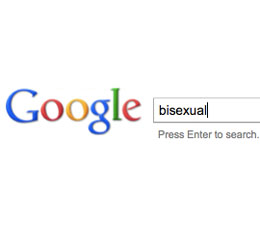
For example, the words "bisexual" and "lesbian" are among the prohibited. Type them in Google - and Live Search will immediately stop the issuance of search options in your window. And you will have to click on “Enter” to certify: yes, I really want to find out something related to bisexuals or lesbian love.
Why is Google blocking these words?
Of course, you have the opportunity to search and find similar words in Google. The only question is that when they are recruited, the Live Search will literally cease to give out its list of options on the fly, and you should already press Enter on your own to see the necessary links.
This is because the Live Search does not use at all what you typed in the search bar to display the results. He simply reads the data that has been collected over the years regarding all previous user searches, trying to predict ahead of time what you intended to type in an empty line. Exactly the same algorithm is the basis for autocomplete strings using Google Suggest technology - in the old, not so "instant" Google search engine.
And if the pop-up window does not offer ready-made words and phrases - after you typed "lesbian" or "ass" - it is not at all for the reason that these results are blocked by internal censorship. It’s just that Google is trying to prevent you from seeing offensive text that users have already searched for and found in the past — in case you are actually looking for something completely harmless and harmless. (Previously, we already debated on this topic).
Countless users associate the word "lesbian" with the concept of "porn", introducing phrases that should not catch the eye of children. That is why the Google algorithm decides not to dump 20 links to lesbian porn sites right there, even if these links are the most frequent in the algorithm database.
Turning this question to Google itself, we received the following comment from an authorized person:
“There are a number of reasons why you may not see the words you are looking for on a particular topic. For example, we put a harsh filter on pornography, scenes of violence and discriminatory stories. I would like to note that removing a request from the autocomplete function is a rather difficult, technologically advanced task, far from as simple as just a blacklist of forbidden words and phrases.
We receive more than a billion queries daily - and therefore apply an algorithmic approach to filtering and deletion, which, of course, is far from ideal (like the search algorithm). But we continue to work hard to improve it, carefully reading all your wishes and objections.
Our algorithm is aimed not only at special words, but also at complex queries that are based on them, moreover, on all the languages presented in Google. For example, if this is some bad word in Russian, we also delete the corresponding compound word, including its transliteration in Latin. In addition, we pay attention to the very result of your search. For example, if you get the impression that it is pornographic, our algorithm may prevent the application of the auto-complete option to it, even if the request itself does not violate the above rules. Today, our system is, of course, imperfect and not as fast as we would like, but we are constantly working to improve it. ”
The highly efficient SafeSearch algorithm is still active in Live Search. He is able to quite effectively filter out potentially offensive content that may appear after the user clicks on “Input”. For example, the first page of the results of a query about “lesbian” with a moderate degree of protection turned out to be completely harmless.
Yes, the current Google development is far from perfect - and company representatives confirm this. At the very least, we would like to be able to manually set parameters for some widespread concepts and words that are prohibited only because they are sometimes associated with sexual, violent or discriminatory content.
Google representatives claim that they are constantly working to improve their system, but do not provide the slightest clarification of exactly what changes we can expect in the future. So for now, if there is a need, you can check out the full list of censored words on the 2006: The Hacker Quarterly website.