February 13, 2010 at 17:24
DAMPS phones
In our century , the year of high technology, nanorobots, touch phones how can you surprise a layman? Maybe the state of affairs 15 years ago? I suggest readers to briefly go back to the time when the phone was like a used nine and was a sign of the owner’s involvement in the “higher caste”.

Scrabbling over the bums of my friends, I brought to light the old phones of the DAMPS standard that had vanished into oblivion. Unfortunately, it was not possible to get absolutely monstrous specimens that could not fit in my pocket, but still something interesting was found.
Almost all telephones of that time had external antennas, because the operators still could not provide good coverage. Many antennas were even retractable (such pictures can often be seen in old films). By the way, one of the advantages of analog communication standards is that when a signal is weak, noise is added to the conversation, but it does not fail and does not disappear, as is the case, for example, in digital GSM. In addition, there were no SIM cards, and the phone was registered on the network by its ESN (we can say an analogue of the MAC address), which was supposed to be registered on the operator’s equipment. ESN is usually listed under the battery.
So to the point.
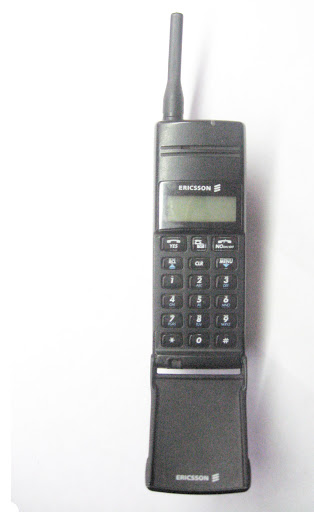
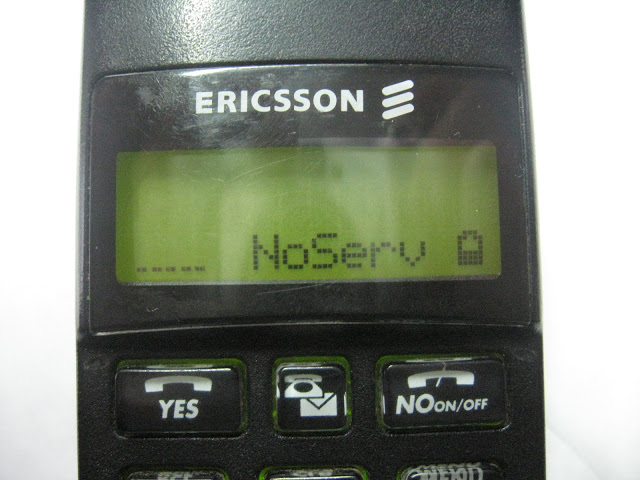
The legendary Ericsson - a manufacturer of telecommunications equipment and one of the founders of wireless networks - was founded in 1876. There was a period in their history when they released cell phones, from this enterprise the Sony-Ericsson Mobile Communications alliance grew. And here is one of the instances in the photo in front of you: Ericsson DF388.

A good brick weighing 250 grams worked in the AMPS 800 and TDMA 800 standards. It had a monochrome three-line display, the ability to send SMS, save 200 numbers in the notebook and the last 10 incoming calls, auto redial, keypad lock, call duration counter, two speakers (call and conversation). The base was metal, and the front panel and battery were made of thick, sturdy plastic. By the way, the battery is more than one and a half centimeters thick, so it was very inconvenient to carry it in a pocket, however, it had a convenient belt holder on it.

Flip performed - the only function - to protect against accidental clicks. That is, by opening the flip during a call, you could not accept the call.
The antenna, by the way, is flexible on it.
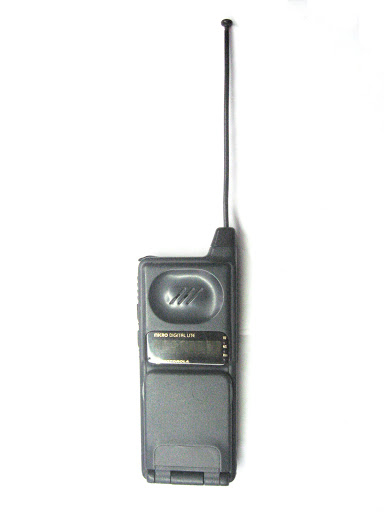
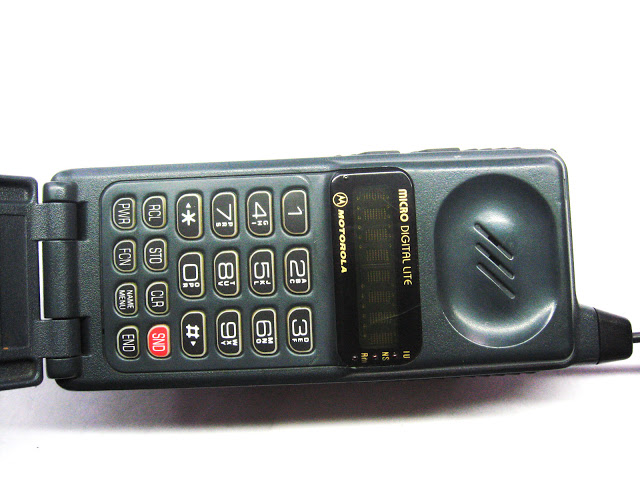
The creator of the world's first pager and the world's first mobile phone (DynaTAC 8000X) is the giant Motorola. The descendant of their first phone was the S5002A - much smaller than its ancestor, but nevertheless large and weighty.
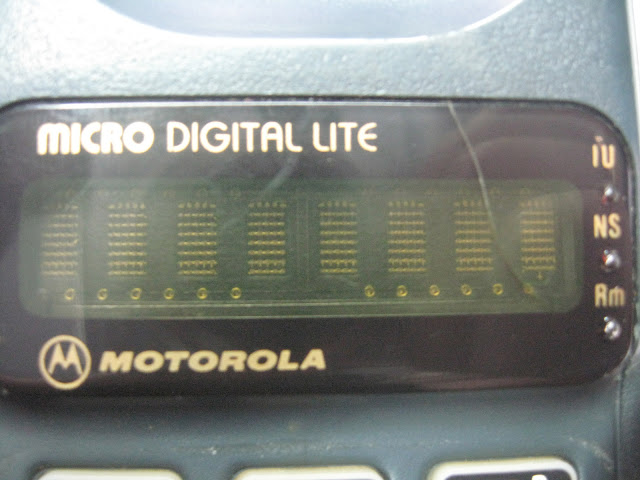
I could not find detailed information on it, but I got it without a battery. It used an LED display, and the meaning of indicators on the sides of the screen and buttons with strange inscriptions: RCL, STO - one can only guess.
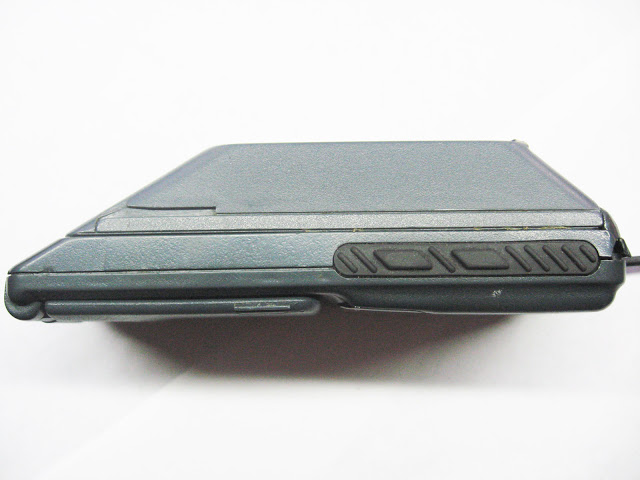
The flip is already truly functional and allows you to receive a call when you open it. Interestingly, a line is drawn behind the battery, which means that when closing, the top edge of the battery should be applied to this place, and the arrows above it should be moved in which direction (in the photo above the top sticker).
From this phone, the first call was made from Kemerovo to Novokuznetsk after building the network. Just imagine what it means to hold it in your hands.
The phone fell from the height of the second floor, after which it received a slightly chipped edge and cracked display glass. Try to drop a modern nokia?

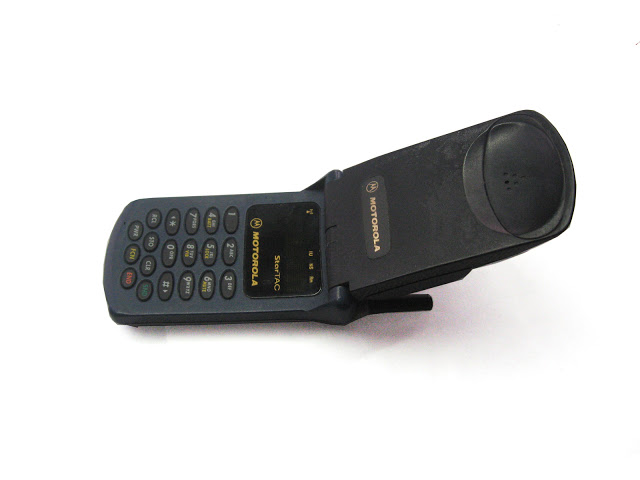
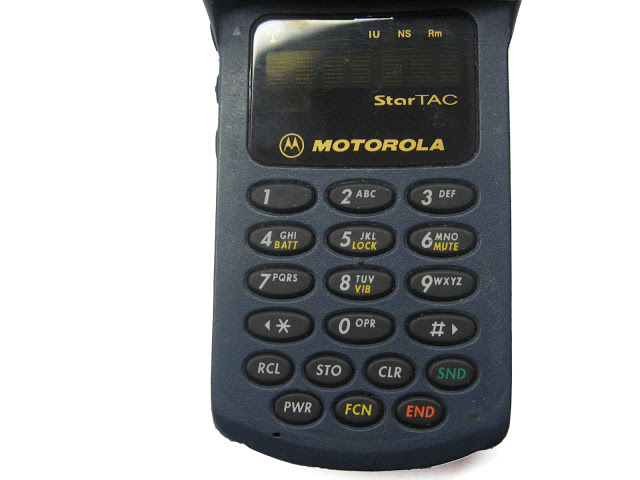
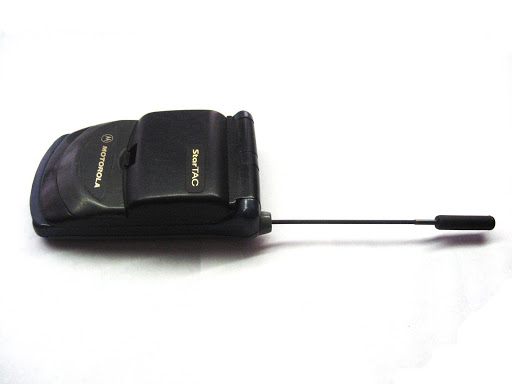
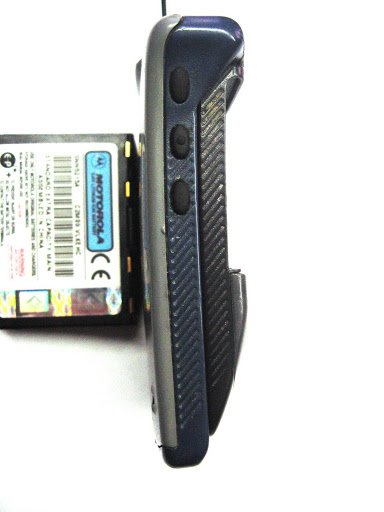
And this is a real breakthrough: Motorola StarTAC S6648A. Its appearance is such a significant event that the wiki page is dedicated to it, you can call it a kind of revolution: this is the first clamshell, the lightest phone in the world (88), compact, uses a lithium-ion battery, while all the others are nickel-metal hydride and customizable vibration alert.

By the way, this phone was the victim of a long conversation. Overheated, it seems, the transistor fused a hole in the case:

The following three phones of the Nokia brand are the great-grandfathers of our modern crafts.
Weighs 170 g. Five-line monochrome LCD display, polyphony, radio. But, as I was corrected in the comments, this is a NMT451 standard phone. I will give it only as an example.
This unit has a white sheet of paper inserted instead of the display. And the display itself was implanted in a similar serviceable model.

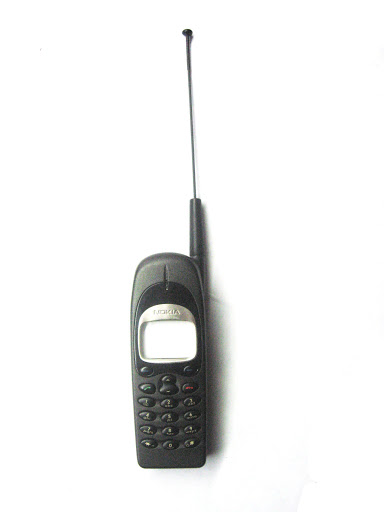
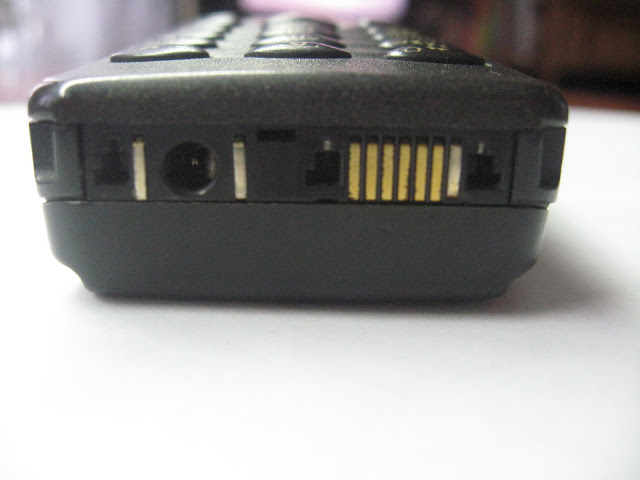

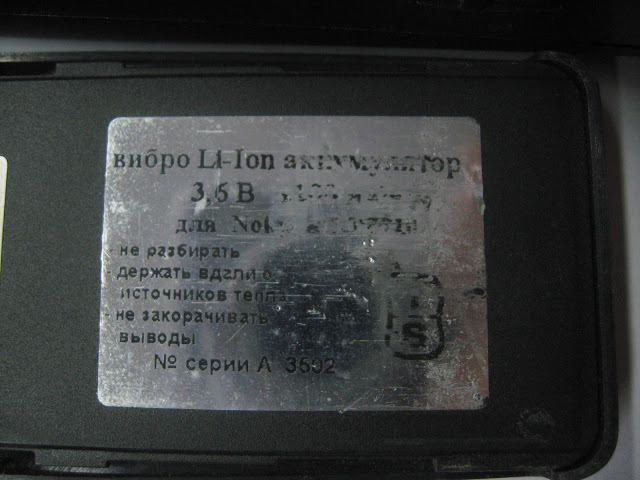
The Nokia 6120iA is slightly different from it.
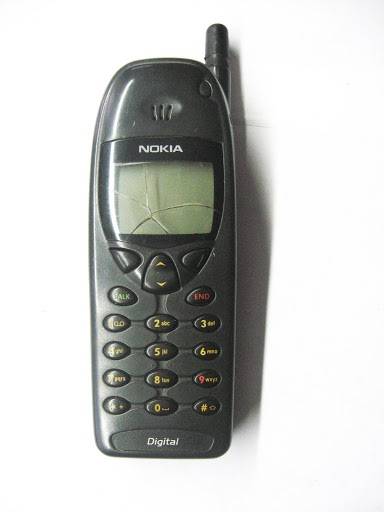
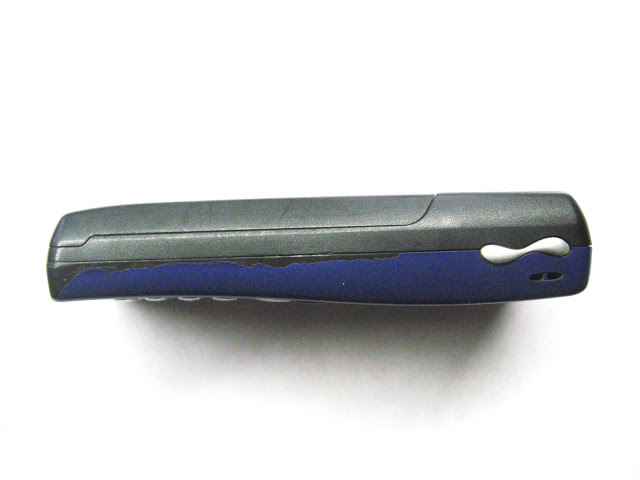
But this one is already more like a modern phone. Nokia 8260. In its functionality, it resembles a GSM phone Nokia 1100.



Then I take my leave.
And I apologize for the quality of the photo.
Scrabbling over the bums of my friends, I brought to light the old phones of the DAMPS standard that had vanished into oblivion. Unfortunately, it was not possible to get absolutely monstrous specimens that could not fit in my pocket, but still something interesting was found.
Almost all telephones of that time had external antennas, because the operators still could not provide good coverage. Many antennas were even retractable (such pictures can often be seen in old films). By the way, one of the advantages of analog communication standards is that when a signal is weak, noise is added to the conversation, but it does not fail and does not disappear, as is the case, for example, in digital GSM. In addition, there were no SIM cards, and the phone was registered on the network by its ESN (we can say an analogue of the MAC address), which was supposed to be registered on the operator’s equipment. ESN is usually listed under the battery.
So to the point.
Ericsson DF388
The legendary Ericsson - a manufacturer of telecommunications equipment and one of the founders of wireless networks - was founded in 1876. There was a period in their history when they released cell phones, from this enterprise the Sony-Ericsson Mobile Communications alliance grew. And here is one of the instances in the photo in front of you: Ericsson DF388.
A good brick weighing 250 grams worked in the AMPS 800 and TDMA 800 standards. It had a monochrome three-line display, the ability to send SMS, save 200 numbers in the notebook and the last 10 incoming calls, auto redial, keypad lock, call duration counter, two speakers (call and conversation). The base was metal, and the front panel and battery were made of thick, sturdy plastic. By the way, the battery is more than one and a half centimeters thick, so it was very inconvenient to carry it in a pocket, however, it had a convenient belt holder on it.
Flip performed - the only function - to protect against accidental clicks. That is, by opening the flip during a call, you could not accept the call.
The antenna, by the way, is flexible on it.
Motorola S5002A
The creator of the world's first pager and the world's first mobile phone (DynaTAC 8000X) is the giant Motorola. The descendant of their first phone was the S5002A - much smaller than its ancestor, but nevertheless large and weighty.
I could not find detailed information on it, but I got it without a battery. It used an LED display, and the meaning of indicators on the sides of the screen and buttons with strange inscriptions: RCL, STO - one can only guess.
The flip is already truly functional and allows you to receive a call when you open it. Interestingly, a line is drawn behind the battery, which means that when closing, the top edge of the battery should be applied to this place, and the arrows above it should be moved in which direction (in the photo above the top sticker).
From this phone, the first call was made from Kemerovo to Novokuznetsk after building the network. Just imagine what it means to hold it in your hands.
The phone fell from the height of the second floor, after which it received a slightly chipped edge and cracked display glass. Try to drop a modern nokia?
Motorola StarTAC S6648A
And this is a real breakthrough: Motorola StarTAC S6648A. Its appearance is such a significant event that the wiki page is dedicated to it, you can call it a kind of revolution: this is the first clamshell, the lightest phone in the world (88), compact, uses a lithium-ion battery, while all the others are nickel-metal hydride and customizable vibration alert.
By the way, this phone was the victim of a long conversation. Overheated, it seems, the transistor fused a hole in the case:
The following three phones of the Nokia brand are the great-grandfathers of our modern crafts.
Nokia 650
Weighs 170 g. Five-line monochrome LCD display, polyphony, radio. But, as I was corrected in the comments, this is a NMT451 standard phone. I will give it only as an example.
This unit has a white sheet of paper inserted instead of the display. And the display itself was implanted in a similar serviceable model.
6120iA
The Nokia 6120iA is slightly different from it.
Nokia 8260
But this one is already more like a modern phone. Nokia 8260. In its functionality, it resembles a GSM phone Nokia 1100.
Then I take my leave.
And I apologize for the quality of the photo.