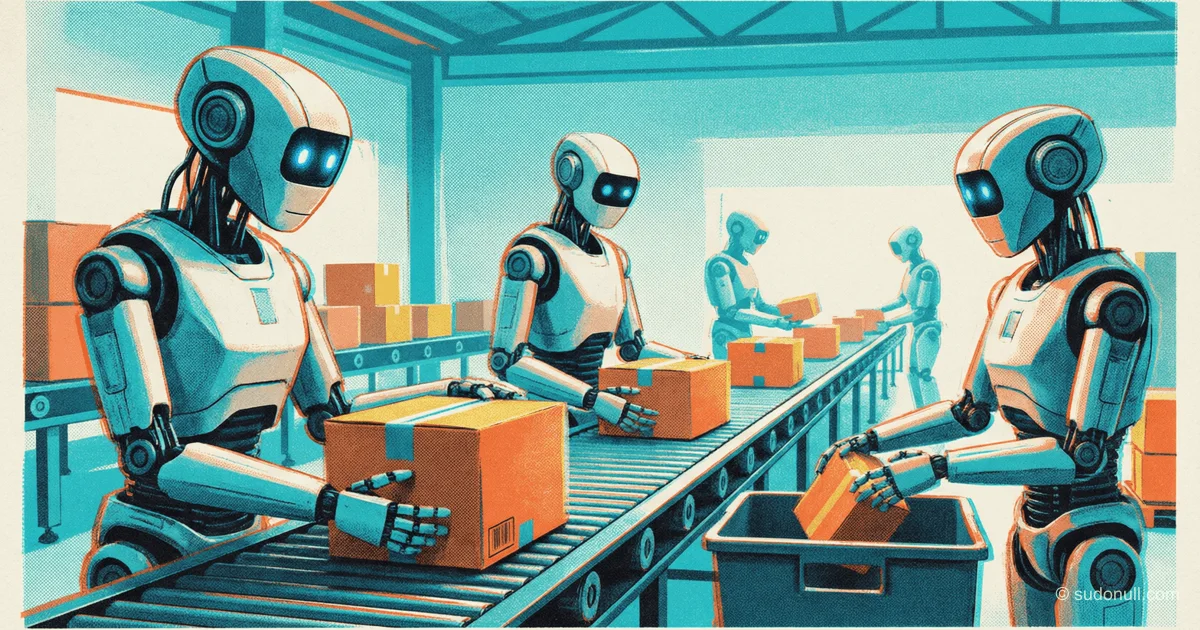
Figure AI Humanoid Robots Set Record by Sorting 28,000 Packages in 24 Hours
Three robots — Bob, Frank, and Gary — controlled by the Helix-02 system worked non-stop for a full day, tripling the planned time and demonstrating high autonomy and reliability in logistics.
Figure AI's Record: Why 24 Hours of Robot Work Changed the Game in Logistics
The Bottom Line: What's Really Happening
Three humanoid robots — Bob, Frank, and Gary — worked non-stop for over 24 hours, sorting 28,000 packages at a speed comparable to a human (about 3 seconds per package). Figure AI CEO Brett Adcock called this "uncharted territory." But behind this impressive number lies more than just a technical success — it's the first time a humanoid system has demonstrated industrial reliability sufficient for round-the-clock operation without remote control.
What makes this event a turning point: full autonomy. Adcock specifically emphasized: "No teleoperation — every action comes directly from Helix-02." This means the neural network runs onboard the robot, without the "crutches" of remote operators that almost all competitors still use in "clean" demonstrations.
Timeline and Context
The test was originally planned for 8 hours. When the system showed no failures, the team decided to continue. Successfully crossing the 24-hour mark is not a fluke but the culmination of several key changes at Figure AI.
First: the company ended its partnership with OpenAI in 2025 and fully switched to its own models. It was a risk — many believed that access to GPT gave Figure an advantage. But Adcock explained the logic: LLM models lack physical robot data and cannot control every movement in the real world. The decision was absolutely correct.
Second: in January-February 2026, Figure introduced Helix-02 — an architecture with three levels: System 2 (slow planning, 7-9 Hz), System 1 (fast control, 200 Hz), and System 0 (balance and stability at 1000 Hz). It is System 0 — trained on over 1000 hours of human motion — that allowed the robots to maintain stability during continuous operation.
Third: Figure has its own BotQ factory, aiming for 12,000 robots per year. Unlike Tesla, which is only planning to scale, Figure already has a physical production base.
Who Wins and Who Loses
Amazon and logistics giants win. 28,000 packages per day equals 10.2 million per year with round-the-clock operation. Given that a human costs about $40,000-$60,000 per year (in the US, including benefits and overtime), and a robot under the RaaS (Robot-as-a-Service) model might cost $4,000-$8,000 per month, the economics align instantly. The Figure CEO has already confirmed: there are two major clients who will receive "tens of thousands" of robots in the next 4 years.
NVIDIA wins. Helix-02 is not a pure software solution; models of this scale require powerful onboard GPUs. Each Figure robot is an additional chip sold.
Agility Robotics (Digit) loses. Their robot was the first commercial one, but it already lags behind Figure in hand dexterity and full autonomy. A SWOT report notes that Agility has "less upper body dexterity." If Figure confirms 24/7 reliability in a real contract, investors will pivot definitively.
Tesla loses. Optimus is still "not really being used," as Musk admitted. Tesla has giant ambitions, but they have not a single deployed humanoid in industrial operation. Figure now has one — live, in front of the entire industry.
What the Media Isn't Saying
Here's the main non-obvious insight: the record was set in ideal conditions on an isolated test line, not in a real chaotic warehouse. The statement says the robots sorted "small packages," placing them barcode-down on a conveyor. This is a limited, predictable task where all parameters are controlled: lighting, object size, distance to the conveyor.
A real warehouse involves boxes of varying weights, falling objects, changing lighting during a shift, and interaction with people. 24 hours in "greenhouse conditions" is not the same as 24 hours on a real Amazon warehouse floor.
Why this matters: many competitors can replicate 24 hours in a test environment. The question is not whether robots can work for a day. The question is how often they fail when encountering the unexpected. The automatic reset and restart that Figure built into Helix is a solution, but it means lost time. In logistics, minutes of downtime cost millions.
Second, what's being hushed up: the economics of replacing humans with robots in the US are worse than they seem. The average warehouse worker salary in the US is about $37,000 per year, but including employer taxes, insurance, and pension contributions, the real cost is $50,000-$55,000 per year. Figure has not yet disclosed the price of its robots, but competitors' RaaS models start at $4,000 per month ($48,000 per year). Additionally, the robot needs maintenance, software updates, and insurance. The final savings might be 10-20%, not 50-70% as many think.
This does not make robots unprofitable. It means payback will come not in 12 months, but in 24-36 months. And that will slow the pace of adoption.
Forecast: Next 30 Days and 90 Days
30 days:
Figure AI will announce the signing of the first industrial contract with a top-5 logistics operator (most likely DHL or FedEx). The current 24-hour record is the perfect marketing asset to close the deal. Also, expect Agility Robotics or Tesla to release response videos with trimmed but flashy demonstrations ("look, our robot worked 30 hours"). Competitors cannot stay silent.
90 days:
Real field trials in uncontrolled environments will begin. Figure AI will deploy 50-100 robots at a single client warehouse and attempt to replicate 24-hour operation in real chaos. That's when we'll find out what Helix-02 is really worth.
If the system shows 90%+ uptime in a real warehouse for a month — it's a market killer. If it drops to 70-80% — the industry will realize that full automation is still 1-2 years away.
Investment take: watch Figure's announcements about production capacity. If they announce expanding BotQ to 50,000+ robots per year in the coming quarters — real test results exceeded expectations. If they keep the current plan (12,000 per year) — they are preparing for a long iterative refinement. As of today, the company is in the best position in the humanoid robotics market.
— Editorial Team










No comments yet.