IMAX 3D vs RealD vs Dolby 3D
This article does not claim to be a complete picture of the world, to objective information and scientific research. This is just an attempt to compare disparate information and summarize some statistics about current 3D technologies. In the last few days I was often asked about the differences between IMAX 3D, RealD and Dolby 3D technologies and which one to choose when watching a movie. There will be no definite choice, whoever wants to - will be able to choose according to the facts provided.
For a long time, people, due to the binocular nature of their vision, have sought to capture our world as we perceive it, i.e. three-dimensional. The first successful works that are known at the moment date back to the 19th century. In the 20th century, mankind did not stop at static stereo images. The film industry began to develop at a frantic pace and to add zest, they began to shoot the first films in 3D using an anaglyph. The technology involves the use of two cameras, color coding is used for display. It quickly gained popularity due to its simplicity of implementation: for viewing, you need color-coded cinema and glasses with red and blue filters. You can show such a movie in any movie theater. Now such films can be watched on a computer. The main disadvantage of this technology is incomplete color rendering.
Then there were various technologies for alternately covering the eyes, but they are complex and not so interesting, about their story some other time.
There are currently three main 3D display technologies in movie theaters on the market, two of which are based on polarization, the third is an evolution of anaglyph technology: IMAX 3D, RealD and Dolby 3D.
IMAX 3D technology appeared the first of the most popular now, the first films were released back in the last century. To create three-dimensionality, linear polarization of the film and special glasses are used. “+” The big plus of IMAX technology is the use of 70 mm film and, accordingly, high resolution of the image. “-” The minus of linear polarization is the loss of three-dimensionality at the slightest tilt of the head to the right and left. Wikipedia - IMAX 3D RealD
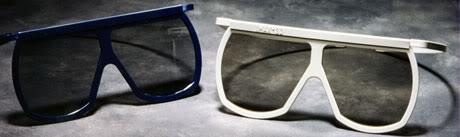

This is the second polarized technology. Unlike IMAX, circular polarization of light is used here and the corresponding glasses are used. There is also a version with increased resolution RealD XL, in Russia known as SuperD.
“+” A plus of the technology is the possibility of a slight tilt of the head without loss of three-dimensionality of the picture.
“-” Lower resolution compared to IMAX.
Wikipedia - RealD
“++” Pluses of polarization: cheap glasses, so it makes no sense to make them vandal resistant and heavy.
“-” Cons of polarization: in order for the screen to not change the polarization of the image, an expensive silver coating is needed; the brightness of the image is reduced due to the fact that the polarizing screen is in front of the projector and blocks part of the light flux.
Dolby 3D
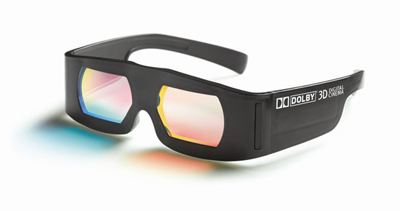
The technology is based on the effect of mixing images with different wavelengths. To do this, use special glasses and a projector with a special rotating filter. A wonderful article about Dolby 3D has already been written, so describing everything in color is simply useless.
"+" Technology is easier to install in cinemas, because does not require special screen preparation. The brightness of the picture is practically not affected.
"-" Glasses for viewing are quite expensive, so they are made heavy and vandal resistant. If you have second points - this will be a rather unpleasant test for watching a movie.
PS There are other methods used at the moment, but it is difficult for me to judge them only by theoretical knowledge, so they did not get into comparison.
PPS If there is a more suitable blog, I will transfer.
UPD: A very good article on this subject.
History. How it all began.
For a long time, people, due to the binocular nature of their vision, have sought to capture our world as we perceive it, i.e. three-dimensional. The first successful works that are known at the moment date back to the 19th century. In the 20th century, mankind did not stop at static stereo images. The film industry began to develop at a frantic pace and to add zest, they began to shoot the first films in 3D using an anaglyph. The technology involves the use of two cameras, color coding is used for display. It quickly gained popularity due to its simplicity of implementation: for viewing, you need color-coded cinema and glasses with red and blue filters. You can show such a movie in any movie theater. Now such films can be watched on a computer. The main disadvantage of this technology is incomplete color rendering.
Then there were various technologies for alternately covering the eyes, but they are complex and not so interesting, about their story some other time.
The present.
There are currently three main 3D display technologies in movie theaters on the market, two of which are based on polarization, the third is an evolution of anaglyph technology: IMAX 3D, RealD and Dolby 3D.
IMAX 3D technology appeared the first of the most popular now, the first films were released back in the last century. To create three-dimensionality, linear polarization of the film and special glasses are used. “+” The big plus of IMAX technology is the use of 70 mm film and, accordingly, high resolution of the image. “-” The minus of linear polarization is the loss of three-dimensionality at the slightest tilt of the head to the right and left. Wikipedia - IMAX 3D RealD


This is the second polarized technology. Unlike IMAX, circular polarization of light is used here and the corresponding glasses are used. There is also a version with increased resolution RealD XL, in Russia known as SuperD.
“+” A plus of the technology is the possibility of a slight tilt of the head without loss of three-dimensionality of the picture.
“-” Lower resolution compared to IMAX.
Wikipedia - RealD
“++” Pluses of polarization: cheap glasses, so it makes no sense to make them vandal resistant and heavy.
“-” Cons of polarization: in order for the screen to not change the polarization of the image, an expensive silver coating is needed; the brightness of the image is reduced due to the fact that the polarizing screen is in front of the projector and blocks part of the light flux.
Dolby 3D

The technology is based on the effect of mixing images with different wavelengths. To do this, use special glasses and a projector with a special rotating filter. A wonderful article about Dolby 3D has already been written, so describing everything in color is simply useless.
"+" Technology is easier to install in cinemas, because does not require special screen preparation. The brightness of the picture is practically not affected.
"-" Glasses for viewing are quite expensive, so they are made heavy and vandal resistant. If you have second points - this will be a rather unpleasant test for watching a movie.
As a result:
| Method | + | - | |
| IMAX 3D | Linear polarization | Light glasses High resolution | Lower brightness. Better not tilt your head. |
| Reald | Circular polarization | Light glasses You can tilt your head | Lower brightness |
| Dolby 3D | Different wavelengths | Vivid image | Heavy glasses |
PS There are other methods used at the moment, but it is difficult for me to judge them only by theoretical knowledge, so they did not get into comparison.
PPS If there is a more suitable blog, I will transfer.
UPD: A very good article on this subject.