Professor of mathematics wants to win jerrimending with the help of science
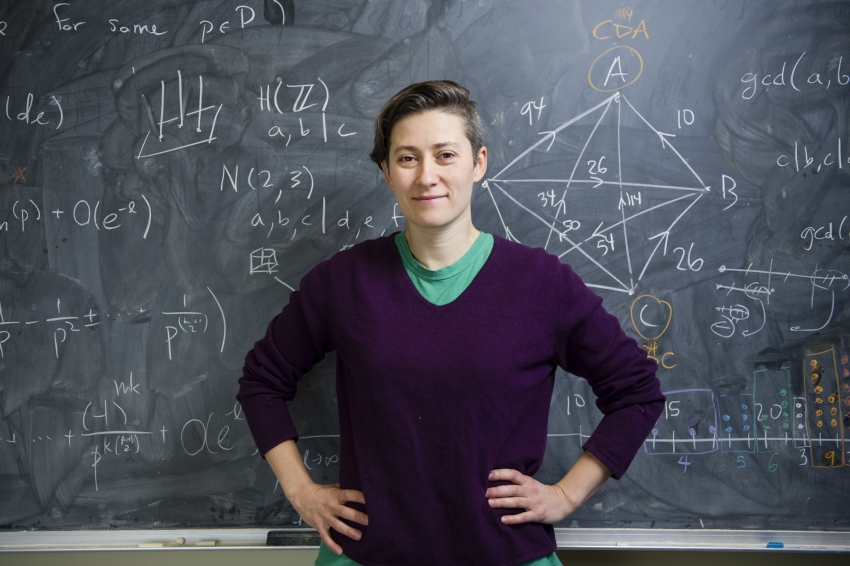
Moon Duchin, Associate Professor of Mathematics and Director of the Science, Technology and Society Program at Tufts University (USA)
Political parties and election commissions in the United States, Russia and other countries traditionally “cheat” with the size and shape of constituencies, trying to isolate protest part of the electorate in individual reservations, or, conversely, a little smear in neighboring districts. Due to such manipulations - jerrimending - the districts sometimes get very bizarre outlines. But everything is legal. Until now, there is nowhere normal legislation with mathematical formulas that describe the geometric shape of the district. An associate professor of mathematics at Tufts University intends to correct this shortcoming and offers several mathematical models.
Jerrymending is often used in countries with majority elections to parliament and a strong party system. So that the maximum number of “their own” deputies gets into the parliament, the voters of the opposition party are concentrated in several districts, and in the rest they make a small but sure preponderance of their party. For this purpose, constituencies with an unequal number of voters are created, as well as districts of a bizarre territorial form.
For example, in the USA, jerrimending was used to neutralize black voters, so that their candidates would not go to parliament (there were also cases of positive discrimination when it was black candidates who were promoted in this way). And in Russia in 2015, before the parliamentary elections, a law was adopted on the “petal” cutting of districtsin which small sectors of large cities with disloyal electorate join large rural areas with loyal populations. As a result, jerrimending performs the same task - blocks the passage of “malicious” candidates to parliament in most districts.
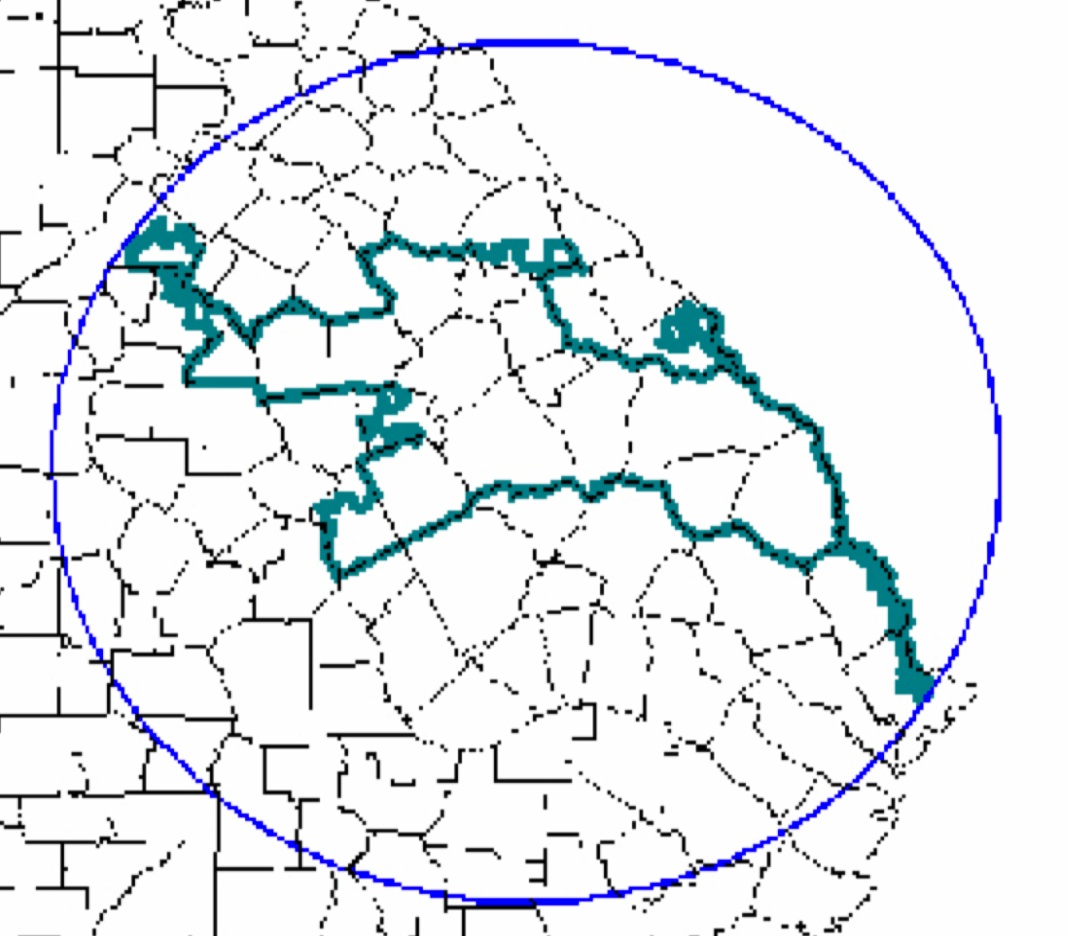
For example, in the Novosibirsk region, the authorities divided the population of the city into four parts and attached each of them to the territory of the region.
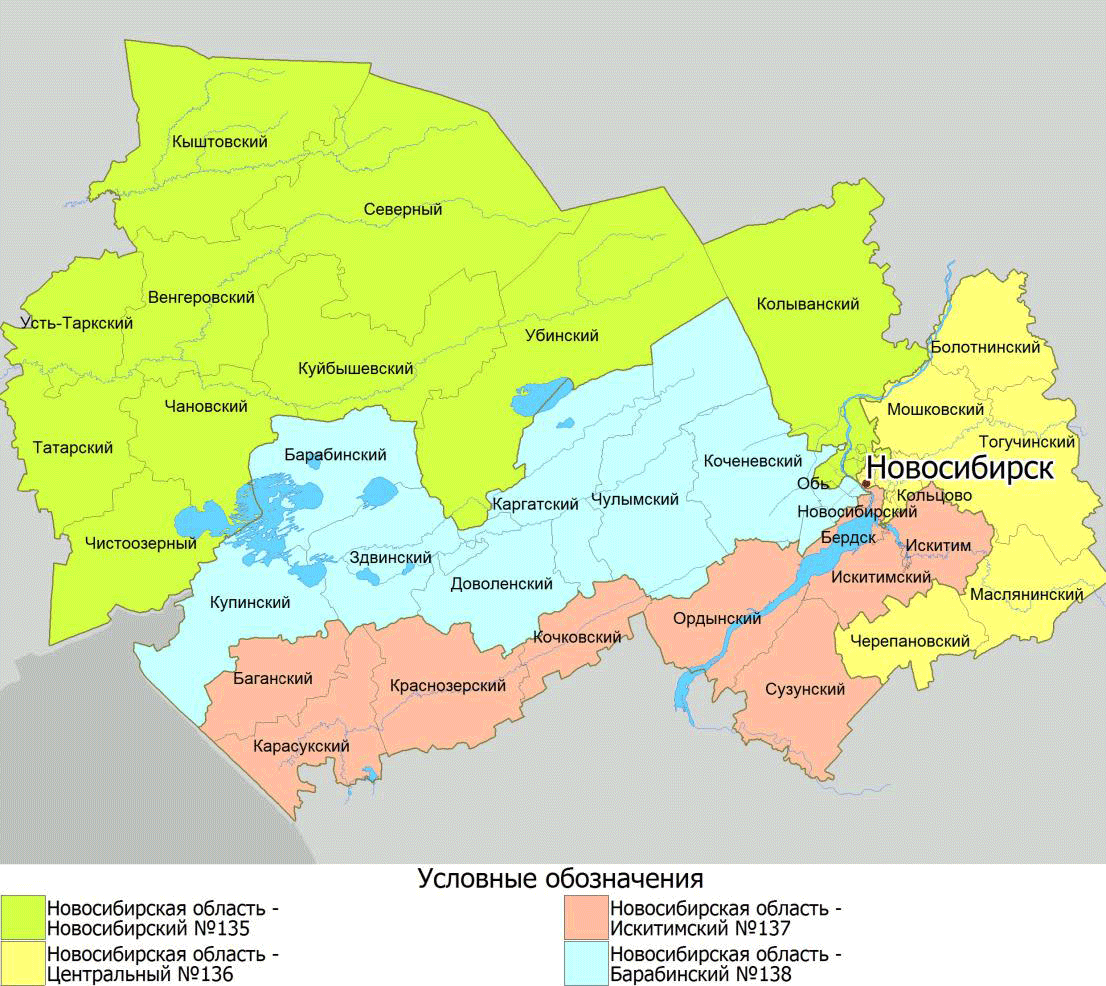
Election districts of the Novosibirsk region
In the USA, the situation with jerrimending is even worse, because in most states cutting of districts is within the competence of regional parliaments (that is, in fact, is in the hands of the party having the parliamentary majority). For example, the Novosibirsk region is not even close in terms of the degree of idiocy to the distribution of the territory of the state of Maryland in eight districts.

Second district Maryland

Third District pcs. Maryland
At the same time, only basic rules on the form of constituencies are usually provided for in state constitutions or no rules are provided at all. It is usually stated that the district should be “compact”, but this is clearly a broad subjective statement.
To make a difference, Moon Dachin organized a five-person expert organization, Metric Geometry and Gerrymandering Group (MGGG), which opened a mailing list to start a discussion of the jerrimendering problem in the scientific community. She told about the goals of the organization in an interview with the journal Chronicle of Higher Education.
What is “compactness”?
Associate Professor Dachin proposes to consider the possibility of using several concepts to describe an acceptable form of the district, that is, to objectively verify the requirement of "compactness", which is spelled out in state constitutions.
For example, one can consider such a parameter as the Polesby-Popper estimate , which is calculated as the ratio of the area of a district to the area of a circle whose length is equal to the perimeter of the district.
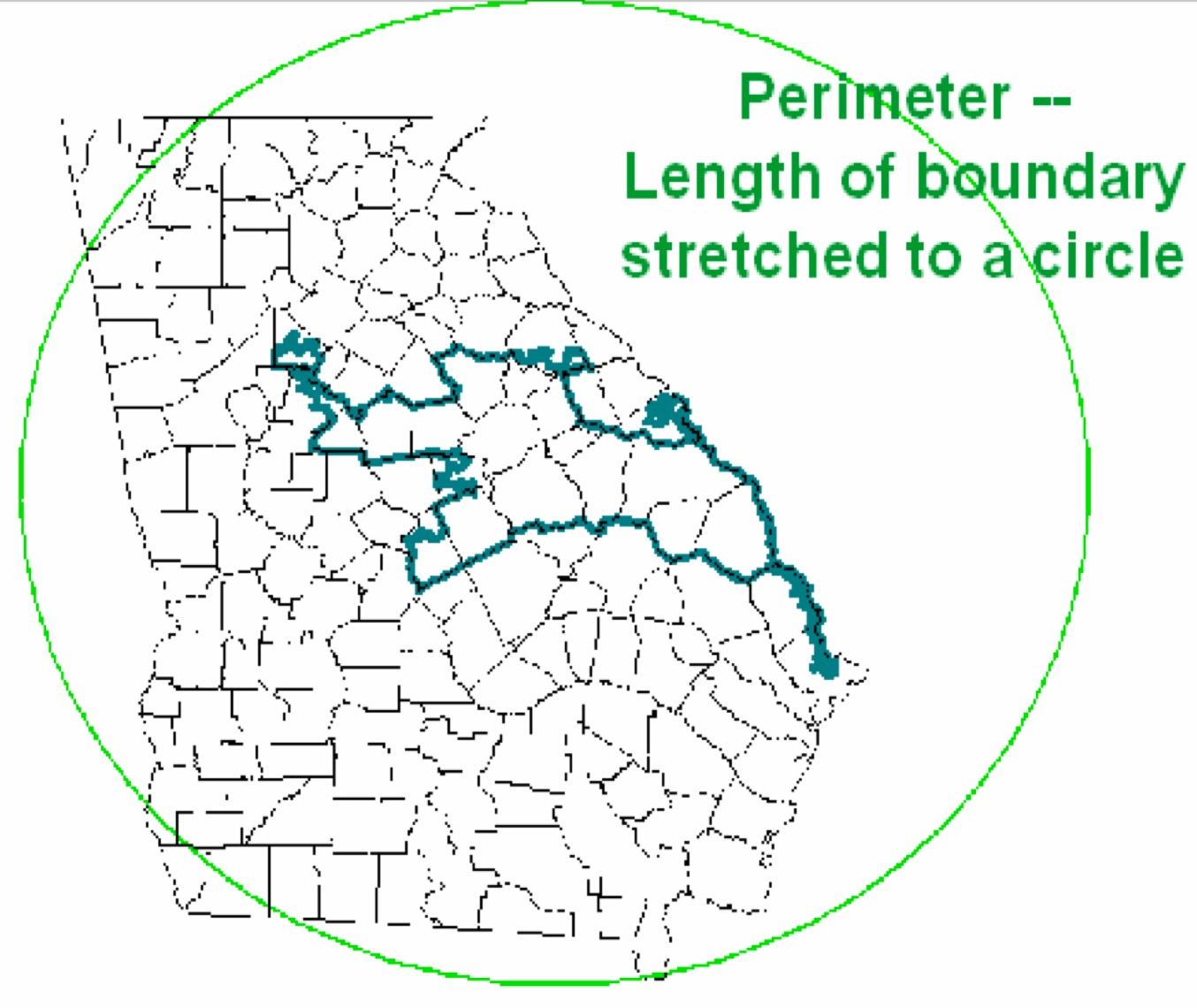
Assessment of Polesby-Popper
Another option is a simple ratio of the area of the district to the area of a circle in the circumcircle.
The ratio of the area of the district to the area of the circle
Moon Dachin says that he is now working on the problems of metric geometry in the framework of the geometric theory of groups. This is a branch of mathematics that studies finitely generated groups with the help of connections between their algebraic properties and the topological and geometric properties of the spaces on which such groups act, or of the groups themselves, considered as geometric objects. On a personal website Danchin can find several scientific papers in this field, in which she describes a parameter as the average distance between all points of an arbitrary figure (probably more parameter should be normalized, for example, the diameter of the circumscribed circle of the same). This parameter is quite suitable as a characteristic of compactness.
Another option to assess the compactness, which jokingly mentioned by experts- Grofman inter-eye test, which was proposed by the American scientist Bernie Grofman. This test allows you to visually determine the level of jerrimendering by measuring how wide the eyes of a person who looks at a map and evaluates the scale of frauds are. By the way, the same test was once offered for the evaluation of "hardcore" porn. The point is that such things are difficult to formalize, but when you see this, you immediately understand (look again at the counties in Maryland).
An adjunct professor at Tufts University is confident that with the help of mathematics many social problems can be solved. But the difficulty is that politicians often cannot understand simple mathematical concepts. Therefore, it will be quite difficult to convince them to include such formulas in the laws and the Constitution of the country. After all, they first need to understand. Mun Dachin gives an example of the concept of efficiency deficit , which describes jerrimendering with simple examples - a unique case where a US judge understood the math and said that he “liked” it. This mathematical document formed the basis of the Whitford v. Litigation . Nichol in Wisconsin. In this way, mathematical concepts should be explained and presented to judges, politicians and society: as clear and convincing as possible.