May 27, 2008 at 10:54
“Intellectual Property” is a stupid euphemism
- Transfer
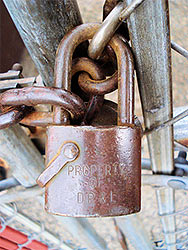
As soon as ideas break free, you cannot turn them back ...
“Intellectual property” is one of the most ideologically loaded terms that is objectionable, even if you just mention it. The term was not used until the 60s, until it was adopted by the World Intellectual Property Organization, a trade union body that later received high agency status with the UN.
The WIPO case of using the term is easy to understand: people from whom “their property was stolen” are much prettier in the public imagination than “production organizations from which they violated the contours of regulatory monopolies,” as it was customary to talk about violations, until “intellectual property” dominate as a term.
Is it important what we call it? Ownership, in the end, is a useful, understandable concept in law and in everyday life, such a thing that the average person can figure out without much subtleties.
This is pure truth - and that is why the phrase "intellectual property" is a fundamentally dangerous euphemism that leads us to all kinds of erroneous judgments regarding knowledge. Erroneous ideas about knowledge at best cause problems, but they are deadly for any country trying to switch to a "knowledge economy."
Essentially, the thing we call “intellectual property” is simply knowledge — ideas, words, melodies, blueprints, identifiers, secrets, databases. This thing is somewhat similar to property: it can be valuable and sometimes you need to invest a lot of money and labor in its development in order to realize this value.
Out of control
But it also differs from ownership to an equally important degree. First of all, it is not "exclusive" in essence. If you get into my apartment, I can kick you out (expel you from my house). If you steal my car, I can bring it back (expel you from my car). But if you listened to my song, if you read my book, if you just watched my movie, then I will lose my control over this. Except with the help of electric shock, I can’t make you forget the suggestions you just read here.
It is this discrepancy that makes “ownership” in intellectual property so problematic. If everyone who comes to my apartment physically takes something out of it with me, I would go crazy. I would spend all my time worrying about those who crossed the threshold, I would force them to sign all kinds of obsessive agreements before they go to the toilet, and the like. And as everyone who bought a DVD-ROM and was forced to sit on the insulting clumsy clip “You Won't Steal A Car,” knows that this is exactly the behavior that conversations about property encourage when it comes to knowledge.
But there are many things that have value, although they are not property. For example, my daughter was born on February 3, 2008. She is not my property, but she is very dear to me. If you take it from me, then this crime will not be "theft." If you harm her, it will not be “an attempt on property rights”. We have a separate lexicon and a set of legal concepts to consider issues related to the value that human life represents.
Moreover, although it is not my property, I still have a legally recognized interest in my daughter. She is “mine” in a sense of the word, but it also falls within the scope of many other individuals — the governments of the UK and Canada, the Public Health Service, the Child Welfare Service, not to mention other family members — all of them may be interested to the living conditions, treatment and future of my daughter.
Flexibility and subtleties
Attempts to push knowledge into the framework of the concept of “property” leave us without the flexibility and subtleties that a real system of rights to knowledge could possess. For example, there is no copyright to the facts, so no one can say that he “owns” your address, health insurance policy number or PIN of your credit card. Despite this, you are very interested in all these things, and this interest can and should be protected by law.
There are many works and facts that are not subject to copyright, trademarks, patents and other rights that make up the hydra of “intellectual property”, from recipes and telephone directories to “illegal art” like music mashups. These works are not property - and should not be taken for it - but around each of them there is a whole ecosystem of people with legitimate interests in relation to them.
I once heard a WIPO representative at the European Association of Commercial Broadcasters explain that, given all the contributions made by their members to record the 60th anniversary of the capture of Dieppe during World War II, they should be given ownership of the ceremony, the same reason that they own television programs and other “creative works”. I immediately asked why the “owners” should be some rich people with cameras - why not the families of those who died on the other side? Why not shore owners? Why not the generals who ordered the capture? When it comes to knowledge, “possession” loses all meaning - a lot of people are related to the records of this ceremony, but to say that someone “owns” it is just nonsense.
Copyright - with all its troubles, exceptions and peculiarities - has for centuries been a legitimate regulatory system that tried to handle the unique properties of knowledge, and did not pretend to be another set of rules for managing property. After forty years of “ownership debate,” we have endless warfare between unyielding positions of ownership, theft, and fair deals.
If we want to achieve a stable peace in the wars for knowledge, it is time to put property aside, it is time to understand that knowledge - valuable, treasured, expensive knowledge - is not owned. They cannot be owned. The state should regulate our relative interests in the ephemeral world of ideas, but this regulation should concern knowledge, and not be a clumsy remake of the property system.
Original: “Intellectual property” is a silly euphemism , Cory Doctorow
Translation: ruguevara , iAdramelk , Orie
Crossstation: JetStyle library
PS Translator Postscript: See how irreconcilable the discussion flared up in the comments! About that and the speech, it was worth only a little touch on the topic. How we it call it, has a value.