September 11, 2007 at 18:55
Seven Wonders of the IT World
- Transfer
CIO Magazine has published an interesting list of the seven wonders of the IT world . This list was compiled based on the results of users voting and it included the most impressive achievements of computer technology.
www.arctic.noaa.gov/gallery_np.html
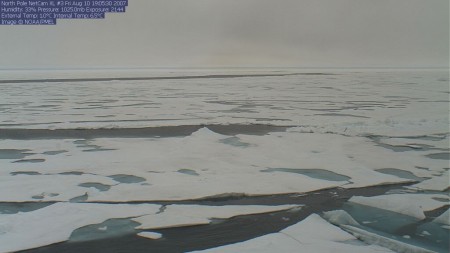
The US National Oceanographic and Meteorological Administration has installed a computer in the immediate vicinity of the North Pole, north of Norway. On a metal platform with a drifting ice floe in the Arctic Ocean, he sends photographs of 2048 × 1536 pixels every 14 days along with his current coordinates, which change all the time. The battery floats beneath the ice and somehow recharges the computer continuously. Webcam model: NetCam XL manufactured by StarDot Technologies.
www.nasa.gov/mission_pages/voyager/index.html
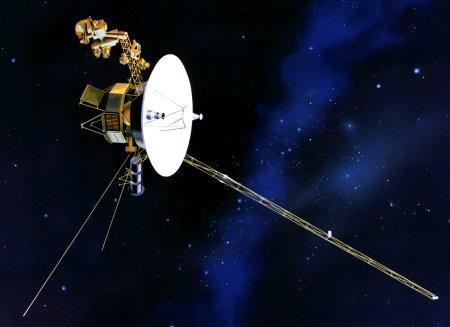
The ship was launched thirty years ago and flew away from the solar system a long time ago, every day moving away from it by another 1.6 million km. To date, the distance to the Sun exceeds 15.44 terameters. Communication with the Earth is maintained through the Deep Space Network orbital computer network: a system of antennas in Earth orbit.
The main Google data center is located in Oregon, 128 km from Portland. Electricity comes from a nearby hydroelectric power station, and to cool the servers we had to build two four-story water towers. The number of technical engineers is kept secret: from 100 to 200 people. The total number of servers is also unknown (Google has half a million servers in 25 data centers; they store 25 PB of data). The building is strictly guarded; the highest level of secrecy is established for it. Throughout history, only two local journalists who wrote this article managed to get into it .
www.eu-egee.org
Launched in September 2006 and accessible to all scientists of the world, this computer network unites 36,000 processors and 5 PB of disk space (240 supercomputers and computer networks in 45 countries are united). The network helps to carry out resource-intensive experiments in the fields of physics, chemistry and others, where massive calculations are required. For example, this is where the data from the CERN Large Hadron Collider accelerator is processed. Besides him, 98,000 tasks per day are counted, more than a million per month.
domino.research.ibm.com/comm/research_projects.nsf/pages/bluegene.index.html
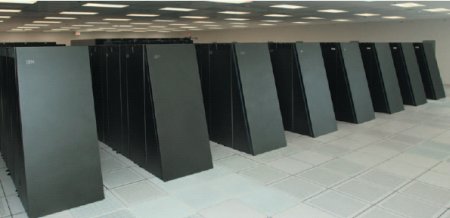
Distributed computing system on 65,536 computers dual covers an area of 232 m 2 at the Lawrence Livermore Laboratory. Lawrence (Lawrence Livermore National Laboratory) in California. Serves for calculating scientific experiments, such as simulation of a nuclear explosion. A giant cluster with a capacity of 280.6 teraflops consumes 1.5 megawatts of electricity. According to rough estimates, the cost of equipment is approaching $ 100 million.
To assess the performance of IBM BlueGene / L, we can say this: every person on the planet, including infants, must perform 60,000 operations per second, so that the entire population of the world is compared in speed to one this supercomputer.
IBM has already announced the next generation supercomputer, Blue Gene / P, three times more powerful.
www.oqo.com The

miniature handheld computer contains a 1.5 GHz processor, a 30 or 60 GB hard drive, up to 1 GB of RAM, Wi-Fi and Bluetooth interfaces. Full-fledged keyboard with 57 buttons, mouse buttons, programmable wheel, digital stylus. The batteries last for three hours. The cost of the device is one and a half thousand dollars. However, do not rush to spend money. Surely in the very near future there will be more productive and miniature gadgets.
Created in 1991 by Finnish soldier Linus Torvalds, the Linux operating system really threatens the hegemony of Windows, especially in the enterprise market.
The Linux kernel contains 8.2 million lines of code, and approximately an additional 85.63 lines are added there every hour (+ 10% per year). The number of developers noted in the latest release was 3200 people. A new release has recently been released every 2.6 months.
1. The computer closest to the North Pole: Webcam # 1
www.arctic.noaa.gov/gallery_np.html
The US National Oceanographic and Meteorological Administration has installed a computer in the immediate vicinity of the North Pole, north of Norway. On a metal platform with a drifting ice floe in the Arctic Ocean, he sends photographs of 2048 × 1536 pixels every 14 days along with his current coordinates, which change all the time. The battery floats beneath the ice and somehow recharges the computer continuously. Webcam model: NetCam XL manufactured by StarDot Technologies.
2. The computer farthest from Earth: the ship Voyager 1
www.nasa.gov/mission_pages/voyager/index.html
The ship was launched thirty years ago and flew away from the solar system a long time ago, every day moving away from it by another 1.6 million km. To date, the distance to the Sun exceeds 15.44 terameters. Communication with the Earth is maintained through the Deep Space Network orbital computer network: a system of antennas in Earth orbit.
3. The most intriguing data center: Google
The main Google data center is located in Oregon, 128 km from Portland. Electricity comes from a nearby hydroelectric power station, and to cool the servers we had to build two four-story water towers. The number of technical engineers is kept secret: from 100 to 200 people. The total number of servers is also unknown (Google has half a million servers in 25 data centers; they store 25 PB of data). The building is strictly guarded; the highest level of secrecy is established for it. Throughout history, only two local journalists who wrote this article managed to get into it .
4. The world's largest distributed computing computing project: E-sciencE II
www.eu-egee.org
Launched in September 2006 and accessible to all scientists of the world, this computer network unites 36,000 processors and 5 PB of disk space (240 supercomputers and computer networks in 45 countries are united). The network helps to carry out resource-intensive experiments in the fields of physics, chemistry and others, where massive calculations are required. For example, this is where the data from the CERN Large Hadron Collider accelerator is processed. Besides him, 98,000 tasks per day are counted, more than a million per month.
5. The most powerful supercomputer: IBM BlueGene / L
domino.research.ibm.com/comm/research_projects.nsf/pages/bluegene.index.html
Distributed computing system on 65,536 computers dual covers an area of 232 m 2 at the Lawrence Livermore Laboratory. Lawrence (Lawrence Livermore National Laboratory) in California. Serves for calculating scientific experiments, such as simulation of a nuclear explosion. A giant cluster with a capacity of 280.6 teraflops consumes 1.5 megawatts of electricity. According to rough estimates, the cost of equipment is approaching $ 100 million.
To assess the performance of IBM BlueGene / L, we can say this: every person on the planet, including infants, must perform 60,000 operations per second, so that the entire population of the world is compared in speed to one this supercomputer.
IBM has already announced the next generation supercomputer, Blue Gene / P, three times more powerful.
6. Smallest Windows Vista PC: OQO Model 02
www.oqo.com The
miniature handheld computer contains a 1.5 GHz processor, a 30 or 60 GB hard drive, up to 1 GB of RAM, Wi-Fi and Bluetooth interfaces. Full-fledged keyboard with 57 buttons, mouse buttons, programmable wheel, digital stylus. The batteries last for three hours. The cost of the device is one and a half thousand dollars. However, do not rush to spend money. Surely in the very near future there will be more productive and miniature gadgets.
7. Powerful impact on enterprise software: Linux kernel
Created in 1991 by Finnish soldier Linus Torvalds, the Linux operating system really threatens the hegemony of Windows, especially in the enterprise market.
The Linux kernel contains 8.2 million lines of code, and approximately an additional 85.63 lines are added there every hour (+ 10% per year). The number of developers noted in the latest release was 3200 people. A new release has recently been released every 2.6 months.