Smart home alert zone amplifier
At the stage of building the “smart home” system, there was a desire to organize a voice alert for some events. After a short “google” I did not find anything suitable in terms of functionality and price, and decided to make my device once again. This time it will be a zone amplifier for the annunciator.
The appearance of the finished amplifier
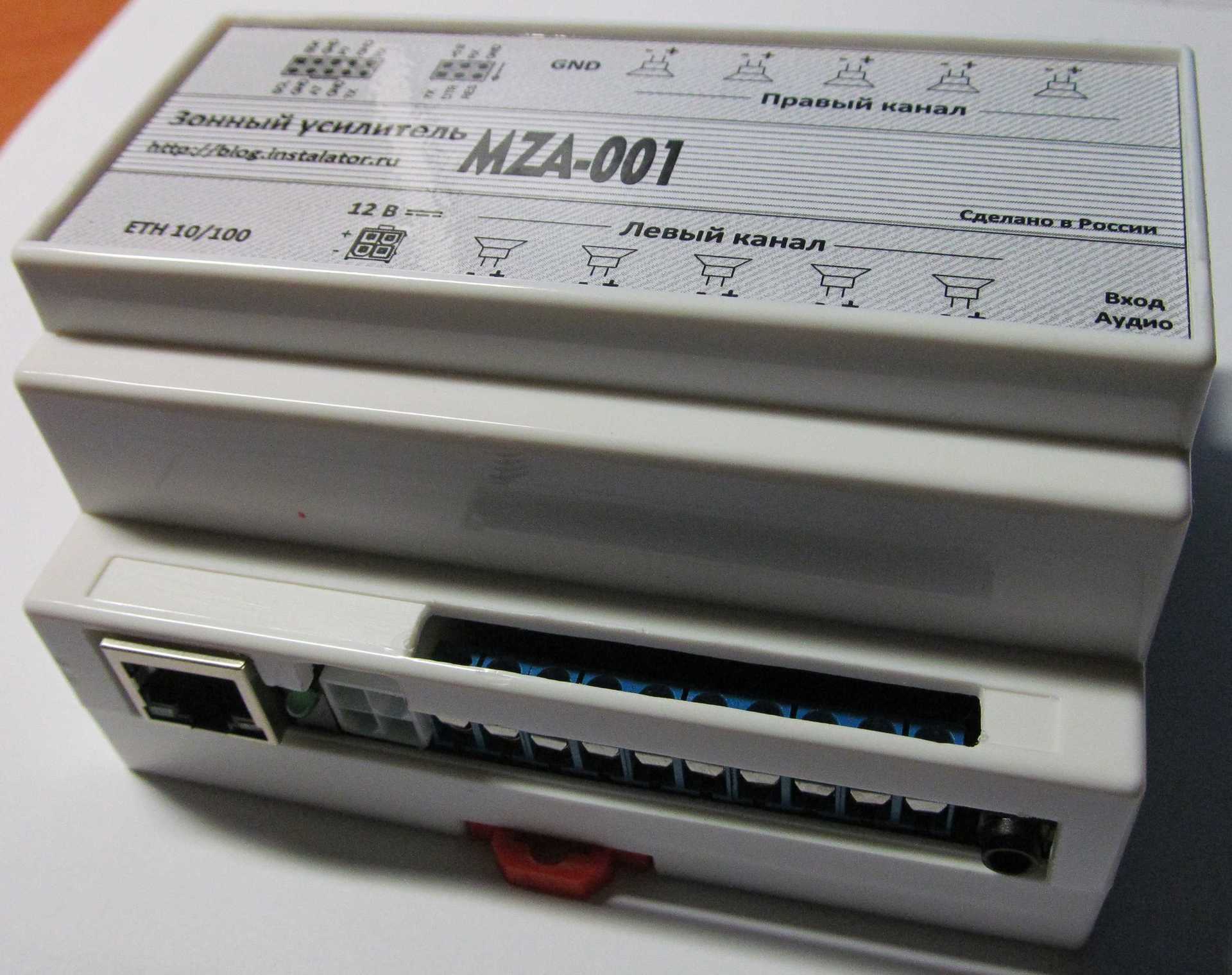
When designing the amplifier, the following logic of the amplifier operation was assumed:
- Sound only in those rooms in which there are people at a given time.
- Ability to adjust the volume level for each room, regardless of the rest, and preferably through the web interface, rather than adjusting the trimmer or variable resistor.
- At the time of silence, amplifiers must be switched to Mute mode to avoid unnecessary noise from the acoustics.
- Form factor for installation in a low-current cabinet with DIN rail mounting.
As a result of searching, reading datasheets and comparing existing low-frequency amplifier (ULF) microcircuits, an amplifier was selected on the PAM8610 microcircuit. This microcircuit is a D class stereo amplifier, which means high efficiency, which means less heat and lower consumption compared to other classes of amplifiers.
PAM8610 chip specifications:
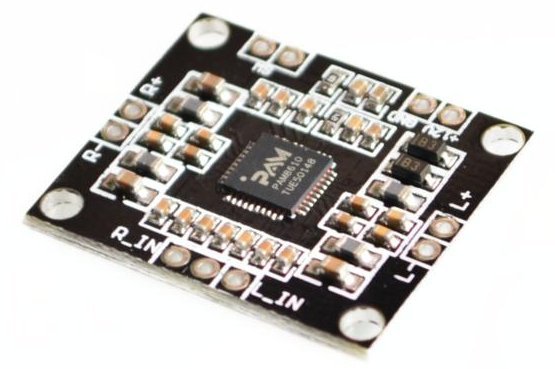
Another significant advantage was the price, as it was assumed 5 stereo amplification zones. The cost of the finished amplifier module on Ali is about $ 1. If you buy only chips, it is more expensive. I bought ready-made boards, removed chips from them, partially mounted (resistors, capacitors) and soldered them onto my boards.
These are the modules I bought for disassembly.
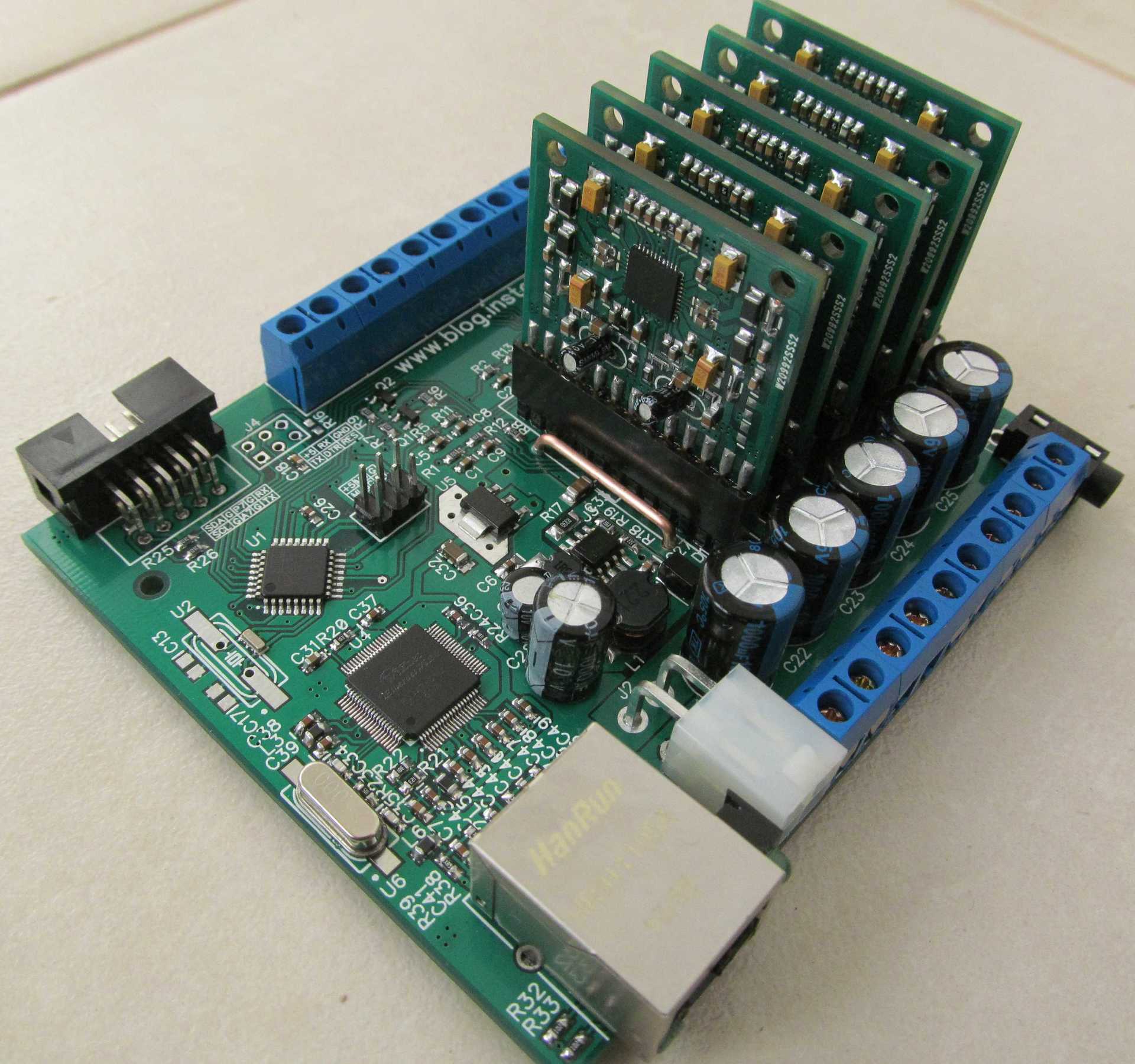
The amplifier is assembled as follows:
The brain of the amplifier is an ATmega328 microcontroller with an "Arduin" bootloader. The code is written in the Arduino environment. Amplifier control is organized via Ethernet using the MQTT protocol. Ethernet is assembled on a W5100 chip.
Boards for the amplifier ordered in China. It was the first experience of ordering boards in China, manufacturing and delivery took about a month. I am quite satisfied with the quality practically does not differ from those made in Russia, the only moment is a protective mask, it seemed to me not as strong as on boards from Russia. but this minor and not affecting the lack of anything can be ignored.
The base board of the amplifier.

Board with installed amplifiers
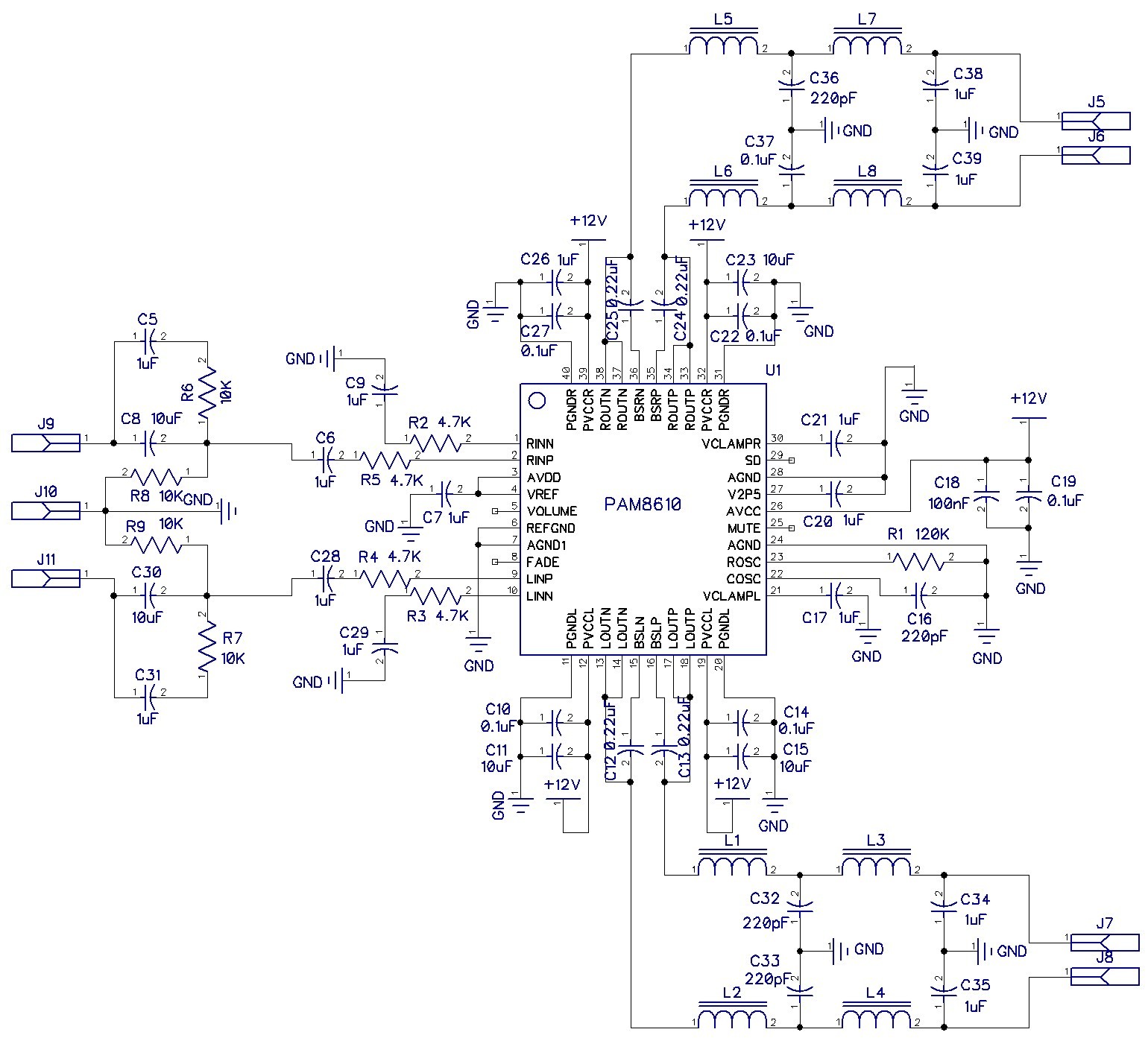
A little about the function of the amplifier. The amplifier has one audio input, which is parallelized to 5 amplifiers through capacitors. The Shutdown line of all amplifiers is combined into one circuit and serves to turn off all amplifiers, for example, when you turn on the script, no one is at home. The Mute input is used to enable and disable the sound of each amplifier independently. Adjusting the volume of each amplifier has 32 adjustment steps (from -75dB to + 33dB) is used to adjust the same volume level in different zones while storing values in the non-volatile memory of the microcontroller. There is also a common for all amplifiers input Fade, a smooth increase in sound when you turn off the Shutdown mode.
The server part of the IoBroker base is responsible for the logic of notifying and determining the amplifier enable zones .. Detection of the presence of people in the room is organized on motion sensors.
The sound quality of the PAM8610 chip is certainly not very good, there is a small high-frequency background, most likely from the built-in PWM. In Mute mode, the noise is completely absent. The microcircuit attracts low price, output power, low power consumption and low power dissipation.
The amplifier works for several months and is quite comfortable, for the "alert" more and not needed. If you need to improve the sound quality, it will be possible, without changing the main board, to put on it amplifier boards on a higher-quality microcircuit.
» The first part - the smart home, the beginning.
» Part Two - Bathroom Visitor Counter
» Part Three - Haier air conditioning control based on ESP8266
The appearance of the finished amplifier
When designing the amplifier, the following logic of the amplifier operation was assumed:
- Sound only in those rooms in which there are people at a given time.
- Ability to adjust the volume level for each room, regardless of the rest, and preferably through the web interface, rather than adjusting the trimmer or variable resistor.
- At the time of silence, amplifiers must be switched to Mute mode to avoid unnecessary noise from the acoustics.
- Form factor for installation in a low-current cabinet with DIN rail mounting.
As a result of searching, reading datasheets and comparing existing low-frequency amplifier (ULF) microcircuits, an amplifier was selected on the PAM8610 microcircuit. This microcircuit is a D class stereo amplifier, which means high efficiency, which means less heat and lower consumption compared to other classes of amplifiers.
PAM8610 chip specifications:
Power: 2 x 10 W
Supply voltage min, (V): 7.0
Supply voltage max, (V): 13.5
Efficiency: more than 90% (does not require cooling radiators)
Another significant advantage was the price, as it was assumed 5 stereo amplification zones. The cost of the finished amplifier module on Ali is about $ 1. If you buy only chips, it is more expensive. I bought ready-made boards, removed chips from them, partially mounted (resistors, capacitors) and soldered them onto my boards.
These are the modules I bought for disassembly.
The amplifier is assembled as follows:
3D models of printed circuit boards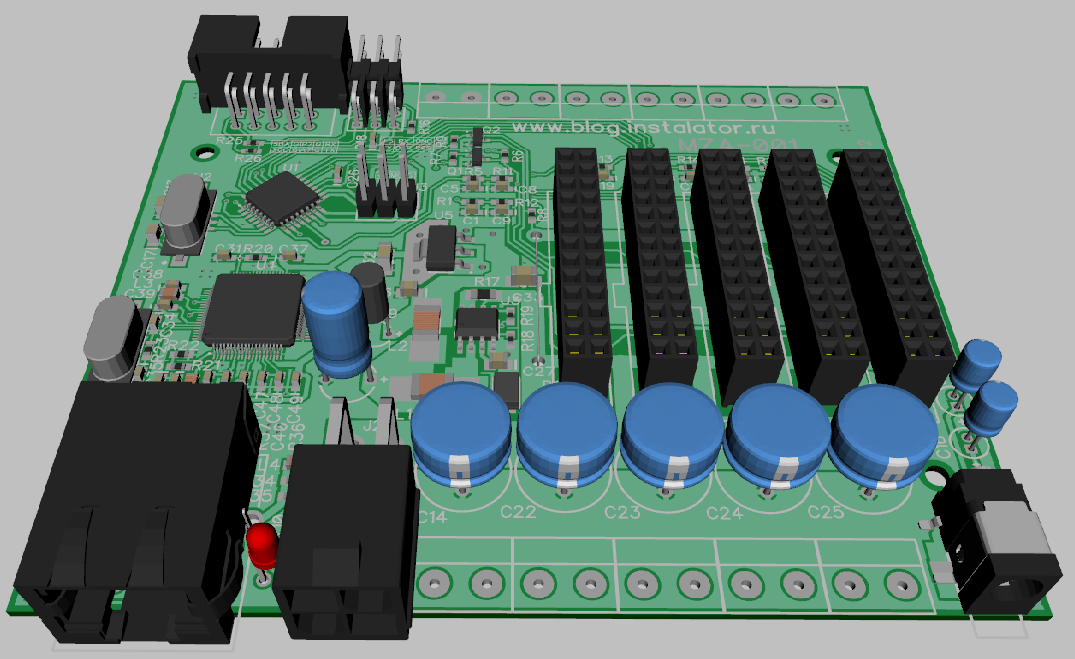
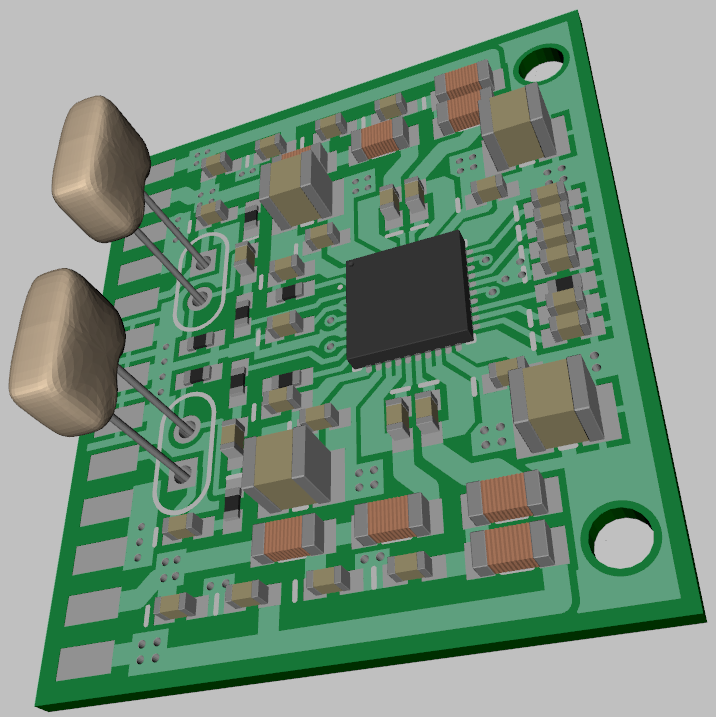
The brain of the amplifier is an ATmega328 microcontroller with an "Arduin" bootloader. The code is written in the Arduino environment. Amplifier control is organized via Ethernet using the MQTT protocol. Ethernet is assembled on a W5100 chip.
Boards for the amplifier ordered in China. It was the first experience of ordering boards in China, manufacturing and delivery took about a month. I am quite satisfied with the quality practically does not differ from those made in Russia, the only moment is a protective mask, it seemed to me not as strong as on boards from Russia. but this minor and not affecting the lack of anything can be ignored.
The base board of the amplifier.
Board with installed amplifiers
Another couple of photos from different angles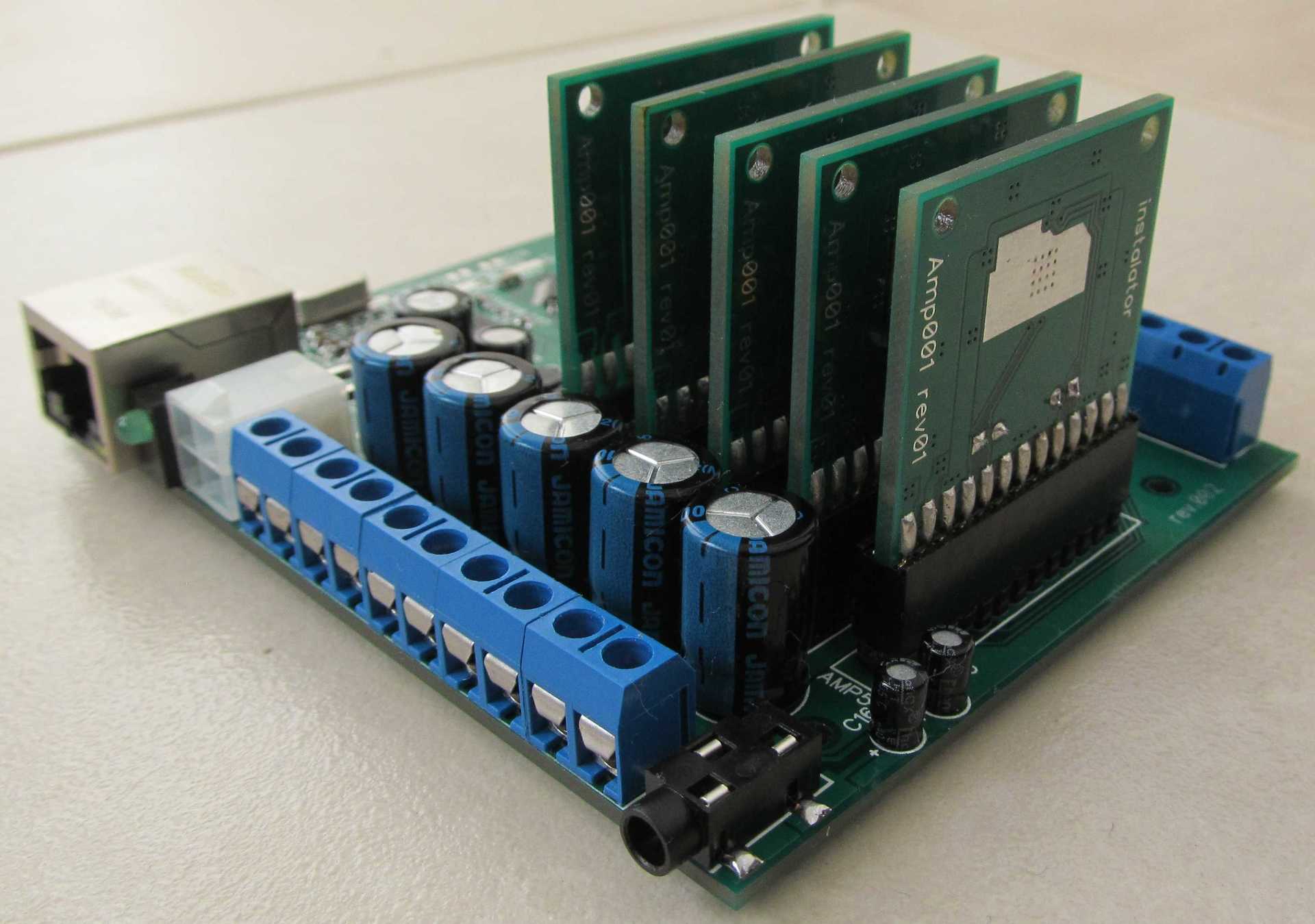

A little about the function of the amplifier. The amplifier has one audio input, which is parallelized to 5 amplifiers through capacitors. The Shutdown line of all amplifiers is combined into one circuit and serves to turn off all amplifiers, for example, when you turn on the script, no one is at home. The Mute input is used to enable and disable the sound of each amplifier independently. Adjusting the volume of each amplifier has 32 adjustment steps (from -75dB to + 33dB) is used to adjust the same volume level in different zones while storing values in the non-volatile memory of the microcontroller. There is also a common for all amplifiers input Fade, a smooth increase in sound when you turn off the Shutdown mode.
The server part of the IoBroker base is responsible for the logic of notifying and determining the amplifier enable zones .. Detection of the presence of people in the room is organized on motion sensors.
The sound quality of the PAM8610 chip is certainly not very good, there is a small high-frequency background, most likely from the built-in PWM. In Mute mode, the noise is completely absent. The microcircuit attracts low price, output power, low power consumption and low power dissipation.
The amplifier works for several months and is quite comfortable, for the "alert" more and not needed. If you need to improve the sound quality, it will be possible, without changing the main board, to put on it amplifier boards on a higher-quality microcircuit.
» The first part - the smart home, the beginning.
» Part Two - Bathroom Visitor Counter
» Part Three - Haier air conditioning control based on ESP8266