Dreame Unveils Its First 3-in-1 Purifier Fan Heater Halo, Entering the US Climate Tech Market
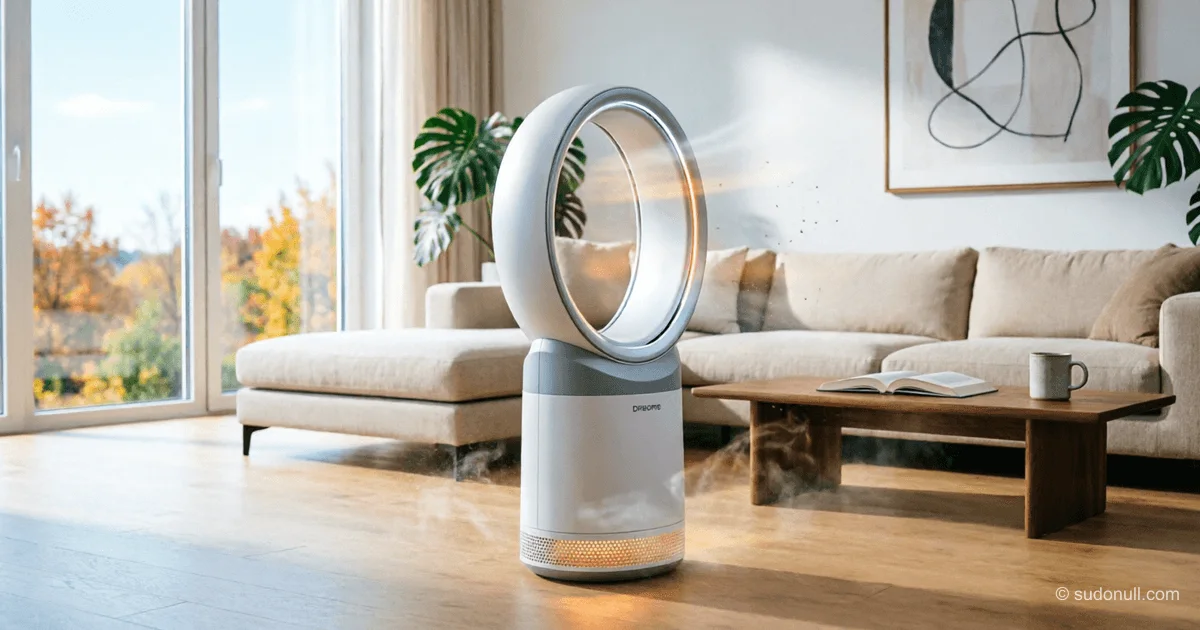
The "3-in-1" device combines fan, heater, and air purifier functions with a HEPA filter. The new product debuted at an exhibition in San Francisco and aims to provide year-round home comfort in a single gadget.
Dreame Halo and the Battle for Home Air: How a Chinese Brand Turns Three Gadgets into One and Targets the US Market
Introduction
In late April 2026, an event that can hardly be called an ordinary home appliance presentation unfolded in San Francisco at the famous Palace of Fine Arts. Chinese Dreame Technology, until recently primarily associated with robot vacuum cleaners, held a four-day conference DREAME NEXT, where it showcased not just new products but a holistic vision of the ecosystem for the next decade—from AI-powered refrigerators to a concept car with a rocket engine. Against this backdrop, the seemingly modest "3-in-1" device Dreame Halo turned out to be one of the most pragmatic and strategically significant announcements. The company officially entered the US climate tech market, offering a device that combines fan, heater, and air purifier functions—thereby challenging established players like Dyson.
Event Details and Timeline
The DREAME NEXT conference took place from April 27 to May 1, 2026, and became the largest in the company's history, founded in 2017. The presentation was structured around five thematic areas: Drive Next (mobility), Living Next (smart home), Connect Next (personal devices), Self Next (personal care), and Humanity Next (social responsibility). In total, the company presented over 100 technologies and covered six product lines with 180 SKUs.
During the session dedicated to home environmental appliances, Dreame announced three new products. The first is the FP10 air purifier, whose main feature is the world's first self-cleaning roller system designed for households with pets. The second is the MF10 bladeless fan, which by the time of the presentation had already taken first place among new products on Amazon. But the central product was the Dreame Halo, which made its global debut at this exhibition.
Halo is positioned as a three-function bladeless air purifying fan. The device provides a wide airflow with a 120-degree coverage angle, is equipped with a 2000W PTC heating element for warmth in cold seasons, and a three-stage HEPA filter for year-round air purification. A distinctive engineering detail is the robotic "arms" (movable louvers) that control the direction of airflow with high response speed.
The launch context is supported by financial indicators. Dreame's environmental tech division was founded in March 2025 and achieved revenue of USD 14.5 million in ten months, and USD 17.43 million for the full year 2025. In the first quarter of 2026, revenue grew 1,174% year-over-year, with the next milestone of USD 14.6 million reached in just 38 days.
Impact and Significance
The significance of the Dreame Halo is best understood by viewing it not as a standalone product but as a strategic tool for expansion into a market long dominated by one brand—Dyson. James Dyson's company practically invented the category of premium bladeless fan purifiers, and for years its products remained the only choice for consumers willing to pay for a combination of design and functionality. The arrival of Halo marks the entry of a second serious player into a category that was once a monopoly.
From a user experience perspective, Dreame promotes an approach known in consumer electronics as "de-complication." Instead of three devices taking up space, consuming electricity, and requiring maintenance, the consumer gets one. In American housing, where square footage is highly valued and interior aesthetics matter as much as functionality, this offer seems targeted and well-thought-out.
Most interesting is the economic arithmetic. The dealer price of Halo at launch has not yet been announced, but Dreame's general approach—aggressive price undercutting with comparable quality—is evident across all product categories. If Dreame manages to bring to market a device functionally comparable to the Dyson Purifier Hot+Cool but significantly cheaper, American consumers will have a real choice, and price pressure on the entire category will increase. Already, Dreame's environmental tech division revenue is growing more than 1,000% year-over-year, indicating sustained demand.
Also noteworthy is the aspect of cultural and market adaptation. Dreame emphasizes that its strategy for entering the US market is not based on mechanically transferring its product range but on carefully selecting products that match American user habits. Halo is a product that solves a universal problem (seasonal switching of climate appliances and air quality), and in that sense, it is minimally dependent on cultural specifics. This makes it an ideal tool for testing the US climate tech market.
Reactions from Key Players
There were no direct comments from Dyson or other competitors regarding Dreame's presentation, which is typical for the home appliance market—reactions to competitors' actions manifest not in statements but in pricing policies and the pace of product line updates.
Within Dreame itself, the event was presented as part of a much larger transformation. The company's global president, Zhang Xinwei, articulated the event's credo: "We founded Dreame on the belief that core technologies are the source of everything, and four days in San Francisco showed what results are possible when that belief is applied to the entire product ecosystem. DREAME NEXT is not the end of a strategy but the first chapter of Dreame's next ten years."
Notably, the conference featured figures such as Apple co-founder Steve Wozniak (who participated in a discussion about the future of mobile phones), Turing Award winner David Patterson, and former NASA rocket scientist Sylvia Acevedo. Gathering such speakers at a presentation by a Chinese home appliance brand signals ambitions that extend far beyond vacuum cleaners and fans.
Industry observers noted the company's cautious approach to bringing products to the US market. Dreame's North American marketing director, Yang Shu, explained in an interview: "Europe and the US, including the domestic Chinese market, have very different needs. We are acting cautiously, conducting strict SKU selection, and only launching products that match American consumer experience and habits."
Forecast and Conclusions
The Dreame Halo is a product where strategic significance is almost more important than technological innovation. A company that started a decade ago with a single product category is now building a full-fledged smart home ecosystem, and climate tech is the missing piece in that picture.
In the short term (one to two years), we can expect aggressive expansion of Dreame's presence in US retail chains. The company already has a flagship store in Silicon Valley, and by the end of 2026, it plans to cover all major US retail channels—from mass retailers like Costco and Best Buy to specialized stores. With its versatile functionality and premium positioning, Halo fits perfectly into the shelf space of these chains.
In the medium term (three to five years), the "3-in-1" category has the potential to evolve from a niche experiment into a standard. If Dreame can deliver performance comparable to Dyson at a lower price, the market may see a repeat of the scenario already played out in the robot vacuum market: Chinese brands first occupied the price segment below premium, then began to challenge leaders in the upper price range.
The main challenge is not technological but reputational. Older American consumers may still associate Chinese home appliance brands with quality compromises. Dreame is methodically overcoming this barrier through a combination of factors: placement in premium retail chains, participation of stars like Dwyane Wade in product demonstrations, and cooperation with Google in the field of AI.
The Dreame Halo is a case where mundane home appliances become indicators of tectonic shifts in the global industry. The boundary between "Chinese mass market" and "Western premium segment" is blurring, and a fan with a HEPA filter proves to be no less important a weapon in this battle than a concept car with a rocket engine.
— Editorial Team










No comments yet.