Due to lack of confidence in scientists, Italy may lose its olive trees.
The situation is aggravated by anti-GMO activists who claim that scientists have created genetically modified bacteria that infect trees.
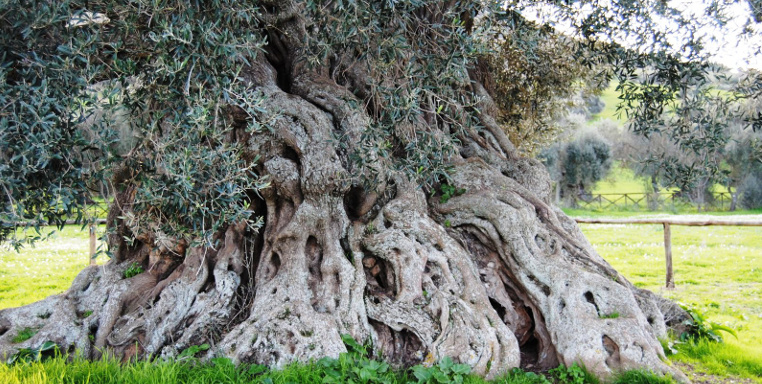
For Italians, old olive trees are practically members of the family.
Gram-negative rickettsie-like bacterium Xylella fastidiosa is being actively distributed in southern Italy . This bacterium is capable of infecting more than 200 species of plants that belong to 50 families. The bacterium affects, among other things, a number of crops: olives, grapes, almonds, peaches, plums, apricots, citrus fruits, coffee, and sunflower.
This bacterium has already infected more than 1 million olive trees in southern Italy. In total, there are about 50 million such trees. The region supplies about a third of all olives grown in the country. The varieties of olive oils that are produced here are considered among the best in the world. By the beginning of this year, the damage caused by the bacterium amounted to about 250 million euros. One of the main ways to combat the disease is cutting down and burning diseased trees. But local farmers resist this. They do not trust the scientific data, believing that their trees are going to be cut down for some other reason, the disease has nothing to do with it. Top conspiracy therapists, inventing a variety of theories.
If the resistance of farmers is not overcome, in a short time the epidemic will cover not only the whole region, but also other parts of Europe, which will lead to an agricultural crisis.
In the past, the bacterium was distributed mainly in the USA and Brazil. These countries have always had a plan that allowed them to confront epidemics in the most difficult years. The bacterium is usually transmitted by insects, and in these countries they fought against the vectors of the disease, took measures against diseased trees. In France, where a few years ago, olive trees and other crops were also victims of Xylella fastidiosa, authorities and farmers collaborate, and they are struggling with the problem here. But in southern Italy, the situation is quite different.
Here, olive trees are not only of agricultural importance. In the region for hundreds of years, olive trees are considered family members. Old trees belonging to certain families symbolize the families themselves and the antiquity of their kind. Destruction of trees causes violent protests of local residents, who organize demonstrations, use force to prevent liquidators of foci of diseases. And here, various conspiracy theories and conspiracy therapists flourish, offering a variety of explanations for why the authorities want to cut down trees.
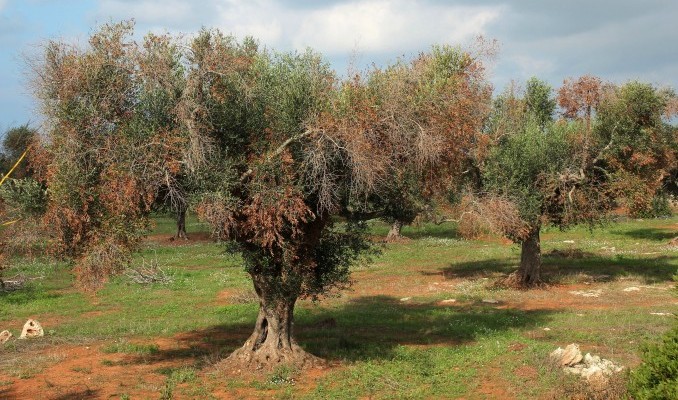
This is what bacteria-affected trees look like.
The situation is aggravated by the fact that it takes 12-14 months for the disease to manifest itself. Therefore, trees are also destroyed without symptoms of the disease. The most effective method is cutting and burning not only infected trees, but also all plants within a radius of 100 meters from the source of the disease. Naturally, such countermeasures cause significant damage to farms. Nevertheless, the bacterium has already struck hundreds of thousands of hectares of olive groves, including groves with very old trees, which are considered to be a landmark in the region. All this causes local protests and misunderstanding.
Nobody trusts scientists. Moreover, in southern Italy, activists are now active against GMOs. They claim that scientists are to blame for the spread of bacteria. Allegedly, it was scientists who created a certain strain of microorganisms that affects local trees.
This conviction is also supported by the 2010 case. Then local authorities considered that the bacteria were brought in by scientists for research purposes from California, USA. A case was brought against the scientists, which was considered in court. Subsequently, it turned out that the European strain was different from the American one, and the case had to be closed. But now the local population does not believe scientists, preferring to listen to anti-GMO activists and supporters of the conspiracy. The positions of these activists are now stronger than ever, because recently an Italian researcher with the help of fabricated evidence has shown that GMOs are harmful to mammals. The results of the study have been repeatedly refuted, but scientists and GMOs here are treated with prejudice .
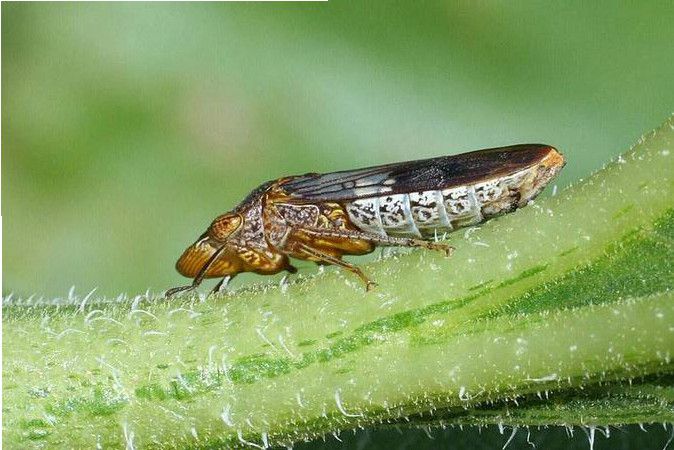
Insects, and not scientists, are real carriers of the disease.
All this leads to the fact that measures to combat Xylella fastidiosa, proposed by the European Union, cause disagreement among local politicians, farmers, ordinary citizens. But it is necessary to fight the bacterium - if this is not done now, when only in Italy more than 10% of the population of olive trees are affected by Xylella fastidiosa, then in a few years it will be too late. Not only Italy will have problems, but all EU countries, where agriculture and olive trees play an important role in the economy.
An example for Italians might be French farmers. For two years now they have been activeon uprooting and burning of Corsican olive groves, which also have many decades. This will avoid further spread of the disease. The French, among other measures, imposed a quarantine on the import of plants. And an important role in the whole process of fighting Xylella fastidiosa is played by scientists, to whose opinion both farmers and politicians listen.