How we helped transform the work of accounting in a large energy company
We have written several times about how our technologies help various organizations and even entire states process information from any type of document and enter data into accounting systems. Today we’ll tell you how ABBYY FlexiCapture was implemented in one of the largest Russian energy companies. For convenience, we call it the "Big Company".
Imagine yourself as a regular accountant. We understand, this is not easy, but still try. Every day you receive a huge amount of paper bills, invoices, certificates and so on. And especially a lot - on the days before reporting. All details and amounts must be quickly and carefully checked, reprinted and entered into the accounting system, manually conduct transactions and send documents to the archive, so that later they can be submitted to internal auditors, the tax service, tariff regulation authorities and others for verification in time. Difficult? But this is a long-standing business practice that exists in many companies. Together with the Big Company, we simplified this painstaking work and made it more convenient. If you are interested in how it was, welcome to cat.

The Big Company in Moscow has many branches. The company buys a lot of equipment and services for economic activity: about 2000 purchases per year. Paperwork in each unit initiating procurement is carried out by special employees - curators of contracts.
How is the execution of contracts in a large company? When the curators enter into an agreement, they receive from the counterparty many important paper documents: waybills, acts of rendering services, invoices, certificates, etc. Usually, the curator scans business papers and then attaches scans to the order in the enterprise resource management system. The financial controller manually checks all the data. After that, the curator takes the original documents to the accounting department. Or a courier does this, and then moving documents may take longer - from a few hours to a couple of days.
And all would be fine, but in the Big Company, as in many other companies:
As the accounting scheme at the Big Company used to look like:
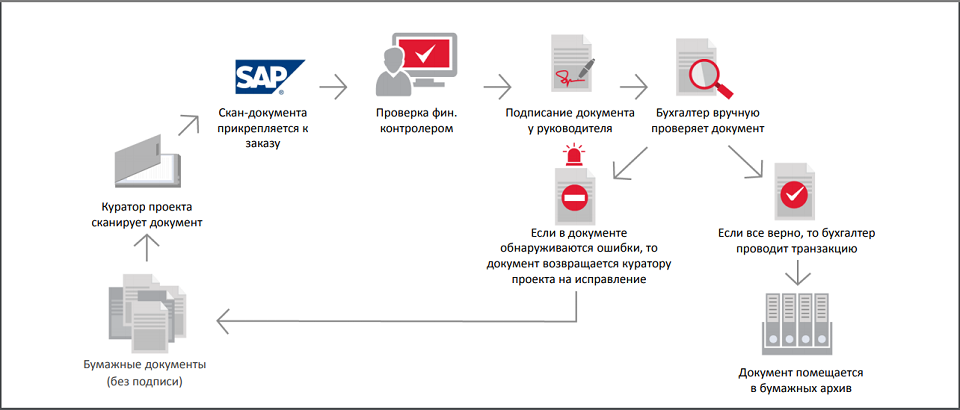
The Big Company was the first in the energy industry to decide to restructure and simplify this scheme in order to quickly close deals and submit reports, better evaluate market changes during purchases and plan its financial strategy. Alone, alone, to change the long-standing established accounting work scheme was not easy, so the company decided to transform it together with its partner - ABBYY.
The ABBYY team of specialists introduced the ABBYY FlexiCapture universal platform for intelligent information processing into Big Company and set up:
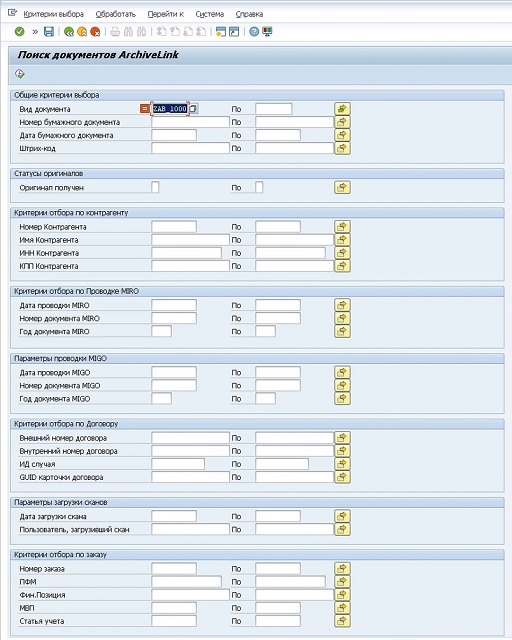
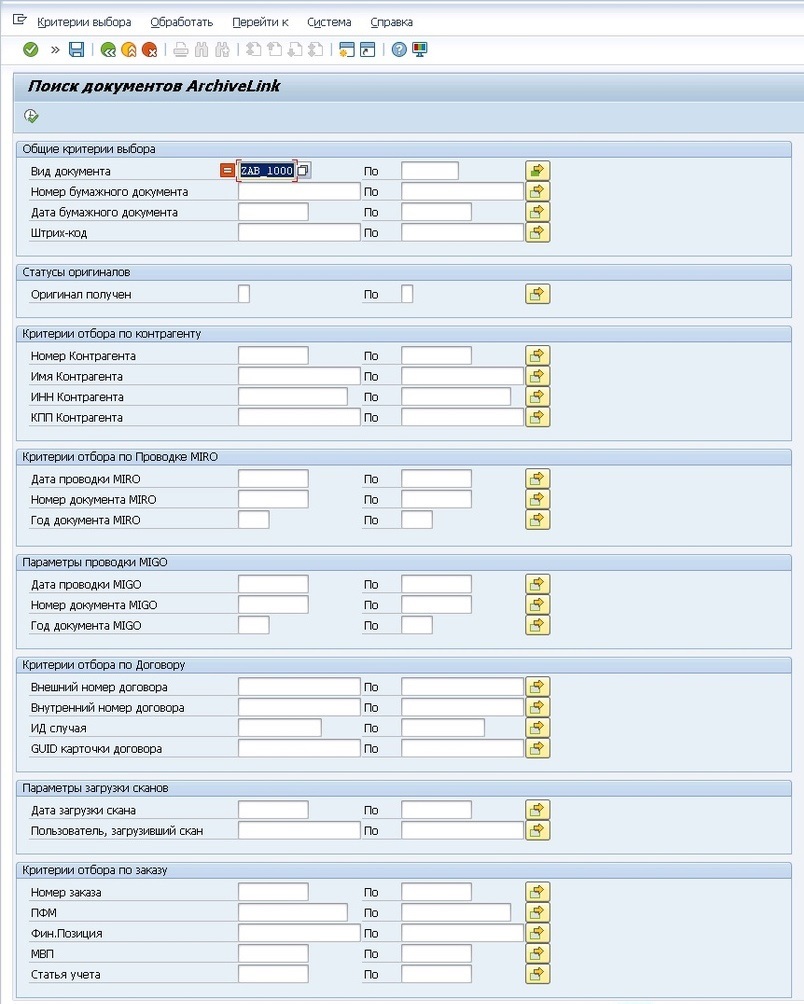
Then, ABBYY and Big Company employees developed a search form so that the accountant could quickly find important accounts by any attribute in the electronic archive and provide them for tax inspections.
The search is possible according to 26 different criteria (the picture is clickable): After the Big Company successfully tested the entire system, it was put into operation. The entire project, including approval, clarification and refinement, was implemented in 10 months. The scheme of work after the introduction of ABBYY FlexiCapture in the Big Company: Does it seem to you that nothing has changed? Yes, the business process has remained the same, just most of the functions are now performed by the machine.
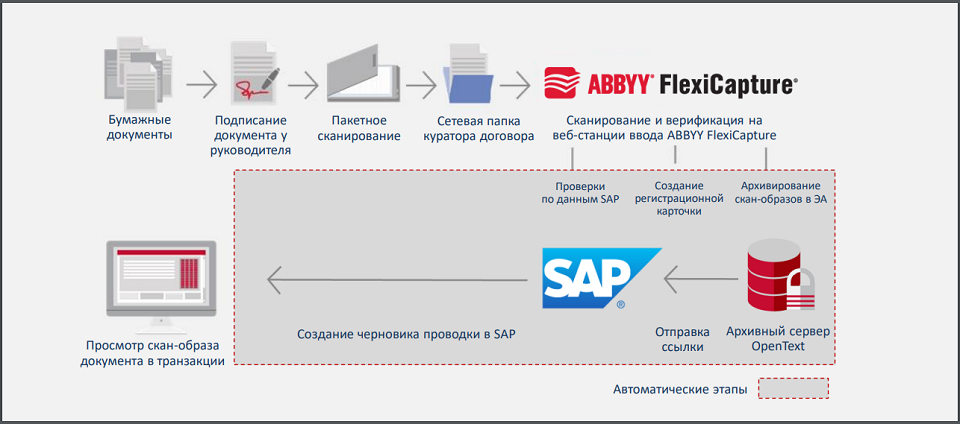
How are things now? Suppose the curator of the contract received a set of primary documents on a deal for the supply of pumps for a thermal power plant, or, for example, the construction of heating networks. The specialist no longer needs to check the completeness and content of the documents himself, call the courier and send the original documents to the accounting department. The curator simply scans the signed set of primary documents, and then the technology sets in.
Using a network scanning system, an employee sends scans in TIFF or PDF format to his hot folder or to mail. He then opens the ABBYY FlexiCapture input web station and selects the type of document set to process. For example, “purchase of works / services with agent remuneration”, “receipt of material and technical resources (MTR)” or “accounting for property”.
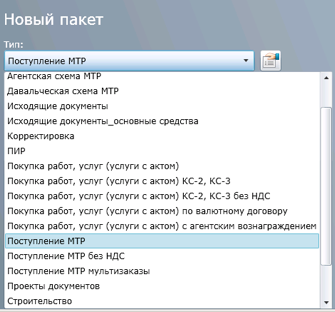
The type and quantity of types of necessary documents and data that the system should classify, recognize and verify depends on the type of kit.
The curator downloads scans for recognition. The system automatically checks the availability of all documents, the contents of each paper, and the server recognizes details - the date of the contract, amount, address, TIN, KPP and other data. By the way, Big Company is the first energy company in Russia to use this approach.
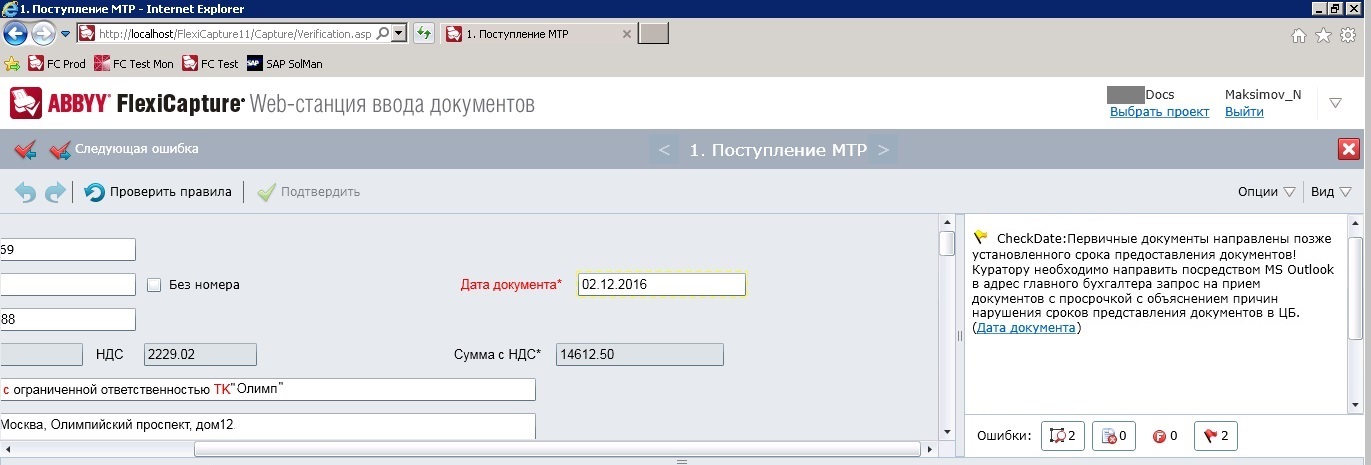
If the curator did not download all the documents or not all the data is indicated on some invoice, the system notices this and immediately asks the employee to correct the error:
The systemswears and asks to add the missing documents (hereinafter the screenshots are clickable): The system noticed that the document has expired:
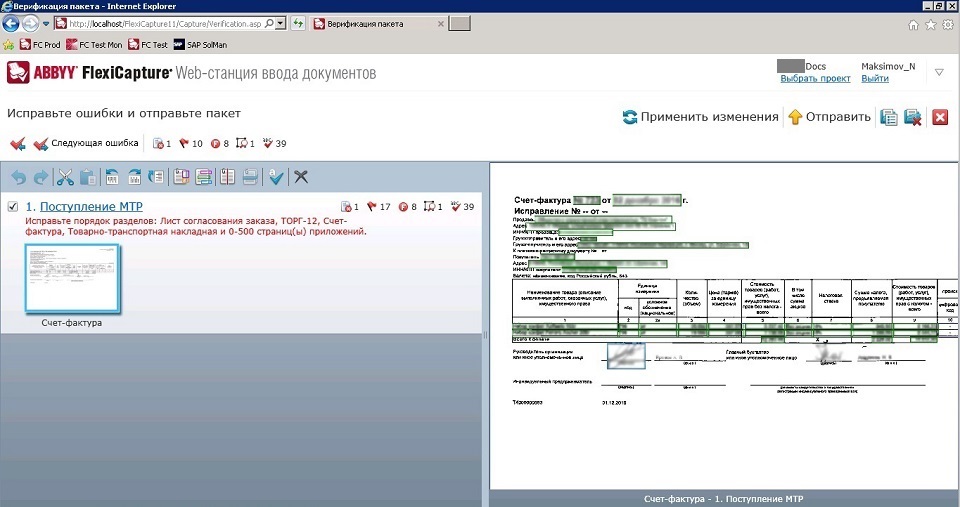

Thus, the employee no longer needs to determine whether the document is correctly executed. If everything is correct, then most of the data checks automatically happen right at the input web station. Just enter the order number specified in SAP ERP. After that, the recognized data is compared with the information processed in SAP: TIN and checkpoint of the counterparty, contract numbers and amounts, VAT, product or service nomenclature. Processing and verification of one document takes only a couple of minutes.
According to the details - TIN and KPP - you can select the company from the directory:

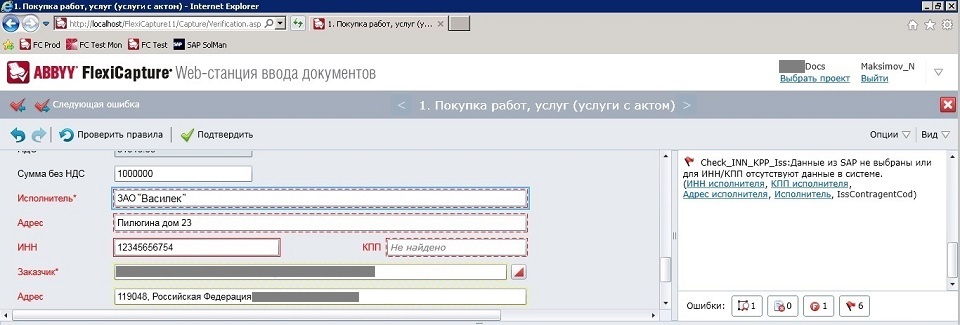
If there is an error in the invoice or invoice, then it will not skip the document for export to the archive. For example, if a document is incorrectly composed or one of the characters is incorrectly recognized, the system will indicate this and ask the employee to correct all inaccuracies. Let us give an example:
The system found that CJSC Vasilek is not included in the list of suppliers of the Big Company. This allows employees to track errors even before the document has entered accounting. If all the checks are successfully passed, then in one click the scanned copy of the document is sent to the OpenText electronic archive, and a link and a card with its metadata appear in SAP. The accountant or curator can always look in the electronic archive for a list of documents for the desired order and information on who, in what time frame, with what result processed the documents.
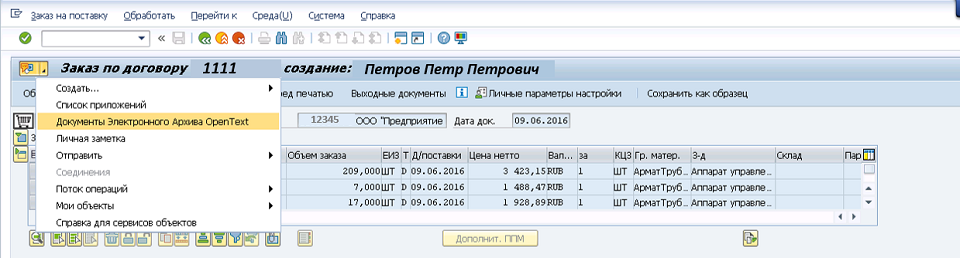
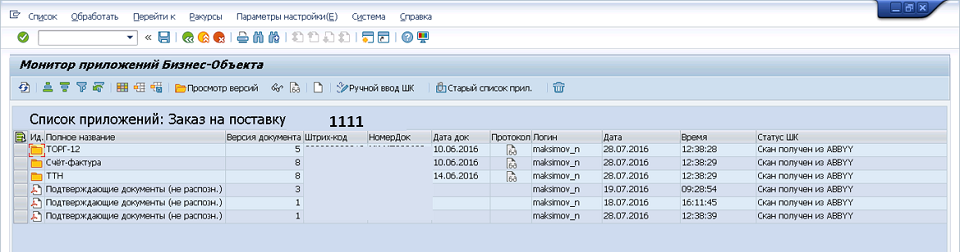
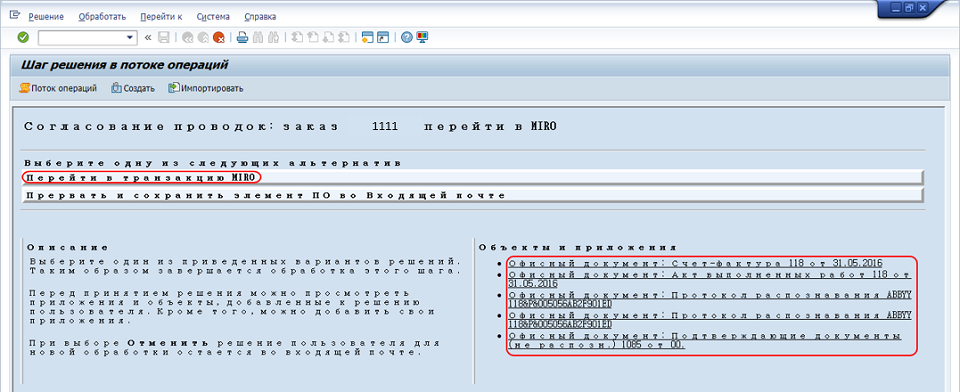
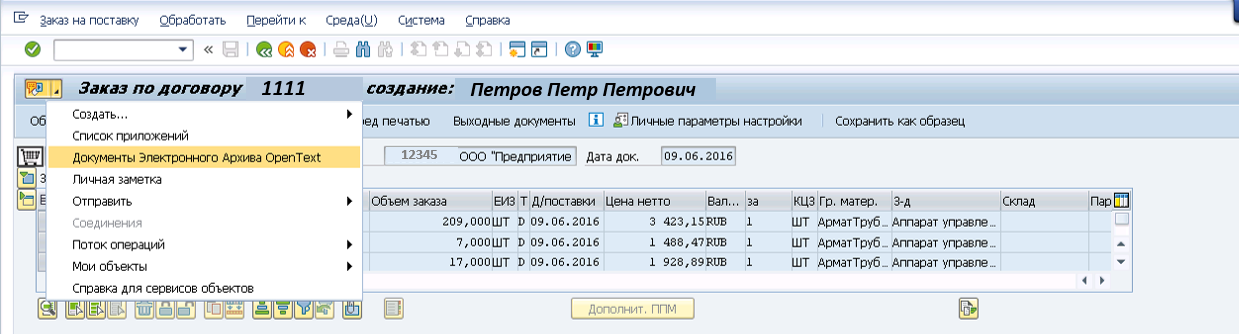
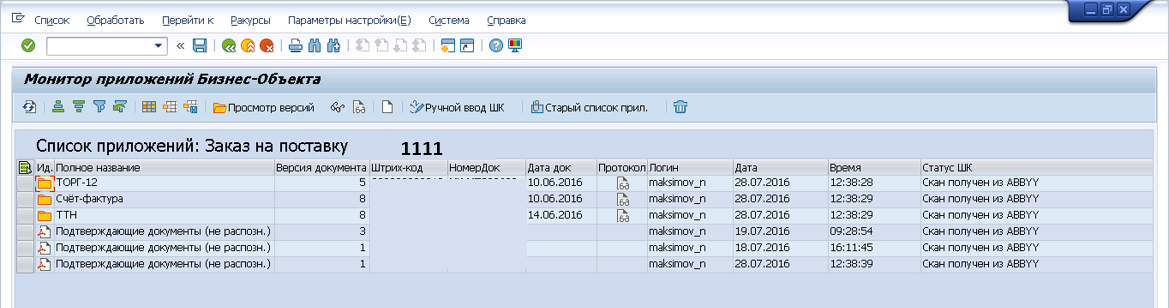
Petr Petrovich looked into the electronic archive, ... ... to see who uploaded the documents for order No. 1111. After uploading data and scans from ABBYY FlexiCapture to SAP, a draft draft appears with pre-filled data and links to scan documents. Draft posting: Then, the accountant receives an alert in the mail with a link to the finished draft and scans. The specialist no longer needs to suffer with paper. He can only verify in scans the total amount of the transaction, the presence of a seal, a signature and post. The accountant now spends less than a minute on her.
Big Company has been using ABBYY FlexiCapture for 2 years and collected statistics during this time. It turned out that accountants make 95% of the postings without making changes to the drafts. And this means that in the future such transactions can be skipped completely automatically. It so happened that this product was actually the first step of the company on the path to introducing elements of “artificial intelligence” into the company's business processes: Big Company is developing a corresponding program for itself.
Other Russian companies also automate the work of accounting: make it simpler and more convenient. For example, using ABBYY technology, the financial control service of Khlebprom»2 times faster receives important business information and spends 20% less time searching for the right invoices and waybills. Intelligent information processing technologies help the accounting staff of the Rust holding instantly find the necessary financial documents during mass tax audits. In 2019, the company's specialists plan to process about 10 million pages of documents.
Elizaveta Titarenko,
editor of the corporate blog ABBYY
Imagine yourself as a regular accountant. We understand, this is not easy, but still try. Every day you receive a huge amount of paper bills, invoices, certificates and so on. And especially a lot - on the days before reporting. All details and amounts must be quickly and carefully checked, reprinted and entered into the accounting system, manually conduct transactions and send documents to the archive, so that later they can be submitted to internal auditors, the tax service, tariff regulation authorities and others for verification in time. Difficult? But this is a long-standing business practice that exists in many companies. Together with the Big Company, we simplified this painstaking work and made it more convenient. If you are interested in how it was, welcome to cat.
The Big Company in Moscow has many branches. The company buys a lot of equipment and services for economic activity: about 2000 purchases per year. Paperwork in each unit initiating procurement is carried out by special employees - curators of contracts.
How is the execution of contracts in a large company? When the curators enter into an agreement, they receive from the counterparty many important paper documents: waybills, acts of rendering services, invoices, certificates, etc. Usually, the curator scans business papers and then attaches scans to the order in the enterprise resource management system. The financial controller manually checks all the data. After that, the curator takes the original documents to the accounting department. Or a courier does this, and then moving documents may take longer - from a few hours to a couple of days.
And all would be fine, but in the Big Company, as in many other companies:
- Papers may be submitted to accounting several days before reporting. Then accountants have to spend the night and sleep at the workplace. It is necessary to manually check whether all accounts, invoices, etc. are filled in correctly. Then, if everything is correct, the employee re-prints the data into the accounting system and makes postings. At the same time, 90% of the accountant’s time is reprinting data - details, amounts, dates, item numbers, etc. Because of this, there is a risk of making a mistake.
- Documents may come already with errors. And sometimes there are not enough accounts or certificates. Sometimes this is clarified in the last days before reporting. Because of this, the timing of approval of documents may be delayed.
- After posting, accountants store invoices, invoices and acts in separate paper and electronic archives. Why is this causing difficulties? When the next state or tax audit comes to accounting, employees have to look for documents for a long time.
As the accounting scheme at the Big Company used to look like:
The Big Company was the first in the energy industry to decide to restructure and simplify this scheme in order to quickly close deals and submit reports, better evaluate market changes during purchases and plan its financial strategy. Alone, alone, to change the long-standing established accounting work scheme was not easy, so the company decided to transform it together with its partner - ABBYY.
No sooner said than done
The ABBYY team of specialists introduced the ABBYY FlexiCapture universal platform for intelligent information processing into Big Company and set up:
- Flexible descriptions (data extraction templates) for processing documents. About what it is and for what we needed, we spoke in detail on Habré here and here . “Big Company” processes with the help of a solution more than 30 types of documents (for example, a certificate of installed equipment or a certificate for agent remuneration) and extracts from them more than 50 attributes (document number, total amount with VAT, name of buyer, seller, contractor, quantity of goods and etc.);
- a connector for checking and uploading data, which connected ABBYY FlexiCapture, SAP and OpenText. Thanks to the connector, it became possible to automatically check the data from the order and contract for various directories. We will talk about this below;
- export of documents to an electronic archive based on OpenText. Now all scans of documents are stored in one place;
- Draft accounting entries in SAP ERP with links to scan documents.
Then, ABBYY and Big Company employees developed a search form so that the accountant could quickly find important accounts by any attribute in the electronic archive and provide them for tax inspections.
The search is possible according to 26 different criteria (the picture is clickable): After the Big Company successfully tested the entire system, it was put into operation. The entire project, including approval, clarification and refinement, was implemented in 10 months. The scheme of work after the introduction of ABBYY FlexiCapture in the Big Company: Does it seem to you that nothing has changed? Yes, the business process has remained the same, just most of the functions are now performed by the machine.
Posting done!
How are things now? Suppose the curator of the contract received a set of primary documents on a deal for the supply of pumps for a thermal power plant, or, for example, the construction of heating networks. The specialist no longer needs to check the completeness and content of the documents himself, call the courier and send the original documents to the accounting department. The curator simply scans the signed set of primary documents, and then the technology sets in.
Using a network scanning system, an employee sends scans in TIFF or PDF format to his hot folder or to mail. He then opens the ABBYY FlexiCapture input web station and selects the type of document set to process. For example, “purchase of works / services with agent remuneration”, “receipt of material and technical resources (MTR)” or “accounting for property”.
The type and quantity of types of necessary documents and data that the system should classify, recognize and verify depends on the type of kit.
The curator downloads scans for recognition. The system automatically checks the availability of all documents, the contents of each paper, and the server recognizes details - the date of the contract, amount, address, TIN, KPP and other data. By the way, Big Company is the first energy company in Russia to use this approach.
If the curator did not download all the documents or not all the data is indicated on some invoice, the system notices this and immediately asks the employee to correct the error:
The system

Thus, the employee no longer needs to determine whether the document is correctly executed. If everything is correct, then most of the data checks automatically happen right at the input web station. Just enter the order number specified in SAP ERP. After that, the recognized data is compared with the information processed in SAP: TIN and checkpoint of the counterparty, contract numbers and amounts, VAT, product or service nomenclature. Processing and verification of one document takes only a couple of minutes.
According to the details - TIN and KPP - you can select the company from the directory:
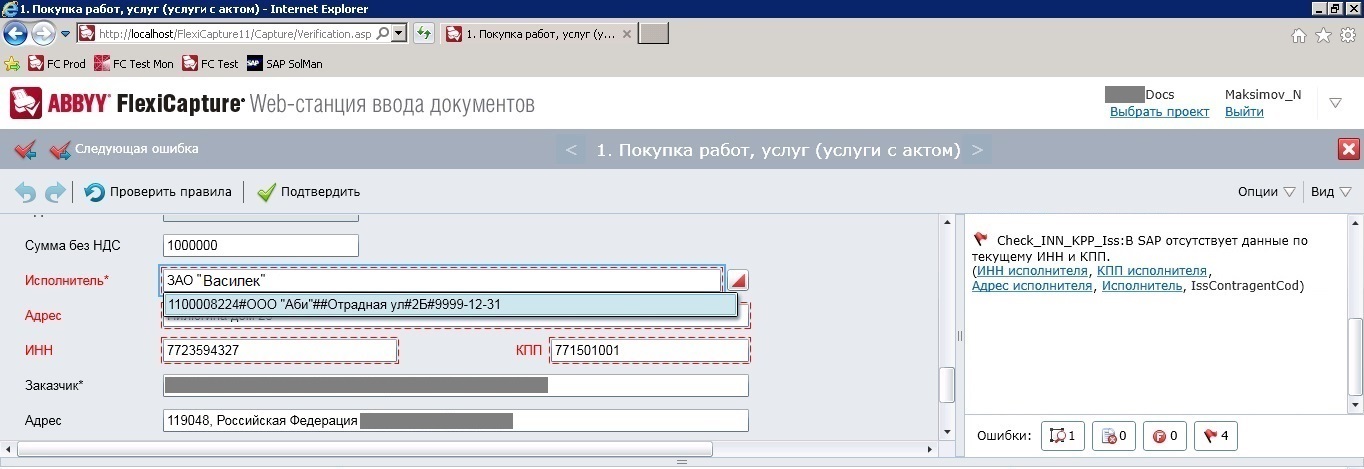
If there is an error in the invoice or invoice, then it will not skip the document for export to the archive. For example, if a document is incorrectly composed or one of the characters is incorrectly recognized, the system will indicate this and ask the employee to correct all inaccuracies. Let us give an example:
The system found that CJSC Vasilek is not included in the list of suppliers of the Big Company. This allows employees to track errors even before the document has entered accounting. If all the checks are successfully passed, then in one click the scanned copy of the document is sent to the OpenText electronic archive, and a link and a card with its metadata appear in SAP. The accountant or curator can always look in the electronic archive for a list of documents for the desired order and information on who, in what time frame, with what result processed the documents.

Petr Petrovich looked into the electronic archive, ... ... to see who uploaded the documents for order No. 1111. After uploading data and scans from ABBYY FlexiCapture to SAP, a draft draft appears with pre-filled data and links to scan documents. Draft posting: Then, the accountant receives an alert in the mail with a link to the finished draft and scans. The specialist no longer needs to suffer with paper. He can only verify in scans the total amount of the transaction, the presence of a seal, a signature and post. The accountant now spends less than a minute on her.

Project Summary
- Using ABBYY technologies, Big Company simplified and accelerated not only accounting, but also financial control. To make a posting, employees no longer need to wait for the courier with the original documents - just one click to get a scan with the already verified data from the electronic archive. True, a paper document is still needed. But now it can be sent to accounting later. When he arrives there, the employee will put a tick in the accounting system “Original received.”
- Employees immediately receive all the necessary data about the transaction from scans, make timely entries and prepare all documents for reporting in advance. Now they are not afraid of either internal or external checks.
- Accountants conduct financial transactions 3 times faster, and Big Company closes the reporting period 10 days earlier.
- All branches of the Big Company store accounting documents in a single electronic archive. Thanks to this, you can find any invoice, contract or act of work performed, as well as any attributes from them (amount, VAT, product or service nomenclature) 4 times faster than before.
- The solution processes over 2.6 million pages of documents per year.
Instead of a conclusion
Big Company has been using ABBYY FlexiCapture for 2 years and collected statistics during this time. It turned out that accountants make 95% of the postings without making changes to the drafts. And this means that in the future such transactions can be skipped completely automatically. It so happened that this product was actually the first step of the company on the path to introducing elements of “artificial intelligence” into the company's business processes: Big Company is developing a corresponding program for itself.
Other Russian companies also automate the work of accounting: make it simpler and more convenient. For example, using ABBYY technology, the financial control service of Khlebprom»2 times faster receives important business information and spends 20% less time searching for the right invoices and waybills. Intelligent information processing technologies help the accounting staff of the Rust holding instantly find the necessary financial documents during mass tax audits. In 2019, the company's specialists plan to process about 10 million pages of documents.
Elizaveta Titarenko,
editor of the corporate blog ABBYY