February 28, 2019 at 15:18
Antiquities: twenty year old floppy disk camera
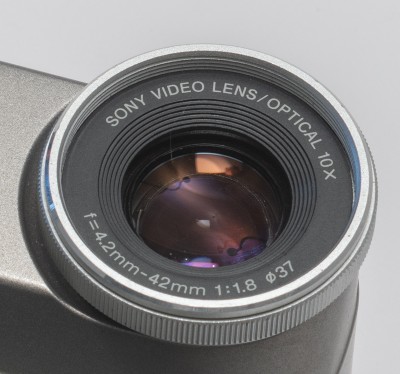 In 1998, I hopelessly dreamed of two gadgets: a handheld computer (with a keyboard, then there were almost no others) and a digital camera. I had no chance to buy either, but there was a plan , and with regard to the camera, the choice was definitely in favor of devices that write digital photos to floppy disks. Why? Very simple: memory cards were expensive, and floppy disks - here they are, in quantities. Plus, compatibility with any computer was provided without any wires.
The advantage of my vintage hobby is that all dreams come true, you just have to wait a little (ten to twenty years). Recently, I bought a twenty-year-old device quite inexpensively - a Sony Digital Mavica MVC-FD71 digital camera with a 0.3-megapixel sensor and a diskette drive. She in 1998 was not the best representative of the new generation of cameras, but from 2019 there is no fundamental difference. Expecting something completely unusable in modern conditions, I was pleasantly surprised.
I keep a diary of a collector of old pieces of iron in real time in a Telegram . This article is also published here in a format compatible with most older computers (there are still a bit more samples from the camera there).

In an advertisement from PC Magazine 1999, Sony offers four floppy camera models. FD71 - second from the bottom for the price. 700 dollars of those years is a little more than a thousand modern ones, or the cost of a good mid-level mirrorless camera. By 1998, more than 50 digital camera models were assigned to this site, and for about the same money you could buy, for example, the Casio QV-7000SX with a 1.3 megapixel sensor. Nearby advertising gives an idea of the prices of memory cards:

133 dollars for 48 megabytes, or a reasonable 16 megabytes for fifty. It seems to be inexpensive - 10% of the cost of the camera itself, but twenty years ago a life hack with floppy disks seemed to me a win-win option (given that I couldn’t acquire anything of the above). The main means of photographing in the late nineties were film soap dishes, in favor of which I even refused the Soviet cameras that were available in the assortment. In fact, in vain, now historical photos would be much better. The film had to be bought, then taken to the laboratory, where it would be shown and printed to you for money. Digital photography promised independence from photolarkov and the absence of additional costs, instant results, and besides - it was progress!

In January 1999, PC Magazine conducted a comparative test of digital cameras. The older model of the series, FD81, gets the editorial choice (she even knows how to shoot video!). If you had a lot of money in 1998, you could buy the Canon EOS D6000 . This digital SLR camera was developed at Kodak (the first camera of its own design, Canon EOS D30, will appear only in 2000) and had a 6-megapixel CCD-matrix. The megapixel race seems to have begun then, and ended somewhere at the beginning of this decade. At the beginning of the millennium, three megapixels were already considered sufficient for any task, although if you take a camera of those times and modern, it will become clear that it is not only a matter of resolution.
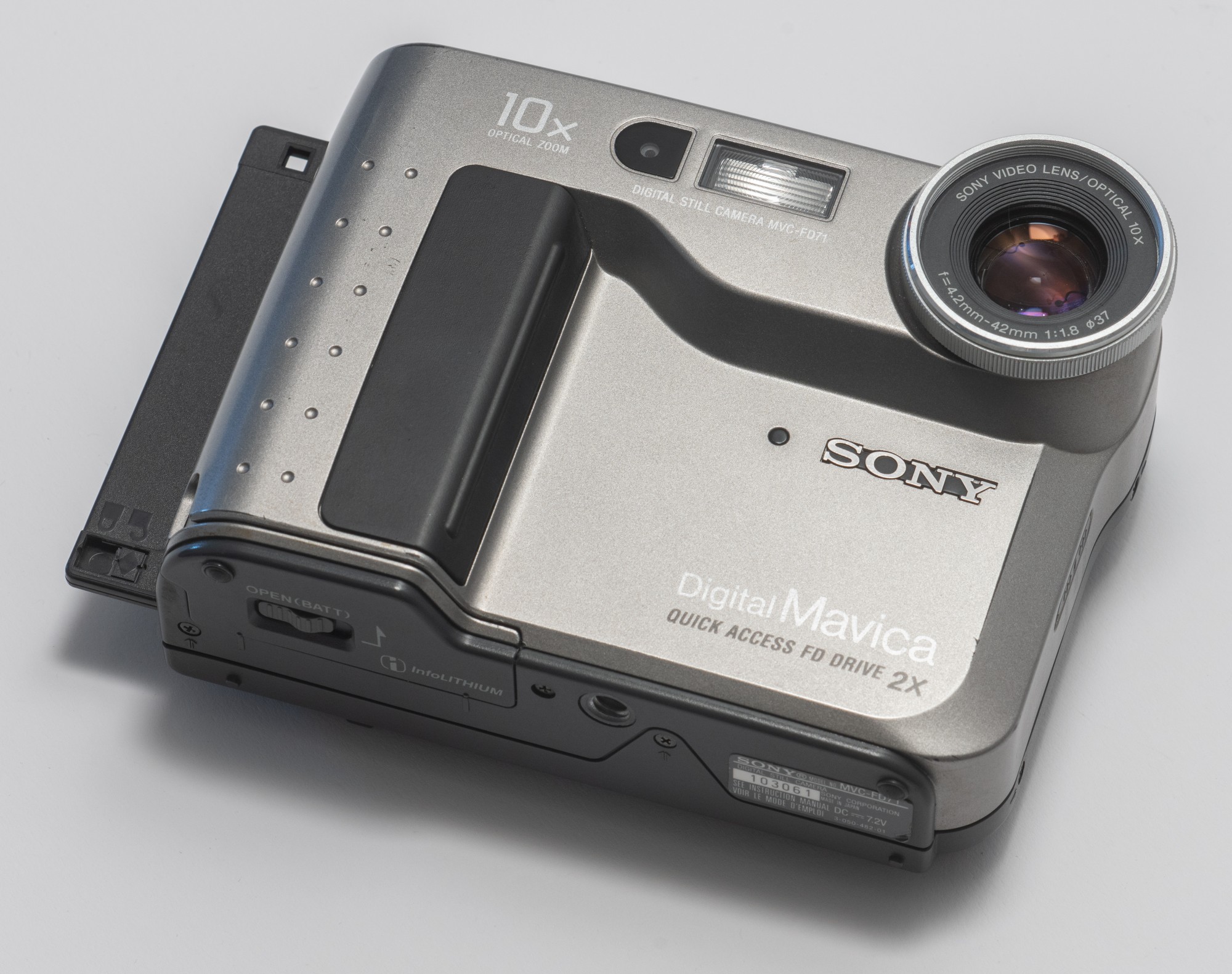
Back to Sony. I bought it according to the "beggarly" method. Usually, when you are looking for a specific model, and even preferably in good condition, even the oldest junk is relatively expensive, and no one guarantees the device’s performance. Several times, I bought seemingly well-preserved devices in a box with accessories for decent money, and found that they were, to put it mildly, far from ideal. Therefore, you can act differently and choose the cheapest lot, and see what happens. It often happens that these penny devices work better than expensive ones.
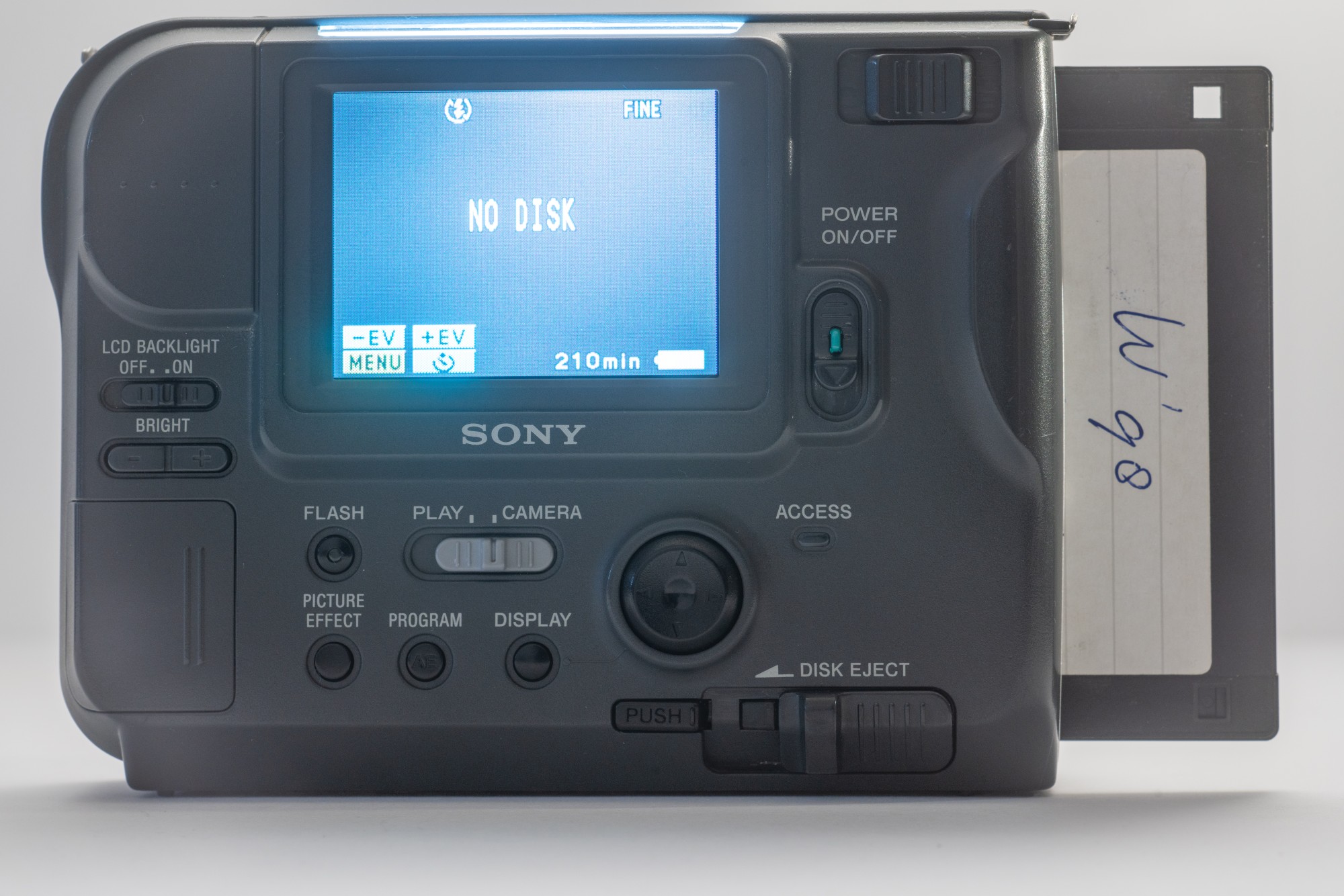
And so it happened. The camera arrived in a bag, with a new, working battery (non-original, the original one was also, and it worked, but not for long). Judging by the wiped display, she was clearly loved and often used. This is not a museum exhibit, but everything works in it. Incredible reliability. To save battery, a separate switch could turn off the screen backlight. The display is highlighted through a special window on the upper edge, and in sunny weather there is enough such natural light (but still inconvenient). The controls, let’s say so, are basic: there is a button for disabling the flash, a switch for shooting and playback modes, a button for (terrible) photo effects (sepia, negative image, etc.). You can enter the menu with the joystick, and in shooting mode it adjusts exposure compensation. There’s a switch on the side, allowing you to manually adjust the focus of the ring on the lens. There is no manual control of shutter speed and aperture, only through “shooting modes”.

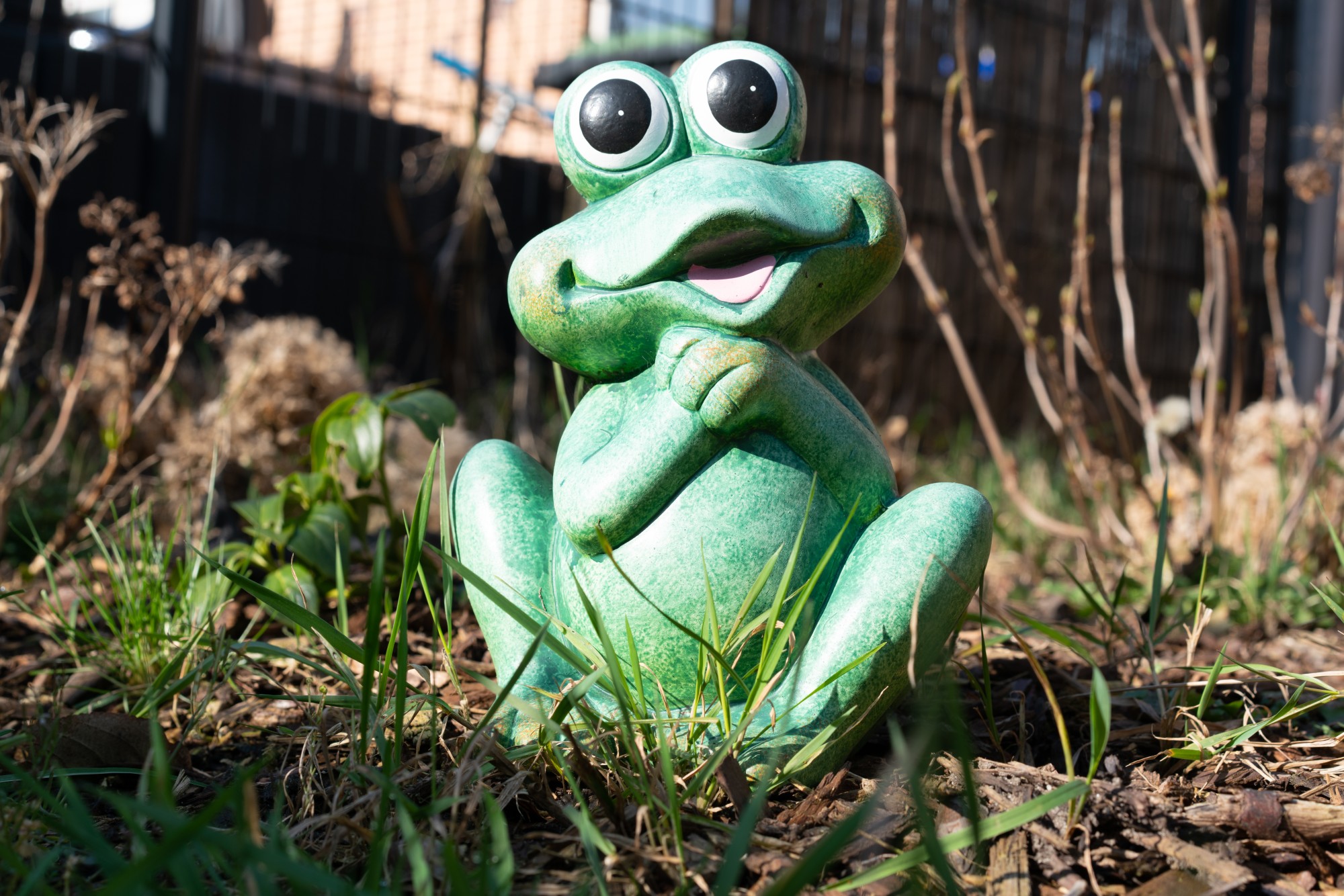
But all this in 2019 is not very important. In 2019, the coolest thing is to insert a floppy disk into this weighty device, press the shutter button and hear the divine sounds of the recording. And the photos are something like this:

By modern standards, everything is missing: the resolution, the dynamic range, and the quality of the optics, but the photos are far from being as terrible as I imagined. The file size in standard mode is from 40 to 100 kilobytes, and from 10 to 20 photos will fit on one diskette. Again, compared to 36 frames of film, this is normal, especially since I did not experience a lack of floppy disks either then or now. Going on a trip with such a camera, you yourself can decide how many pictures you need and take the appropriate number of diskettes. But this is a standard mode, but there is still a quality one: the camera writes a picture in uncompressed BMP format. This is probably the closest analogue to modern shooting in RAW.

In this mode, everything becomes very bad. Instead of 3-5 seconds, the camera writes the picture to a floppy disk for about a minute. The size of the photograph is about 900 kilobytes, which means that only one frame is placed on a standard diskette.

This is the best that a camera of twenty years ago can offer. How is it compared to modern devices? For good, the Sony Mavica camera needs to be compared with smartphones. They almost completely replaced compact cameras, provide very good quality, and cost about the same (and can do more). You can compare with compact cameras of our time, for example with the same Sony RX100. But I decided not to save on pixels and made a comparison with the Sony A7R II mirrorless camera. Not fair? Perhaps, but clearly.
A JPEG photo with an original 43-megapixel resolution weighs 19 megabytes, 14 floppy disks will be required for one. If you shoot in RAW, then you need 29 floppy disks. It’s not only a matter of resolution, the contribution of a better lens and a full-frame matrix is noticeable: the photo from the “soap box” with crop factor in the region of 10 is too flat. However, what else could you expect? I want to compare cameras in one shot, but it's not easy. Sony Digital Mavica derives its pedigree from camcorders, so the aspect ratio of the pictures (as well as the resolution) is television, 4: 3. Sony's modern digital camera shoots in a 3: 2 format. It’s best to compare on some flat object: you can bring the resolution of the “old” photo to a new one and align the two photos in Photoshop.

Photoshop distorted the perspective a bit, aligning both photos, but still the difference is very noticeable. In both cases, only fragments of the frame were used. This is about how to photograph Jupiter through a telescope from the Earth and using the Cassini spacecraft . Here is twenty years of progress in digital photography!

In the context of the late nineties, Digital Mavica is not the best technically, but reliable and quite convenient to use digital camera. It has tenfold optical zoom (the photo above is at maximum), a sufficient set of features for everyday photography, and the most convenient way to transfer photos to a computer. We can say that even for similar money, even then there were better instances. But then it could be said. If I set off a time machine twenty years ago, which digital camera would I choose?

None, and this is such an interesting feature of digital photography in the context of my obsolete hobby. My subjective opinion is that cameras are comparable to film in the quality of photographs (I'm not talking about convenience, and not about creative possibilities, but about technical parameters), the earliest ones appeared in the mid-to-late zero. This is, for example, the 12-megapixel Nikon D90 of 2008 or the first "people's" full-frame Canon 5D SLR of 2005. Even they, in comparison with modern photographic equipment, seem like dinosaurs. In the late nineties, I would probably shoot on film, not a soap box of course, but with the help of a SLR camera. Or even Zenith or Fed-5V. To some, the film still seems more attractive to numbers, but now it is more a matter of taste and creative preferences, rather than some real advantage.

But the floppy camera has one nice feature that it surpasses many modern cameras - the almost complete absence of lag between the matrix and the display. Everything that you see on the screen, happens almost in real time. In addition, if you need to copy a diskette, and for several reasons this is your only device with a drive, the camera allows you to do this through its own buffer. A digital camera of the late nineties is a big set of compromises, and this model in general, apparently, is a video camera without a cassette mechanism. This is an interesting artifact of the end of the last century, a harbinger of a new world in which digital photography is something universal and taken for granted. In a sense, a useless exhibit, but despite the complex drive mechanism, this camera can very well survive my modern devices. For at least twenty years, the flight is normal.