February 16, 2016 at 11:58
Iranian youth avoids morale police via mobile app
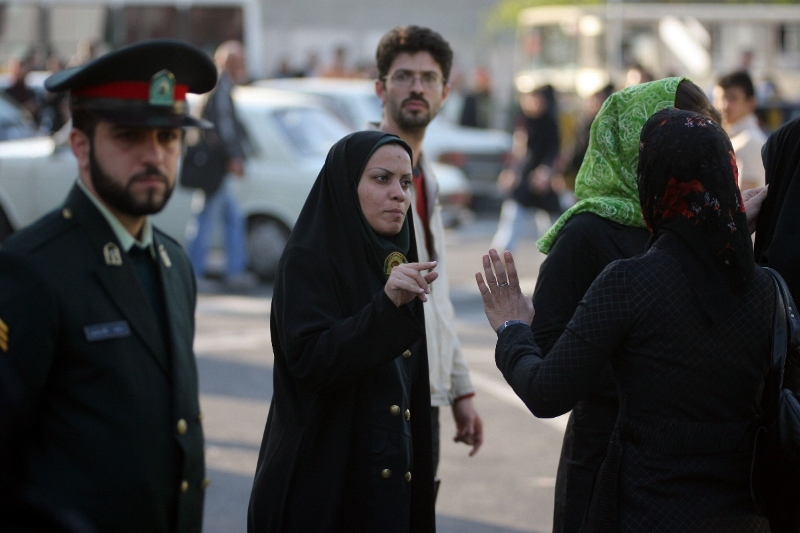
Moral police at work A new smartphone application called Gershad is rapidly gaining popularity in Iran. This software helps users avoid the Iranian customs police checkpoint, which monitors the observance and implementation of Sharia law in the Islamic Republic.
The application, which is currently actively distributed in Iran through social media (although there are no statistics on downloads), allows Iranian youth (they are the target audience) to mark the location of the customs police checkpoint on a map and share this information with other users. This is relevant due to the fact that the morale police do not sleep and arrange random checks, raids and constantly change the location of their points for the most efficient search for violators.
The word Gershad is an abbreviation for the phrase “Gashte Ershad,” which can be translated as “patrol guide.” According to the Gershad team, avoiding morale police in Iran is difficult and tiring, especially for young women (Sharia law, as you know, pay great attention to the appearance of women and their clothes).
“Technology has created an amazing opportunity to establish a process for jointly solving social problems.”
Iranian authorities blocked access to the application shortly after its release, but it is still available to many users who can circumvent restrictions.
The essence of the problem is that, unlike the countries of Europe, the population of Iran is very young: half of the country's inhabitants are not older than 25 years. And, like any youth, this part of the Iranian population actively accepts and uses the benefits of technological progress. Online communication is now the most common form of contact between young Iranians. Separately, you can highlight the Telegram messenger, which is preferred because of the high level of confidentiality.
Some conservatives condemn the penetration of Western culture into Iranian society, but the progressive portion of the population hopes for more moderate bills and cultural relief.
Arrests are not rare in Iran for posting content that the authorities consider immoral or undermine cultural traditions, which also include Gershad. However, many users consider the use of the application a unique form of digital protest against authoritarian restrictions and the requirements for the behavior and lifestyle of citizens of the country.
Via thestack