Overview of the gaming card Inno3D iChill GeForce GTX 960 Ultra (C960-2SDN-E5CNX)
Choosing a video card for games is not an easy task: on the one hand they support requests, on the other, financial capabilities. We have to balance between the desired and the real, choosing not very expensive, but at the same time productive model. The NVIDIA GTX 960 from the 9xx series is one of the contenders for the title of “golden mean,” combining all the advantages of the second generation Maxwell architecture and a relatively low cost.
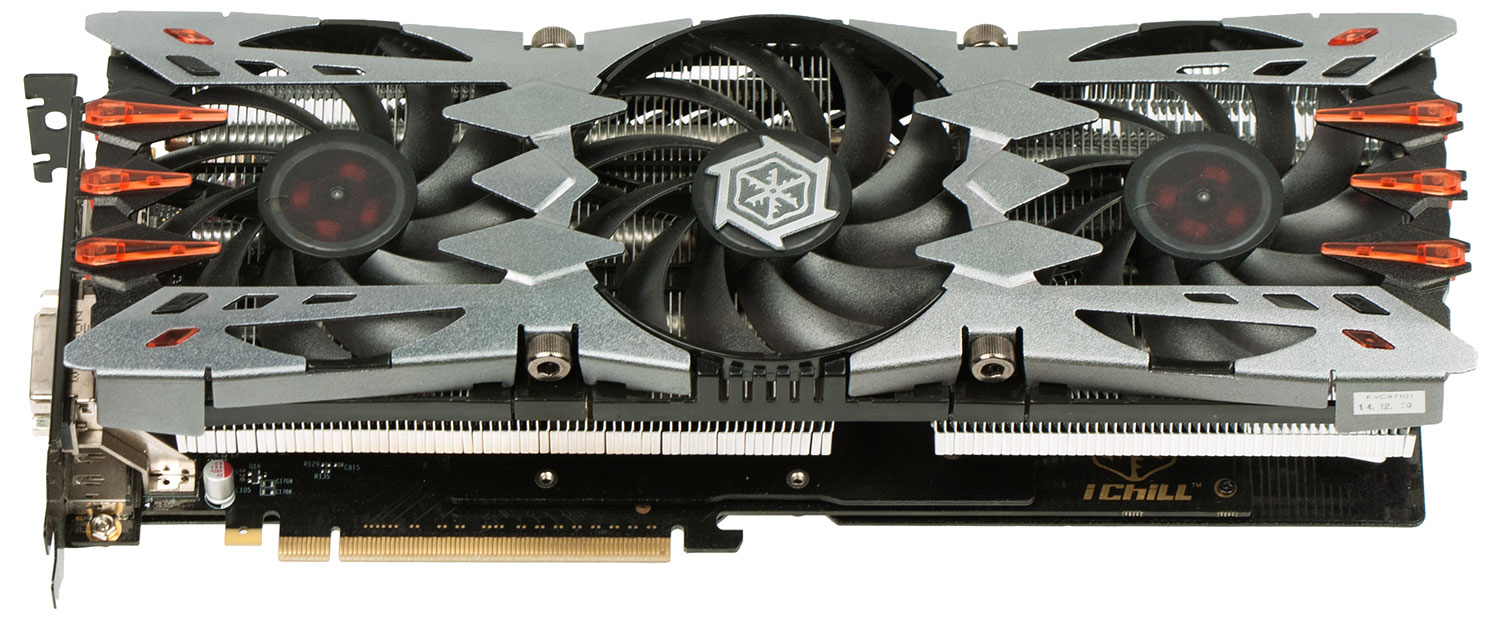
A test sample was made by Inno3D, instead of a standard cooler with a turbine, a massive proprietary cooling system was installed For comparison, this is the reference GTX 960: Reference length is 240 mm, iChill GeForce GTX 960 Ultra has this parameter at 301 mm due to the significant dimensions of the cooling system.

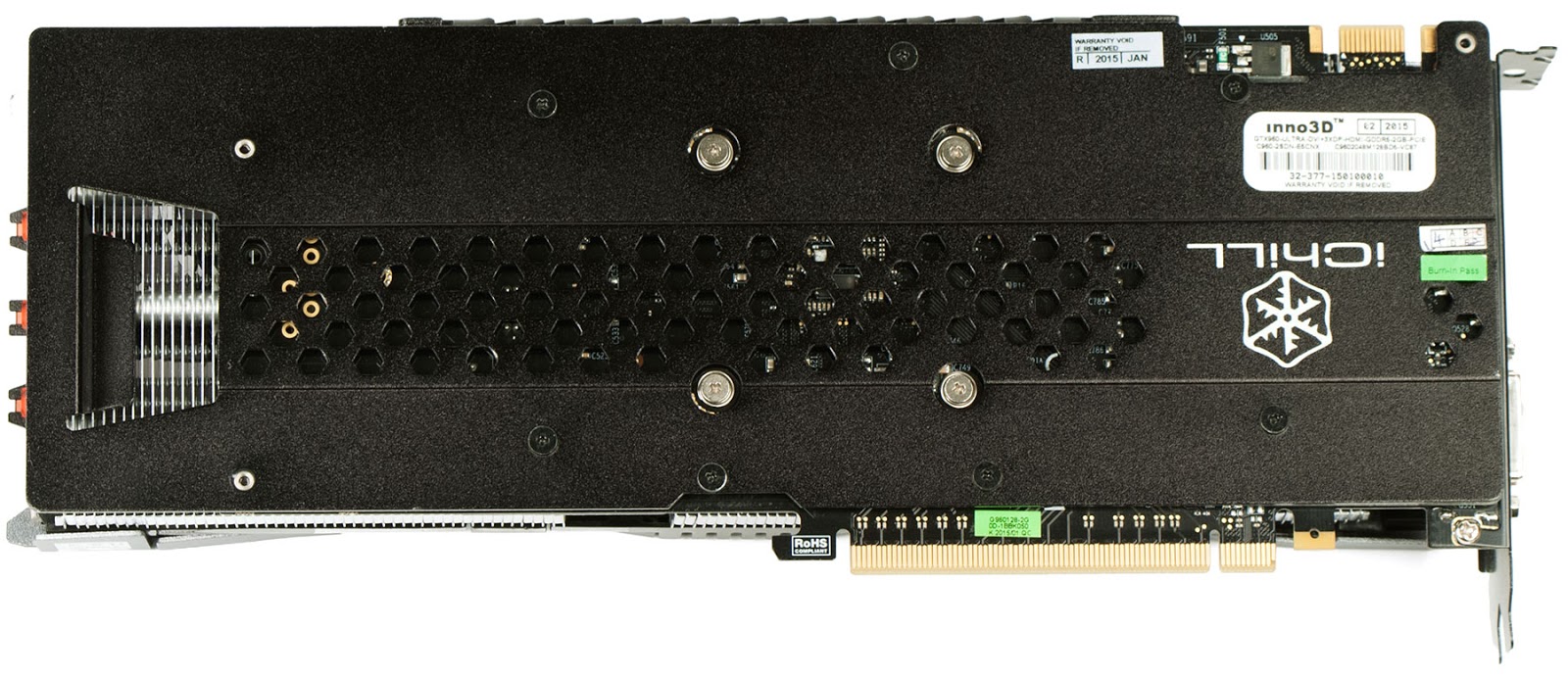
An aluminum plate is installed on the reverse side of the board, which removes heat from the memory chips and acts as a stiffener:
It is not clear why the mount bar was made dual-slot, while the video card occupies all three:
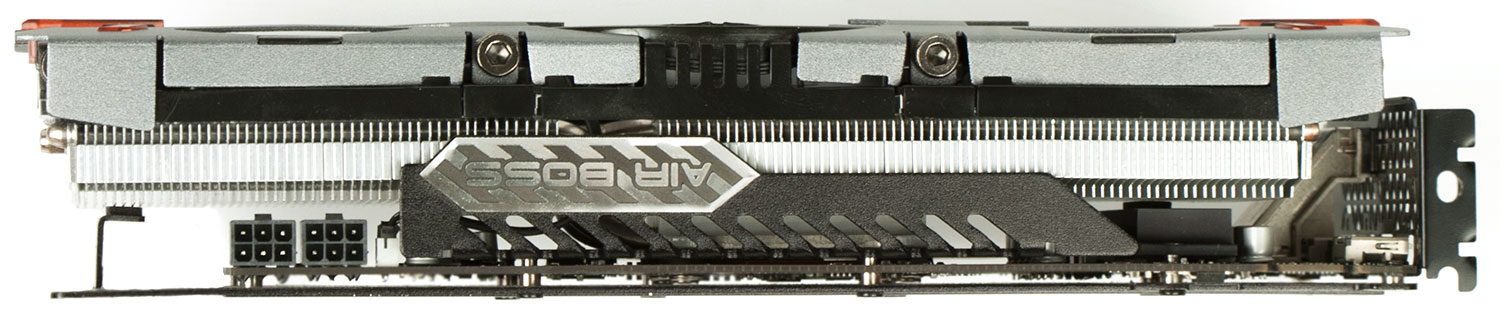
From this photo you can visually assess the cooler's monstrosity. Infrequently, manufacturers install such effective solutions on mid-end boards. For comparison, I will give a photo of the budget version of the GTX 960 (length about 170 mm):

The cooler consists of a stacked radiator and three CF-12915S fans (90 mm, 12 V, 0.35 A) installed in a row.
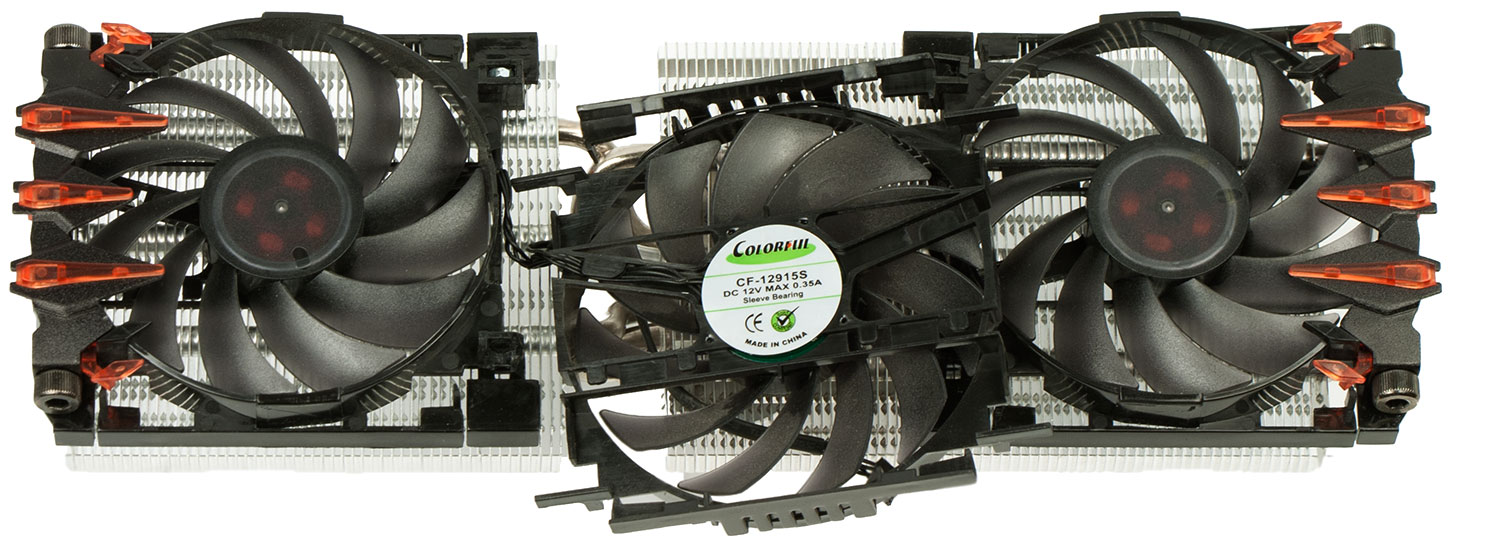
Heat is transferred from the copper base to the radiator through four heat pipes with a diameter of 6 mm. The thickness of the ribs is 0.4 mm, the intercostal distance is 1.8 mm.
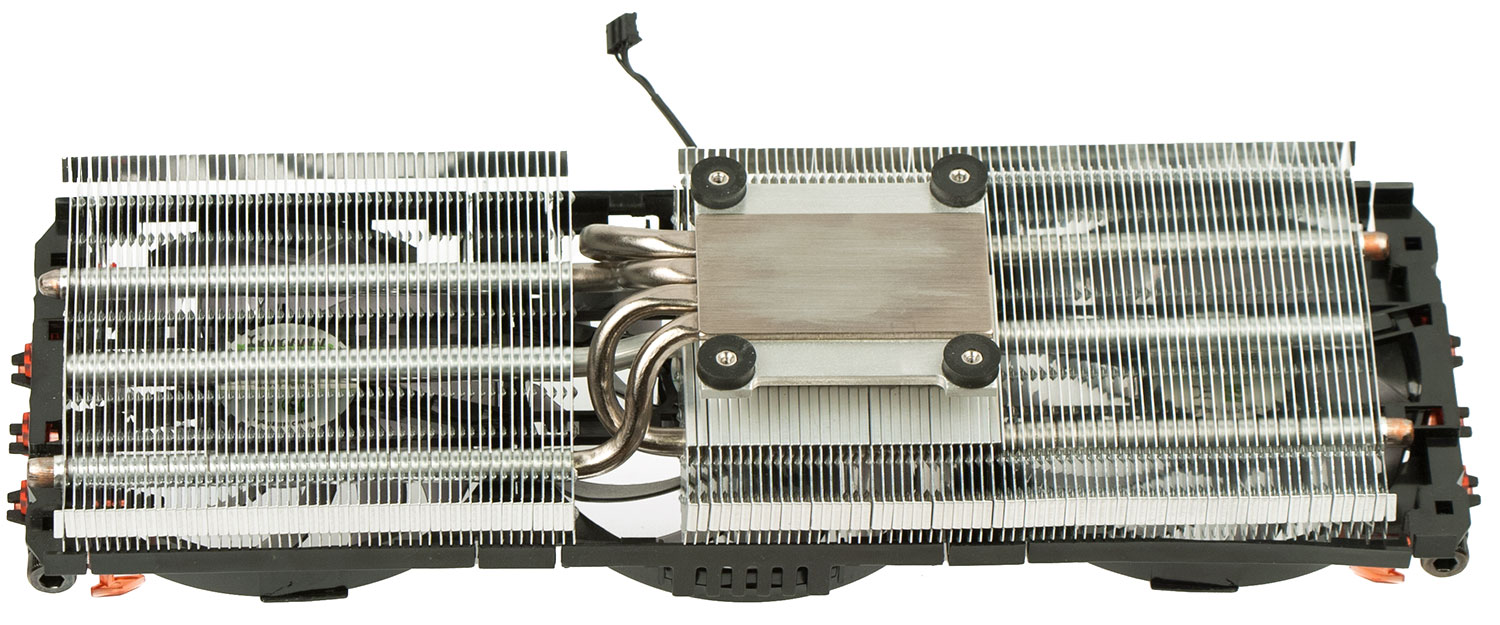
Such a radiator has a relatively low aerodynamic drag, which is positively reflected in the noise level.
A second aluminum plate is located under the video core cooling system, which removes heat from memory microcircuits wired on the front side.
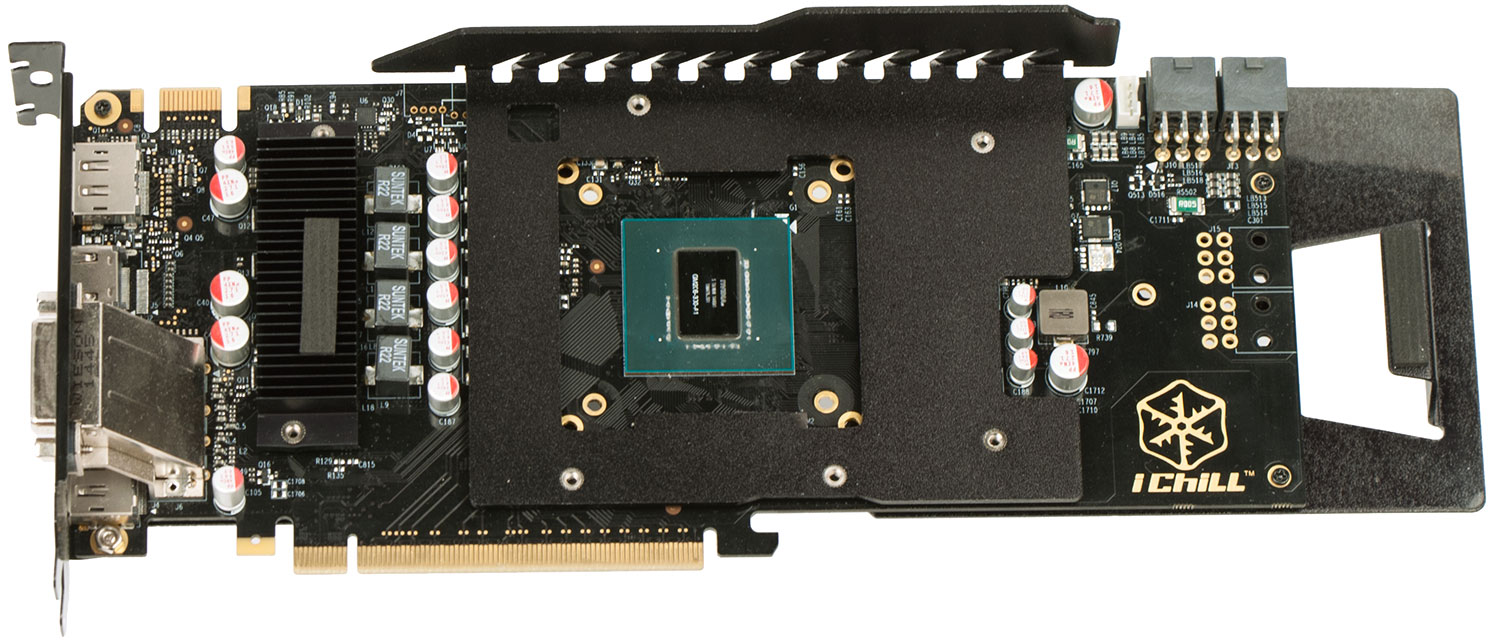
A small aluminum radiator on power semiconductors of the power system is also clearly visible.
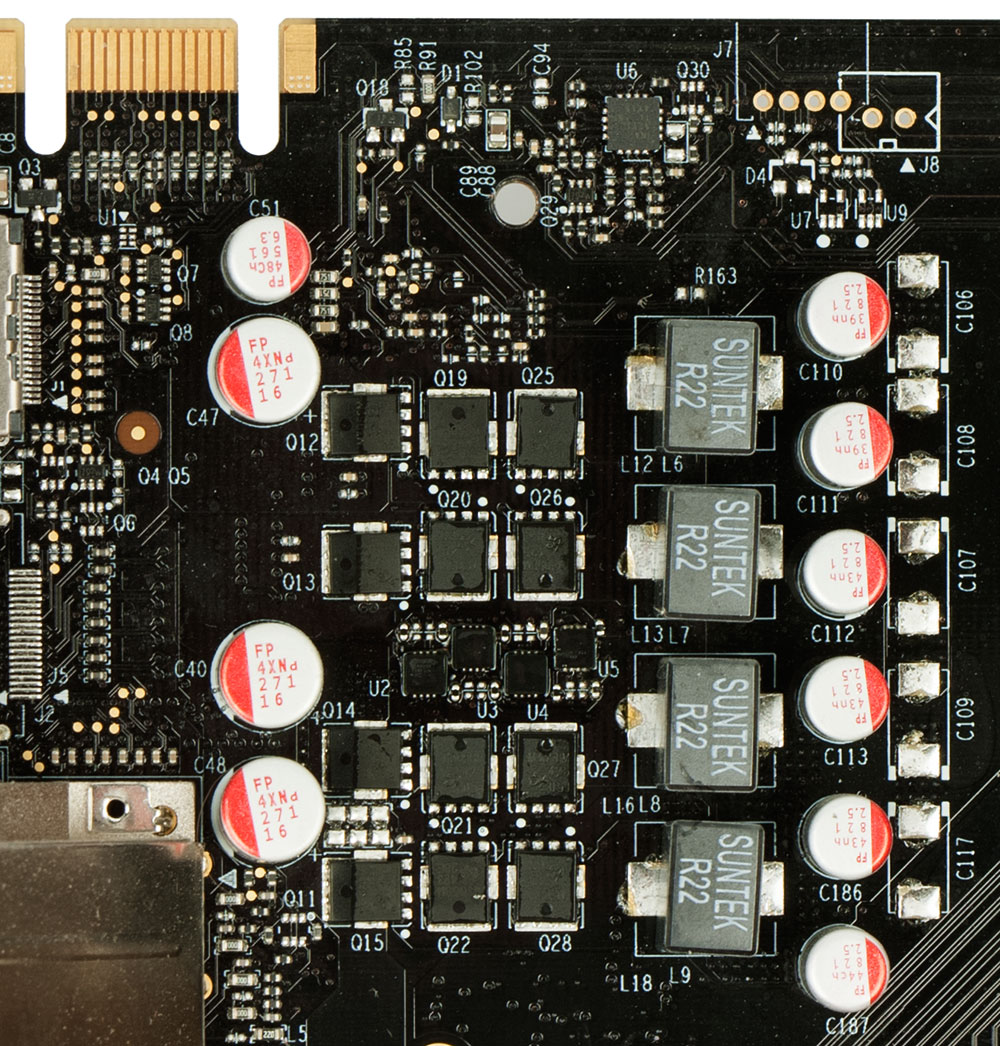
It is worth noting that all elements of the cooling system, except for the fans, are made of metal and fastened together by screws, without the use of latches or aluminum clips. A well-thought-out approach pays for itself: the video card is easily disassembled and assembled, there are no problems with alignment, the distribution of pressure. All CO components sit in their places without play, the contact with the parts to be cooled is uniform, and when assembled, the iChill GeForce GTX 960 Ultra feels like a monolithic bar. Not every top product can boast of such quality.
The circuit board differs from the reference length:
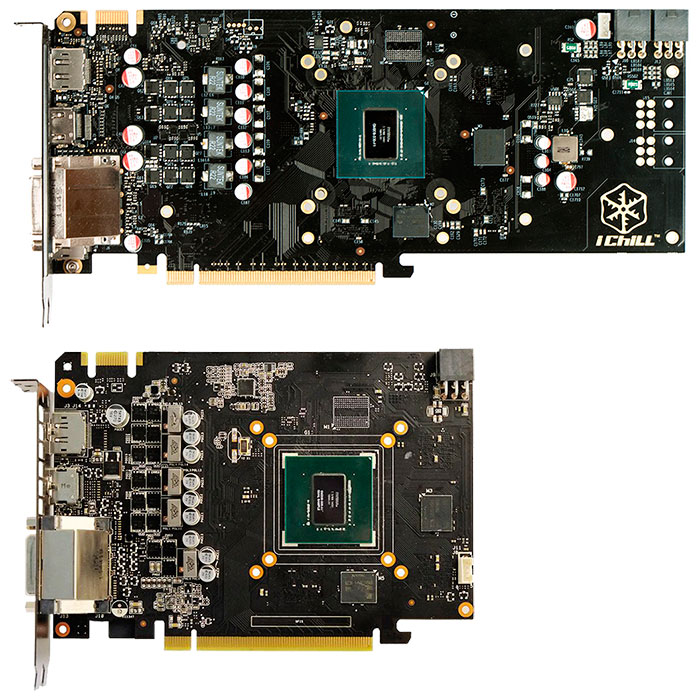
The reference instance is more tightly arranged, otherwise the arrangement of the main elements - the graphics processor, video memory, power subsystem, power connectors - remains unchanged. I dare to assume that the main goal of creating an elongated version was to adapt the installation of the overall cooling system, since it would be more expensive to globally recycle a universal OS (a similar heatsink was installed on the GTX 970 and GTX 980 named Inno3D).
There are five video outputs: three full-sized DisplayPort, one DVI and one HDMI.
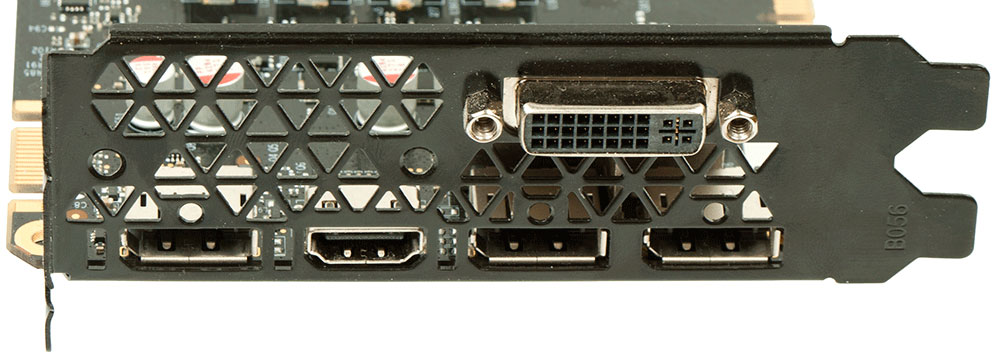
In my opinion, this is one of the most successful sets, both in number and in variety of interfaces. GM206 graphic processor based on Maxwell 2.0 architecture is soldered in the PCB center
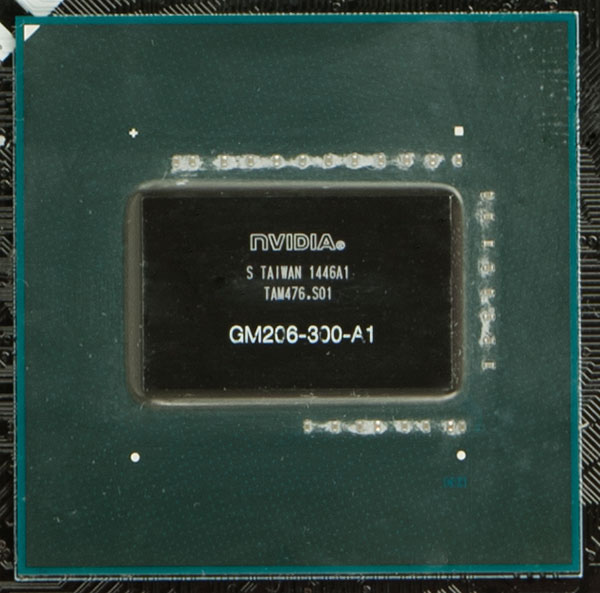
The ASIC quality parameter for this instance is low, only 59%. Previously, vendors used select crystals for such products (as stated in press releases), but now they don’t bother much.
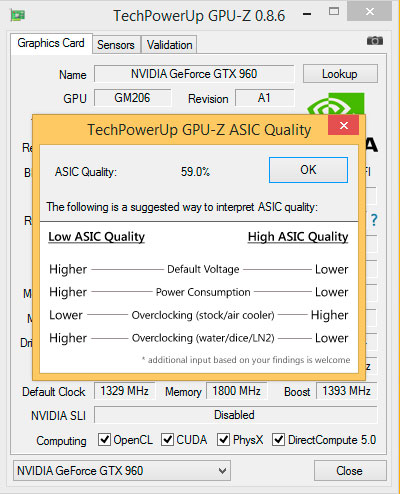
Video memory 2 gigabytes in four chips labeled K4G41325FC-HC28.
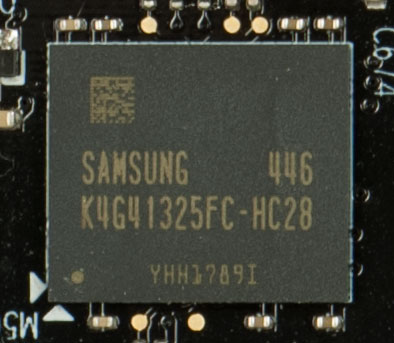
They are placed on both sides of the board, two on each.
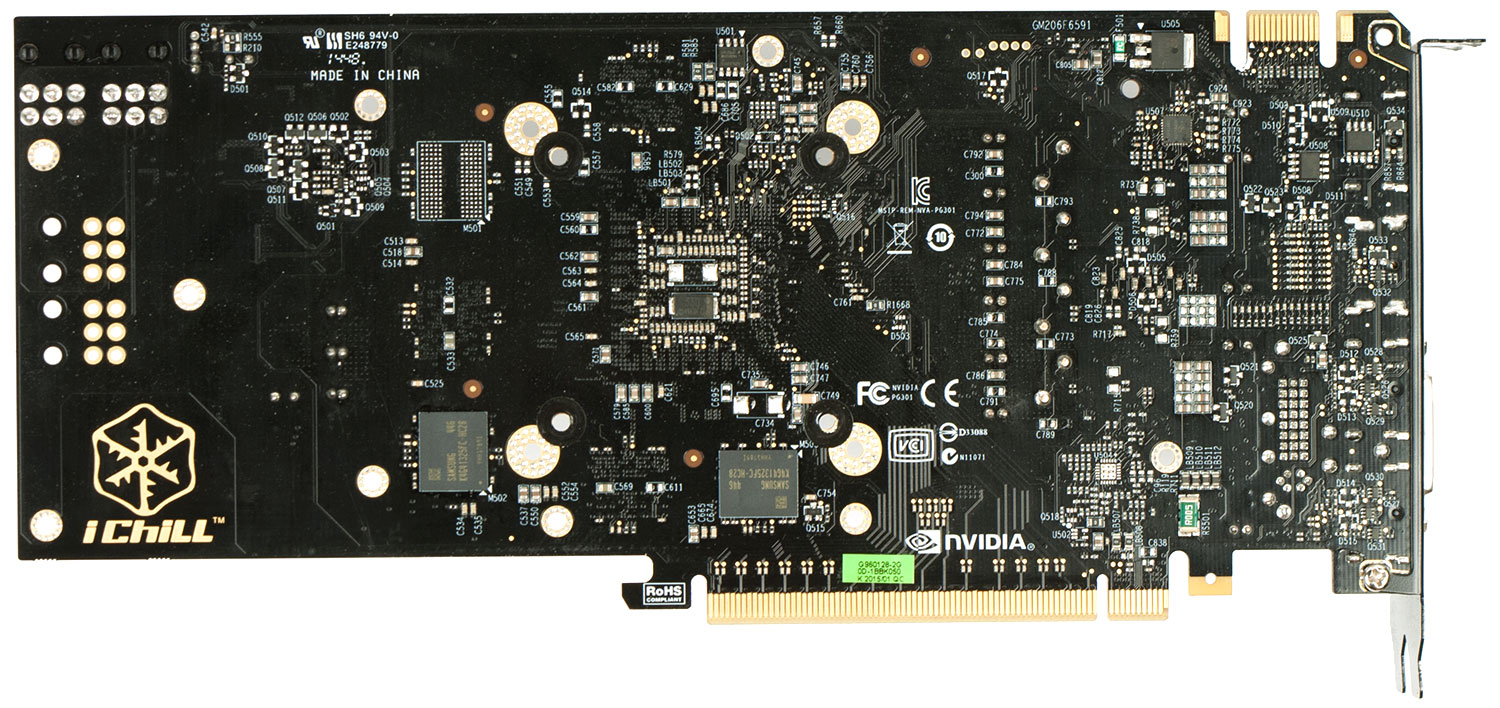
Two places for microchips are empty. I assume that the same design of the printed circuit board produces the GTX 960 version with four gigabytes of video memory. As you know, there is never much memory, but the question of the practical benefits of additional gigabytes on this solution remains open.
Clock frequencies differ in a big way from the established NVIDIA. The GPU runs at 1329 MHz (against 1126 MHz reference), and video memory at 7200 MHz (against 7012 MHz reference).
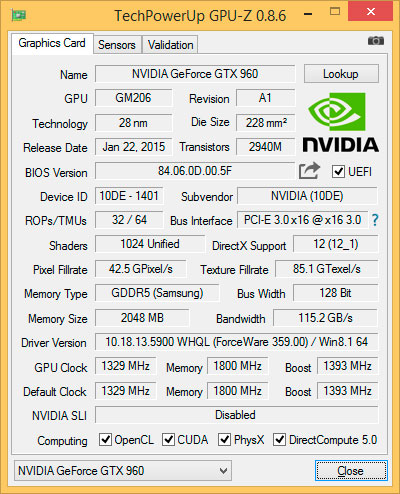
The memory bus is 128 bits, which by modern standards is not enough, but NVIDIA says that this does not prevent all the advantages of the new architecture from being fully revealed.
Given that the GPU is now overclocked in a semi-automatic mode through an increase in Power Limit (free translation - the GPU's power consumption limit) and the desired increase to the base frequency, we can achieve any significant results in the field of overclocking with the iChill GeForce GTX 960 Ultra without hardware modifications failed. All that this instance boasts is 1495 MHz (GPU), 12% higher than the standard one.
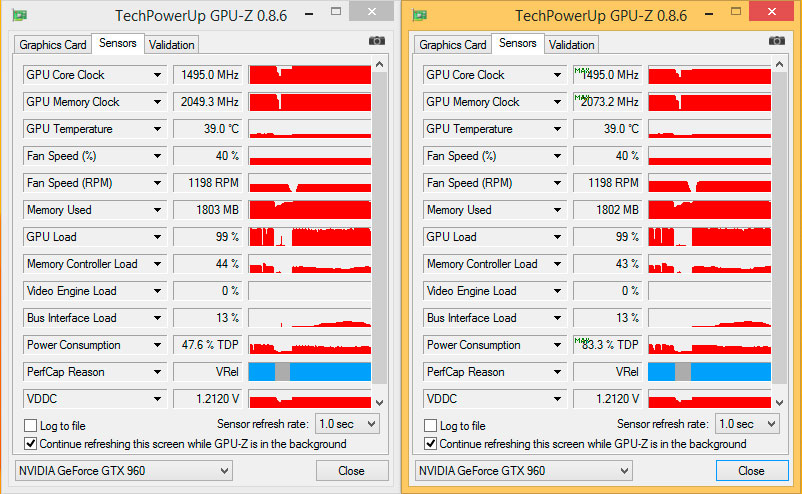
The frequency memory reached 2070 (8020) MHz, which is 15% higher than the standard one. The efficiency of the cooling system is beyond praise: in 2D mode none of the three fans rotates, in 3D at 1050 rpm the GPU temperature does not rise above 52 degrees (open stand, air temperature +25 Celsius):
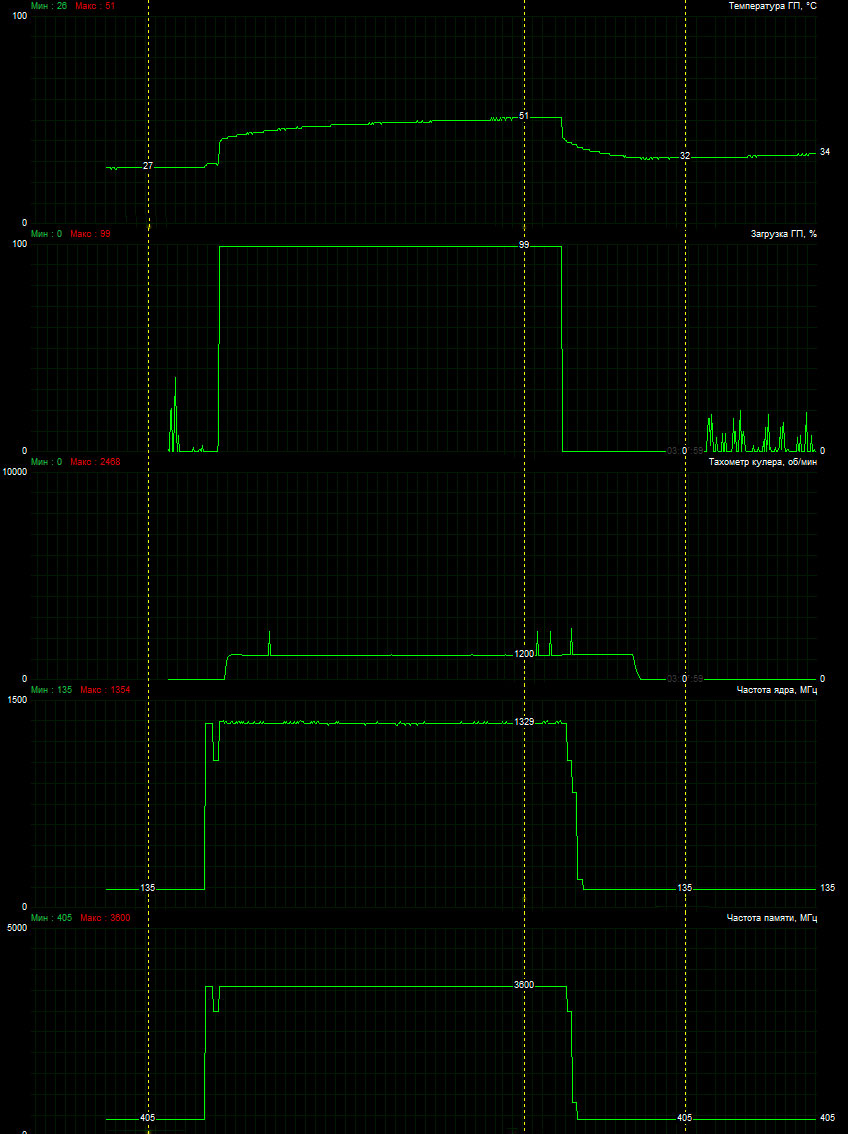
Forced acceleration to 3000 rpm per minute lowers the maximum temperature in 3D mode to 41 degrees, and also significantly increases the noise level:
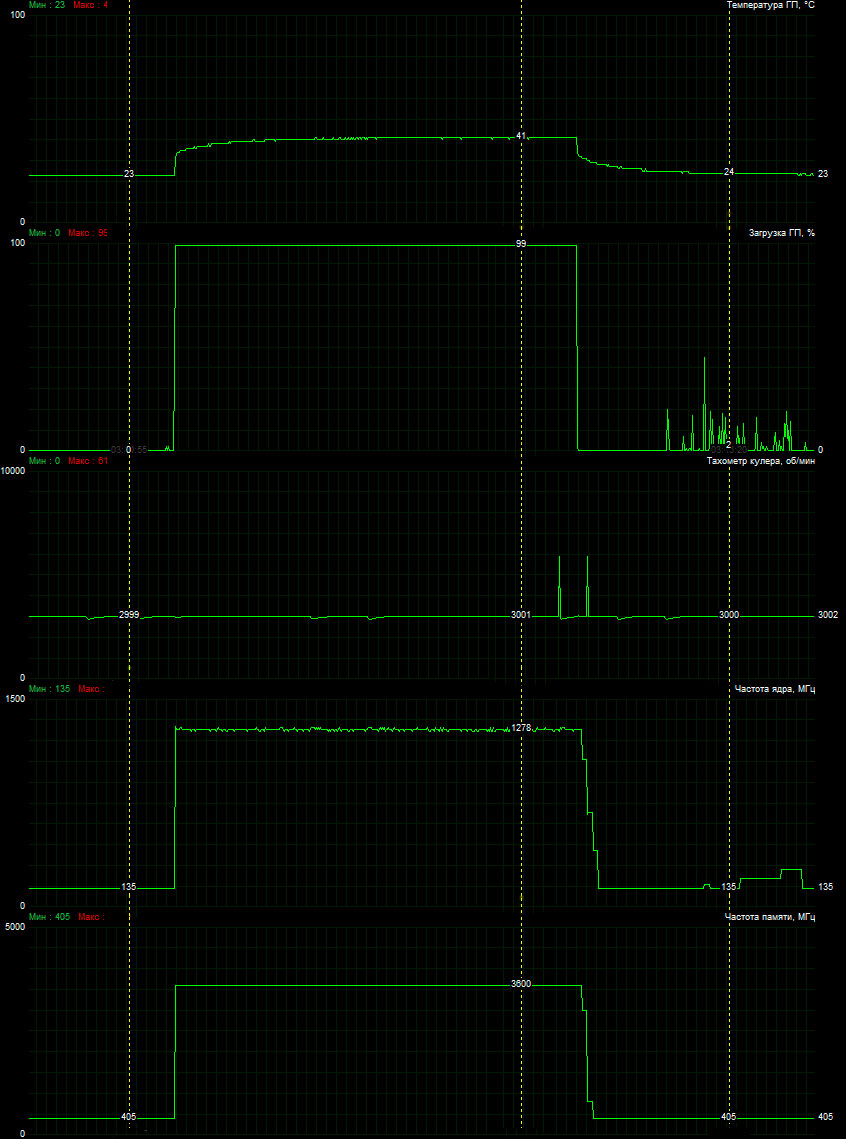
A good supply of CO performance can come in handy in a poorly ventilated case and for those who are too lazy to clean every few months system unit from dust.
For clarity, all the characteristics are summarized in the table:
Testing the performance of the video card was carried out in five relevant gaming applications on the following test configuration:
A popular hit of the fall of 2015 is built on the basis of the same IW Engine 3, which is constantly being updated, which is clearly visible in the screenshots and gameplay of all Black Ops series.
Since there is no built-in performance test in CoD: BO3, I had to use the FRAPS utility. The final result was the average of five runs (for each resolution).
The GTX 960 has enough power to provide an acceptable level of fps in FullHD resolution with almost the maximum picture quality twisted:
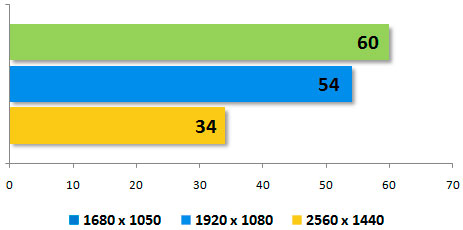
And in higher resolution (2560 x 1440) you can see a sharp drop in performance, which is especially noticeable at the time of rendering explosions and blazing fires.
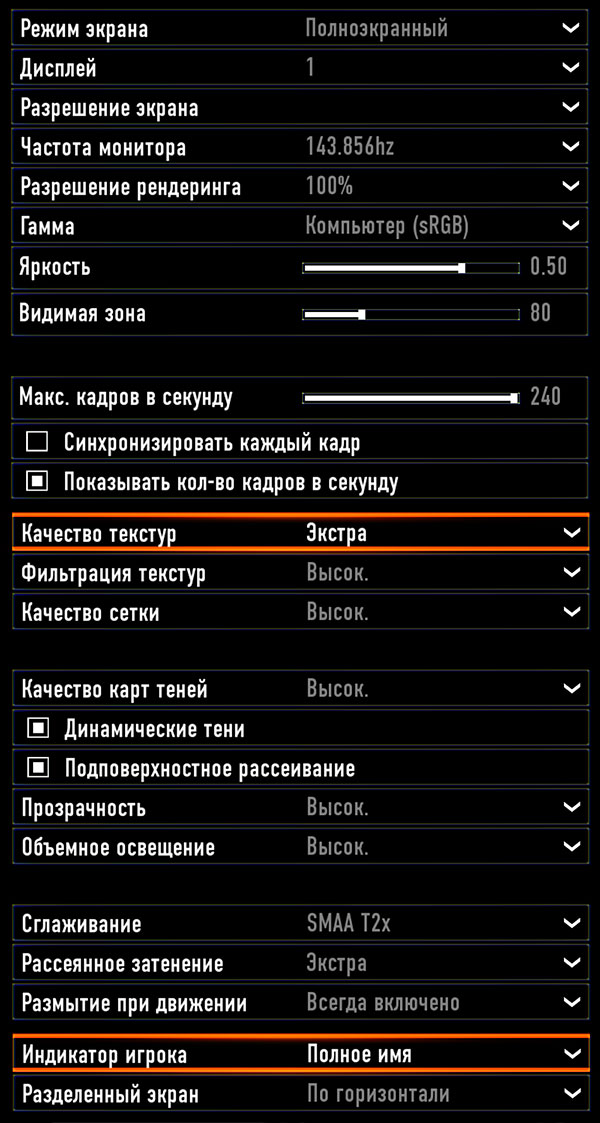
At the heart of GTA V is its own Rockstar Advanced Game Engine (RAGE) engine, demanding on the resources of both the central processor and the video card. When evaluating performance, the built-in benchmark and the following settings were used:

Setting the maximum value is prevented by the feature of the game, which manifests itself in the reset of all settings to the minimum when using more than 2 GB of video memory (an appropriate warning is issued about this). Given the repeated glitches of the built-in benchmark in earlier versions of the game, it was decided to be content with what is.
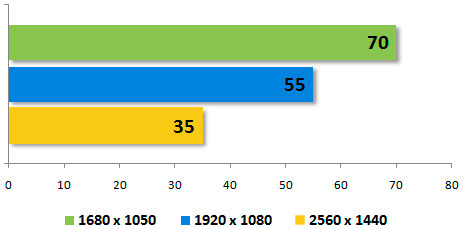
Again, the GTX 960 is enough for resolutions of 1920 x 1080 and lower, and 2560 x 1440 discomfort, especially when actively moving around the city on a sunny day.
Another expected new fall 2015, based on the Creation Engine developed by Bethesda Game Studios. It has already been used in the game The Elder Scrolls V: Skyrim, where it performed very well, especially after additional settings and adding high-resolution textures.
There is no built-in benchmark, and FRAPS came to the rescue again. In the process of measuring performance, it was noticed that with a complete repetition of actions on the same location, sharp fps drawdowns lasting one or two seconds occur, which greatly affects the average value. In this game, 10 runs were made for each resolution, of which 1-2 with an abnormally low (about 25%) avg fps were not taken into account when calculating the total average value.
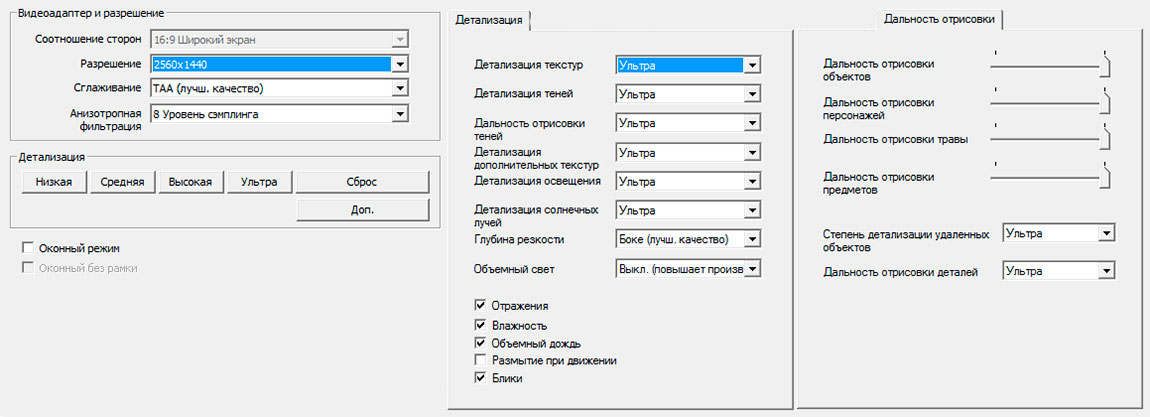
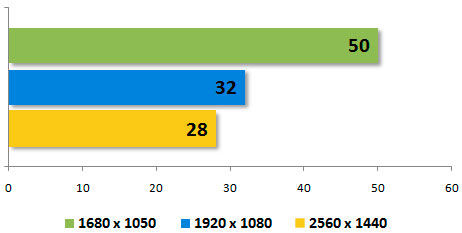
The abundance of various objects, sunny weather and dynamic fights made themselves felt - you can play confidently with maximum settings only at a resolution of 1680 x 1050 or lower, and already in FullHD the minimum fps sometimes drops to 12. It is noteworthy that the difference between 1920 x 1080 and 2048 x 1440 is very small, but increases with the shutdown of all kinds of visual effects.
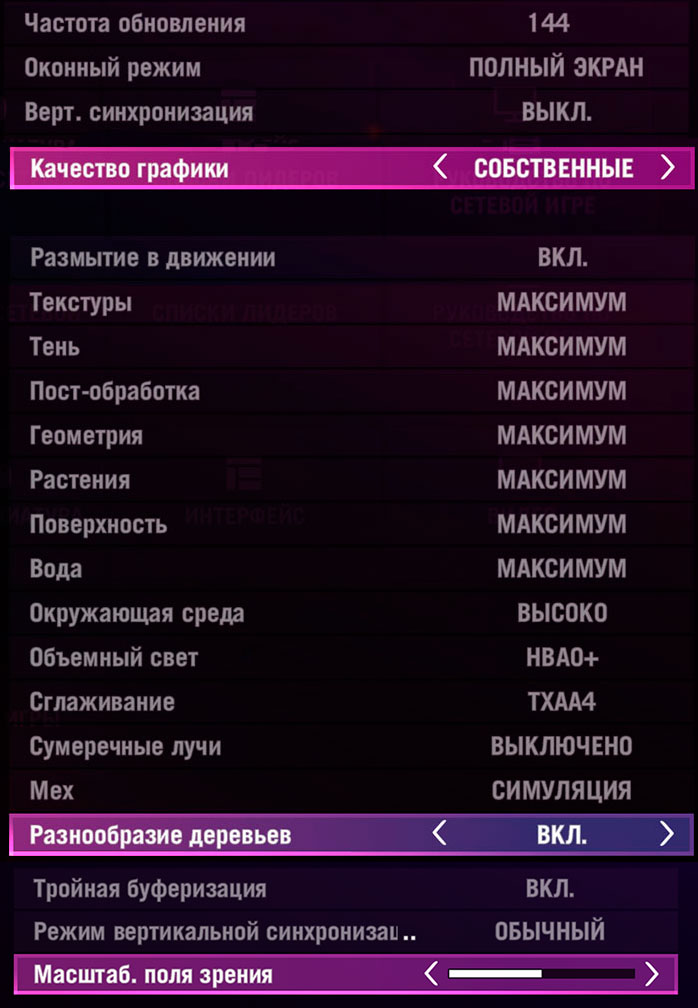
In the fourth part of the "shooter" the Dunia Engine, already familiar from the third series, is used. Also, in the preparation of the game, the developers collaborated with NVIDIA, which allows using the latest generation GeForce cards to activate additional effects: PCSS (Percentage Closer Soft Shadows), HBAO + (Horizon Based Ambient Occlusion), TXAA (Temporal Anti-Aliasing), Hairworks. They can significantly increase the realism of the image, but you have to pay for it with low fps. At least to owners of a single GTX 960:
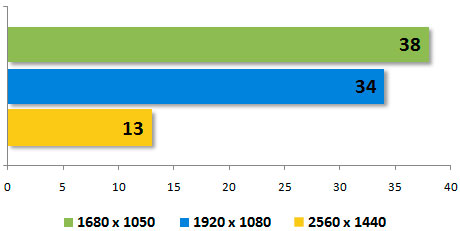
Disabling effects significantly increases the frequency of refresh:
Performance was evaluated using FRAPS, five passes of the scene for each resolution.
Japanese stealth action on its own engine Fox Engine, developed by Kojima Productions. The game itself is respected by fans of the series, of which there are many, therefore, it was decided to include it in the test applications. One of the difficulties is locked at 60 maximum fps, which does not allow to objectively evaluate the performance of the video card. But in the case of the GTX 960, it was possible to “run into the ceiling” only at a resolution of 1680 x 1050, at higher average fps was lower, but did not fall below 55. This is at maximum quality settings.
Analysis of the log file created by the FRAPS utility used to measure performance (yes, the next game without the built-in test) showed that the minimum values are very close to average. More than all the games mentioned above.

The Inno3D iChill GeForce GTX 960 Ultra is a successful and well-developed version of the GeForce GTX 960; only the price can be written down as disadvantages: 17,000 rubles, which stands out a bit from offers from other brands. Excellent cooling system with a large margin, quiet in 3D mode and completely silent in 2D, reliable design, five video outputs, increased clock speeds and at the same time relatively low power consumption. An excellent choice for installation in a medium-sized universal computer, used for most of the day (or even around the clock) for games, work, downloads, watching videos.
A test sample was made by Inno3D, instead of a standard cooler with a turbine, a massive proprietary cooling system was installed For comparison, this is the reference GTX 960: Reference length is 240 mm, iChill GeForce GTX 960 Ultra has this parameter at 301 mm due to the significant dimensions of the cooling system.
An aluminum plate is installed on the reverse side of the board, which removes heat from the memory chips and acts as a stiffener:
It is not clear why the mount bar was made dual-slot, while the video card occupies all three:
From this photo you can visually assess the cooler's monstrosity. Infrequently, manufacturers install such effective solutions on mid-end boards. For comparison, I will give a photo of the budget version of the GTX 960 (length about 170 mm):
The cooler consists of a stacked radiator and three CF-12915S fans (90 mm, 12 V, 0.35 A) installed in a row.
Heat is transferred from the copper base to the radiator through four heat pipes with a diameter of 6 mm. The thickness of the ribs is 0.4 mm, the intercostal distance is 1.8 mm.
Such a radiator has a relatively low aerodynamic drag, which is positively reflected in the noise level.
A second aluminum plate is located under the video core cooling system, which removes heat from memory microcircuits wired on the front side.
A small aluminum radiator on power semiconductors of the power system is also clearly visible.
It is worth noting that all elements of the cooling system, except for the fans, are made of metal and fastened together by screws, without the use of latches or aluminum clips. A well-thought-out approach pays for itself: the video card is easily disassembled and assembled, there are no problems with alignment, the distribution of pressure. All CO components sit in their places without play, the contact with the parts to be cooled is uniform, and when assembled, the iChill GeForce GTX 960 Ultra feels like a monolithic bar. Not every top product can boast of such quality.
The circuit board differs from the reference length:
The reference instance is more tightly arranged, otherwise the arrangement of the main elements - the graphics processor, video memory, power subsystem, power connectors - remains unchanged. I dare to assume that the main goal of creating an elongated version was to adapt the installation of the overall cooling system, since it would be more expensive to globally recycle a universal OS (a similar heatsink was installed on the GTX 970 and GTX 980 named Inno3D).
There are five video outputs: three full-sized DisplayPort, one DVI and one HDMI.
In my opinion, this is one of the most successful sets, both in number and in variety of interfaces. GM206 graphic processor based on Maxwell 2.0 architecture is soldered in the PCB center
The ASIC quality parameter for this instance is low, only 59%. Previously, vendors used select crystals for such products (as stated in press releases), but now they don’t bother much.
Video memory 2 gigabytes in four chips labeled K4G41325FC-HC28.
They are placed on both sides of the board, two on each.
Two places for microchips are empty. I assume that the same design of the printed circuit board produces the GTX 960 version with four gigabytes of video memory. As you know, there is never much memory, but the question of the practical benefits of additional gigabytes on this solution remains open.
Clock frequencies differ in a big way from the established NVIDIA. The GPU runs at 1329 MHz (against 1126 MHz reference), and video memory at 7200 MHz (against 7012 MHz reference).
The memory bus is 128 bits, which by modern standards is not enough, but NVIDIA says that this does not prevent all the advantages of the new architecture from being fully revealed.
Given that the GPU is now overclocked in a semi-automatic mode through an increase in Power Limit (free translation - the GPU's power consumption limit) and the desired increase to the base frequency, we can achieve any significant results in the field of overclocking with the iChill GeForce GTX 960 Ultra without hardware modifications failed. All that this instance boasts is 1495 MHz (GPU), 12% higher than the standard one.
The frequency memory reached 2070 (8020) MHz, which is 15% higher than the standard one. The efficiency of the cooling system is beyond praise: in 2D mode none of the three fans rotates, in 3D at 1050 rpm the GPU temperature does not rise above 52 degrees (open stand, air temperature +25 Celsius):
Forced acceleration to 3000 rpm per minute lowers the maximum temperature in 3D mode to 41 degrees, and also significantly increases the noise level:
A good supply of CO performance can come in handy in a poorly ventilated case and for those who are too lazy to clean every few months system unit from dust.
For clarity, all the characteristics are summarized in the table:
| Video card | Inno3D C960-2SDN-E5CNX |
| Core | GM206 |
| Process technology, nm | 28 |
| The number of transistors, mln. Pcs. | 2940 |
| Number of universal processors | 1024 |
| The number of texture units | 64 |
| Number of ROP blocks | 32 |
| GPU frequency, MHz | 1330 |
| Video memory frequency, MHz | 1800 (7200) |
| The amount of video memory, MB | 2048 |
| Memory bus bit | 128 |
| PCI Express Bus | PCI Express x16 3.0 |
| Outputs | 3x DisplayPort, 1x DVI, 1x HDMI |
| Dimensions, mm | 301 x 106 x 60 |
Testing the performance of the video card was carried out in five relevant gaming applications on the following test configuration:
Processor: the Intel Core i7-5930K
RAM: 4 GB DDR4-2400 4
Motherboard: the Asus the Sabertooth X99
drive: the SSD 256GB Plextor M6V
Power supply: the Enermax TRIATHLOR 550 W
Operating system: the Windows 8.1 x64
driver: the ForceWare 359.00
Test results
Call of Duty: Black Ops 3
A popular hit of the fall of 2015 is built on the basis of the same IW Engine 3, which is constantly being updated, which is clearly visible in the screenshots and gameplay of all Black Ops series.
Since there is no built-in performance test in CoD: BO3, I had to use the FRAPS utility. The final result was the average of five runs (for each resolution).
The GTX 960 has enough power to provide an acceptable level of fps in FullHD resolution with almost the maximum picture quality twisted:
And in higher resolution (2560 x 1440) you can see a sharp drop in performance, which is especially noticeable at the time of rendering explosions and blazing fires.
Grand theft auto v
At the heart of GTA V is its own Rockstar Advanced Game Engine (RAGE) engine, demanding on the resources of both the central processor and the video card. When evaluating performance, the built-in benchmark and the following settings were used:
Setting the maximum value is prevented by the feature of the game, which manifests itself in the reset of all settings to the minimum when using more than 2 GB of video memory (an appropriate warning is issued about this). Given the repeated glitches of the built-in benchmark in earlier versions of the game, it was decided to be content with what is.
Again, the GTX 960 is enough for resolutions of 1920 x 1080 and lower, and 2560 x 1440 discomfort, especially when actively moving around the city on a sunny day.
Fallout 4
Another expected new fall 2015, based on the Creation Engine developed by Bethesda Game Studios. It has already been used in the game The Elder Scrolls V: Skyrim, where it performed very well, especially after additional settings and adding high-resolution textures.
There is no built-in benchmark, and FRAPS came to the rescue again. In the process of measuring performance, it was noticed that with a complete repetition of actions on the same location, sharp fps drawdowns lasting one or two seconds occur, which greatly affects the average value. In this game, 10 runs were made for each resolution, of which 1-2 with an abnormally low (about 25%) avg fps were not taken into account when calculating the total average value.
The abundance of various objects, sunny weather and dynamic fights made themselves felt - you can play confidently with maximum settings only at a resolution of 1680 x 1050 or lower, and already in FullHD the minimum fps sometimes drops to 12. It is noteworthy that the difference between 1920 x 1080 and 2048 x 1440 is very small, but increases with the shutdown of all kinds of visual effects.
Far cry 4
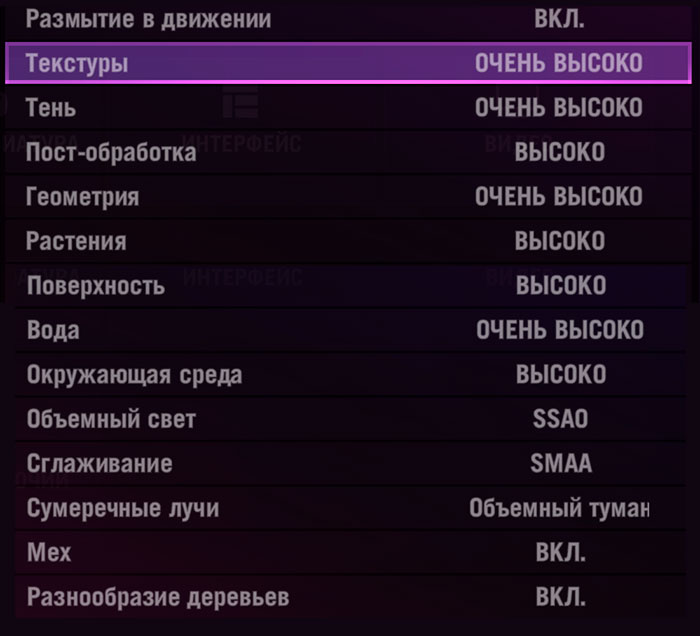
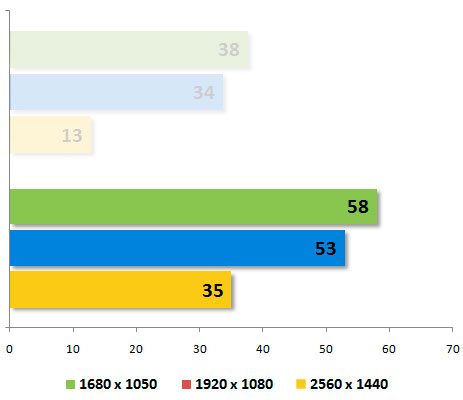
In the fourth part of the "shooter" the Dunia Engine, already familiar from the third series, is used. Also, in the preparation of the game, the developers collaborated with NVIDIA, which allows using the latest generation GeForce cards to activate additional effects: PCSS (Percentage Closer Soft Shadows), HBAO + (Horizon Based Ambient Occlusion), TXAA (Temporal Anti-Aliasing), Hairworks. They can significantly increase the realism of the image, but you have to pay for it with low fps. At least to owners of a single GTX 960:
Disabling effects significantly increases the frequency of refresh:
Performance was evaluated using FRAPS, five passes of the scene for each resolution.
Metal Gear Solid V: The Phantom Pain
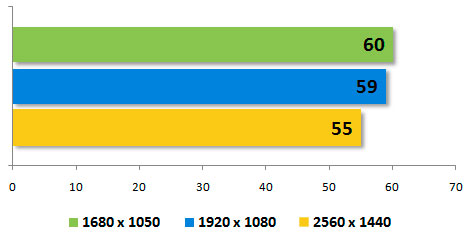
Japanese stealth action on its own engine Fox Engine, developed by Kojima Productions. The game itself is respected by fans of the series, of which there are many, therefore, it was decided to include it in the test applications. One of the difficulties is locked at 60 maximum fps, which does not allow to objectively evaluate the performance of the video card. But in the case of the GTX 960, it was possible to “run into the ceiling” only at a resolution of 1680 x 1050, at higher average fps was lower, but did not fall below 55. This is at maximum quality settings.
Analysis of the log file created by the FRAPS utility used to measure performance (yes, the next game without the built-in test) showed that the minimum values are very close to average. More than all the games mentioned above.
Conclusion
The Inno3D iChill GeForce GTX 960 Ultra is a successful and well-developed version of the GeForce GTX 960; only the price can be written down as disadvantages: 17,000 rubles, which stands out a bit from offers from other brands. Excellent cooling system with a large margin, quiet in 3D mode and completely silent in 2D, reliable design, five video outputs, increased clock speeds and at the same time relatively low power consumption. An excellent choice for installation in a medium-sized universal computer, used for most of the day (or even around the clock) for games, work, downloads, watching videos.