November 28, 2015 at 11:45
MIT designers have developed shoes that change shape from external conditions

As 3D printing technology leaks into the world of fashion and robotics, we have the opportunity to witness several innovative and experimental items printed on a 3D printer that respond to the environment and the wearer's movements.
Expanding the horizons of this exciting sphere, two designers from MIT, Christoph Guberin and Karto Klopat, most recently created the Minimal Shoe, 3D-printed shoes that change shape in response to the movements of the owner. Working with computer technology specialist Skyler Tibbits as part of the MIT Self-Assembly Lab, three entrepreneurial designers created shape-fitting sneakers.
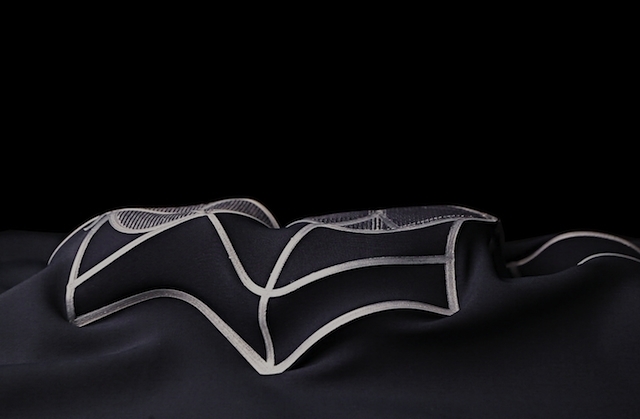
MIT team used FDM 3D printingwith plastic material extruded into a stretch fabric. This fabric then reduces in size when the wearer's foot does not press on it.
These sneakers function not only within the framework of this function - they look fashionably modern and geometrically seamless.
To minimize material and design costs, the team combined the upper printed plastic part of the shoe with more traditional materials such as leather and rubber.
“We can narrow the size of the shoe, we just have to squeeze it around the foot. Full 3D printing of sneakers is a long and inexpedient process, so we have reduced the use of 3D printing to a minimum, ”says Guberin. “It’s interesting to note that we don’t have to use 3D printing to create the entire shoe, but we can add it to existing material.

Until now, the team has been searching for better methods of creating shoes printed on a 3D printer, and, in turn, is striving to make our physical and material reality smoother and more active.
With Minimal Shoe, which theoretically can be fully printed on a 3D printerwithout auxiliary materials, the hybrid process of their creation opens up possibilities for custom manufacturing and greater availability. What makes this project especially innovative and remarkable is the lack of robotic and sensory elements, which proves the absence of the need for these advanced technologies in the manufacture of interactive clothing.
In fact, this stretching fabric and printed plastic can respond to our physical and bodily sensations and accordingly transform the shape of what we wear.
Want more interesting news from the world of 3D technology?
Subscribe to us in the social. facebook network: