October 7, 2015 at 13:49
3 business models for IoT startups
- Transfer
The world of electronics has changed a lot. The gross profit from the sale of electronics made in China at that time was 30%. All devices were protected by patents, produced by millions of different enterprises, and after 18 months they were replaced by new advanced equipment.
Larger companies with a large amount of available resources, closer production links and an established production system invariably entered the market with slightly better and cheaper goods and received more profit. Those who came to the market earlier than others eventually lost their money and market share due to fierce competition.
They had in their hands a line of unremarkable goods, and their company was content with only a small profit, if any. A striking example was the company Jawbone.
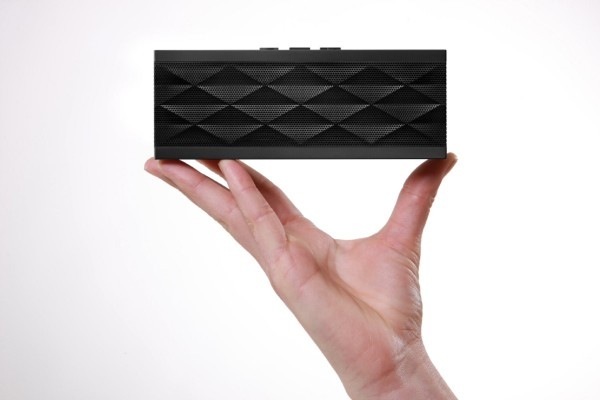
Jawbone Portable Jambox [approx. - we talked about development in Jawbone here ]
Jawbone has been running its business for quite some time, for 16 years now. The two main products of the company (headphones and portable speakers with Bluetooth support) have become incredibly popular, and their total cost was estimated at several billion dollars. The company managed to attract very valuable specialists such as Yves Behar and Samir Samat. They managed to attract financing from leading world investors (Sequoia Capital, Andreessen-Horowitz, Kleiner Perkins and Khosla Ventures). Compared to other successful startup companies, Jawbone is no match for them.
Why do they have difficulty struggling to the top, while younger hardware companies show record IPO performance?

Jambox
Jawbone is a traditional hardware company prone to commoditization due to the variety of Bluetooth-enabled speakers released after the speakers entered the market . She has a series of diverse products with well-organized supply, but not the best brand. Only a few buyers consider Jawbone a world leader in one area or another, because their speakers, headphones and bracelets for sports do not produce the same effect as, for example, Beats in music or Fitbit in the environment of sports gadgets.
Jawbone is more like a distributor desperate to make a new technological breakthrough. What is the difference between modern and successful hardware companies, such as GoPro, Arista, Fitbit, Nest, Dropcam, Zayo and Oculus, from Jawbone?
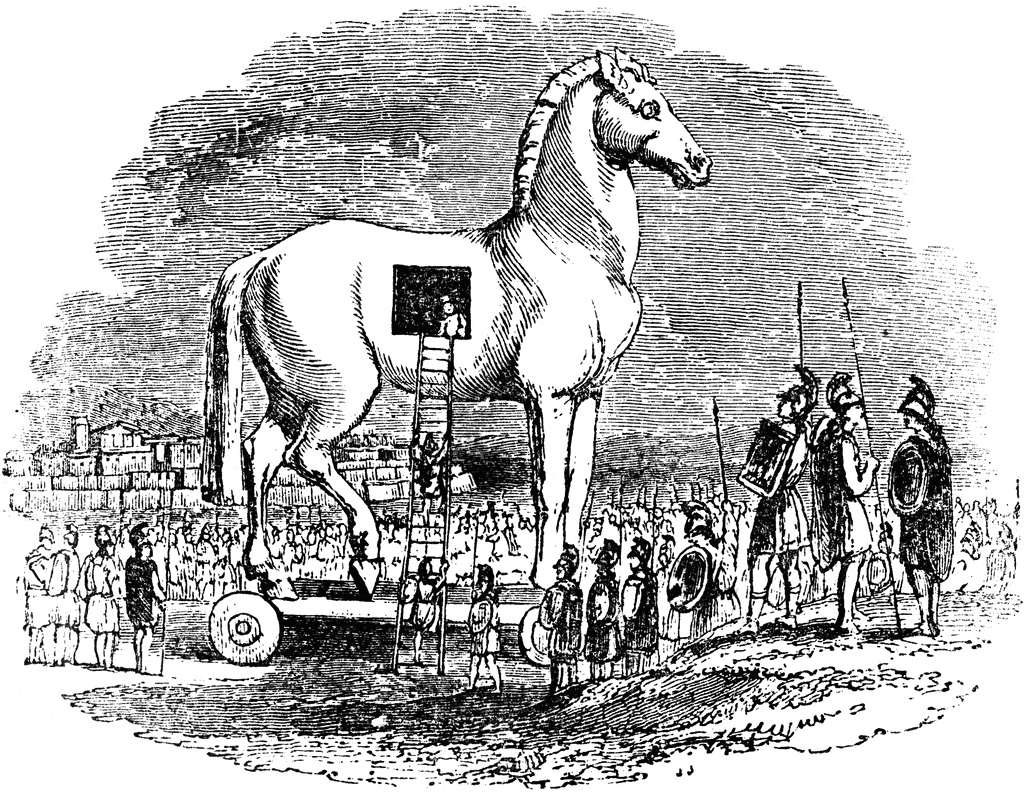
Modern electronics production plays the role of a Trojan horse, in which application development is “hidden”.
Each of the companies listed above is actually an application developer, cleverly disguised as an electronics manufacturer. All their equipment is just a way to implement their software products. Many of them receive regular income, and in almost all of them the number of programmers exceeds the number of specialists in the development of hardware devices.
Due to the fact that software is becoming an integral part of the finished product, some companies are becoming less sensitive to commoditization: developing a similar software product is much more difficult. The presence of applications can increase the switching costs [from one product to another], which the buyer bears, and gives more opportunities for interacting with customers and creating a brand.
We divided the business models of modern hardware projects into three categories.
1. “Hardware as a Service”
The most common business model for startups developing devices with Internet access is based on the idea of selling or renting portable equipment that works only if a monthly fee is paid for it. This subscription fee is almost always paid for issuing a license for a software or service.
Payment can be made both for a certain period (annually, monthly), and for exceeding certain indicators (traffic volume or number of users). Companies organized by the principle of “hardware as a service” [eng. hardware as a service], maximize their total profit precisely due to the subscription fee, and not due to the large income from the first batch of goods.

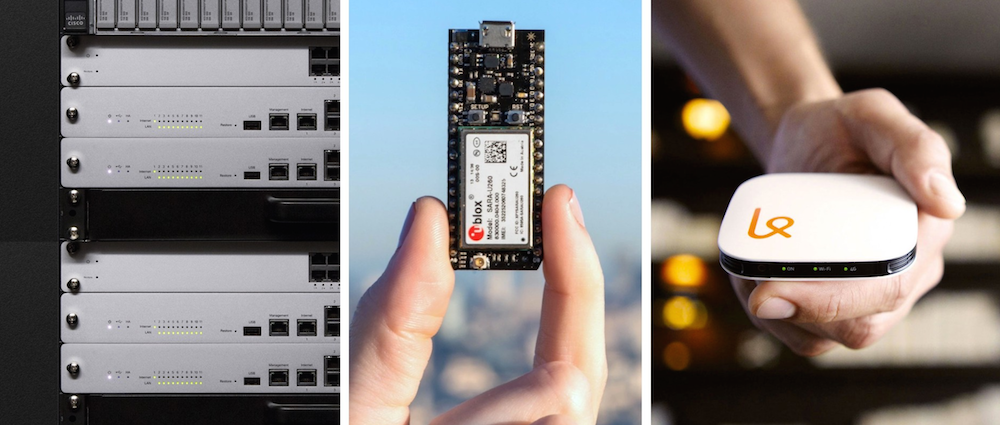
Particle Meraki, Photon, and Karma's Go portable device
Some of the hardware-as-a-service companies are:
Meraki (acquired by Cisco) sells stylish IT infrastructure in conjunction with a network management platform. Company products can replace your IT professionals. Despite the fact that customers post decent amounts for the company's equipment, the bulk of LTV [eng. lifetimevalue - “customer’s life value”] accounted for by annual software contracts.
Particle supports hardware companies by integrating Wi-Fi and 3G technology into their products. At an affordable price, customers can purchase a set of development tools [eng. software development kit, SDK], which will help them realize their ideas, and then easily switch to mass production of products running on the same software. Particle’s business model is to profit from the sale of software / data licenses, like virtual mobile carriers. mobile virtual network operator, MVNO].
Karma , using its devices, provides the ability to access the Internet from anywhere. End users only pay for the data they receive on their devices; among other things, they can share data with others. The business model of the company consists in obtaining the main share of profit from downloading data by users, as well as with a small additional fee for receiving data through 4G.
DipJar is a credit card tip and donation machine. Owners of shops or charitable organizations provide a monthly fee for using such a machine. In addition, DipJar takes a small commission from each donation and tip. This company receives much more income from tips and charitable contributions than from the sale / rental of the devices themselves.
2. Electronics-based services
Products based on portable equipment are very similar to products that act as “hardware as a service,” but in this situation, service is already an optional component. It seems that the difference is small, but the approach to doing business in this case is completely different.
Each device developed within the framework of this business model should bring significant profit from the sale of a unit of production. At the moment, this business model, as a rule, is aimed at the production of consumer goods, whose basic functions are available to the client for free, and for more advanced ones an additional fee is charged (compare with the freemium model).
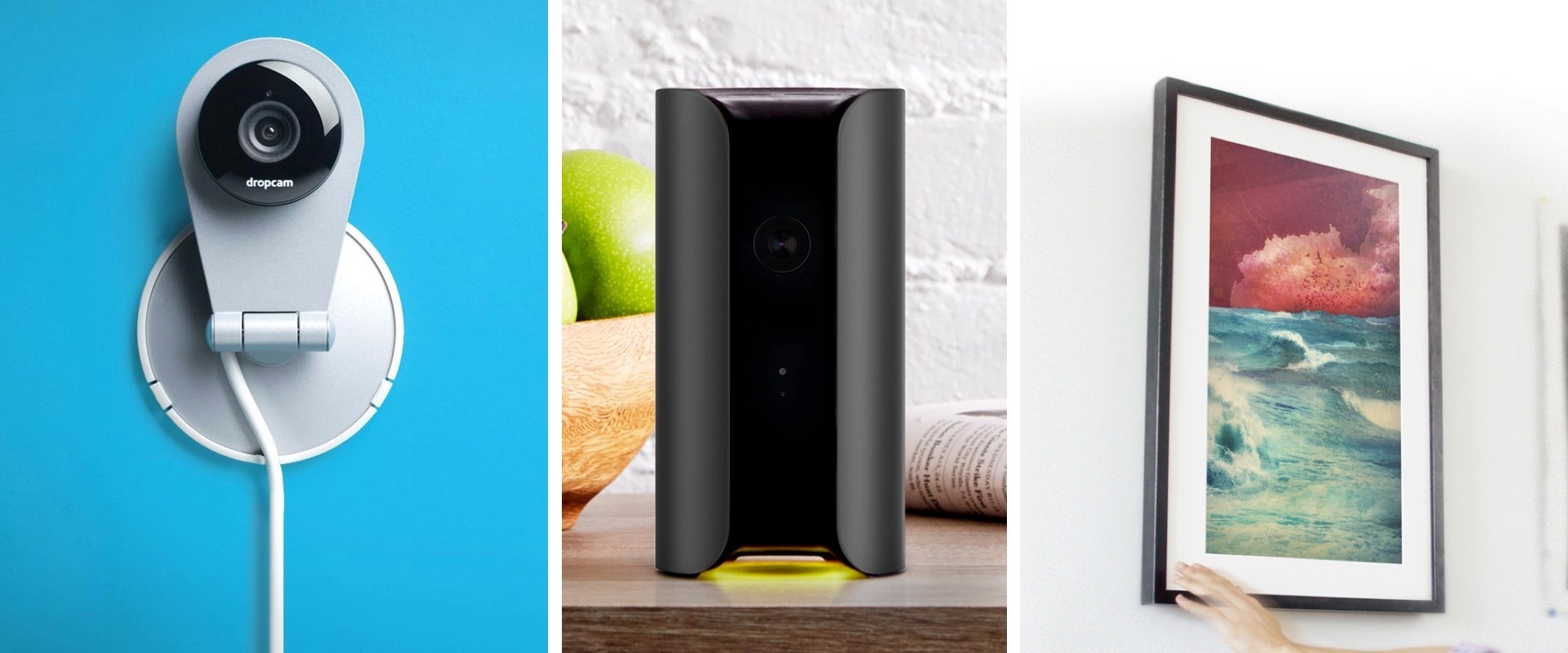
First Dropcam, Canary Security, and Meural Photo Frame
Some of the companies focused on providing electronic services are:
Dropcam (bought by Nest) sells primitive CCTV systems at a retail price of $ 199, making quite good profit from them. In addition, storing video in the Dropcam cloud will cost from $ 10 per month.
Canary sells modern security systems that remember everything that happens in your home and send notifications directly to your phone. The system will cost $ 249, which may not be so cheap, but it is much more convenient compared to systems from ADT and Honeywell.
Meural is developing stylish digital photo frames. The company's products, which can be purchased at a retail price of $ 499, make the main contribution to the development of the business, but Meural also charges an additional fee for displaying images of much higher quality.
Fitbit is a well-known manufacturer of fitness gadgets. Despite the low cost of their products (only $ 79), Fitbit receives a decent income from each product. Moreover, Fitbit’s millions of active premium users are willing to pay $ 50 a year for additional features on their devices.
3. Consumer goods
More and more startups are starting to experiment with the business model that has become popular thanks to Keurig Green Mountain. This is one of the most complex models for hardware companies, but it can be extremely profitable.
The model is based on a one-time sale of the main device and regular sales of consumer goods that users wish to purchase, but cannot do this in the absence of the main device. Often, this model requires not only a mobile / web application (complicated) and the corresponding equipment (even more complicated), but also an incredibly efficient and fast sales system developed from scratch (the most difficult).

Petnet Pet Feeding Device, Kuvée Smart Bottle and Amazon Kindle Paperwhite
Petnet sells Wi-Fi devices for pet feeding and automatic feed delivery if it runs out. The incredibly low price for such a device (only $ 99) gives rise to the development of home feed delivery services, for which the vast majority of users are subscribed. Petnet also acts as a feed retailer, earning a good profit from its sale.
Kuvée is changing our minds about buying and consuming wine. Like Keurig and Nespresso, Kuvée users have a basic device, which is a “smart” bottle, into which special 750 ml wine cartridges are inserted. These cartridges can be ordered at the touch of a button on the bottle, after which they will be delivered the next day right to your door. Almost all of Kuvée’s profits come from the sale of wine.
Amazon’s Keurig model is being adapted based on the fact that digital content (books) is used instead of consumer products, although in reality it’s almost the same thing. Amazon is losing money on the sale of every Kindle device , but still makes good money on digital content.
Rest Devices sells systems that allow you to track the condition of the baby with the help of special children's overalls. Parents can purchase additional sets of clothes when the child is growing up, and / or pick up accessories for existing ones. As a result, most of the company's LTV is not so much revenue from the first sale of an electronic system, but rather profit from the sale of clothing.
And this is just the beginning.
It is important to remember that the production of electronics with access to the Internet is at a very early stage of its development. This is not some kind of IoT mod, but only a new way of building a business by companies and a new type of user relationship to the products of these companies.
 Announcement:
On October 8, 2015 at 18:30, the FRII Open Doors Day will be held. If you are developing your own project, come and chat with our experts. Participation is free, registration is required .
You can apply for the 8th set of the IIDF Accelerator until October 22.