BMW's future: cylinder water and a torpedo in the cabin
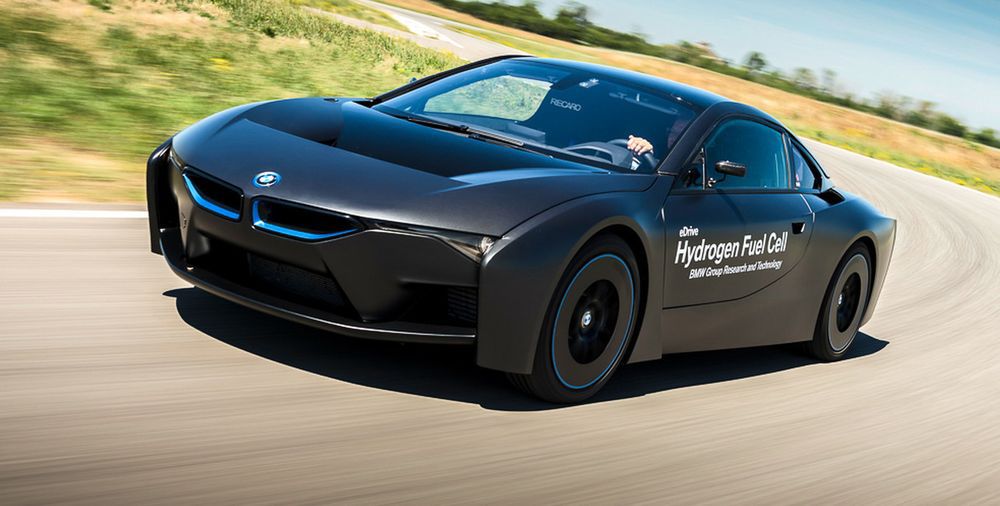
Recently, we managed to get to the BMW test site, where we saw many interesting prototypes and experimental samples. We can say that we touched the near future of the automotive industry, and we hasten to share with you everything we saw and heard.
The landfill is located in France, in the city of Miramas. Under the hot sun, cars passing one by one run along the highway, not much different in appearance from the usual production models. We approached the nearby BMW 5 GT, which differs from cars traveling in our cities only with blue lights near the door locks. To our question, what is it, the engineer accompanying us answered: “Hydrogen leak indicators. But do not worry, there is no danger. ” Naturally, we tensed up, because the memory of the last minutes of the Hindenburg immediately appeared in our memory .
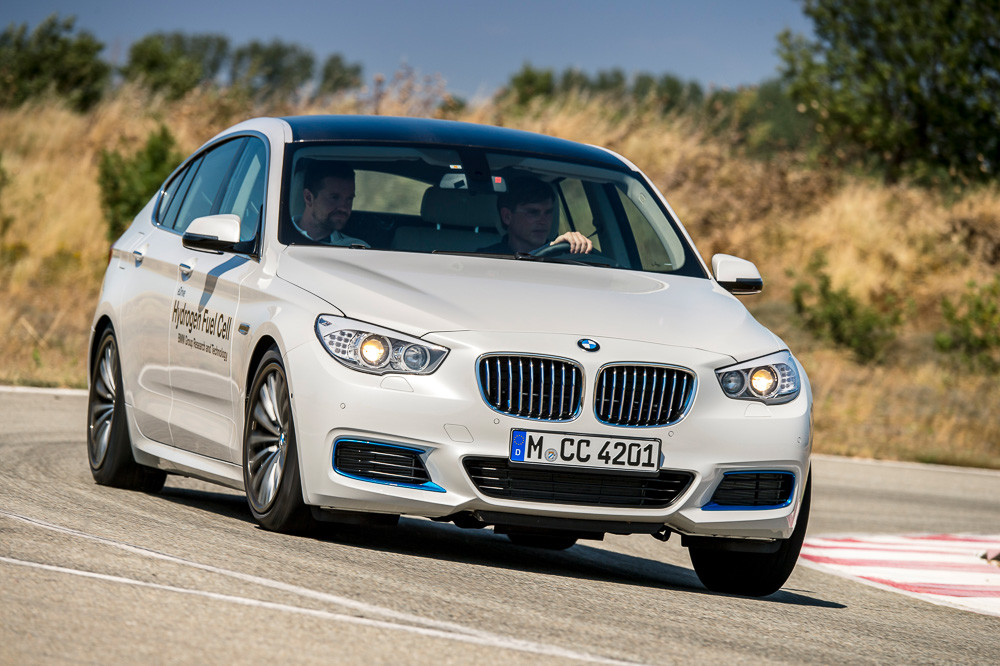
However, we really had nothing to fear, because, unlike the hydrogen-air mixture that filled the giant airship, BMW uses much less explosive pure hydrogen. Moreover, the Germans have been carrying out R&D in this direction for more than 30 years. In the early stages of experiments with hydrogen, they tried to use it as fuel for conventional internal combustion engines. However, it was not possible to achieve a sufficiently high efficiency for many years, and the last model with an internal combustion engine on hydrogen was the BMW Hydrogen 7 sedan, which was discontinued in 2007.
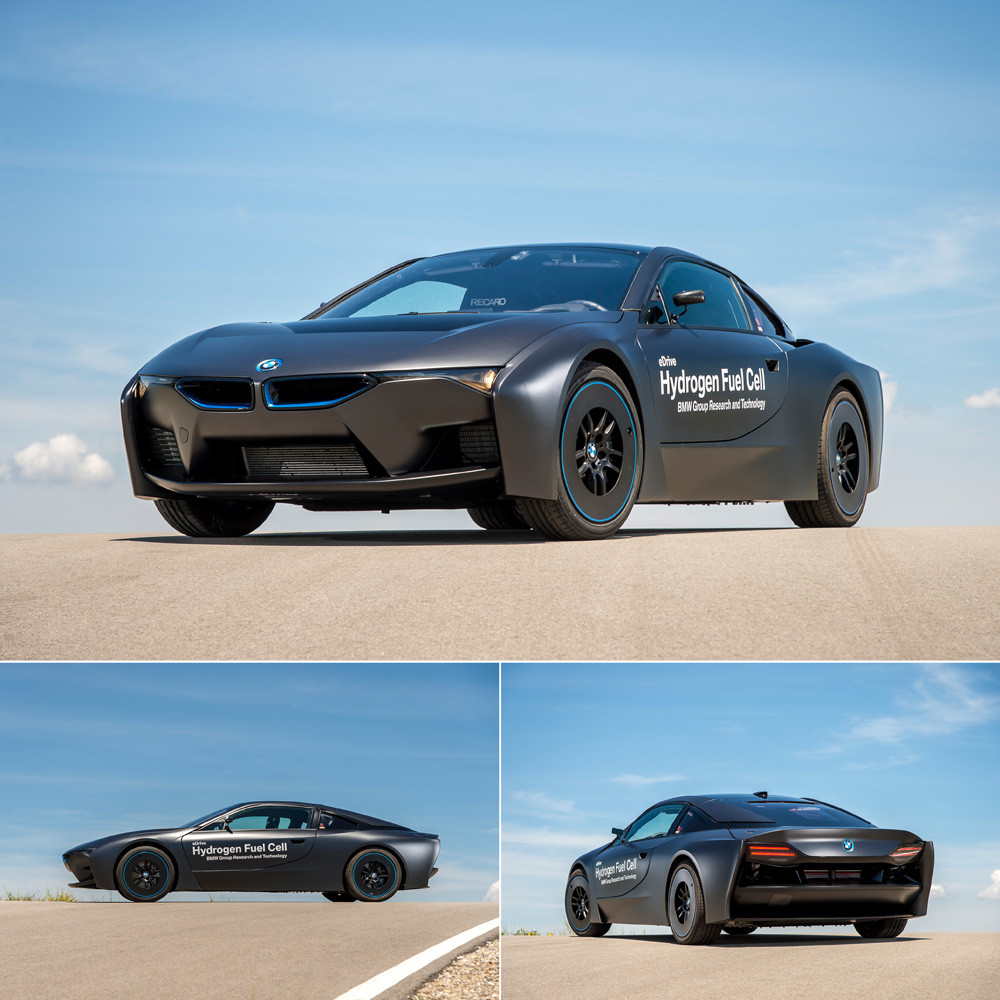
Very beautiful and stylish prototype fuel cell car. Unfortunately, the project is already closed.
The next step towards a bright hydrogen future was the use of fuel cells - elements containing hydrogen, in which electricity is generated due to a chemical reaction. The first fuel cell electric vehicle prototype was created at BMW in 2012. In 2013, a research and development cooperation program was launched with Toyota, the product of which was the aforementioned hydrogen 5 BMW.
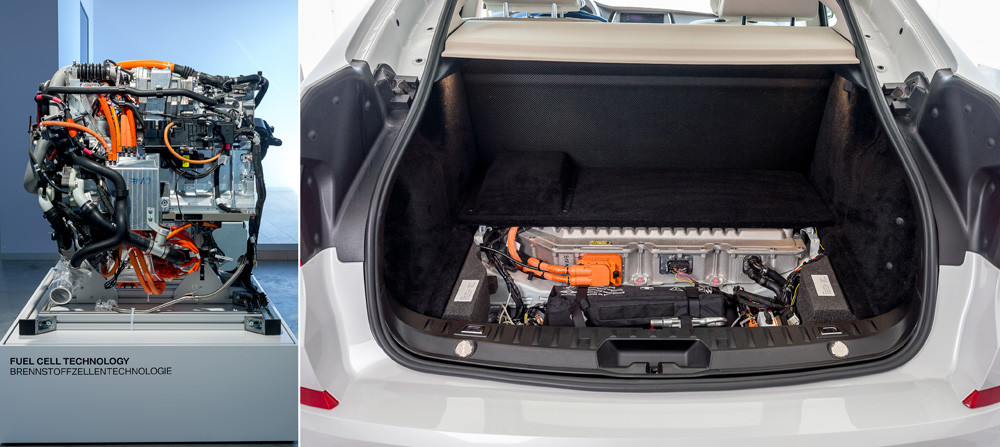
The fuel cell block and electric motor are located under the boot floor.
Why did you need to spend so much effort and money on the development of hydrogen, if BMW has already established the production of commercially successful hybrids that are enough to plug into a power outlet to recharge? Indeed, in addition to developing a hydrogen car, it will be necessary to invest a lot of money both in the production of pure hydrogen and in the construction of a network of gas stations. Even if these “related” costs are not taken into account, the cost of hydrogen is higher than that of gasoline and diesel fuel. By the way, the first hydrogen gas station has already started operating in Munich, which allows refueling cars using two technologies:
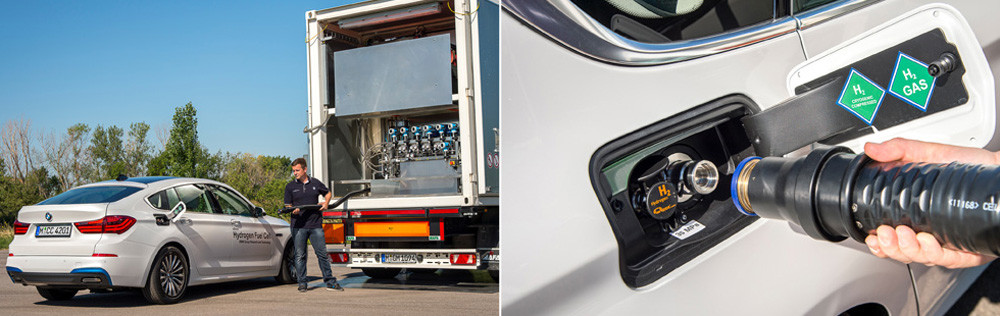
- CGH2: hydrogen is pumped into the tank in a gaseous state at a pressure of 700 bar;
- CCH2: the gas is pre-cooled to -200 degrees Celsius, this allows for a 50% increase in tank capacity.
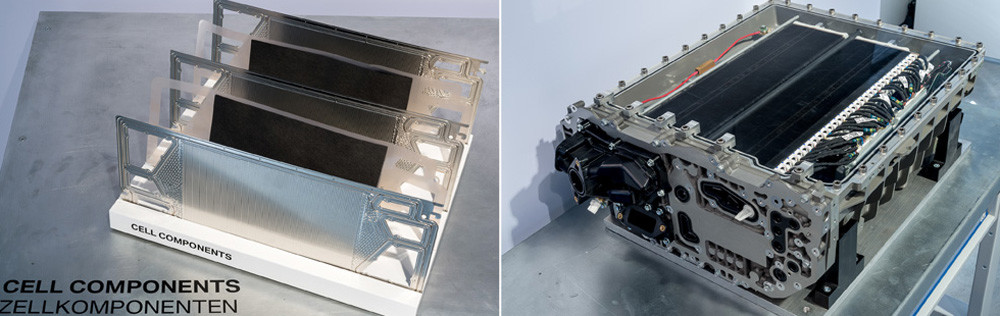
Fuel cells consist of catalyst plates for a chemical reaction during which electricity is generated. The plates are supplied by Samsung, and the enclosures and all electronics are developed at BMW. A cell of 50 x 60 cm contains 400 plates, and the resulting power reaches 100 kW.
When refueling using CCH2 technology, the maximum range is up to 500 km under ideal conditions. At the same time, the time of refueling itself is comparable to filling a full tank of gasoline. Naturally, the hydrogen filling hose is equipped with a protective thermal cover, so you can not be afraid to freeze to it. The hydrogen tank itself is very similar to an
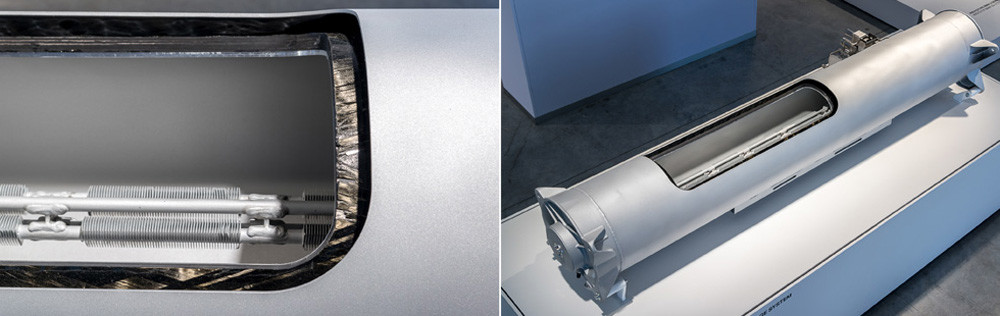
The length of the tank is about 2 m, it is a multi-layer structure of aluminum, carbon fiber, radiation protection and air gap. A fully filled tank weighs about 160 kg. It is placed instead of the driveshaft. The total mass of fuel cells and an electric motor is about 200 kg. Thus, the hydrogen “five” turns out to be of the same mass as cars with internal combustion engines, and is lighter than traditional battery electric vehicles.
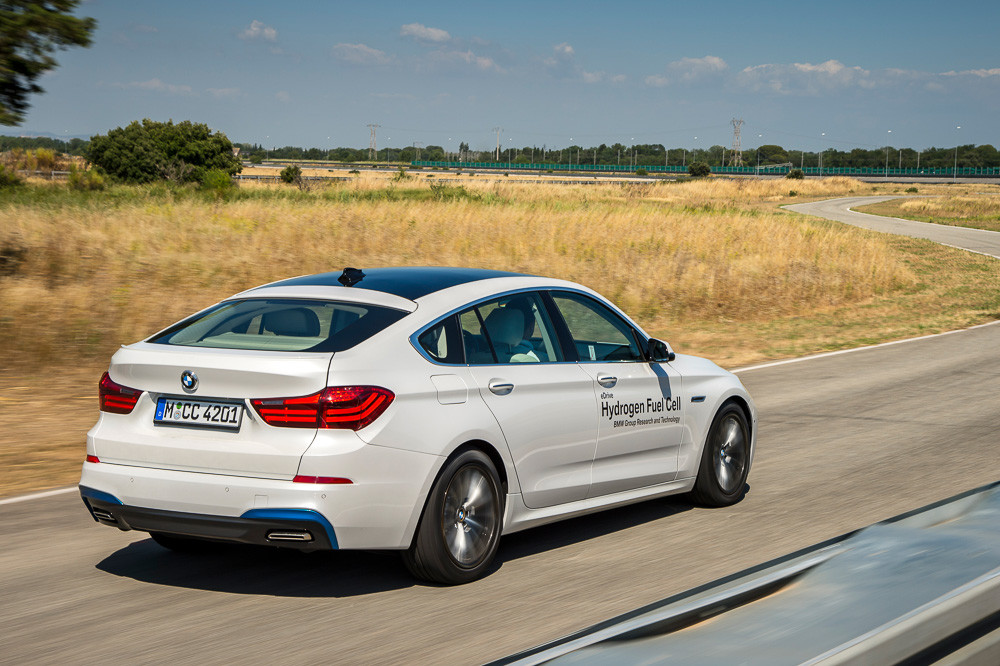
Using a hydrogen car is no different from the usual approach: they tucked in, sat down, pressed the engine start button, selected the driving mode and pressed the gas pedal. The motor power of the prototype is 180 kW (245 hp), which is enough to quickly disperse a fairly large car. Unfortunately, we were not allowed to test the speed limits of the prototype, so we did not exceed 150 km / h. It was very unusual to feel how the car walks behind the gas pedal, while not hearing the usual engine noise. Only with rapid acceleration did the electric motor begin to whistle softly.
Why has hydrogen transport not begun to actively push traditional cars off the road? There are several reasons for this. Firstly, the cost of “hydrogen” is quite high, because advanced, practically space technologies are used in the production of the fuel tank and cells. True, Toyota has already taken the first step and released the Mirai hydrogen sedan, which will cost about $ 60 thousand. Secondly, it is necessary to provide a wide infrastructure of gas stations, but the oil lobby is still interested in expanding the range of fuels. It is expected that by 2023-2025 in Germany there will be about 400 hydrogen refueling (now about 50), and in Japan - about 800. At about the same time, BMW plans to launch the first production model on fuel cells.
H 2 O
While developers bring hydrogen to their minds, engineers try to squeeze everything out of the traditional ICE. In particular, from the dusty closets they got the idea of the Second World War: the injection of water into the engine. In the 1960s and 70s, Oldsmobile and Saab produced mass-produced cars with water injection, but the imperfection of the control electronics at that time led to the curtailment of work on this technology.
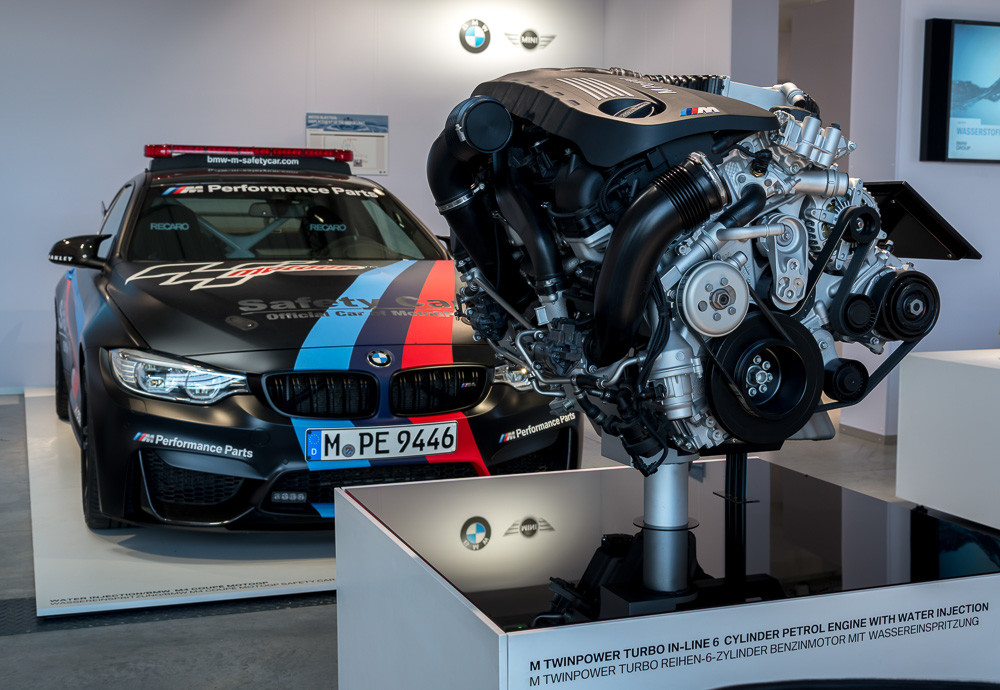
When water is injected into the intake manifold, the air temperature decreases and its density increases, which allows a slight increase in engine power. Also, water vapor reduces the temperature in the combustion chamber, so you can still increase the boost pressure. BMW's first water-injected car was the M4 Coupe. She will participate in MotoGP motorcycle racing as a safety car.
In addition, the company is preparing a BMW “first” hatchback equipped with a combined injection: water is supplied not only to the collector, but also to the cylinders. The total increase in power in the 1.5-liter turbo engine reaches 14 hp. If we confine ourselves to injection only into the collector, then the increase will not exceed 4 hp. Water injection reduces the risk of detonation, so engineers can further increase the degree of compression and reduce the proportion of fuel in the mixture, thereby saving gasoline. Under normal conditions, the savings will be 3-8%. Judging by research, combustion in the presence of water also proceeds more efficiently.
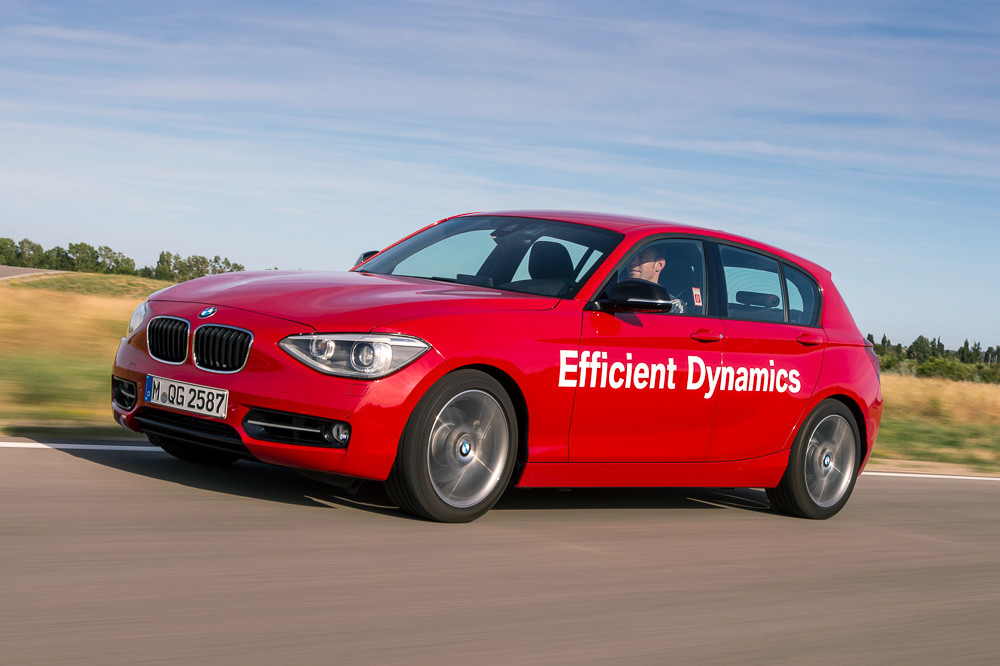
By the way, unlike the M4, which will have to regularly replenish the water tank, in the “unit” you will not even have to do this. Water will be collected in the form of condensate in the air conditioning system. True, in the heat you still have to add water on your own (only distillate!). In the cold season, the water tank will be heated, so there is no need to fear its freezing.
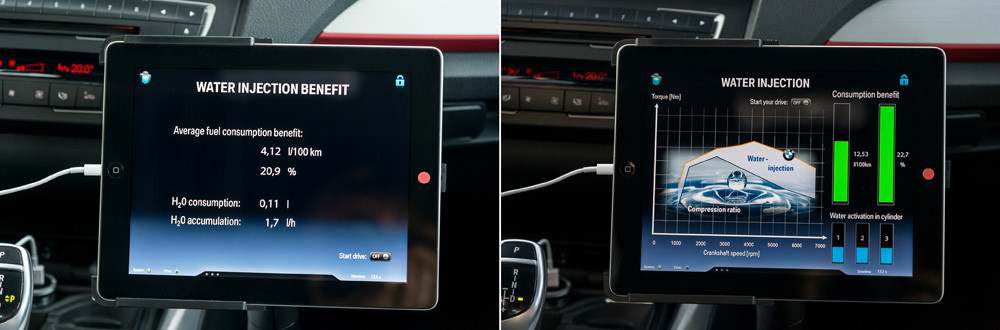
So far, the company does not name the timing of the sale of a serial model with combined water injection. The system is complex, quite expensive and not yet completed. But the technology that will be tested on the M4 will go into production in 2016. Perhaps the first model with it will be the M2, but BMW does not provide information on this subject.
Near future
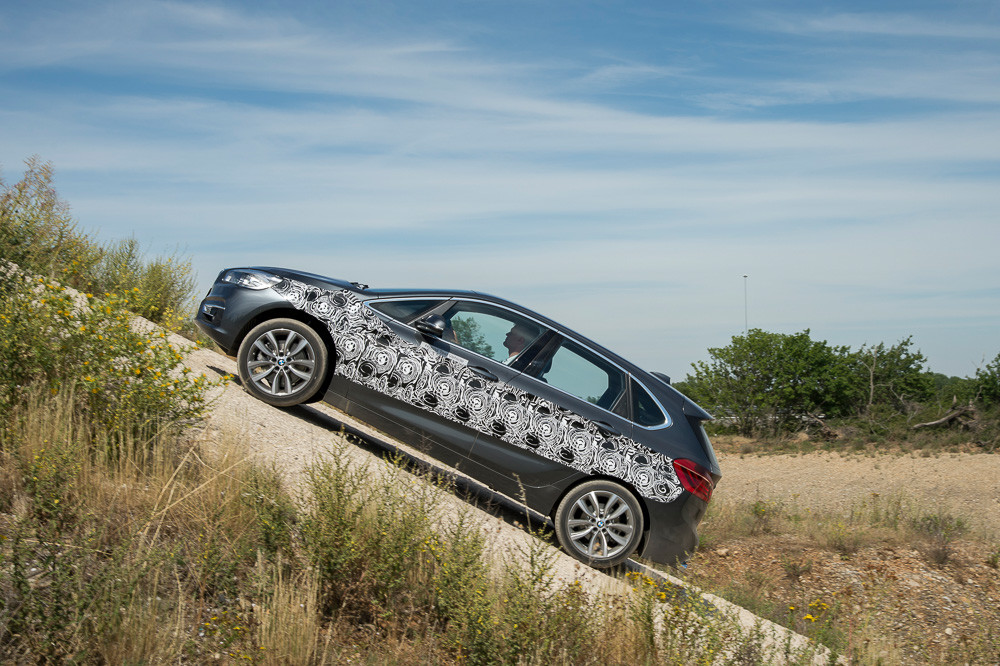
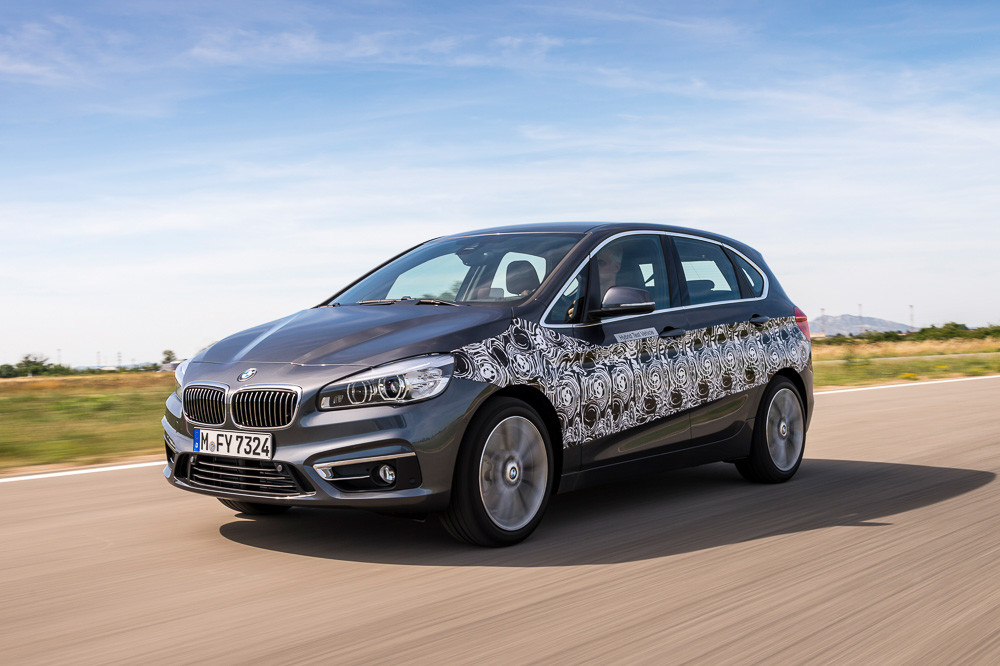
In the end, we managed to “feel” the compact Active 2 Tourer eDrive, which will go on sale in early 2016. The body is five-door, the platform is from the i8 coupe, only with a 65 kW electric motor located in front. Rear-wheel drive. The total return reaches 220 hp at 385 N * m of torque. Acceleration to 100 km / h will be 6.5 seconds.
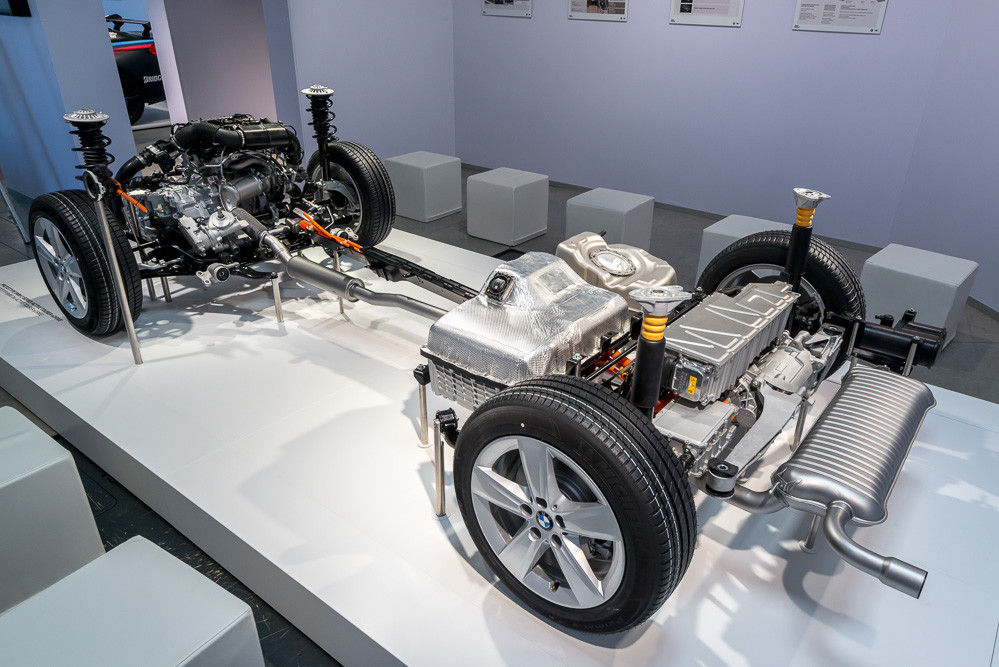
The mobility of the car was really very good, with four riders the car almost did not lag behind the BMW 435i. In corners 2 Active heels little, holds the road well. When leaving for the primer, the automation quickly connected the rear axle, so the front wheels did not have time to stall.
You can choose one of three modes of operation:
- Auto eDrive: the automation itself switches between the internal combustion engine and the electric motor;
- Max eDrive: electric motor has priority;
- Save Battery: ICE is used to charge the battery, this way you can bring the charge level to 70%.
A full charge from a household outlet will be 3 hours 15 minutes, from a wall outlet with a WallBox device - 2 hours 15 minutes.
Given the activity of BMW in the promotion of hybrids, we should expect their appearance in most of the company's lines. In particular, there is already information about the preparation of the BMW hybrid of the third series, in line with the BMW "five".