June 10, 2015 at 11:16
Silicone Plastic Injection - Affordable Small Batch Production At Home
- Tutorial
Many of those who print on a 3D printer are either faced with the need to get a batch of models in a short time, or copy a successful part, or get products with strength characteristics that are superior to those for home 3D printing plastics .
A 3D printer is far from always capable of performing such tasks, but it is perfect for creating a single sample, or master model. And then, materials from the production of Smooth-On , probably the most popular manufacturer of cold-cured materials, come to our aid .
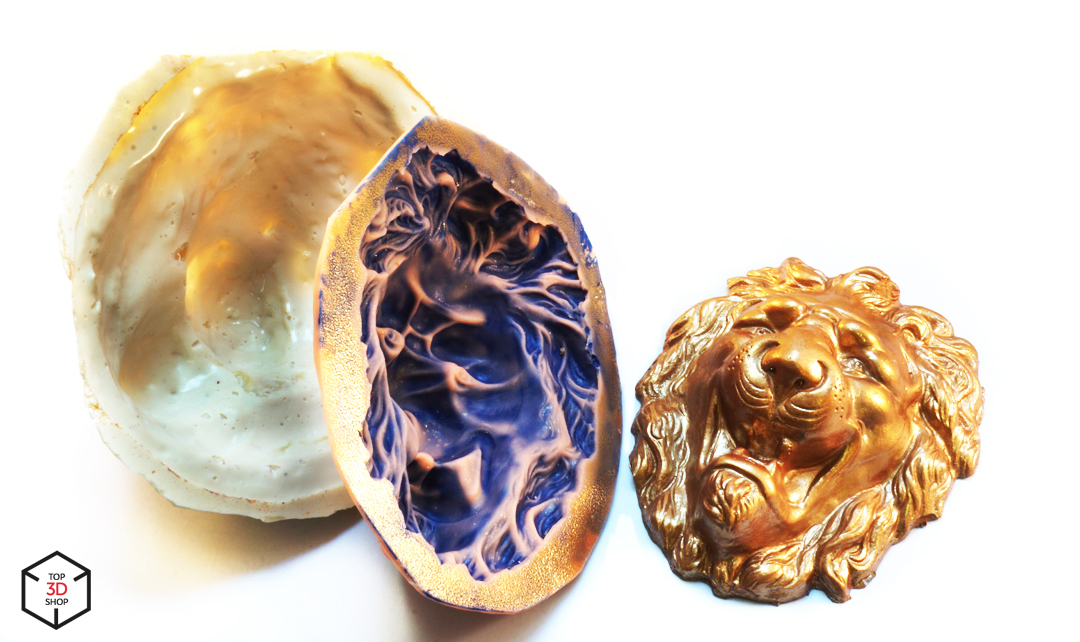
In this review, we will compare the most basic and popular silicones, polyurethanes and additives to them, briefly look at the main ways of creating molds and products, think about where this can be used, and finally, create our own silicone mold and model.
Before writing this post, we went through a three-day training at an official Smooth-On dealer in Russia to understand all the intricacies of silicone molding.
Overview of the process
The process of creating products by casting is almost always the same: create a model, use it to create a silicone mold, fill it with material, and get the product. But depending on the model, the required properties, the number of castings, each stage can radically change. There are several ways to create a form as well as a finished product.
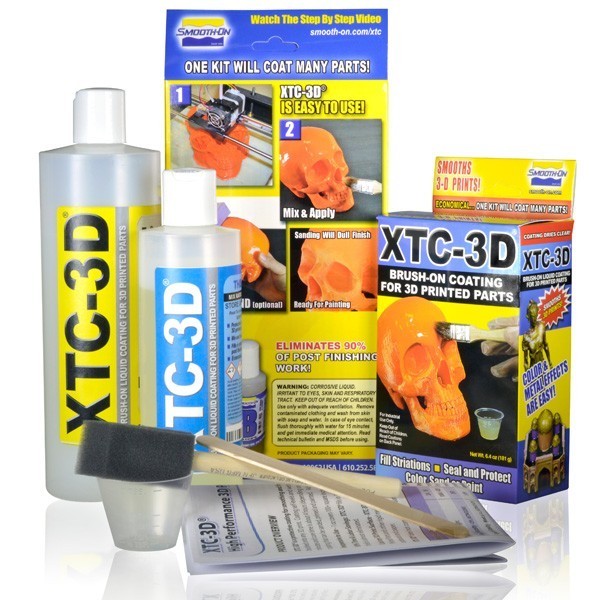
A few words about the preparation of models printed on a 3D printer . The company Smooth-On turned its attention to this technology, and has released a special varnish called of XTC-3D . It perfectly smooths the flaws characteristic of printed models, visible layers, which will necessarily go over to the silicone form, and gives the surface smoothness and a glossy look. You can read a
detailed review of XTC 3D here .
Methods for creating forms
• Solid fill
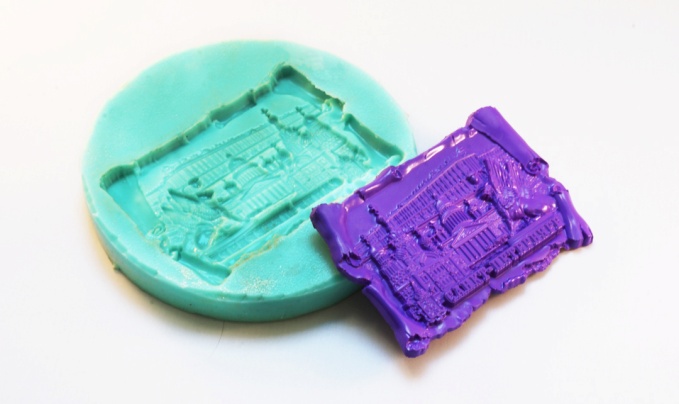
The easiest way: the model is placed in the formwork (a special sealed container made of ordinary plexiglass, plastic or other material), fixed in it and filled with silicone. Well suited for simple two-dimensional models, reliefs, souvenir and branding products.
• Cutting mold
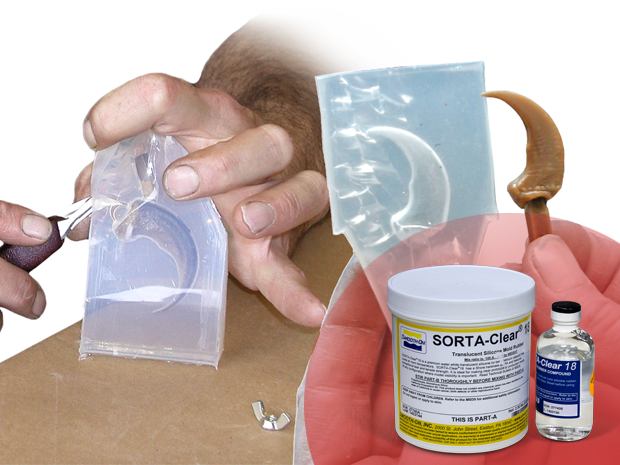
Similar to the previous one, only the model is placed taking into account that the mold will be cut in whole or in part to facilitate removal. The model can be suspended using wire or placed on a thin support. The method is intended for more complex geometry, technical products, complex figures.
• Two-part form
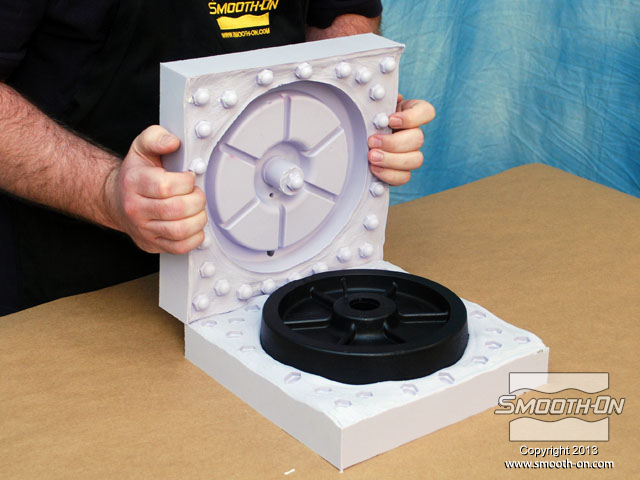
This is one of the most difficult ways. It consists in placing the model on a clay or plasticine base, which divides the silicone form in half.
On the basis of special locks are placed, which will ensure the exact combination of two forms and the absence of displacements. Around the base, the formwork is assembled, sealed with hot glue or plasticine, and the first half of the mold is poured into it. Then, after curing the silicone, the mold is turned over, the clay or plasticine is scraped off, the silicone is coated with a release agent, and the second half of the mold is poured.
•
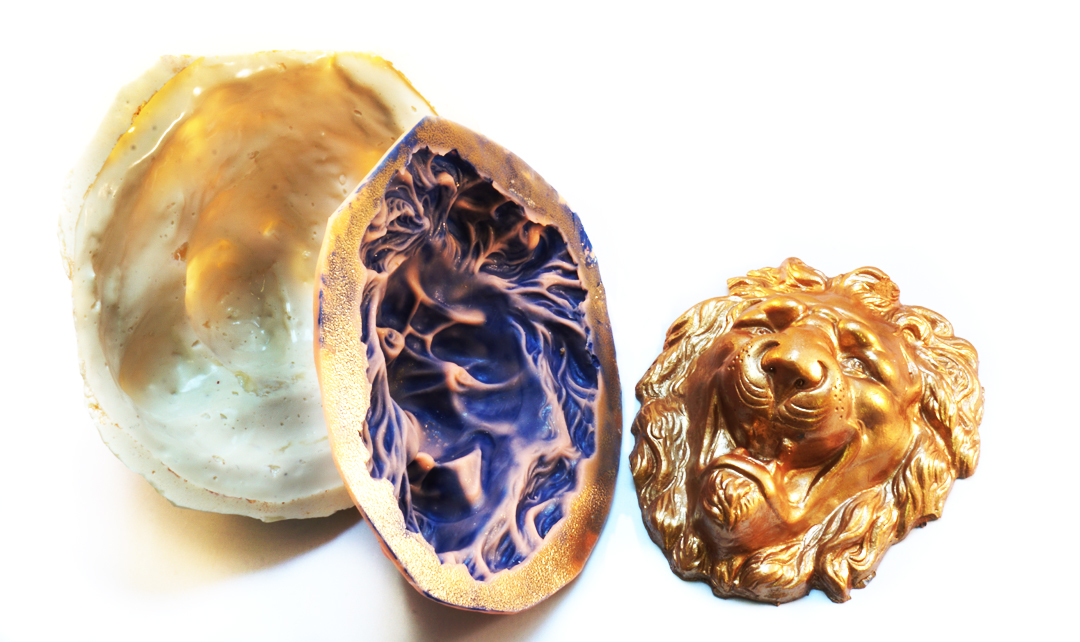
“Putty” method This method creates the so-called “hosiery” forms, when the silicone precisely repeats the shape of the object and has a thickness of 3 mm to several centimeters. To create a “putty” shape, a sufficiently viscous silicone is needed that would not drain from the model.
You can use both specially designed silicones, called thixotropic, and ordinary, but modified with thickeners.
Silicone is applied with a brush or spatula in several layers, in which viscosity and hardening speed alternate, so that the form is as detailed and durable as possible. After all the layers are ready, with the help of a special composition, a rigid outer shell is created that will hold its shape.
Methods of pouring plastics
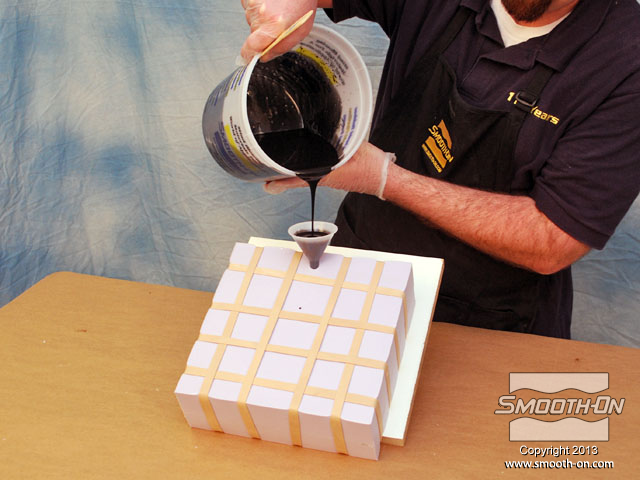
The simplest method is to simply fill the plastic into the mold, it is suitable for home use and can achieve acceptable quality. But, if necessary, for a better result, it is possible to use high-pressure installations, which will almost completely remove air bubbles.
To do this, the mold, together with the plastic, is placed in a chamber in which pressure is increased up to 4 atmospheres. The mold must remain in the chamber during the curing time of the polyurethane. At this pressure, the bubbles decrease to a size almost invisible to the eye, which greatly improves the quality of the product.
Another method, the so-called “run-in” fill, is used to create hollow products. A small amount of plastic is poured into the mold, about 10% of the total volume, the fill hole closes, and the mold begins to rotate on all planes, manually or on a special rotary machine. In this case, the plastic hardens on the walls of the mold, creating a hollow model, which can significantly reduce the weight of the product and save material.
Silicon Overview
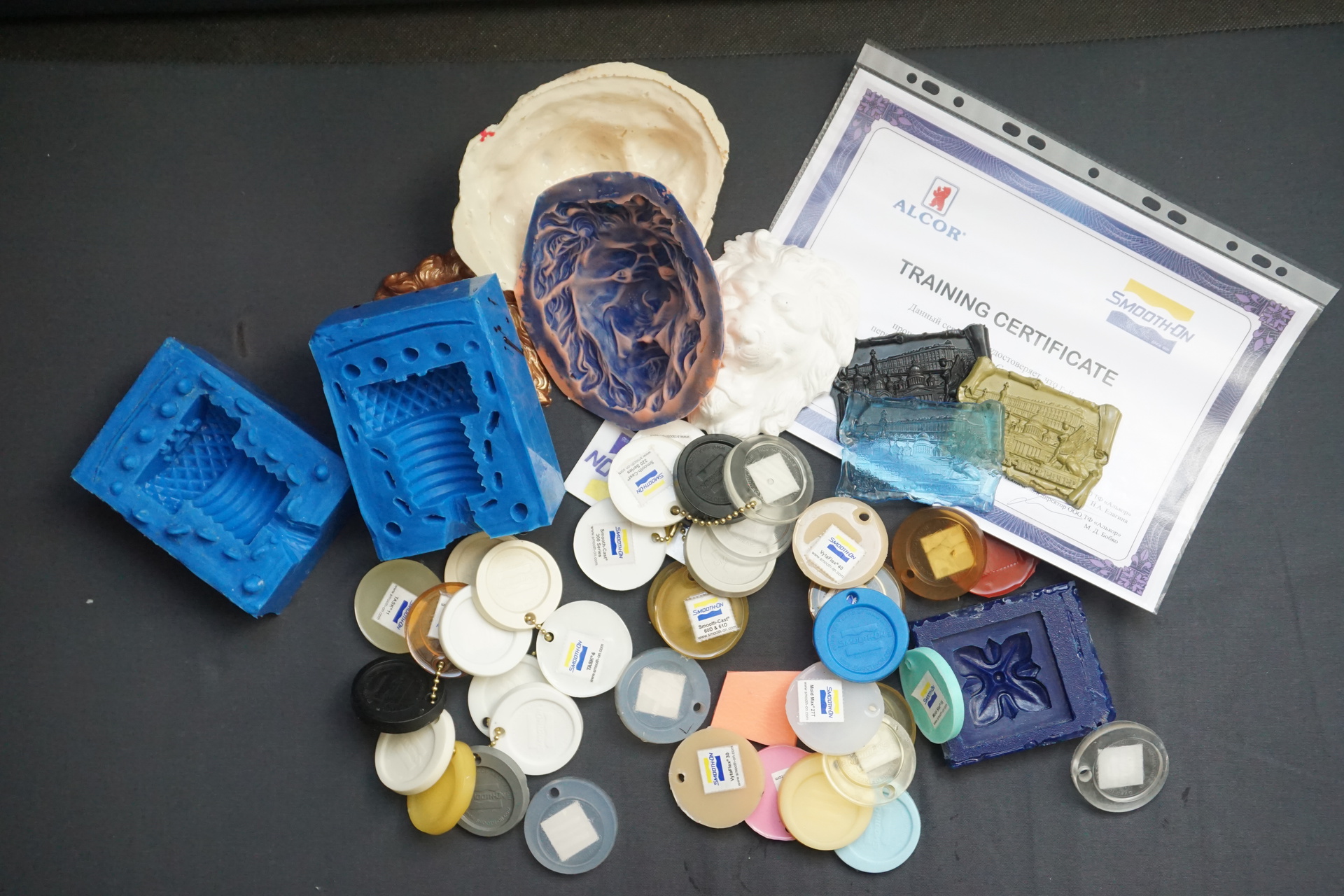
• Mold Star Series 15, 16, 30
Silicones to create platinum based molds. It solidifies at room temperature, forms a strong, flexible and very detailed form. Designed for casting silicone, polyurethane, resins, polyester, wax and other materials. Chemically sensitive and unable to work with latex, sulfur and some other compounds.
The most basic and basic silicones that can solve most problems. The number in the title reflects the hardness on the Shore A. scale. It has a low viscosity, which allows in most cases to work without equipment for degassing. The material is two-component, the parts are mixed in a convenient ratio of 1: 1 by volume. Mainly designed to create forms by continuous casting.
• Rebound series 25, 40
A series of silicones for creating molds with the “putty” method, which consists in applying silicone with a brush or spatula to the surface of the model. It has high viscosity, the ability to modify properties using thickeners and accelerators to create a high-quality multilayer form. Two-component, mixed in a ratio of 1: 1 by volume.
• Equinox 35, 38, 40 series
Silicone pastes with a life time of 1, 4 and 30 minutes. Designed for manual mixing, the consistency resembles a thick dough. The numbers correspond to Shore A. hardness. It has extremely high tensile strength and durability. When cured, it is safe for pouring chocolate, caramel and other ingredients.
• SortaClear 18, 37, 40 series
A series of translucent silicones. Such a feature as optical transparency is used to create complex cut forms - the product is perfectly visible, which allows you to make an accurate cut. Like the Equinox series, it is safe in contact with food.
Also to silicones there are a large number of additives with a variety of effects. Accel-T and Plat-Cat are accelerators of curing, Slo-jo - increases the life time of silicone, Thi-Vex increases the viscosity of silicone and allows you to spread it with a brush or spatula on the model, Silc-Pig - these are concentrated pigments for coloring.
Polyurethanes Overview
• Smooth-Cast Series
The most basic and popular series of polyurethanes for creating end products. The line includes more than 10 names of various plastics with a variety of properties, allowing you to choose the material specifically for your project. For example, Smooth-Cast 300 has a short life time of 3 minutes and a cure time of 10 minutes, which allows you to quickly reproduce large batches of parts. Smooth-Cast 305 is similar to the previous one, but has been “living” for 7 minutes, which allows degassing of mixed components and obtaining an even better product. ONYX has a deep black color that cannot be achieved with dyes, 65D ROTOit is designed to create hollow models using the “run-in” method, 325 is indispensable for accurate color reproduction, 385 cures practically without shrinkage and most accurately copies the product.
• TASK
Series A series of special purpose polyurethanes. Designed for industrial use and has specific properties for specific tasks.
For your convenience, we have formed special filters for the fields of application:
• Food:
Smooth-Sil 940, Sorta Clear series, Equinox series, TASK 11.
• Architectural, pouring concrete and other abrasive materials:
VytaFlex series, Brush-On series, Ez- series Spray PMC Series .
• Medical: tissue and organ simulations
Dragon Skin Series, additives Slacker, Ecoflex 0030, Ecoflex Gel, Body Double.
• Prototyping:
Almost any polyurethanes and silicones, depending on the tasks and requirements. Series Mold Max , Mold Star , Smooth-Cast , TASK .
• Special effects and makeup:
Skin Tite, Body Double, Dragon Skin, Alja-Safe, Ecoflex, Soma Foama, Rubber Glass, Encapso K.
It is worth noting that this division is still conditional, and is given to approximately represent the possibilities of a wide range of Smooth -On.
Process overview
We will use only those materials and equipment that can be used at home. We will try to create the most difficult two-piece form in manufacturing.
We will need:
• Mold Star 30 platinum silicone
• Smooth-Cast 300 filling polyurethane
• XTC-3D 3D model varnish
• Vinyl gloves packaging
• Several disposable plastic cups
• Mixing containers
• Hot glue gun
• Formwork (plastic panels)
• Sculptural clay
• Several paint brushes.
The master model will be a model of a test bolt that is quite popular among printers. We printed it in blackPLA plastic on Picaso 3D Designer with a layer thickness of 100 microns. We did this specifically to demonstrate the effect of XTC 3D , since not every 3D printer can print with 50 micron quality.
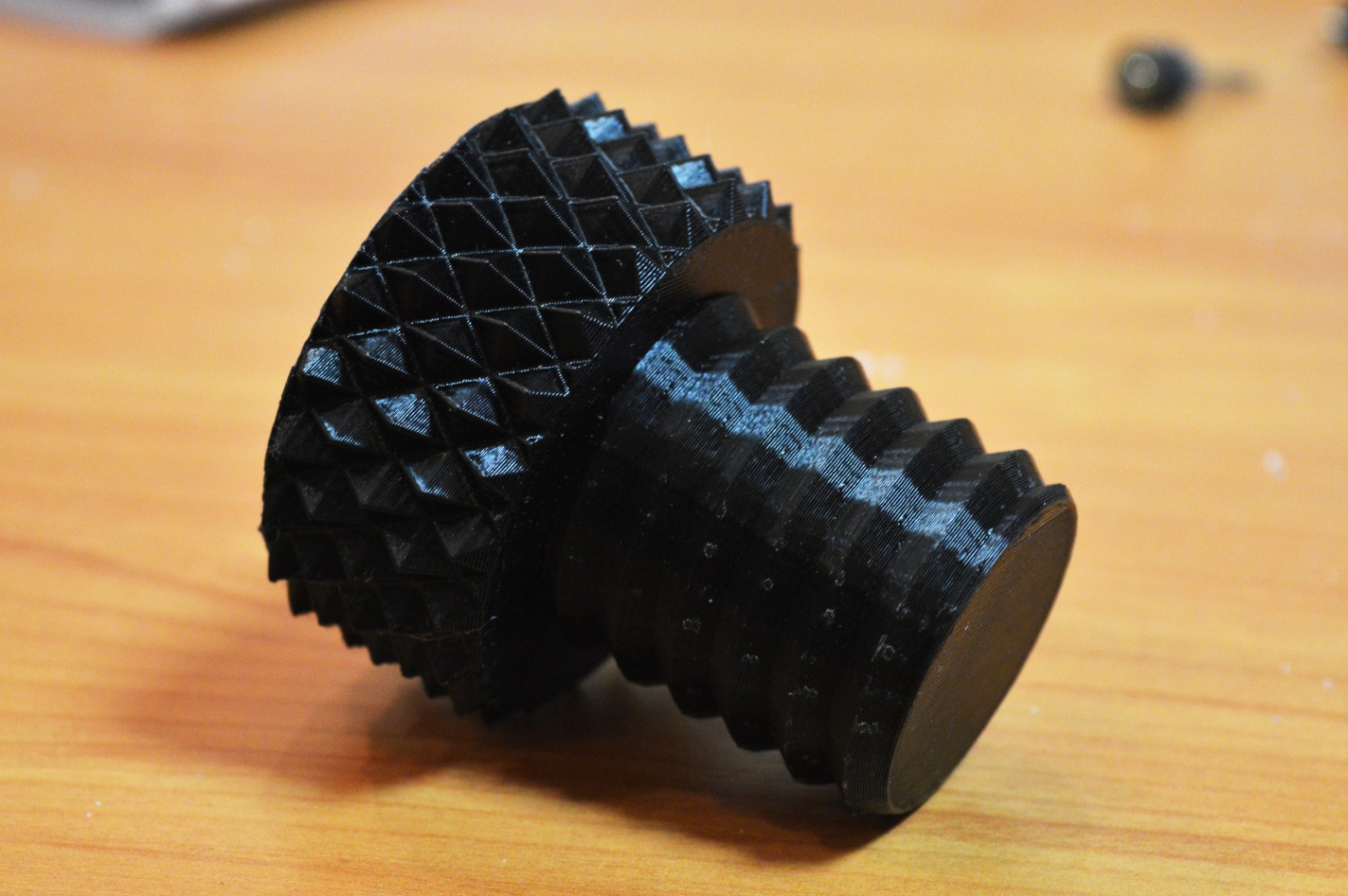
Next is processing so that the cast model does not adopt the layering of the printed object. We process the bolt with XTC-3D varnish (more details about this process can be found here ), and then we skin it to get a smooth matte surface.
Now the model is ready for pouring with silicone. We place it on a clay base, with which we will create a two-part silicone mold.
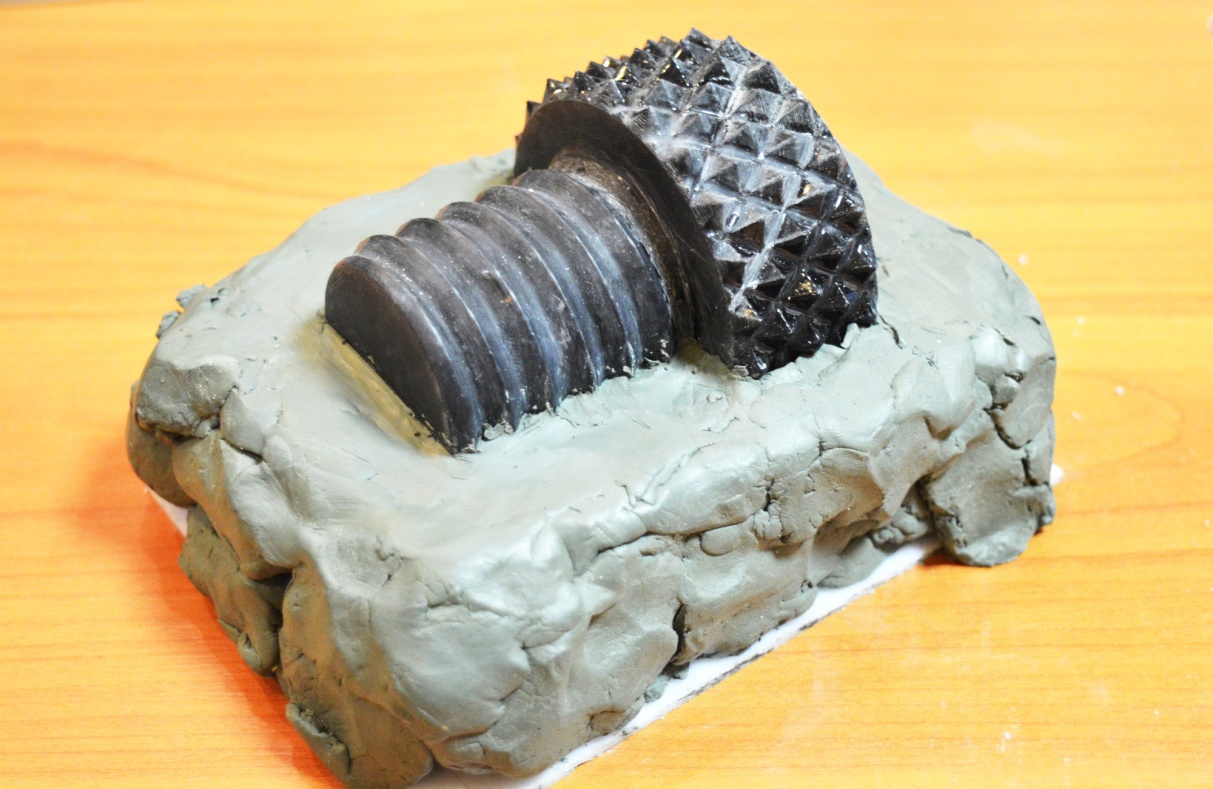
The model should be immersed in clay exactly halfway, so we begin the process of leveling the clay. The edges should be as even as possible and completely fit to the model, the quality of separation of the silicone halves depends on this. We remove excess clay and enclose the model in a plastic formwork.
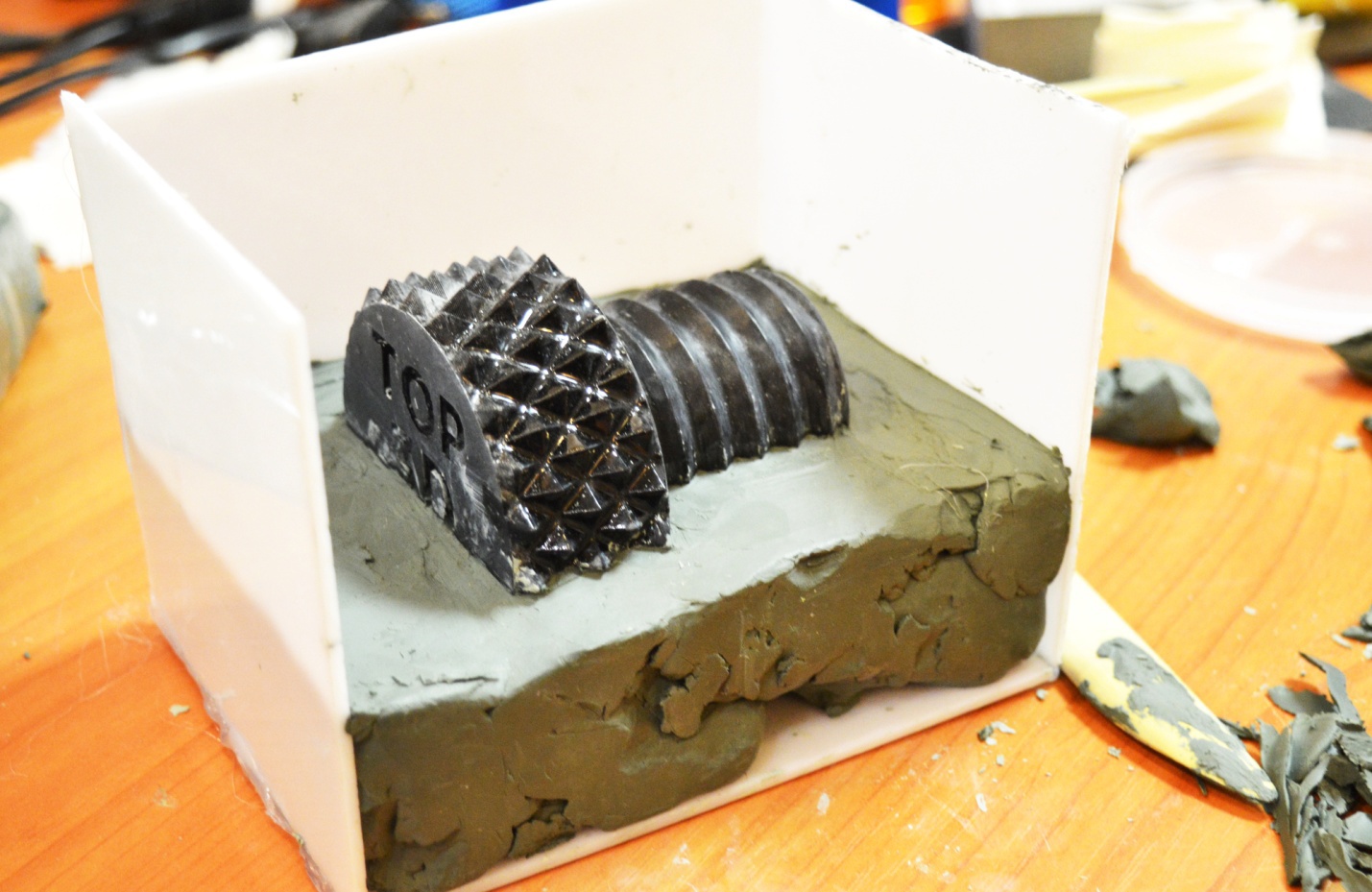
We process all joints of plastic with a hot glue gun and close the formwork, finally process the clay base, make recesses for locks in it.
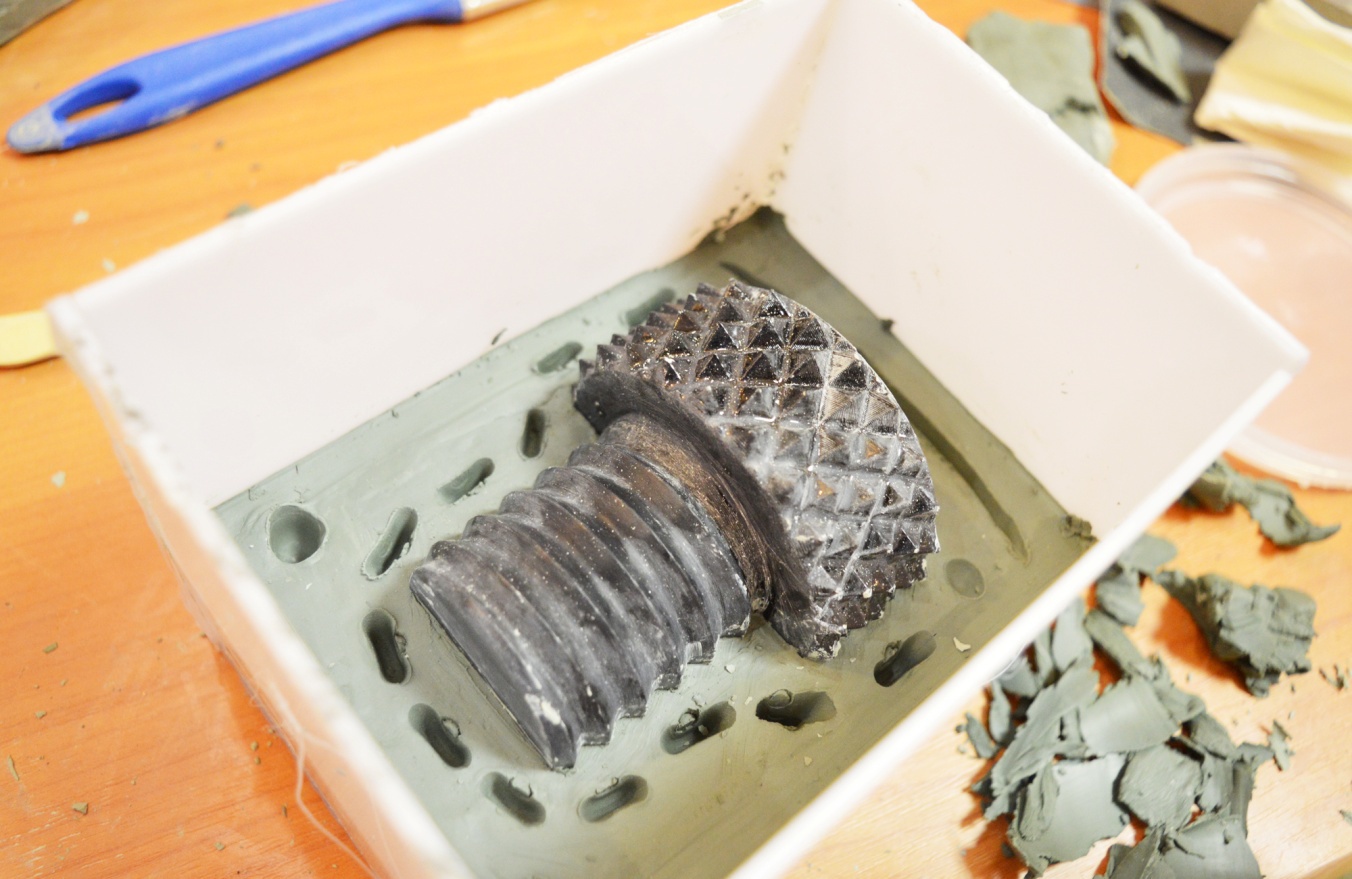
Everything is ready for pouring silicone. Since bicomponent silicones and polyurethanes are prone to fractionation, they must be thoroughly mixed in containers before each use.
After mixing, measure out an equal amount of two components in volume and proceed to mixing.
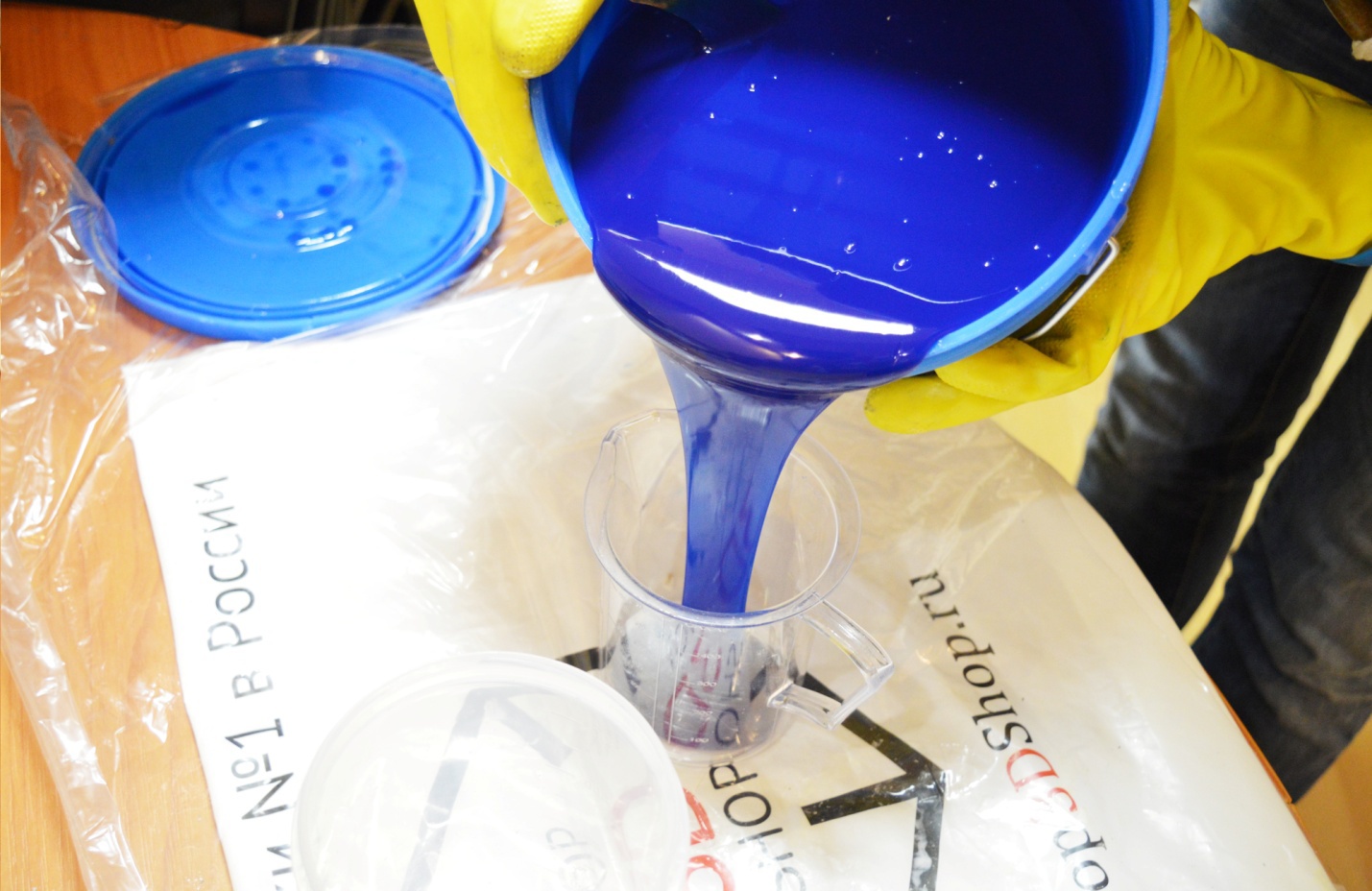
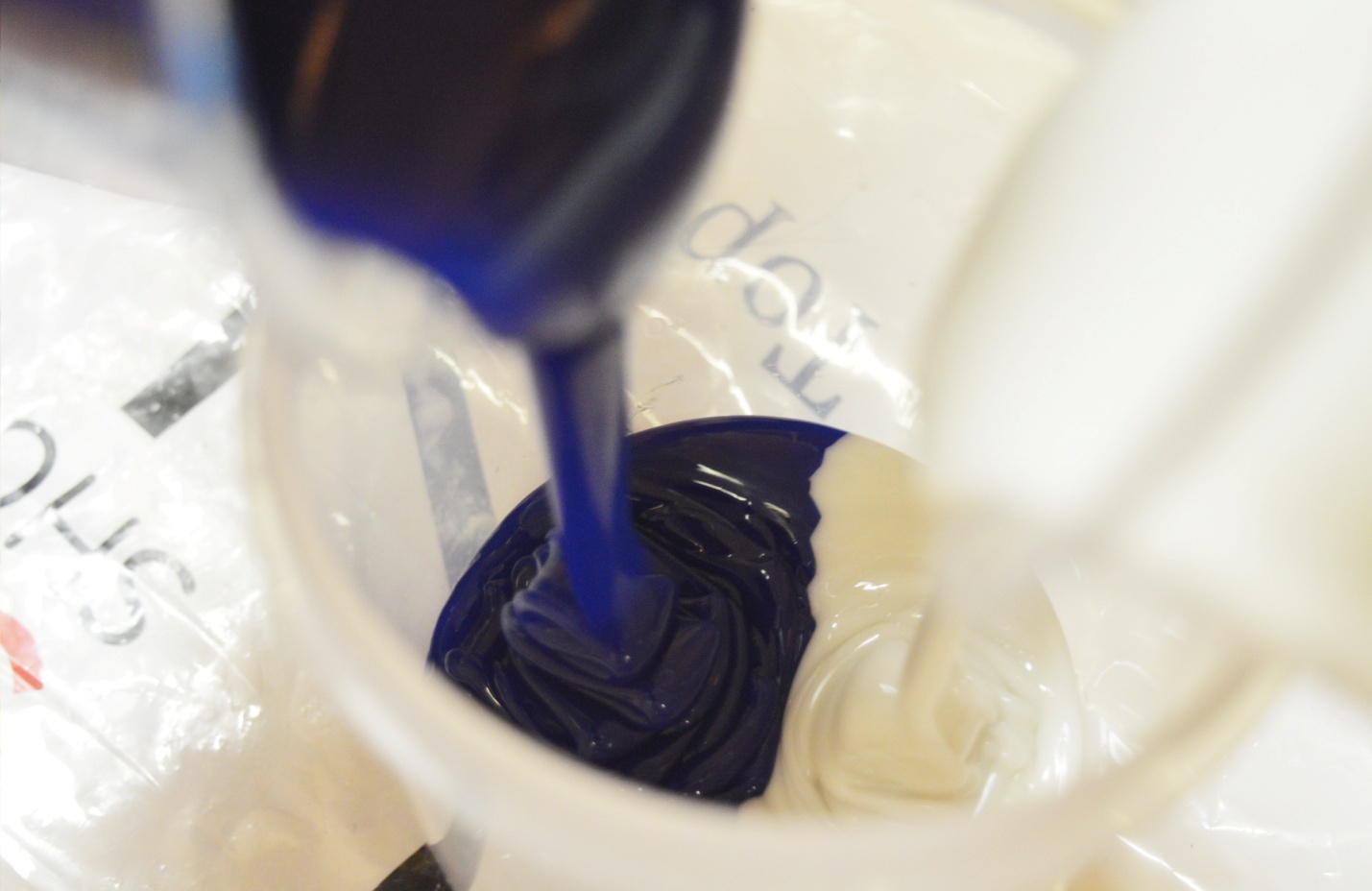
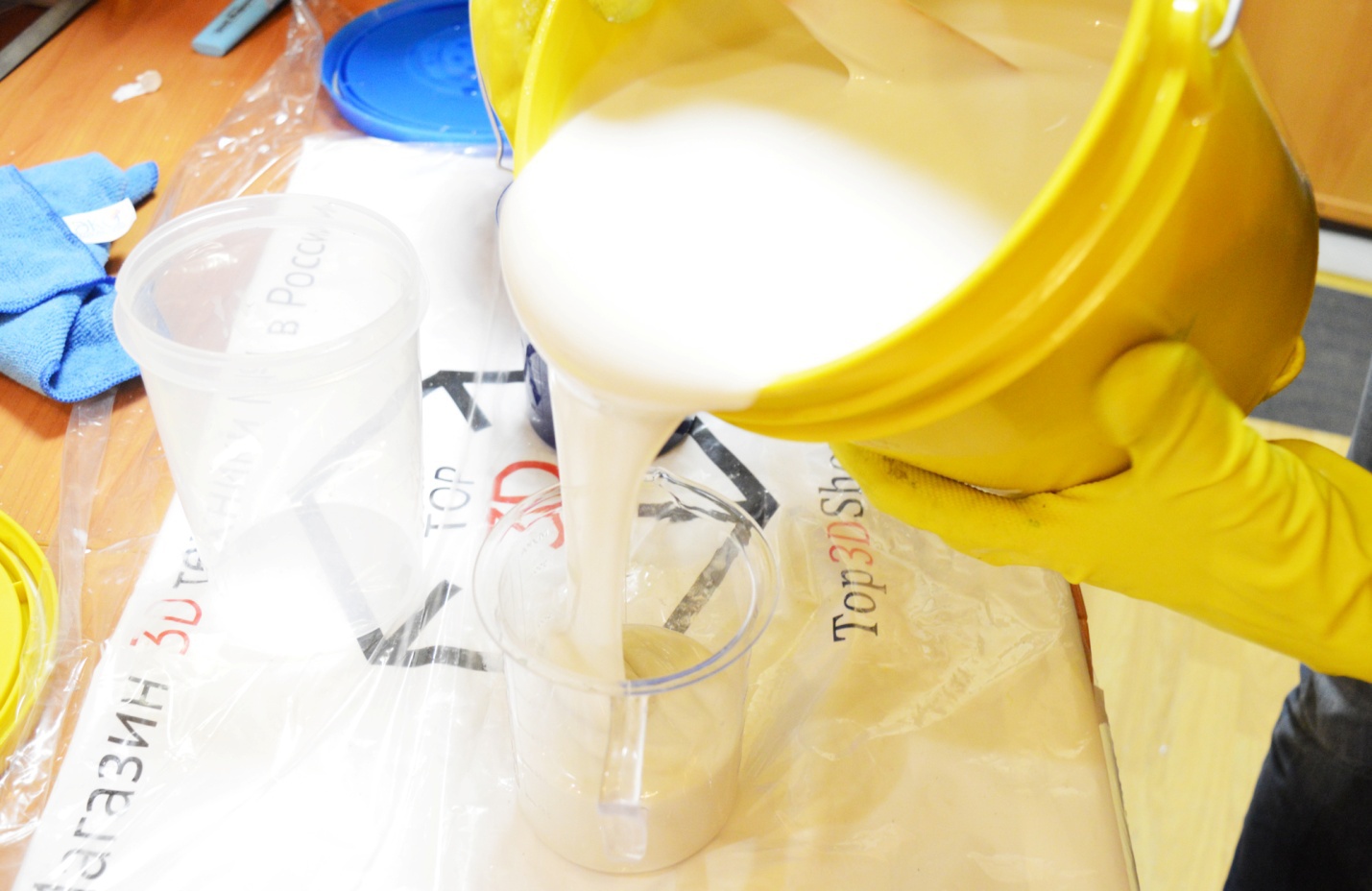
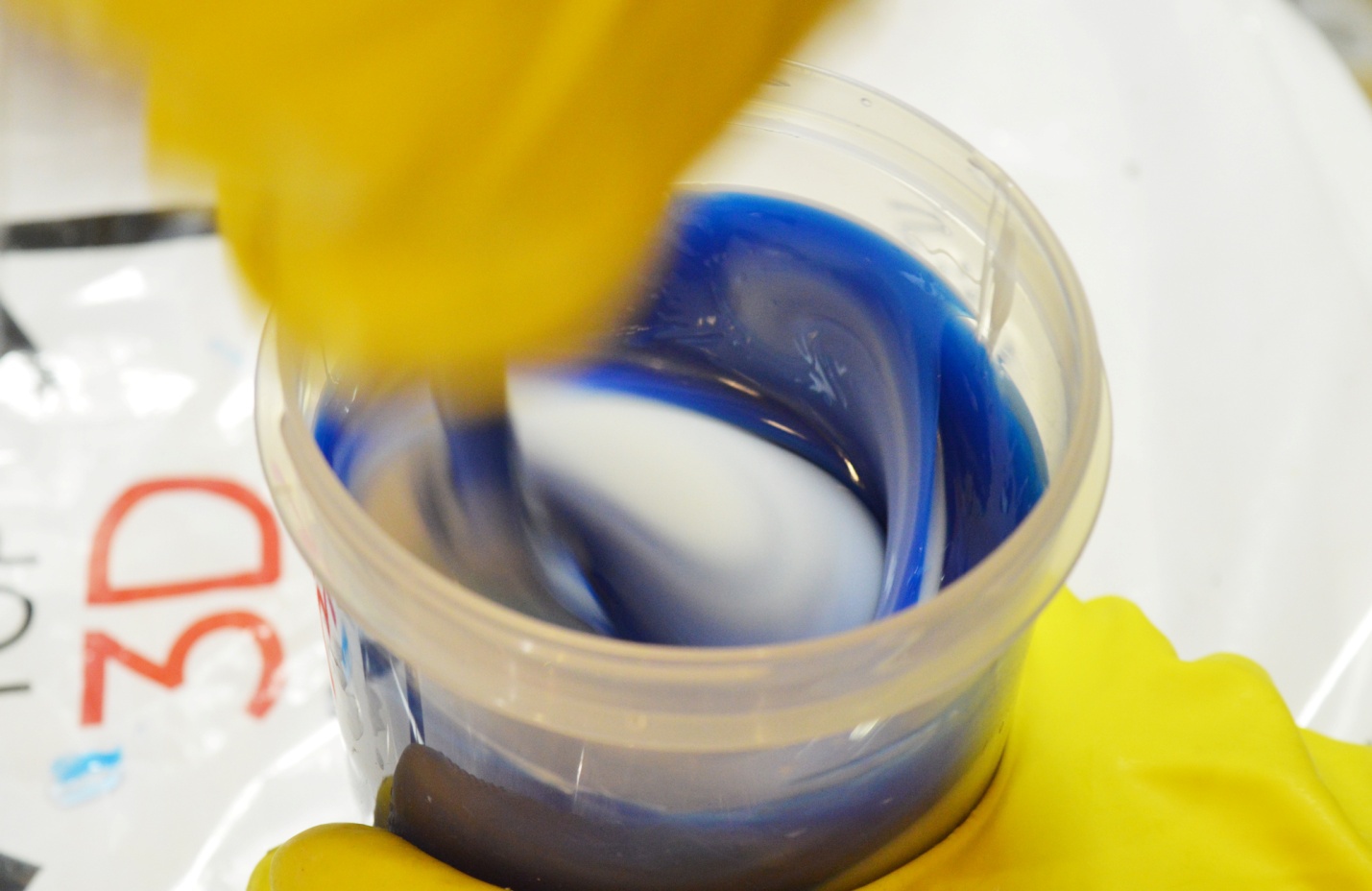
For this brand of silicone, degassing in a vacuum chamber is optional, which is very convenient: the appearance of bubbles that can ruin our shape is excluded. Slowly pour silicone into the formwork, at its lowest point.
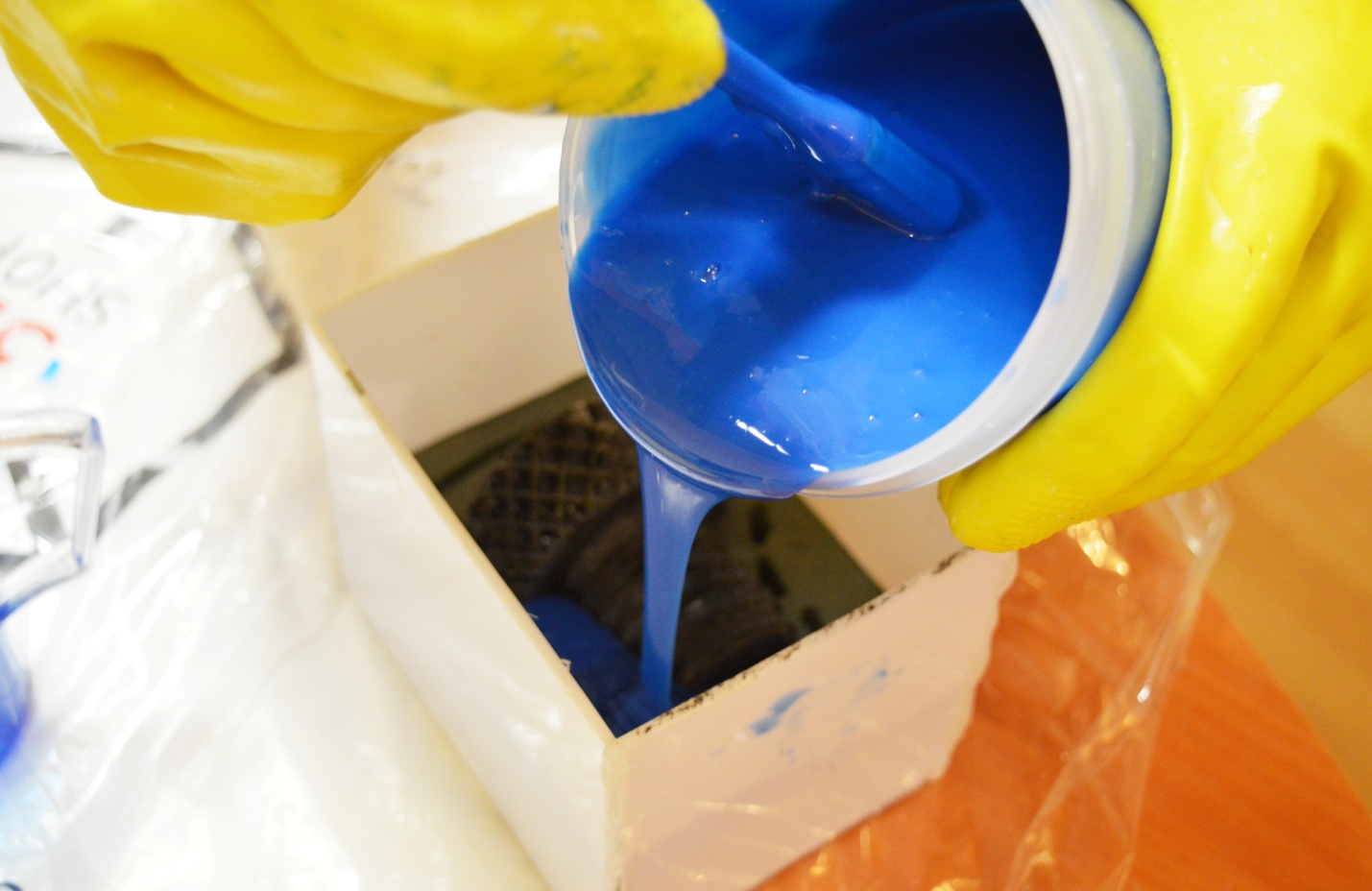
And leave to freeze. The pour time for this brand of silicone is 6 hours. After this time, we release the model from the formwork.
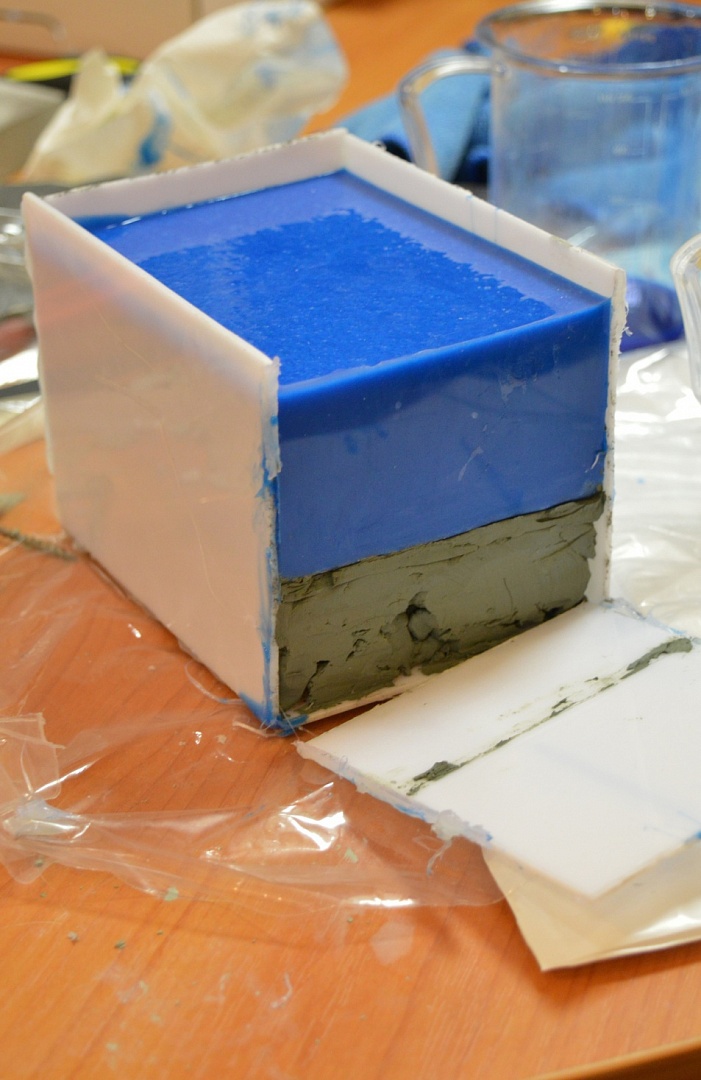
Then we remove the clay, carefully clean the model of its residues, lubricate the silicone with a release agent. In case of its absence, you can use regular petroleum jelly, but the quality will be slightly worse.
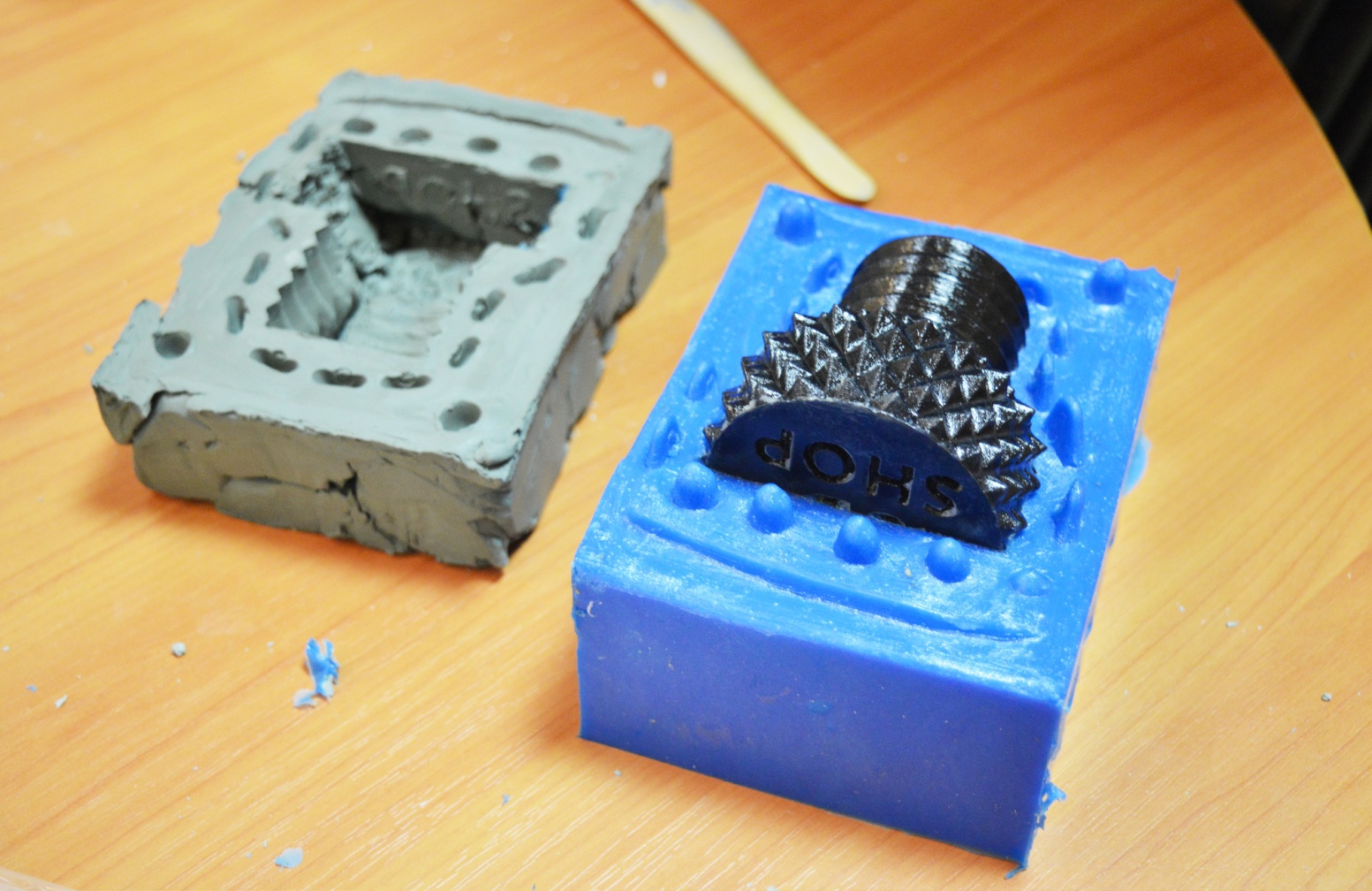
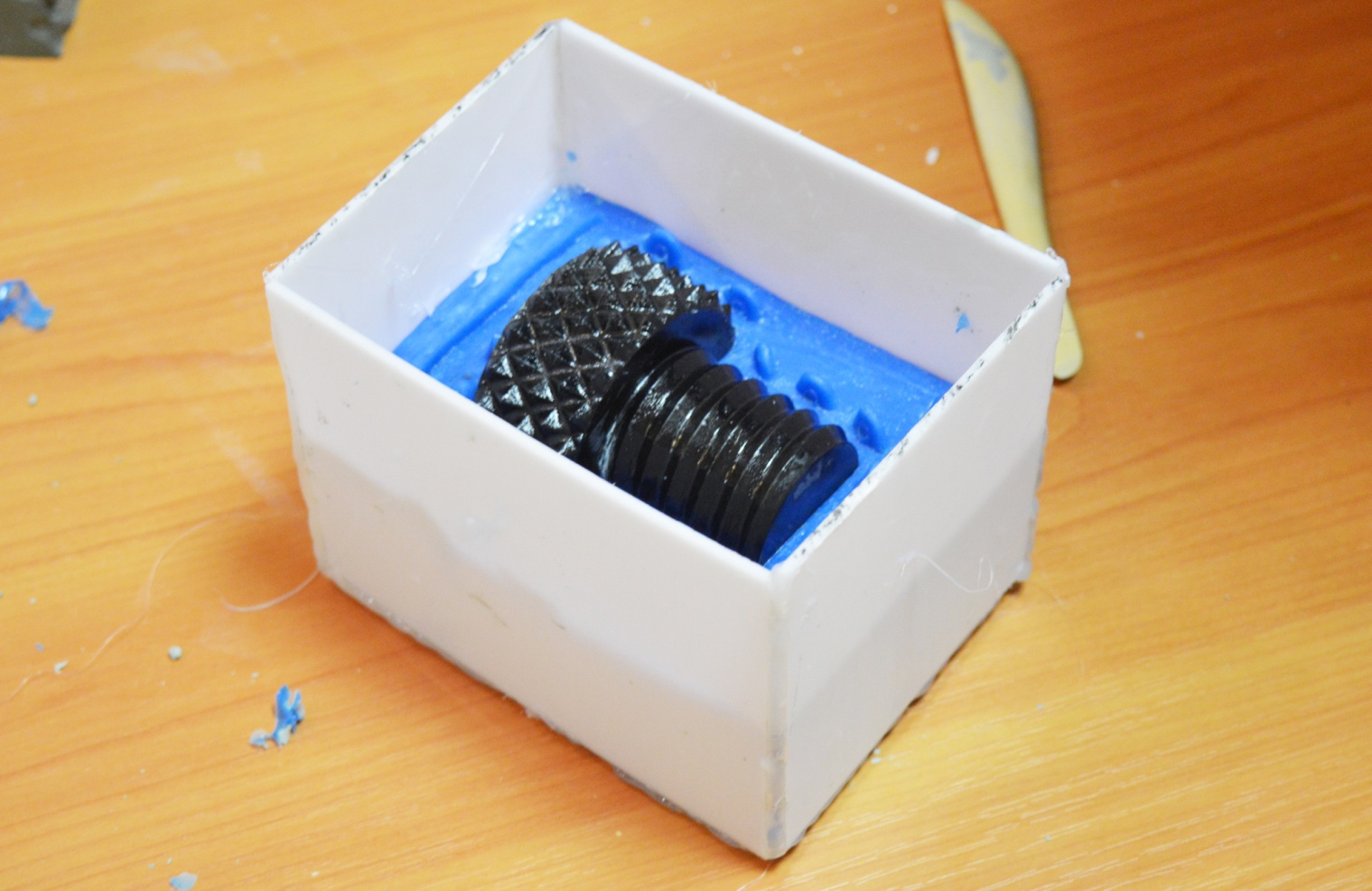
And then we completely repeat the process, pouring the second half of the silicone mold.
After another 6 hours, the silicone mold is ready. Using the blade, carefully disconnect the halves, take out the part and evaluate what we got.
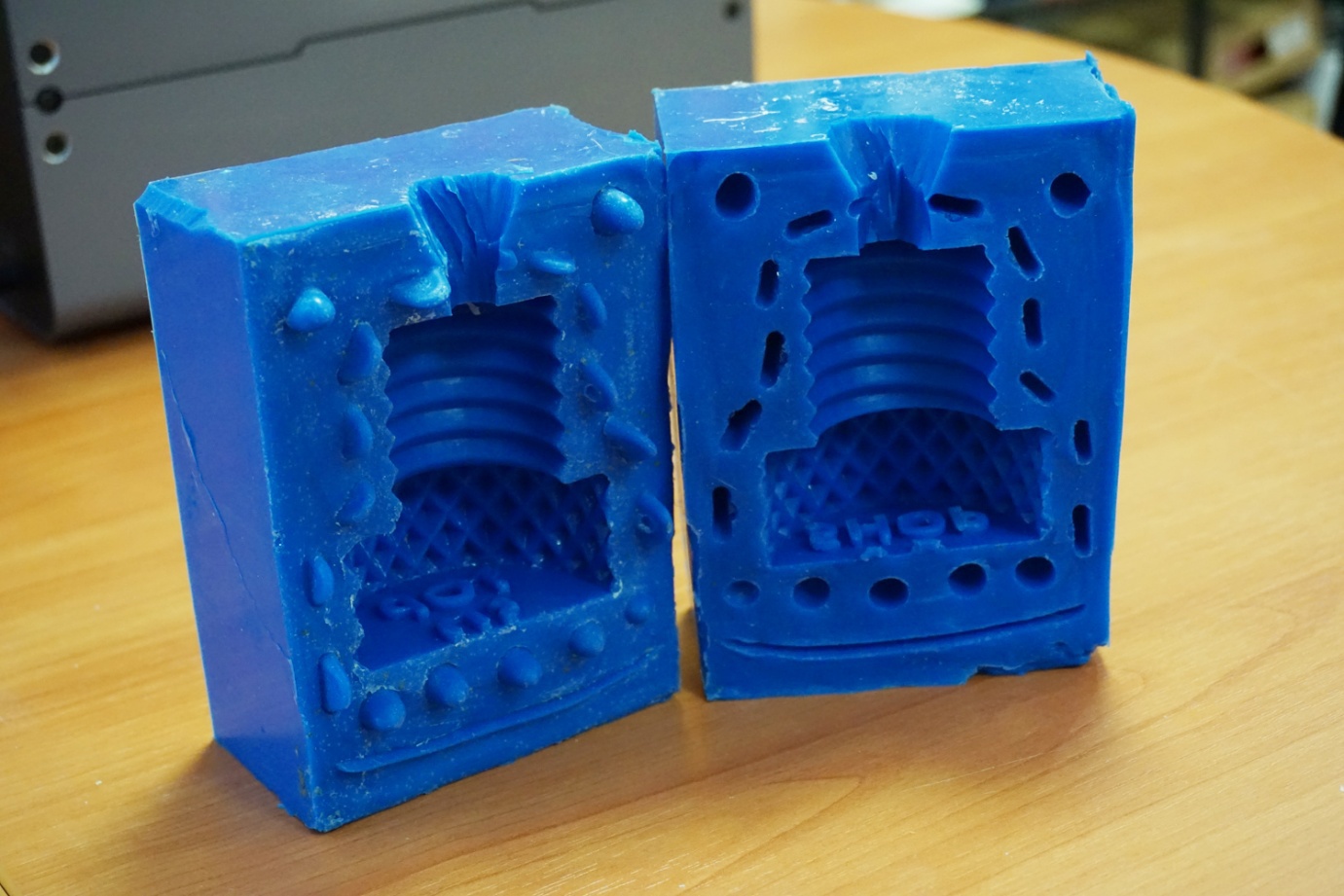
The locks laid in the clay base are clearly visible, good detailing, despite the fact that the dividing line went through rather difficult places, like dented letters.
In fact, for this model, this is not the best way to create a form. But it was interesting for us to test this particular method, despite the difficulties.
So, everything is ready for pouring polyurethane. We connect the two halves of the form using the formwork elements for rigidity, fasten it with rubber, tape or another way, and proceed to the preparation of polyurethane.
Mix both components well, shaking them for 5-10 minutes. After that, let it settle a little so that the resulting bubbles come out. Everything else is exactly the same as with silicone: measure out an equal amount in volume and mix them. And then you need to act quickly: the lifetime of this polyurethane is only 3 minutes, and time begins to go right away, as you mixed the two components together. So we interfere quickly, but carefully, so as not to create unnecessary bubbles, and immediately fill in the form.
After about 3 minutes, depending on the volume of the material, the plastic will set quickly, and after 10 minutes the part is ready to be removed.
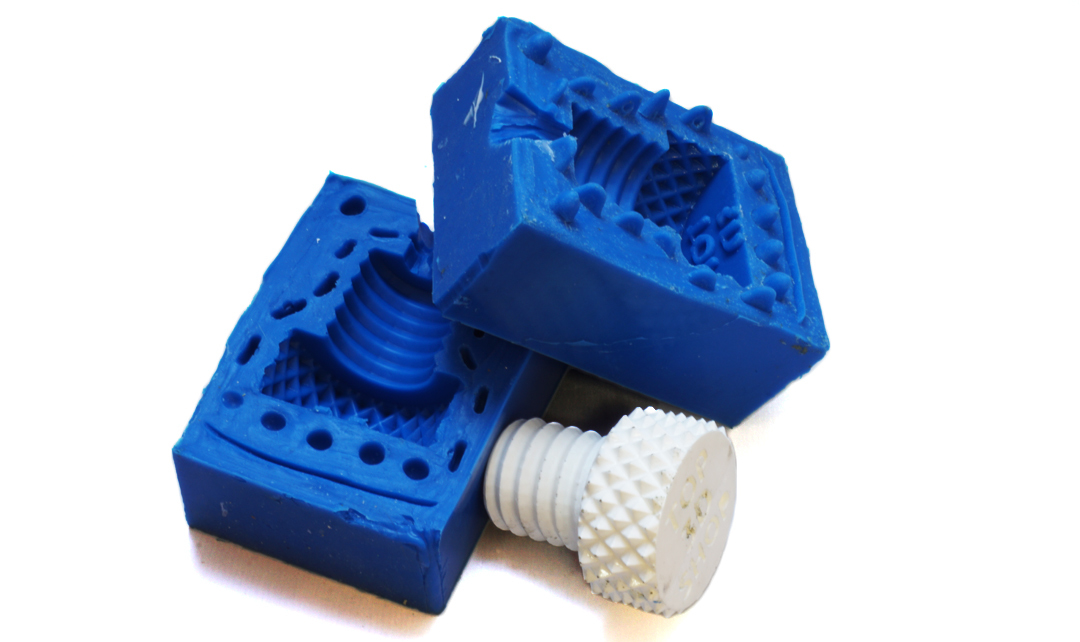
The model is ready. Absolutely all the details of the original are transmitted.
Conclusion
I would like to note that truly enormous opportunities for the use of materialsSmooth-On opens in conjunction with 3D printing.
Now you can get products from a huge number of materials with a wide variety of properties, and not just be limited to classic PLA and ABS . In addition, small-scale production will become available: by printing only one copy and properly processing it, you can, in a fairly short time, create the number of copies you need at home. To achieve an acceptable result, it is not necessary to use expensive equipment.
In case you need services of small-scale production Top 3D Shop is at your service .

A 3D printer is far from always capable of performing such tasks, but it is perfect for creating a single sample, or master model. And then, materials from the production of Smooth-On , probably the most popular manufacturer of cold-cured materials, come to our aid .
In this review, we will compare the most basic and popular silicones, polyurethanes and additives to them, briefly look at the main ways of creating molds and products, think about where this can be used, and finally, create our own silicone mold and model.
Before writing this post, we went through a three-day training at an official Smooth-On dealer in Russia to understand all the intricacies of silicone molding.
Overview of the process
The process of creating products by casting is almost always the same: create a model, use it to create a silicone mold, fill it with material, and get the product. But depending on the model, the required properties, the number of castings, each stage can radically change. There are several ways to create a form as well as a finished product.
A few words about the preparation of models printed on a 3D printer . The company Smooth-On turned its attention to this technology, and has released a special varnish called of XTC-3D . It perfectly smooths the flaws characteristic of printed models, visible layers, which will necessarily go over to the silicone form, and gives the surface smoothness and a glossy look. You can read a
detailed review of XTC 3D here .
Methods for creating forms
• Solid fill
The easiest way: the model is placed in the formwork (a special sealed container made of ordinary plexiglass, plastic or other material), fixed in it and filled with silicone. Well suited for simple two-dimensional models, reliefs, souvenir and branding products.
• Cutting mold
Similar to the previous one, only the model is placed taking into account that the mold will be cut in whole or in part to facilitate removal. The model can be suspended using wire or placed on a thin support. The method is intended for more complex geometry, technical products, complex figures.
• Two-part form
This is one of the most difficult ways. It consists in placing the model on a clay or plasticine base, which divides the silicone form in half.
On the basis of special locks are placed, which will ensure the exact combination of two forms and the absence of displacements. Around the base, the formwork is assembled, sealed with hot glue or plasticine, and the first half of the mold is poured into it. Then, after curing the silicone, the mold is turned over, the clay or plasticine is scraped off, the silicone is coated with a release agent, and the second half of the mold is poured.
•
“Putty” method This method creates the so-called “hosiery” forms, when the silicone precisely repeats the shape of the object and has a thickness of 3 mm to several centimeters. To create a “putty” shape, a sufficiently viscous silicone is needed that would not drain from the model.
You can use both specially designed silicones, called thixotropic, and ordinary, but modified with thickeners.
Silicone is applied with a brush or spatula in several layers, in which viscosity and hardening speed alternate, so that the form is as detailed and durable as possible. After all the layers are ready, with the help of a special composition, a rigid outer shell is created that will hold its shape.
Methods of pouring plastics
The simplest method is to simply fill the plastic into the mold, it is suitable for home use and can achieve acceptable quality. But, if necessary, for a better result, it is possible to use high-pressure installations, which will almost completely remove air bubbles.
To do this, the mold, together with the plastic, is placed in a chamber in which pressure is increased up to 4 atmospheres. The mold must remain in the chamber during the curing time of the polyurethane. At this pressure, the bubbles decrease to a size almost invisible to the eye, which greatly improves the quality of the product.
Another method, the so-called “run-in” fill, is used to create hollow products. A small amount of plastic is poured into the mold, about 10% of the total volume, the fill hole closes, and the mold begins to rotate on all planes, manually or on a special rotary machine. In this case, the plastic hardens on the walls of the mold, creating a hollow model, which can significantly reduce the weight of the product and save material.
Silicon Overview
• Mold Star Series 15, 16, 30
Silicones to create platinum based molds. It solidifies at room temperature, forms a strong, flexible and very detailed form. Designed for casting silicone, polyurethane, resins, polyester, wax and other materials. Chemically sensitive and unable to work with latex, sulfur and some other compounds.
The most basic and basic silicones that can solve most problems. The number in the title reflects the hardness on the Shore A. scale. It has a low viscosity, which allows in most cases to work without equipment for degassing. The material is two-component, the parts are mixed in a convenient ratio of 1: 1 by volume. Mainly designed to create forms by continuous casting.
• Rebound series 25, 40
A series of silicones for creating molds with the “putty” method, which consists in applying silicone with a brush or spatula to the surface of the model. It has high viscosity, the ability to modify properties using thickeners and accelerators to create a high-quality multilayer form. Two-component, mixed in a ratio of 1: 1 by volume.
• Equinox 35, 38, 40 series
Silicone pastes with a life time of 1, 4 and 30 minutes. Designed for manual mixing, the consistency resembles a thick dough. The numbers correspond to Shore A. hardness. It has extremely high tensile strength and durability. When cured, it is safe for pouring chocolate, caramel and other ingredients.
• SortaClear 18, 37, 40 series
A series of translucent silicones. Such a feature as optical transparency is used to create complex cut forms - the product is perfectly visible, which allows you to make an accurate cut. Like the Equinox series, it is safe in contact with food.
Also to silicones there are a large number of additives with a variety of effects. Accel-T and Plat-Cat are accelerators of curing, Slo-jo - increases the life time of silicone, Thi-Vex increases the viscosity of silicone and allows you to spread it with a brush or spatula on the model, Silc-Pig - these are concentrated pigments for coloring.
Polyurethanes Overview
• Smooth-Cast Series
The most basic and popular series of polyurethanes for creating end products. The line includes more than 10 names of various plastics with a variety of properties, allowing you to choose the material specifically for your project. For example, Smooth-Cast 300 has a short life time of 3 minutes and a cure time of 10 minutes, which allows you to quickly reproduce large batches of parts. Smooth-Cast 305 is similar to the previous one, but has been “living” for 7 minutes, which allows degassing of mixed components and obtaining an even better product. ONYX has a deep black color that cannot be achieved with dyes, 65D ROTOit is designed to create hollow models using the “run-in” method, 325 is indispensable for accurate color reproduction, 385 cures practically without shrinkage and most accurately copies the product.
• TASK
Series A series of special purpose polyurethanes. Designed for industrial use and has specific properties for specific tasks.
For your convenience, we have formed special filters for the fields of application:
• Food:
Smooth-Sil 940, Sorta Clear series, Equinox series, TASK 11.
• Architectural, pouring concrete and other abrasive materials:
VytaFlex series, Brush-On series, Ez- series Spray PMC Series .
• Medical: tissue and organ simulations
Dragon Skin Series, additives Slacker, Ecoflex 0030, Ecoflex Gel, Body Double.
• Prototyping:
Almost any polyurethanes and silicones, depending on the tasks and requirements. Series Mold Max , Mold Star , Smooth-Cast , TASK .
• Special effects and makeup:
Skin Tite, Body Double, Dragon Skin, Alja-Safe, Ecoflex, Soma Foama, Rubber Glass, Encapso K.
It is worth noting that this division is still conditional, and is given to approximately represent the possibilities of a wide range of Smooth -On.
Process overview
We will use only those materials and equipment that can be used at home. We will try to create the most difficult two-piece form in manufacturing.
We will need:
• Mold Star 30 platinum silicone
• Smooth-Cast 300 filling polyurethane
• XTC-3D 3D model varnish
• Vinyl gloves packaging
• Several disposable plastic cups
• Mixing containers
• Hot glue gun
• Formwork (plastic panels)
• Sculptural clay
• Several paint brushes.
The master model will be a model of a test bolt that is quite popular among printers. We printed it in blackPLA plastic on Picaso 3D Designer with a layer thickness of 100 microns. We did this specifically to demonstrate the effect of XTC 3D , since not every 3D printer can print with 50 micron quality.
Next is processing so that the cast model does not adopt the layering of the printed object. We process the bolt with XTC-3D varnish (more details about this process can be found here ), and then we skin it to get a smooth matte surface.
Now the model is ready for pouring with silicone. We place it on a clay base, with which we will create a two-part silicone mold.
The model should be immersed in clay exactly halfway, so we begin the process of leveling the clay. The edges should be as even as possible and completely fit to the model, the quality of separation of the silicone halves depends on this. We remove excess clay and enclose the model in a plastic formwork.
We process all joints of plastic with a hot glue gun and close the formwork, finally process the clay base, make recesses for locks in it.
Everything is ready for pouring silicone. Since bicomponent silicones and polyurethanes are prone to fractionation, they must be thoroughly mixed in containers before each use.
After mixing, measure out an equal amount of two components in volume and proceed to mixing.
For this brand of silicone, degassing in a vacuum chamber is optional, which is very convenient: the appearance of bubbles that can ruin our shape is excluded. Slowly pour silicone into the formwork, at its lowest point.
And leave to freeze. The pour time for this brand of silicone is 6 hours. After this time, we release the model from the formwork.
Then we remove the clay, carefully clean the model of its residues, lubricate the silicone with a release agent. In case of its absence, you can use regular petroleum jelly, but the quality will be slightly worse.
And then we completely repeat the process, pouring the second half of the silicone mold.
After another 6 hours, the silicone mold is ready. Using the blade, carefully disconnect the halves, take out the part and evaluate what we got.
The locks laid in the clay base are clearly visible, good detailing, despite the fact that the dividing line went through rather difficult places, like dented letters.
In fact, for this model, this is not the best way to create a form. But it was interesting for us to test this particular method, despite the difficulties.
So, everything is ready for pouring polyurethane. We connect the two halves of the form using the formwork elements for rigidity, fasten it with rubber, tape or another way, and proceed to the preparation of polyurethane.
Mix both components well, shaking them for 5-10 minutes. After that, let it settle a little so that the resulting bubbles come out. Everything else is exactly the same as with silicone: measure out an equal amount in volume and mix them. And then you need to act quickly: the lifetime of this polyurethane is only 3 minutes, and time begins to go right away, as you mixed the two components together. So we interfere quickly, but carefully, so as not to create unnecessary bubbles, and immediately fill in the form.
After about 3 minutes, depending on the volume of the material, the plastic will set quickly, and after 10 minutes the part is ready to be removed.
The model is ready. Absolutely all the details of the original are transmitted.
Conclusion
I would like to note that truly enormous opportunities for the use of materialsSmooth-On opens in conjunction with 3D printing.
Now you can get products from a huge number of materials with a wide variety of properties, and not just be limited to classic PLA and ABS . In addition, small-scale production will become available: by printing only one copy and properly processing it, you can, in a fairly short time, create the number of copies you need at home. To achieve an acceptable result, it is not necessary to use expensive equipment.
In case you need services of small-scale production Top 3D Shop is at your service .