April 3, 2015 at 11:12
Electric car strikes back: the second half of the XX century
Ecology and fuel price hikes after the 1960s made people think about a new type of car. Rather, about the well-forgotten good old electric car, which has not been mass-produced since the thirties. Electric cars could not regain their former superiority, but individual companies and craftsmen made attempts at mass production, set mileage records (604 km per charge) and speed (281 km / h). Read more in the continuation of the history of electric vehicles.
The whole series of articles:
Dawn of electric vehicles: XIX century.
Dawn and sunset of electric vehicles: the first half of the XX century.
Electric car strikes back: the second half of the XX century.
Revenge of an electric car: the beginning of the XXI century.
In the 1960s, people began to think about the environment, about the problems that a growing fleet of cars around the world creates. The oil crisis, which began in the fall of 1973, led to an increase in the cost of a barrel of oil by 70% to $ 5, for another year the price rose to $ 12. So the Organization of Petroleum Exporting Countries (OPEC) pressured the West for political reasons. The next jump in oil prices began during the energy crisis of 1979-1980, when US President Jimmy Carter announced the reduction of trade relations in Iran and stopped state regulation of oil prices. In 1985, Saudi Arabia tried to increase oil production, which caused a drop in prices.
The jumps in oil and fuel prices for cars with internal combustion engines, and environmental problems made people think of electric cars, the production of which has ceased to be mass since the 1930s.
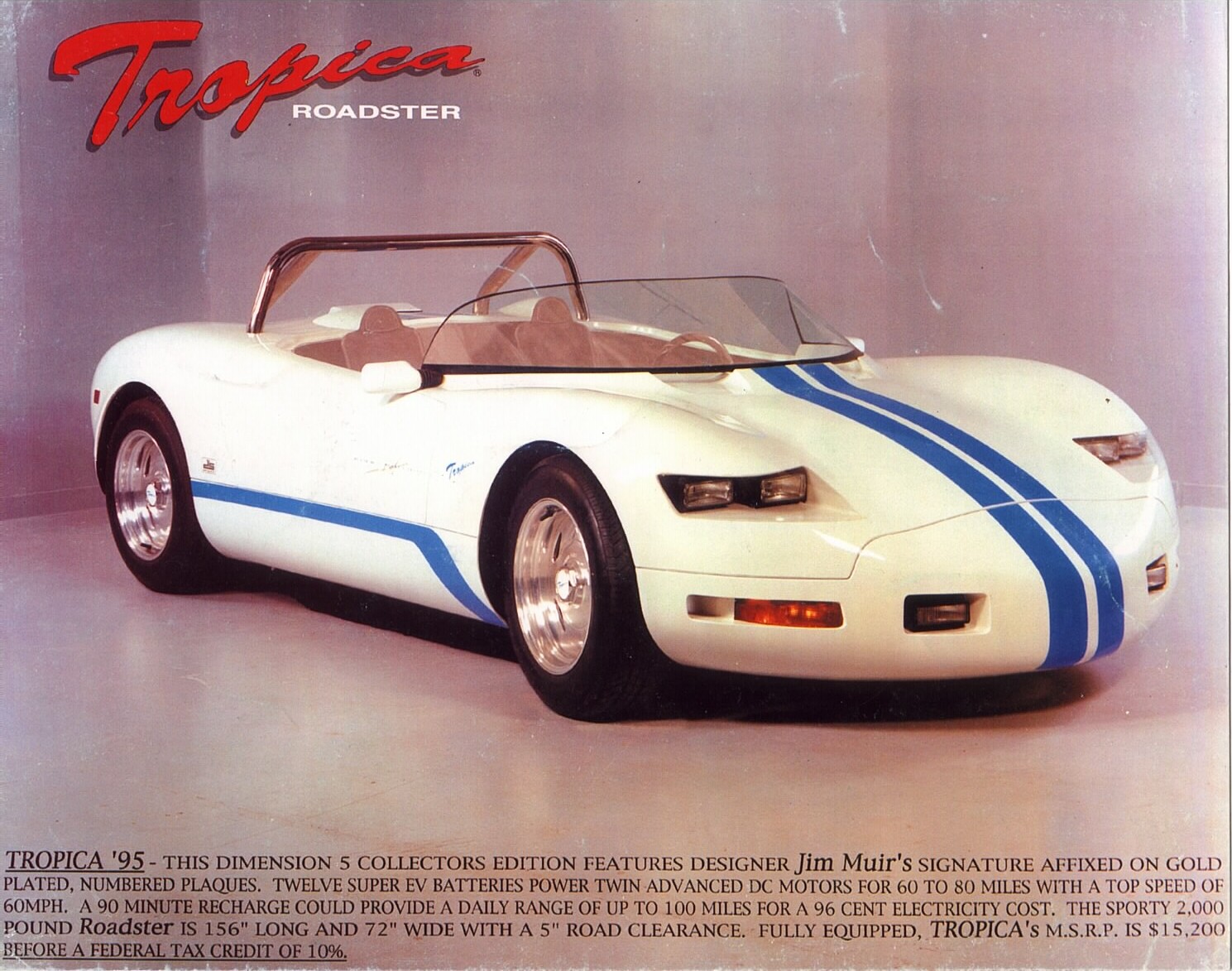
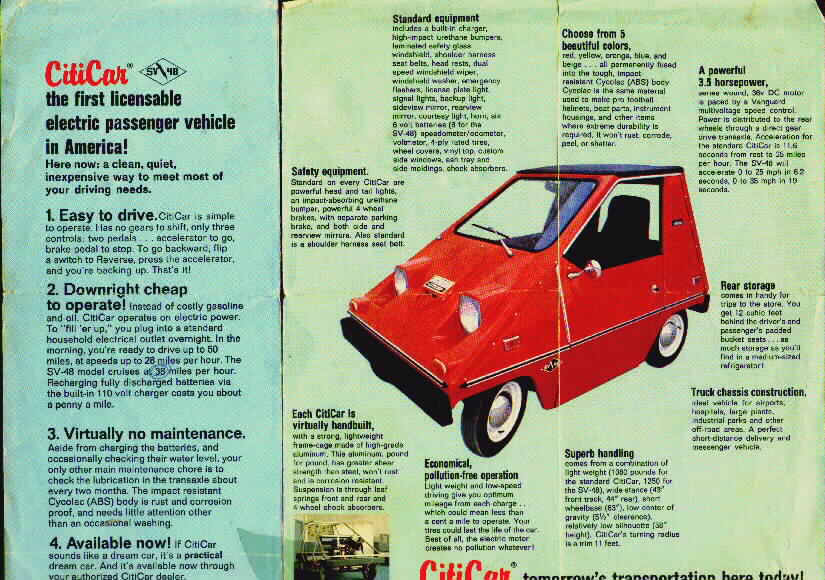
In 1974, Sebring-Vanguard launched one of the most popular electric vehicles of its time - CitiCar, the “city car”. Appearance CitiCar was inspired by golf carts. In the photo below, all generations of the electric car are visible - from the prototype (top right) to the production one.

 Engine power from General Electric ranged from 2.5 to 6 horsepower. This two-seater miracle of technology was equipped with six or eight 6-volt lead-acid batteries, which were located under the seat of the driver and passenger. This is visible in the photo .
From 1974 to 1979, the company assembled 4444 electric vehicles. It was the best-selling electric car after 1945, until it was replaced on the Tesla Model S. pedestal. In 1979, Sebring-Vanguard bought Commuter Vehicles and continued to produce CitiCar under the name Comuta-Car and Comuta-Van until 1982.
CitiCar production conveyor. Source

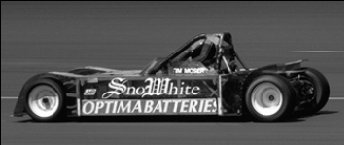
Advertising On August 23, 1974, Roder Hedlang on the salt lake Bonneville in the United States set a record for electric cars: it accelerated to 175 miles per hour - that's 281 kilometers per hour. The name of the car is Battery Box. In 1993, Snow White, built by Bob Shneeviz, accelerated to a speed of more than 100 miles per hour and took second place in the race for electric cars.
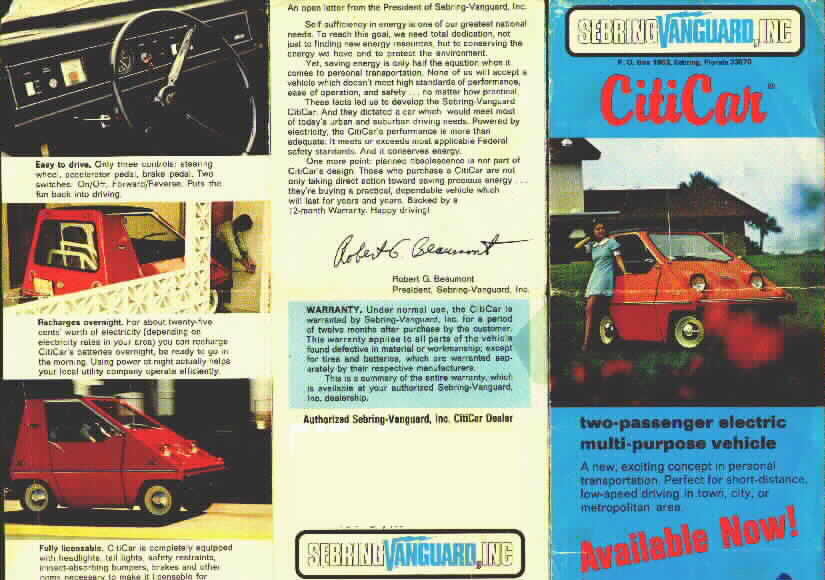


In 1995, the American company Renaissance Cars began to assemble an electric car, the Tropica Roadster. During the year the company was founded, only 25 pieces were produced. Two electric motors accelerated an electric car with a light composite body to 110 kilometers per hour. On a single charge Tropica could travel up to 100 kilometers. The roadster was charged from the outlet in 90 minutes - according to the promise of the manufacturer.
The electric car installed 12 lead-acid batteries.
Photo: Nogas.org Ice Age Ends Source Tropica assembly line in May 1995. A source


The goal of the Solectria Sunrise developers was an electric car that was able to use energy as efficiently as possible and travel as long as possible on a single charge. We can say that they did it: in 1996, an electric car drove 604 kilometers on a single charge as part of the Tour de Sol competition. Solectria Sunrise was equipped with 24 General Motors nickel-metal hydride batteries. Up to 60 miles per hour, the electric car accelerated in 17 seconds. The electric car never went into the series.
Photo from Wikipedia


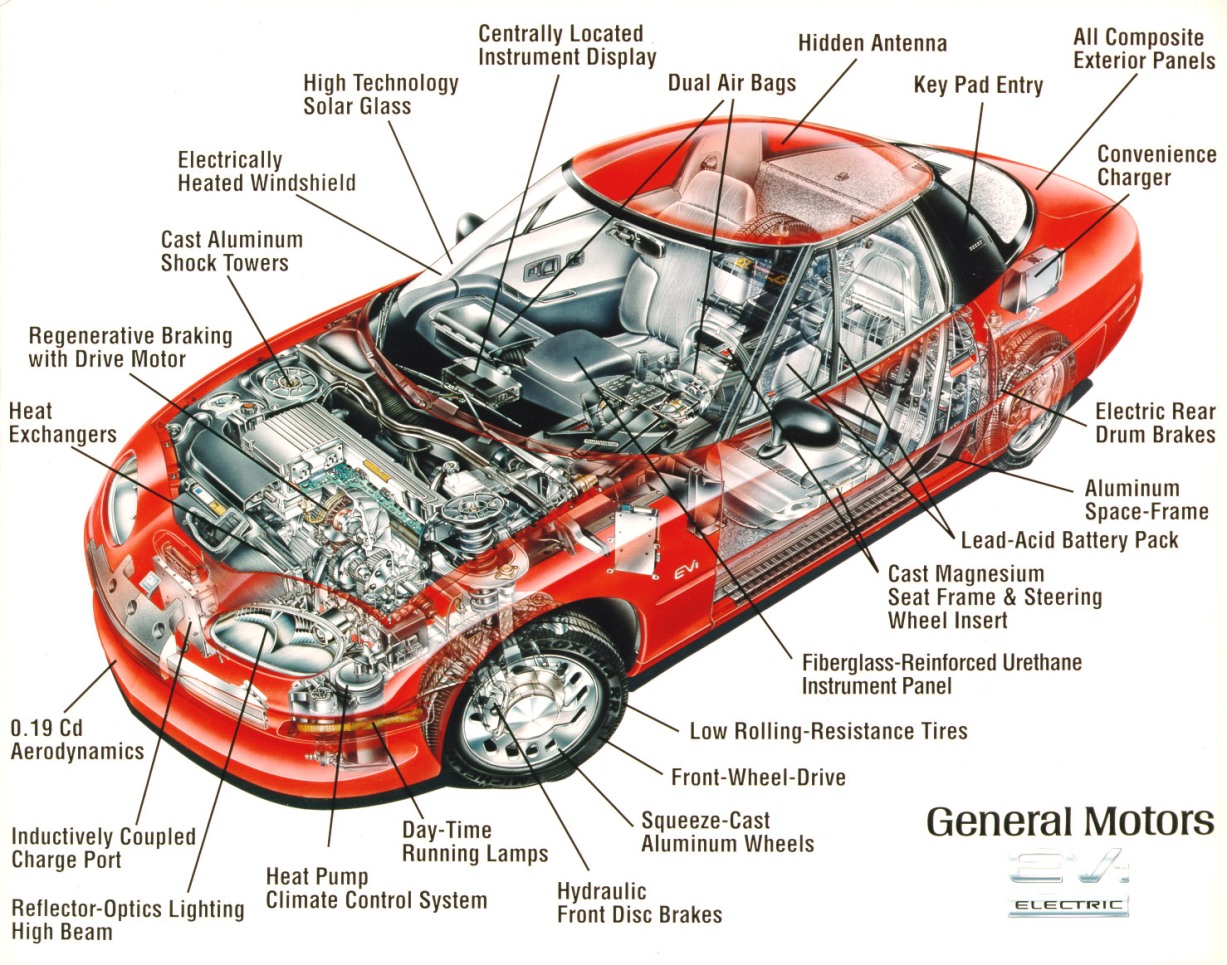
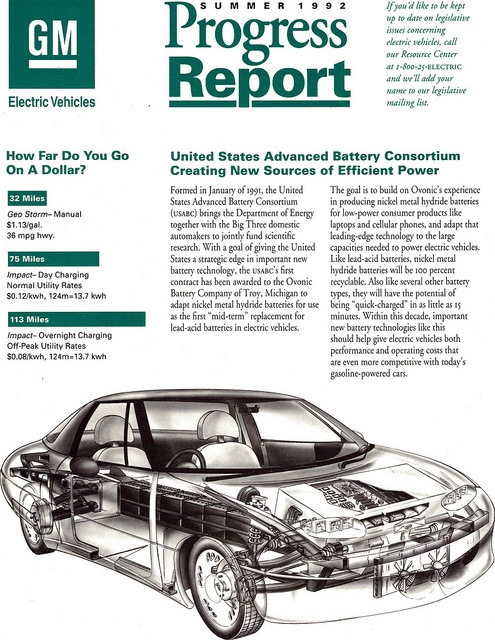
Electric vehicles could not achieve the success that accompanied them at the beginning of the century. Electric cars reached serial production only by 1997, when General Motors introduced the EV1 model. Moreover, the car was available only in two states of the USA, California and Arizona, and it was possible to buy it only on lease. GM produced 650 copies of the first generation - with lead-acid batteries, and nickel-metal hydride batteries were installed on the second-generation cars - there were 465 of them. Almost all 1,117 electric vehicles were destroyed in 2003, leaving two copies as museum exhibits.
An electric vehicle could travel up to 120 kilometers on a single charge of a lead-acid battery, and up to 240 kilometers on a nickel-metal hydride battery. The speed of the car was forcibly limited to 129 km / h, acceleration to 96 km / h took 9 seconds. It was possible to charge the car in 12 hours from an ordinary American standard outlet using a special device. Salon EV1 All EV1 got here In the film Who killed the electric car, they talk about the reasons for the disposal of General Motors' EV1. Neither oil companies, nor car makers, nor dealers are profitable to let such efficient, clean and durable transport onto the market. This approach remains now - we all remember the news about attempts to ban Tesla . But this is a completely different story.




The whole series of articles:
Dawn of electric vehicles: XIX century.
Dawn and sunset of electric vehicles: the first half of the XX century.
Electric car strikes back: the second half of the XX century.
Revenge of an electric car: the beginning of the XXI century.
In the 1960s, people began to think about the environment, about the problems that a growing fleet of cars around the world creates. The oil crisis, which began in the fall of 1973, led to an increase in the cost of a barrel of oil by 70% to $ 5, for another year the price rose to $ 12. So the Organization of Petroleum Exporting Countries (OPEC) pressured the West for political reasons. The next jump in oil prices began during the energy crisis of 1979-1980, when US President Jimmy Carter announced the reduction of trade relations in Iran and stopped state regulation of oil prices. In 1985, Saudi Arabia tried to increase oil production, which caused a drop in prices.
The jumps in oil and fuel prices for cars with internal combustion engines, and environmental problems made people think of electric cars, the production of which has ceased to be mass since the 1930s.
In 1974, Sebring-Vanguard launched one of the most popular electric vehicles of its time - CitiCar, the “city car”. Appearance CitiCar was inspired by golf carts. In the photo below, all generations of the electric car are visible - from the prototype (top right) to the production one.
Engine power from General Electric ranged from 2.5 to 6 horsepower. This two-seater miracle of technology was equipped with six or eight 6-volt lead-acid batteries, which were located under the seat of the driver and passenger. This is visible in the photo .From 1974 to 1979, the company assembled 4444 electric vehicles. It was the best-selling electric car after 1945, until it was replaced on the Tesla Model S. pedestal. In 1979, Sebring-Vanguard bought Commuter Vehicles and continued to produce CitiCar under the name Comuta-Car and Comuta-Van until 1982.
CitiCar production conveyor. Source
Advertising On August 23, 1974, Roder Hedlang on the salt lake Bonneville in the United States set a record for electric cars: it accelerated to 175 miles per hour - that's 281 kilometers per hour. The name of the car is Battery Box. In 1993, Snow White, built by Bob Shneeviz, accelerated to a speed of more than 100 miles per hour and took second place in the race for electric cars.
In 1995, the American company Renaissance Cars began to assemble an electric car, the Tropica Roadster. During the year the company was founded, only 25 pieces were produced. Two electric motors accelerated an electric car with a light composite body to 110 kilometers per hour. On a single charge Tropica could travel up to 100 kilometers. The roadster was charged from the outlet in 90 minutes - according to the promise of the manufacturer.
The electric car installed 12 lead-acid batteries.
Photo: Nogas.org Ice Age Ends Source Tropica assembly line in May 1995. A source
The goal of the Solectria Sunrise developers was an electric car that was able to use energy as efficiently as possible and travel as long as possible on a single charge. We can say that they did it: in 1996, an electric car drove 604 kilometers on a single charge as part of the Tour de Sol competition. Solectria Sunrise was equipped with 24 General Motors nickel-metal hydride batteries. Up to 60 miles per hour, the electric car accelerated in 17 seconds. The electric car never went into the series.
Photo from Wikipedia
Electric vehicles could not achieve the success that accompanied them at the beginning of the century. Electric cars reached serial production only by 1997, when General Motors introduced the EV1 model. Moreover, the car was available only in two states of the USA, California and Arizona, and it was possible to buy it only on lease. GM produced 650 copies of the first generation - with lead-acid batteries, and nickel-metal hydride batteries were installed on the second-generation cars - there were 465 of them. Almost all 1,117 electric vehicles were destroyed in 2003, leaving two copies as museum exhibits.
An electric vehicle could travel up to 120 kilometers on a single charge of a lead-acid battery, and up to 240 kilometers on a nickel-metal hydride battery. The speed of the car was forcibly limited to 129 km / h, acceleration to 96 km / h took 9 seconds. It was possible to charge the car in 12 hours from an ordinary American standard outlet using a special device. Salon EV1 All EV1 got here In the film Who killed the electric car, they talk about the reasons for the disposal of General Motors' EV1. Neither oil companies, nor car makers, nor dealers are profitable to let such efficient, clean and durable transport onto the market. This approach remains now - we all remember the news about attempts to ban Tesla . But this is a completely different story.