March 11, 2015 at 10:23
Dawn and sunset of electric vehicles: the first half of the XX century
The 1907 Detroit Electric electric car covered 130 kilometers without recharging, and the 2013 BMW i3 of the 2013 release without recharging overcomes ... 130 kilometers. Like the brand new VW Golf with an electric motor. Only Tesla is out of the list, as the Model X travels 426 kilometers on a single charge. About how the electric car market looked at the beginning of the 20th century and why at some point everyone moved to a car with internal combustion engines - read under the cat.
The whole series of articles:
Dawn of electric vehicles: XIX century.
Dawn and sunset of electric vehicles: the first half of the XX century.
Electric car strikes back: the second half of the XX century.
Revenge of an electric car: the beginning of the XXI century
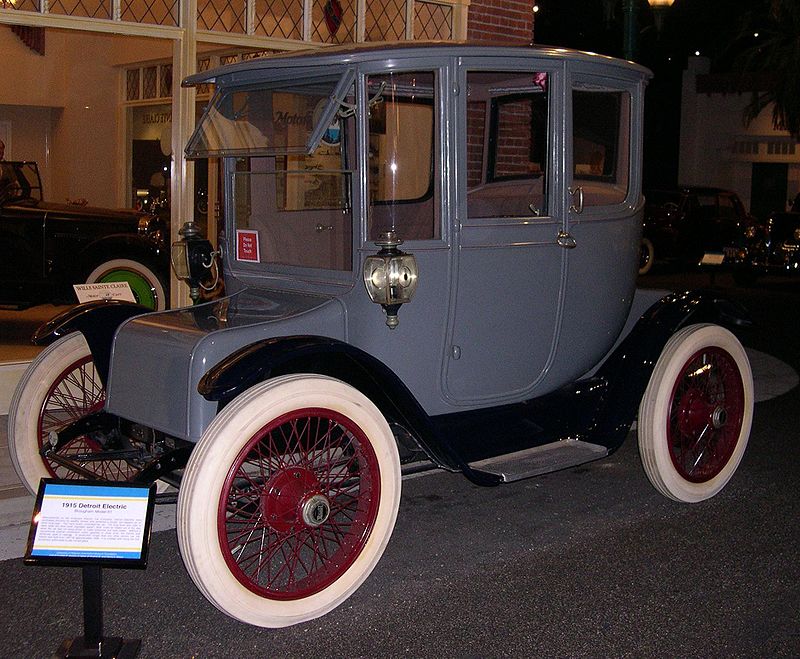
In a previous article, we focused on the fact that at the beginning of the 20th century, electric cars were especially popular in New York.
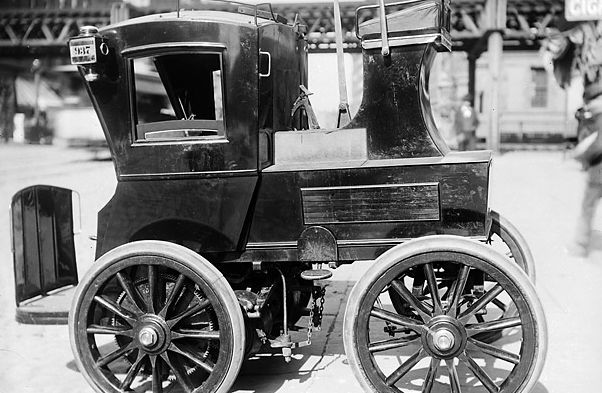
In Russia, the dawn of electric vehicles was late, despite the efforts of individual engineers.
At the beginning of the century, such an omnibus from the Duks company for ten people was already driving around Moscow. And Ippolit Romanov, the inventor of a two-seater electric car, asked the St. Petersburg Duma for permission to open ten routes - for eighty omnibuses. This turn of events did not suit the owners of the horse-drawn car and industrialists - they did everything possible so that the Romanov project did not take place. Unfortunately, Romanov lost in this fight.
In 1914, there were 8 electric crews in Russia: 4 trucks, 1 three-wheeled van and 3 private passenger cars.
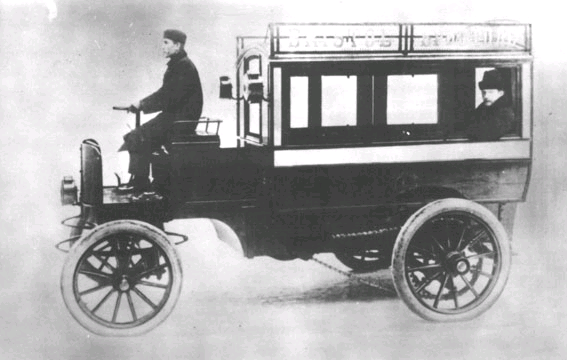
The Duks company tried to produce such a bus for traveling on rails.
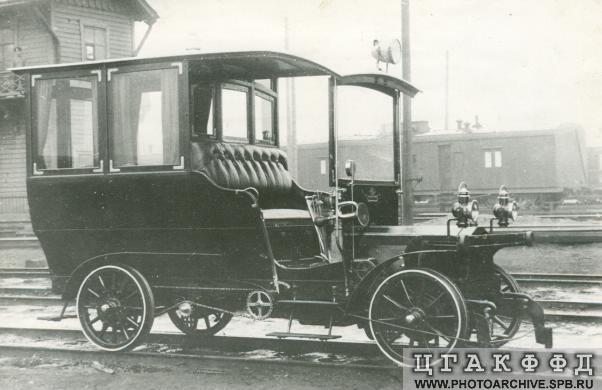
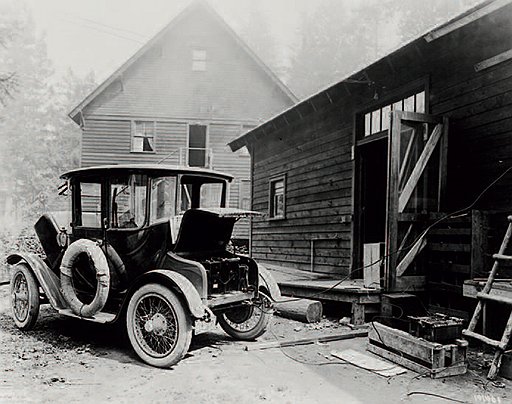
Since there were a lot of electric vehicles and steam-powered cars in the USA at the beginning of the century, charging stations were found there as often as gas stations. An electric car charging at some barn.
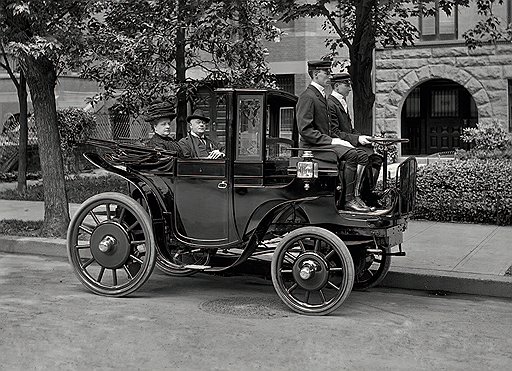
US Senator from Rhode Island George Whitmore on an electric car, 1906.
Since 1907, Detroit began to produce cars under the Detroit Electric brand. These electric cars were assembled until 1939. Initially, the machines were equipped with lead-acid batteries, but from 1911 to 1916 it was possible to choose the version with the Edison iron-nickel battery. The maximum speed was 32 km / h, and a car could drive 130 kilometers.
During World War I, gas prices were high, so in the 1910s, electric cars were in special demand - the company sold up to two thousand units a year. Sales declined in the 1920s due to lower prices for cars with an internal combustion engine.
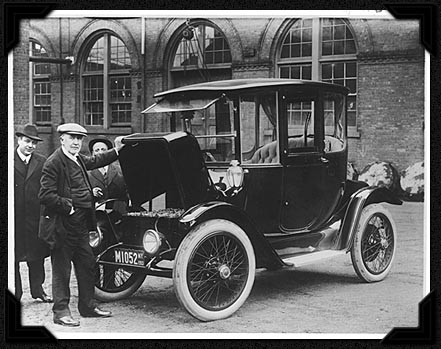
In this photo - Thomas Edison at the car of this brand. The company was owned by Thomas Edison, John Rockefeller, and Henry Ford's wife, Clara Ford.
EV-Opera-Car, model 68/17 B.
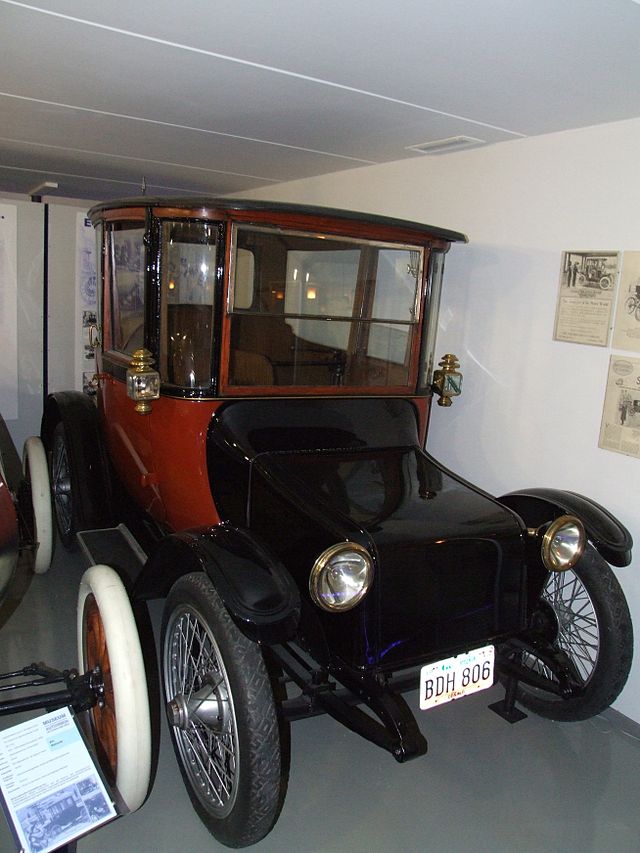
Model 1915.
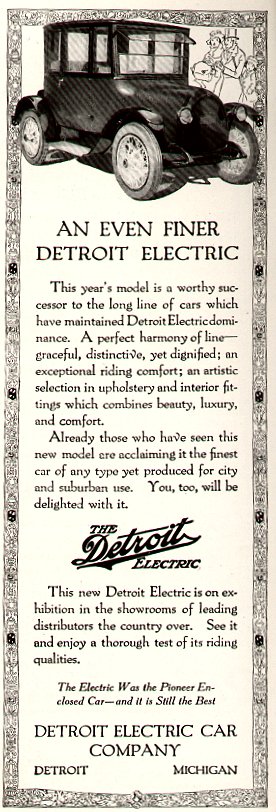
Print ad for Detroit Electric cars from the 1920s.
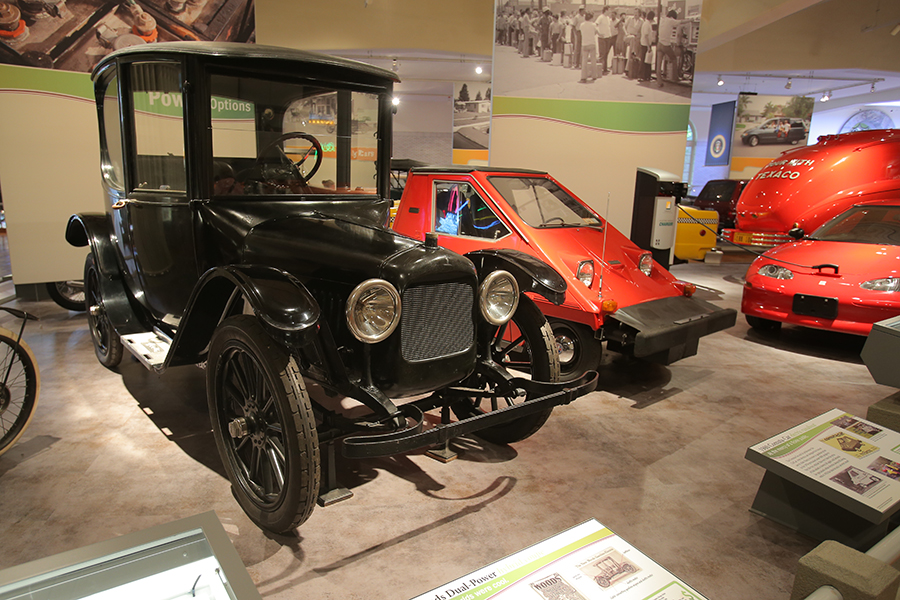
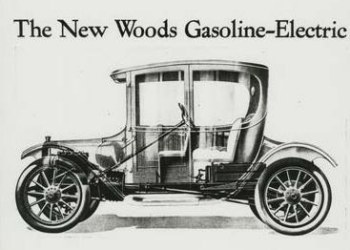
Hybrid cars were invented not yesterday and not the day before yesterday. In 1916 the Clinton Edgar Woods began manufacturing vehicle Woods Dual Power Model 44 Coupe with an electric motor and an internal combustion engine - with two.
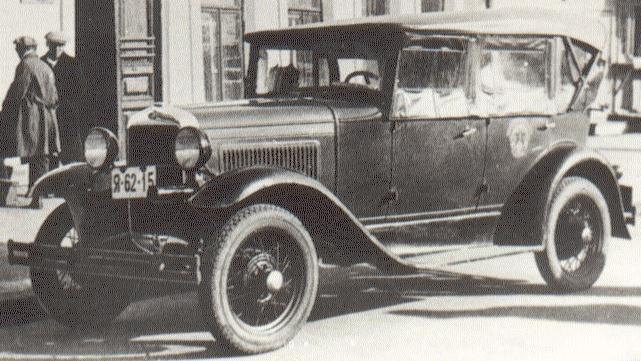
In the USSR in 1935, an electric car was built on the basis of GAZ-A.
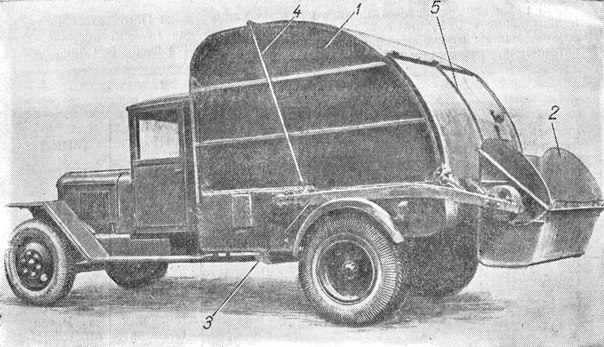
In the same year, the MPEI built a battery-powered garbage truck, remaking it ZIS-5. The car was equipped with forty batteries with a total capacity of 168 ampere-hours, their mass was 1400 kg. Such an electric car was able to transport garbage weighing 1800 kg at a speed of 24 km / h for forty kilometers. Engine power - 13 kW.
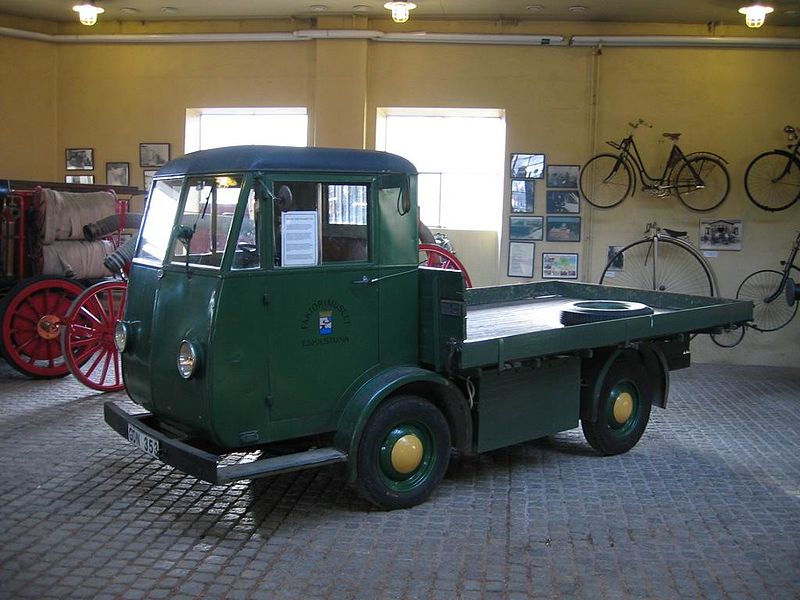
Swedish truck with electric motor, 1943.
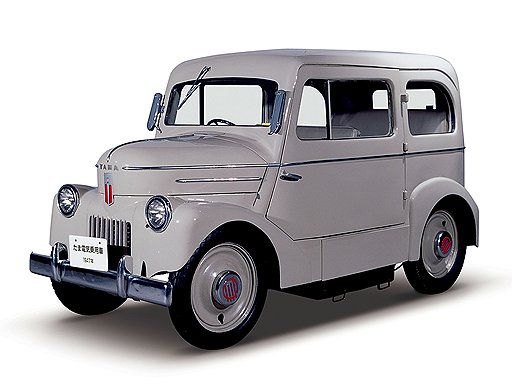
Nissan TAMA since 1947 was produced in the passenger and cargo versions. It was the first Nissan electric car.
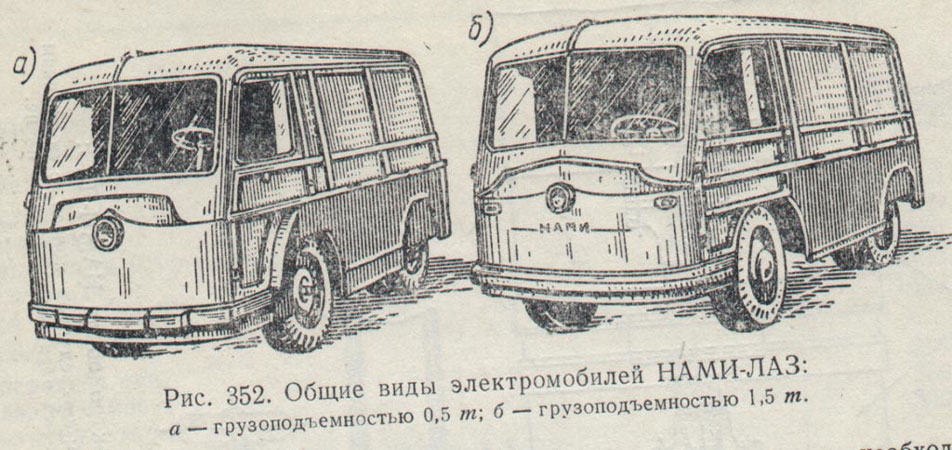
Four electric cars NAMI-LAZ with a loading capacity of 0.5 and 1.5 tons have been used by Moscow post since 1948. Ten more prototypes until 1958 carried mail in Leningrad.
The peak of electric vehicle production hit the 1910s. From electric vehicles there was no burning and soot, women chose them, since it was not necessary to possess the uncommon physical strength to start them - unlike internal combustion engines.
What were the disadvantages of electric vehicles? The roads became too good, people wanted to travel far - and at the beginning of the century it was more difficult to set up charging stations every hundred kilometers . Without recharging, electric cars could travel one hundred and one hundred thirty kilometers, like some cars now.
Thanks to Henry Ford, car prices declined, and the increase in oil production caused a decrease in the cost of fuel. An electric starter - it was developed in 1912 - made cars with an internal combustion engine more convenient. Since the thirties, the production of electric vehicles has ceased to be mass, despite the attempts to use them for official purposes.
In the 1960-1970s, people thought about the environment and again remembered about electric motors. But that's another story…

The whole series of articles:
Dawn of electric vehicles: XIX century.
Dawn and sunset of electric vehicles: the first half of the XX century.
Electric car strikes back: the second half of the XX century.
Revenge of an electric car: the beginning of the XXI century
The most promising type of car in the future can be considered an electric, but so far it has not yet been sufficiently improved. Electric motors give neither noise nor soot, they are undoubtedly more convenient and perfect than all the others ... Brockhaus and Efron Encyclopedic Dictionary.
In a previous article, we focused on the fact that at the beginning of the 20th century, electric cars were especially popular in New York.
In Russia, the dawn of electric vehicles was late, despite the efforts of individual engineers.
At the beginning of the century, such an omnibus from the Duks company for ten people was already driving around Moscow. And Ippolit Romanov, the inventor of a two-seater electric car, asked the St. Petersburg Duma for permission to open ten routes - for eighty omnibuses. This turn of events did not suit the owners of the horse-drawn car and industrialists - they did everything possible so that the Romanov project did not take place. Unfortunately, Romanov lost in this fight.
In 1914, there were 8 electric crews in Russia: 4 trucks, 1 three-wheeled van and 3 private passenger cars.
The Duks company tried to produce such a bus for traveling on rails.
Since there were a lot of electric vehicles and steam-powered cars in the USA at the beginning of the century, charging stations were found there as often as gas stations. An electric car charging at some barn.
US Senator from Rhode Island George Whitmore on an electric car, 1906.
Since 1907, Detroit began to produce cars under the Detroit Electric brand. These electric cars were assembled until 1939. Initially, the machines were equipped with lead-acid batteries, but from 1911 to 1916 it was possible to choose the version with the Edison iron-nickel battery. The maximum speed was 32 km / h, and a car could drive 130 kilometers.
During World War I, gas prices were high, so in the 1910s, electric cars were in special demand - the company sold up to two thousand units a year. Sales declined in the 1920s due to lower prices for cars with an internal combustion engine.
In this photo - Thomas Edison at the car of this brand. The company was owned by Thomas Edison, John Rockefeller, and Henry Ford's wife, Clara Ford.
EV-Opera-Car, model 68/17 B.
Model 1915.
Print ad for Detroit Electric cars from the 1920s.
Hybrid cars were invented not yesterday and not the day before yesterday. In 1916 the Clinton Edgar Woods began manufacturing vehicle Woods Dual Power Model 44 Coupe with an electric motor and an internal combustion engine - with two.
In the USSR in 1935, an electric car was built on the basis of GAZ-A.
In the same year, the MPEI built a battery-powered garbage truck, remaking it ZIS-5. The car was equipped with forty batteries with a total capacity of 168 ampere-hours, their mass was 1400 kg. Such an electric car was able to transport garbage weighing 1800 kg at a speed of 24 km / h for forty kilometers. Engine power - 13 kW.
Swedish truck with electric motor, 1943.
Nissan TAMA since 1947 was produced in the passenger and cargo versions. It was the first Nissan electric car.
Four electric cars NAMI-LAZ with a loading capacity of 0.5 and 1.5 tons have been used by Moscow post since 1948. Ten more prototypes until 1958 carried mail in Leningrad.
The peak of electric vehicle production hit the 1910s. From electric vehicles there was no burning and soot, women chose them, since it was not necessary to possess the uncommon physical strength to start them - unlike internal combustion engines.
What were the disadvantages of electric vehicles? The roads became too good, people wanted to travel far - and at the beginning of the century it was more difficult to set up charging stations every hundred kilometers . Without recharging, electric cars could travel one hundred and one hundred thirty kilometers, like some cars now.
Thanks to Henry Ford, car prices declined, and the increase in oil production caused a decrease in the cost of fuel. An electric starter - it was developed in 1912 - made cars with an internal combustion engine more convenient. Since the thirties, the production of electric vehicles has ceased to be mass, despite the attempts to use them for official purposes.
In the 1960-1970s, people thought about the environment and again remembered about electric motors. But that's another story…