
 January 16, 2015 at 08:46
Conversation with the astronaut: about health, weightlessness and space mutants
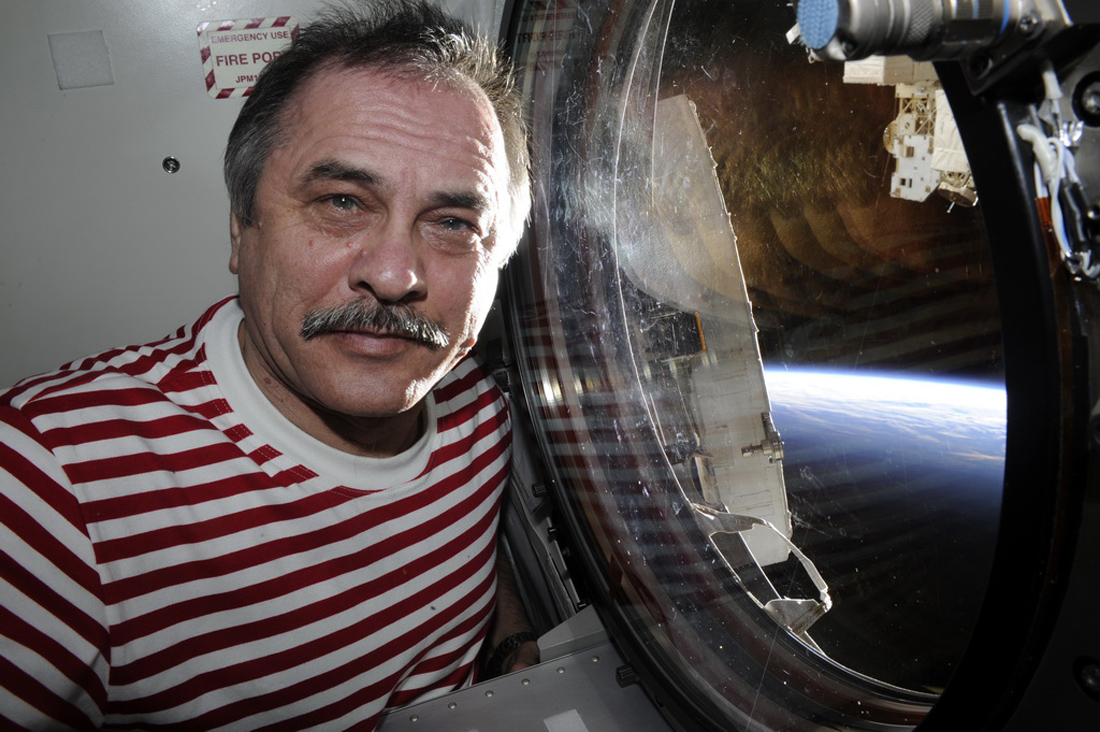
The first part of the conversation with cosmonaut Pavel Vinogradov, about health on Earth and orbit, weight control, sports, medical experiments, weightlessness, overload, smells of the station, comic mutants and mustaches.
Photo borrowed on the blog aviator-ru .
The result of our unexpected meeting with cosmonaut Pavel Vinogradov. The interview was prepared on the issues of users of the LiveJournal , Geektimes publication and Vkontakte social network .
In November 2014, I was invited to talk about rovers and moon rovers at the Robosib festival in Irkutsk. Here is a good report about the event from Leonid Kaganov. By happy coincidence, Pavel Vladimirovich Vinogradov was among the invited guests . I invited him to conduct an interview with questions from the Internet. He happily agreed. I harassed him almost the entire flight Irkutsk-Moscow, as a result, a lot of material accumulated and a lot of time was spent on processing. I decided to divide all the questions and answers into several parts. Conditionally, it will be: “Medicine”, “Psychology”, “Technique”, “Roscosmos”. All of them are closely intertwined and extremely interesting, such details are often not found anywhere.
Communicating with astronauts and space technology designers always reminds me that space is much harder and harder than it seems to us than books or movies draw. And such conversations are a way for one minute to look into a complex and unknown world, where a person takes only the first steps, achieved by incredible efforts at the limit of possibilities.
Pavel Vladimirovich has three space expeditions on his account: one on the Mir in 1997, and two on the ISS in 2006 and 2013. In open space, the astronaut worked for more than 38 hours, for 7 exits, including taking part in eliminating the consequences of the collision of the Progress spacecraft with the Mir station in 1997.
Prior to joining the cosmonaut corps, NPO Energia, Pavel was engaged in automated systems and the interaction of crews with them, and participated, in particular, in the Buran project.
The accumulated experience and knowledge over the 34 years of work of Pavel Vinogradov in the space industry is invaluable to the young generation of space enthusiasts and everyone who decides to connect their lives with the conquest of the universe.
Today is the first part:
Medicine
About health and weight control
One of the most popular issues is health. You are the only astronaut who met his sixtieth birthday in space, and is now also ready to fly. How do you manage to keep fit? They even ask for blood pressure ...
One hundred twenty-eighty. I can’t manage it at all - thanks to dad and mom.
That is, you do not have any secret diets or vitamin complexes? ..
Have never been involved in diets or vitamin complexes. The only thing that probably helped a lot was the part-time job as a tester at the Institute of Biomedical Problems. This is just a fantastic invaluable experience, developing the habit of feeling, feeling your body, knowing your limits, knowing your capabilities. We went to extreme modes for normal people ... Of course, there is physical preparation and exercise: in the morning, try to bend down and sit down eighty times ... I have never been a fan of sports, I do not like to run twenty kilometers like a horse. I run for fun, 2-3 sometimes 4 kilometers, at an easy pace. For me, it is more likely an emotional discharge than physical education.
Weight has to be monitored. So, after the last flight, I had to lose a little ...
So you gained weight there?
Before the flight, I went a little beyond the bounds of comfort. My usual weight of 77-78 kg is normal for my height and build, before the flight was 82, after the flight I scored 84-85. This was already felt by some discomfort. I set a goal ... No special diets, no exceptions, I eat calmly everything that creeps and moves. Just slightly reduced my diet. He returned to physical activity, normal for me - medium and light. And he returned to normal for me 77 kg.
Some astronauts note the difference in tastes on Earth and in orbit. It was so? What did you like at home, and what's at the station?
About half of those who fly say that tastes change. Not even tastes, but preferences. But I was lucky, I am an omnivorous man, which I liked on Earth, even in flight. Although there is something causing special pleasure. Cottage cheese with nuts is probably the most favorite food for all cosmonauts of all crews. Fish products are now doing good. In general, the range of food products at the station is now gigantic - under five hundred items. There are plenty to choose from. Moreover, the station is international and each country is trying to bring something of its own. Our diets are different. The Russian menu changes periodically, but basically these are some fundamental dishes, almost always with meat, very high-calorie, under three thousand calories. Americans have a lot of very good things, they have various cereals ... In general, we have wonderful diets, buckwheat, barley, mashed potatoes with onions ... but in the end it becomes boring, annoying. I want something simple, earthly, boiled potatoes with herring and butter. Somewhere after a month of flight you are already starting to remember.
About vitamins and the mind.
Is any complex of drugs taken to increase concentration, mental tone?
There is a whole range of drugs associated mainly with vitamins and maintaining normal calcium metabolism, for cardiac work, a la panangin. I'm not saying that this is specifically a panangin, but it is of this class. There are all kinds of vitamins, B, D ... Because, despite the radiation level, vitamin D is simply not produced, it simply has nowhere to be produced from there. And preventive measures are being taken, there is a whole complex of them, doctors, medical services all the time resemble "guys, today we are starting this cycle - five to seven days." Well, from my mind, in my opinion did not take anything.

About weightlessness and overload
Tell us about weightlessness and about the feeling of space. When do you realize that you are in space?
You won’t miss this moment. First, 520 seconds of withdrawal, then the pushers of the third stage - pyromedics - work so that you feel a heavy kick-blow to the back. You just won’t miss it. Weightlessness appears abruptly: bang, the engines turned off, the third step undocked and everything flew.
How to explain what weightlessness is? Apart from parabolic flights in training aircraft, the closest similarity is a parachute jump. And then the first few seconds, before the parachute opens. And there is a little different - air flow, wind, load ...
And scuba diving?
There, to a lesser extent. Gravity is still felt. In water, the ability to flip over is simulated. But if in “Orlan” [the suit] you were turned upside down in the hydraulic pool, then outwardly it seems like zero gravity, and the spacesuit is completely weightless - it does not float or sink, but you understand that you are upside down. There the state is different - it is called hydro-weightlessness - orientation skills in space are practiced there, you can spin as you like. The most realistic effect is parabola flying.
How did the body react to zero gravity? How long did the adaptation take?
Everyone has different things, but I was very lucky. They told me before the first start: in no case look at the ship's porthole. Now we are flying fast, and before we went into the spin of the ship - we focused on the sun with batteries. The mode was called: spin in the sun. They flew so that the batteries were always deployed on the sunny side. The rotation is quite intense - 12 degrees per second and the Coriolis force makes itself felt. This lasted for several hours, 3-4 times per flight. Now we fly without a spin, simpler, easier, but the perception of weightlessness is purely individual, although we are loaded the same way with training. Now - the Coriolis chair, there used to be a Hill swing ... In general, there are many devices that will turn you inside out. There are newcomers who at first could not stand two minutes of rotation on the Coriolis chair, but at least 10 were needed. “Passing point” for beginners 10-15 minutes. Before the flight, we spin 25-30-40 minutes. Doctors say, “Until you get bored”, but in fact, until the chair ceases to have any effect at all. It helps someone, someone does not, because in flight there are other vestibular disorders.

Those. in flight problems with spin in the Sun, and not actually with zero gravity?
No, vestibular disorders aren’t just because of the spin. Particular problems arise when you switch from a small ship volume to a large station volume. Here it is already quite bad, because there is no sensation of top and bottom. The floor and ceiling are conditionally divided by color, but this does not help much.
How much adaptation did you take? When did you realize that you feel confident at the station?
Probably still a few days. Since in addition to vestibular sensations, there is also a redistribution of the so-called hemodynamics. Redistribution of blood in the body. Even swelling of the face, swelling of the neck is visible, because blood rushes to the head. Our upper body on Earth is not subject to such influences and this causes some discomfort - nasal congestion, facial swelling ... But it disappears on 3-4-5 days. We also have the means of prevention that we wear the first week - medicine recommends. Costumes are special, which do not allow the muscles to relax. The Penguin loading suit, it looks like a regular flight jumpsuit, but it has a lot of elastic bands. They make the muscles of the back, hips, lower leg, arms, and shoulder girdle work. The whole body is covered. Such a suit is recommended to be worn at the beginning of the flight, but someone prefers to wear the entire flight - this is recommended. I wore it very little in the first flight, because it was very hot, but also in other flights, also not for long.
Is there any dependence on the feeling of weightlessness? Is there a desire to repeat it again?
If someone easily tolerates it - of course there is, of course. It once climbed a mountain, and you are pulled into these mountains a hundred times more. Once I jumped with a parachute, and I want to jump and jump. Or dived under water and you want to dive and dive (laughs). Of course pulls. I remember after a month, days from five to seven - eight, when all kinds of back pains go away a little. You think "I would still fly."
They talk about such a habit when an astronaut can put a mug in the air.
Yes, it was like that for me, the first time I returned from flight, I asked my wife for a glass of water, drank and let go of the glass, without any second thoughts. And in flight exactly the same, earthly habits. He wrote something with a pen, put the pen on the table. Just looked around - she is no longer there. It is everywhere.
And how did they overload?
Overloads are fairly calmly transferred - this is a trained thing - we fly on airplanes, spin in a centrifuge according to the launch-descent schedule.
Is the body ready?
There are full-time overloads - this is 4.5-4.6 units. There are modes, they are also regular, but we try to avoid them - on an uncontrolled ballistic descent. There the load is higher - 8.5-9 units.
Is there a difference in the feelings of overload on the launch and descent?
Of course, the modes are different. The rocket runs smoothly enough, speed picks up smoothly. At the stage of operation of the first stage, an overload of 1-1.5 units. By 25-30 seconds it gradually grows, but when the stage is separated, it drops to almost zero. On the descent, the overload is higher.
About conception and childbirth in zero gravity
Tell us about any experiments on the Mir or the ISS.
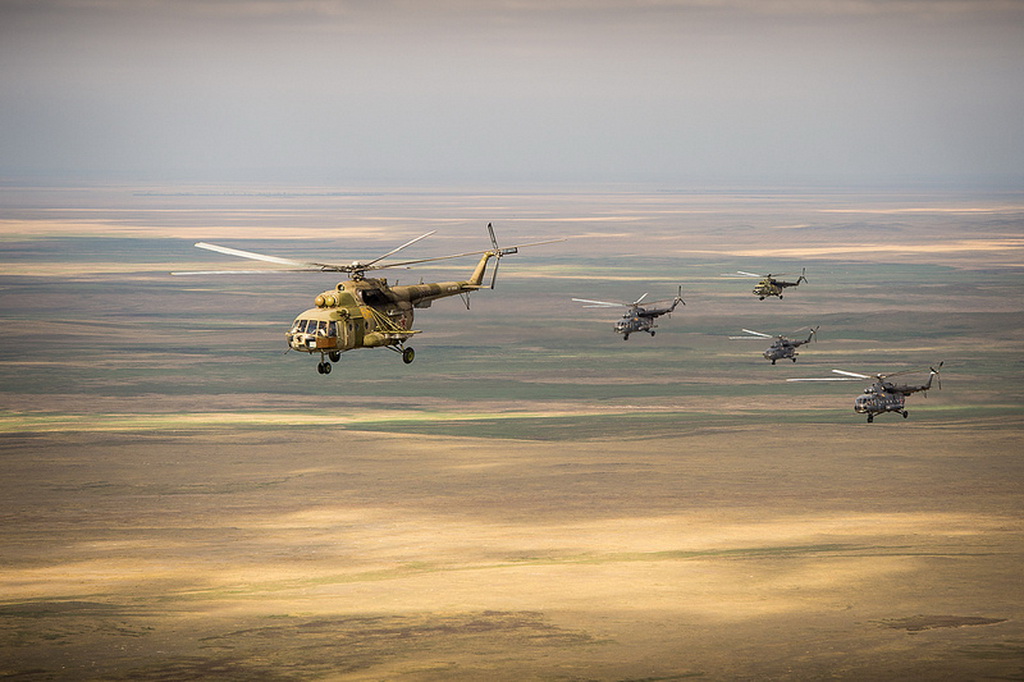
We had newts on the Mir. Officially, they did not have nicknames, only one female we called Anyuta. Colored beads were attached to their paws and we distinguished them by color. Unfortunately, she died of heart failure in our country. We had 14 of them. We brought them into the orbit of the living healthy. But they were not lucky already on Earth. We didn’t very well sit with Tolya Soloviev, sat in a terrible snowstorm on February 19. One single helicopter commander of the air army flew behind us, along with the general. He took us, and left all the rest: paratroopers, a maintenance team. The frost was degrees minus 18-19. While rescue vehicles got to them ... In general, the newts we just froze in the descent vehicle, unfortunately.
But there were a lot of experiments. I worked a lot on the French program, there were interesting biological experiments. There was such an experiment "Ferti", in translation it is "birth, conception", i.e. how is born. Tritons were also grown there, but at a completely different stage. Caviar was delivered to the station, fry appeared from it, tadpoles from fry, triton tadpoles ... The task was to see the development of eggs, and they came to very deplorable results. There were a lot of defective division. Usually, all living things are divided in multiples: one egg is divided in half, then into four, eight, sixteen and off and on, off and on ... And there they caught a large percentage of the so-called. “pathological division”, for example, was divided into two, and then not into four, but into three, or from four to five ... These are the things. So such wild exclamations, they say let's send a couple or some couple somewhere into space and there we’ll do the whole thing, well, from the human point of view, this is nonsense. This is a very complicated process, not even the birth of a person, but his development, conception. In general, I would not risk it.
About sex
Is the process of conception in zero gravity possible? How is it even with this function?
Absolutely real. I think that humanity can do this at all places. It seems to me. It’s even easier there - on the wall and on the ceiling you can, wherever you want. There would be a desire, but there is a desire.
Are there any problems in this area upon returning to Earth?
Well, I don’t know, I think not. In any case, no one spoke of problems. "Here, I flew in and everything is bad there." Just everyone notes the opposite. Everything is good with this business.
Those. Wives happy to return?
Yes!
About a dream
There were several questions about the dream: firstly, are the dreams that you see on earth and in space different. And one such semi-mystical question: was it such that all crew members, or several crew members, simultaneously saw the same dream?
I don’t know, firstly, I didn’t sleep with anyone, and ask what I’m dreaming about ... (laughs). Secondly, I have dreams, I do not know, fortunately or unfortunately, do not dream on Earth in general. Well, maybe they dream, but I don’t remember them. In the same way, they did not dream in space.
About how the dream is framed, it is already known enough about the sleeping bag there ...
Well, sleeps ... Sleeps are generally very bad and disgusting, because in our segment is quite noisy. 65–67 decibels. This noise is slightly less than inside the aircraft. Therefore, I can say about sleep, of course it is worse than on Earth. I always lacked pillows because my head dangles in this sleeping bag. I attached to my boots [fur boots] instead of pillows. Turn them inside out. Which are furry, until they are worn, clean. Turn them out, insert them into the other, and it’s kind of like a pillow.
Regarding outbreaks in the eyes, is there such a thing when cosmic particles enter the pupils?
There is.
Is it at night? or can it happen during the day too?
If the radiation is very powerful, then it is visible even in the afternoon, in normal light, such a flash. It happens at night. At night, even sometimes you even wake up from it. That is, apparently, the dream is not very deep, and the flash ... It is very easy to lose orientation when you sleep. Just wake up, naturally in a sleeping bag, naturally the light is off. Still, I always had the illusion that I was sleeping horizontally, that is, my vertical cabin, as if it were lying horizontally or turned upside down. That is, the feeling that I sleep on the wall vertically, as I normally physically sleep, was rare for me.
About silence
Is silence of space hard to hear?
I only once heard when a control system was cut off on our World and we fell into it ... That is, the station stopped, the fans turned off, went to a minimum, that is, the voltage dropped lower than the minimum threshold, everything stopped nafig, and the case began to creak, because there it cools on the one hand and heats up on the other. This is what is called deathly silence (laughs). This is scary.
About the smell of space
About the smell at the station: If it is impossible to take a shower, and physical activity is mandatory, does the station smell like a gym?
It doesn’t smell, because we have air purification systems that are three orders of magnitude better than in any gym. Everything is cleaned. Smells, ketones that may smell, or whatever. Of course, there is a specific smell at the station, because it is the smell of a car. As you enter a new plane - it smells like anything there, there is insulation ... Well, it's such a normal smell ... No, no.
But about the smell of space, not so long ago they wrote that it smells like ozone, or the smell of welding or something ...
Yes, this is burnt metal. Here is probably the closest comparison. If anyone was there at the metallurgical plants, where the blast furnace is, there is such a smell. Is always.
When does it begin?
The ship joins, and when these seven tons ... in principle, we have the nest that holds it, it’s of this diameter (shows), and this front lobe, on a retractable cord, it enters the hull and starts moving along it. The speeds there are not great, 12-15 centimeters per second, but, firstly, it is metal for metal, it is vacuum, what we call cold friction welding begins. When it joins, it engages, the hooks are closed, and then, when we begin to inflate this cavity, air enters there, and naturally starts to smell like this burnt metal. Then they say "smell what the cosmos smells like," he really is.
So this is the real origin of such a smell?
I explain this to myself, because nothing else ...
And when does spacewalk in a spacesuit, through a gateway, have this smell?
No, because we have oxygen inside. There is a smell when the reverse lock occurs, that is, it comes back ... Yes, it is like that, it smells a bit like ozone when our gateway compartment, or American, was inflated. And when you take off your spacesuit, this smell of freshness, ozone ... there is something like that.

About space mutants.
Regarding biological danger, they told about fungi on the Mir ...
They are also on the ISS. We have such a doctor of sciences Natikova Novikova, and there she tells some terrible horrors that yes, there are mutant fungi, but they are basically all brought from Earth, and no matter how we are processed, they survive. They are slightly different, but most importantly, they never found any pathogenic fungi there. That is, all the mushrooms that exist there, they are a fairly large variety, we regularly take samples from the surface, from ventilation, from ourselves, all this is packaged and sent to Earth, it is studied there, and so, no pathogenic things were found there once.
But were there any stations that were harmful, for example, they destroyed plastic or some kind of coating?
There are such. But we learned to fight them in the sense that we came up with plastic that they don’t eat. (laughs)
I even heard legends about aluminum ...
Yes there is. Well, it’s not even fungal, although it may be fungal lesions, but initially it is mechanical damage, and only then something starts to grow there. Or some chemical damage. Canned urine, and there acid ... Well, we had cases, but I never heard that it was something inexplicable AT ALL. In the end, it came to that. But the fact that there is no pathogen - this is the most important thing.
About the mustache.
Does the mustache in space interfere, and do you have to shave more often than usual?
More often than not, the mustache doesn’t interfere, we cut our hair once every three months, we have special machines connected to the vacuum cleaner so that nothing will fly apart. This is all right away, naturally sucked off, that's all.
To be continued...
Wonderful photos from space by Pavel Vinogradov and his colleagues can be found here:
Man and space .
Space Odyssey of Pavel Vinogradov .
And a huge thank you to Ilya Gusev for help in preparing the text.