December 12, 2017 at 10:25
What makes an airplane with your skin and eyes
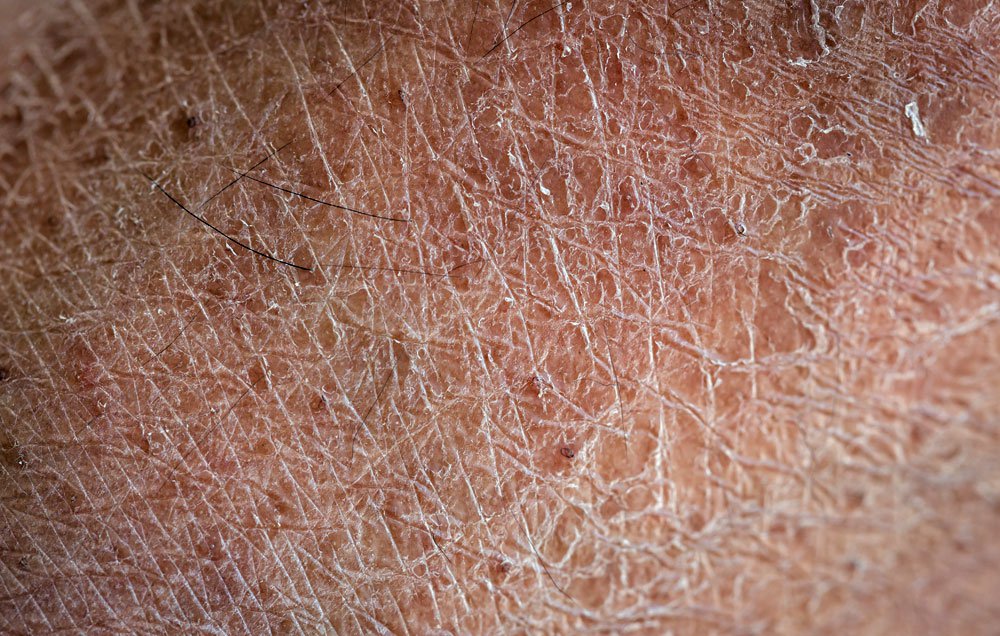
The plane is surprisingly unsuitable for life. Inside there is very dry air, beating in the eyes and skin, malicious radiation (in fact, only in certain latitudes, and this applies only to many flying pilots), another pressure that meanly makes you fart.
So skin and eyes. An airplane, a chemical laboratory or a production workshop are one and the same. Air-conditioned dry air. If the flight is more than 3 hours, the eyes will begin to burn, and rashes may appear on the skin. You hardly need them, like red eye redness, so we’re getting ready.
In the case of a single short flight, you do not need to do anything, just do not read further, otherwise you may have extra fears. In the case of a long flight or frequent flights - you need to do a couple of relaxed things.
Firstly, so that there are no bad skin rashes, a moisturizer. Many people like mild overdry, but there will be problems after the plane. Go to the doctor and ask how it is better to moisturize the skin. If you don’t want to see a doctor, go to a consultant in a pharmacy (sometimes they stand alone on your skin), listen to him and buy an analogue not of his company. You are interested in preparations containing high molecular weight fractions of hyaluronic acid, apple pectin, high molecular weight proteins (such as elastin), aloe vera. It is necessary to exclude everything alcohol-containing for the skin and everything with surfactants.
Lip balm is distributed in Turkish Airlines, for example, and in a couple of companies. You can ask for one more and spread on your hands. Just not in the eye! He is needed in order not to get a net of small cracks upon landing. In general, this is not important for a healthy person, but it is critical for a woman to reduce the likelihood of such an outcome, and you guys with computers are never healthy - you are our main consumer of eye gels and tear substitutes. Therefore, once every 2 hours, moisturize the skin of the eyelids, so you will not become our (and pharmacy) regular customer. In dry eye syndrome, there is no one trigger, it all adds up.
If you missed everything in preparation - take our Blefarogel 1 (but not the second, do not mix it up), it will help to prevent anything bad from happening with the eyes. It can be done even before the flight, when you red-eyed into the code, but in flight I recommend it to everyone without exception. If even Blefarogel did not have time - take a napkin, wrap a warm tea bag in it, and begin to massage your eyelids with it. A warm gentle massage will help. Several years ago, for washing those who have problems with dry eyes, we together with the Research Institute of Eye Diseases of the Russian Academy of Medical Sciences made Blepharoshampoo - there is a base in the form of infants shampoo, water-soluble olive oil, extracts of chamomile, witch hazel, calendula, green tea. It is possible in the eyes.
Secondly, one must drink.Two hours passed without water - they pressed the button to call the stewardess (do not hesitate) and ask for a glass. Or two. This is if the water is free, some people sell it in low-cost airlines. You need to drink a liter in 3-4 hours. The same applies to overdried rooms, but for some reason they remember about the plane, but not about them. Salt and sugar collect water, so drink either tea or just plain water. Tomato juice, cola is not the best choice. Coffee slightly increases moisture loss due to the diuretic effect - but abstain on long flights.
Humidity is usually around 20%. Expect pain in your eyes and cough, especially if you partook of alcohol a couple of hours before the flight (alcohol effectively binds water).
Third, eat protein before flying.Better in 3 hours. Steak, cottage cheese or steamed poultry with vegetables - perfect. Legumes, grapes, bananas - will cause bloating at an altitude. In flight, the nasal vessels narrow and the body decides that all food is tasteless and wrong. Up to 80% of the taste data comes from the nose, so just remember that eating all mustard from a serving is probably not the right idea.
Fourth, do a little exercise. Even in a small plane, you can walk to the toilet and stretch around it. Get up at least once an hour. The task is blood circulation. 25 squats work great.
The pressure in the aircraft at the upper echelon can be at a height of 1800 meters, and the drop is quite sharp. The expansion of air in the paranasal cavities and in the middle ear is usually not a problem, because there nature has carefully provided holes for frequent passengers. But if you caught a cold - you have a lid, this flight will be remembered for a long time. By the way, right away - do not use vasoconstrictors for the nose and eyes. Regardless of the common cold. Vessels are overloaded in flight, they are not very good. Namely, they are recommended that the nose does not block. By the way, if you have a funny click in your nose or ear - this is an occasion then to go to the otolaryngologist just in case after the trip.
If you are sick, you can drink dramins (if it suits you), this is the ultimate answer to all attempts by the body to throw food out. For obvious reasons, doing this is better before flying. It also ebbs, you will fall asleep. If you rock the beginning in the process - look at the horizon.
It’s better to wash your face (without soap) while waiting for your luggage. If you want to quickly build into the local rhythm - walk for half an hour under the sun or easily go for a run.
It may seem that to hell with such difficulties, it's just a flight. Yes, in general, you can not bother at all and forget about it. But in fact, you don’t need stupid excesses with immunity - both on the plane (where it may not be very purely bacteriological due to crowds of people), or on the ground in a new country, where there will still be a wild load due to an unusual biome . By the way, if you want to scare a talkative neighbor, be sure to tell her that there are a lot of bacteria in the clouds. There is moisture, and some there are quite normal. Just don’t say that they almost never get on the plane.
About radiation - in the zone of auroras there is such a configuration of the earth’s magnetic field that the most “aggressive” particles fly there. That is why the auroras are visible, by the way. So, flights from New York to Europe often take place in this area. If you fly there, you see the aurora - your radiation background is exceeded not only because of the lack of protection of the atmosphere, but also because of the best place on Earth for irradiation. It’s safe to do this about 40 times a year (depending on the country's standards), and each pilot keeps track of such flights - he has, roughly speaking, the choice of the first 20 flights between fuel economy and the bonus and his own risk, then you just can’t choose the risk.
As a result, I only take painkillers (just in case), an eyelid treatment and our regeneration tool (you probably don’t need to, I’m in a habit withtesting wear it everywhere).
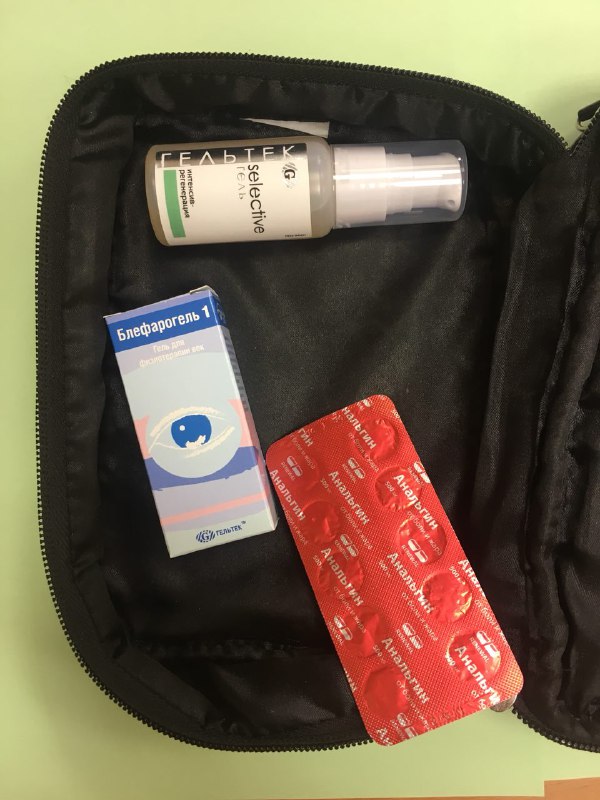
You can also add anti-allergenic and cream for the face and hands, but small.
On board the aircraft there is a rather large first-aid kit at the flight attendants, they also know the first aid and the features of using skills in flight. They should also have a defibrillator and a cylinder of oxygen, but this is far from always the case - I had a case in practice when I did not find what was needed for the patient on board. In general, our planes are subject to the guidelines “Provision of Civil Aviation Aircraft with Medicines and Medical Devices”, who are interested - google the equipment.