September 20, 2016 at 21:38
At the place of detection of the Antikythera mechanism, a human skeleton was found
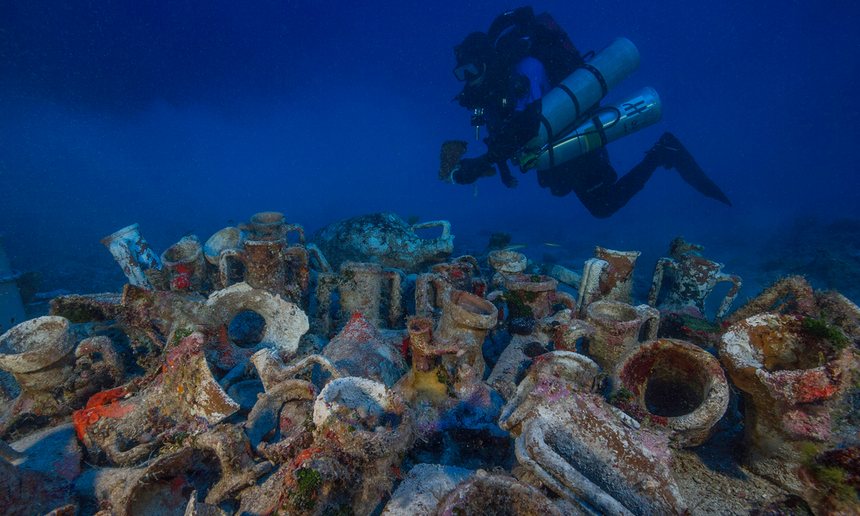
At the crash site of an ancient Greek ship, archaeologists discovered a lot of pottery, metal fragments, and, of course, the Antikythera mechanism (source: Brett Seymour / EUA / WHOI / ARGO)
In 1901, from an ancient ship that sank near the Greek island of Antikythera (Greek Αντικύθηρα ) raised the remains of an unusual mechanism. All this looked like fragments of corroded bronze, covered with a layer of marine sediments. Initially, these fragments were considered parts of a statue. But the archaeologist Valerios Stais, who conducted a survey of fragments in 1902, found out that these were parts of a single mechanism.
This mechanism is called Antikythera at the place of detection. It dates from about 100 BC, it is not possible to more accurately determine its age. Now, more than a century later, in the place where the ship sank with this device, a human skeleton was discovered. Archaeologists believe that the ship sank as a result of a collision with rocks. The resulting damage did not allow the 40-meter vessel to stay afloat. Together with him, part of the crew drowned. The remains of one person were found on August 31 of this year.
Skeletons in the crash sites of ancient ships are extremely rare, because the bodies of people are quickly absorbed by marine life, fauna and microorganisms. But in this case, the specialists were lucky. The fact is that one of the team members was covered during the crash with fragments of pottery and sand. For this reason, the skeleton remained almost untouched. “We are amazed,” says one of the expedition members. “We have not made such finds yet.”
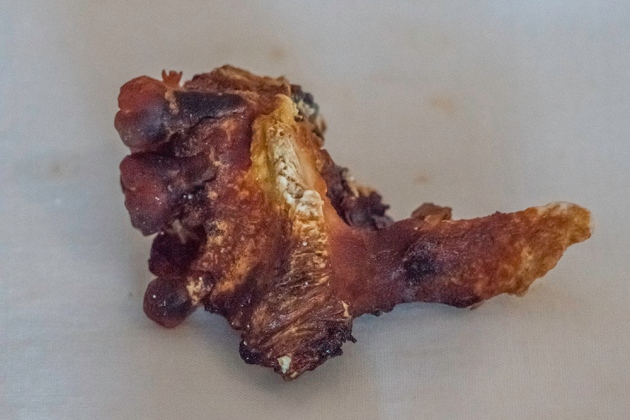
A fragment of a jaw extracted from under water near Antikythera Island (source: Brett Seymour, EUA / WHOI / ARGO)
If scientists succeed in isolating DNA samples from the remains, then it will be possible to carry out sequencing, finding out where the person who died more than two thousand years ago was from. This is not the first skeleton that was found in the place where the ship sank with the Antikythera mechanism. Previous remains were discovered in 1976 by Jacques-Yves Cousteau himself. But the fragments of the skeleton raised from the bottom of the sea were preserved by a number of chemicals. Some fragments were not coated with chemicals, but their safety in terms of the possible extraction of genetic material left much to be desired.
The remains discovered now, according to experts, may well contain preserved DNA samples.
The gender of a man who drowned two thousand years ago, presumably male. Now scientists are waiting for permission from the Greek authorities to work with the remains. Since they were found in Greece, you have to ask the authorities of this country for permission. If DNA sequencing succeeds, it will help to understand some of the details of the origin of the passenger ship (or sailor). Scientists will also receive a number of important data for historical science.
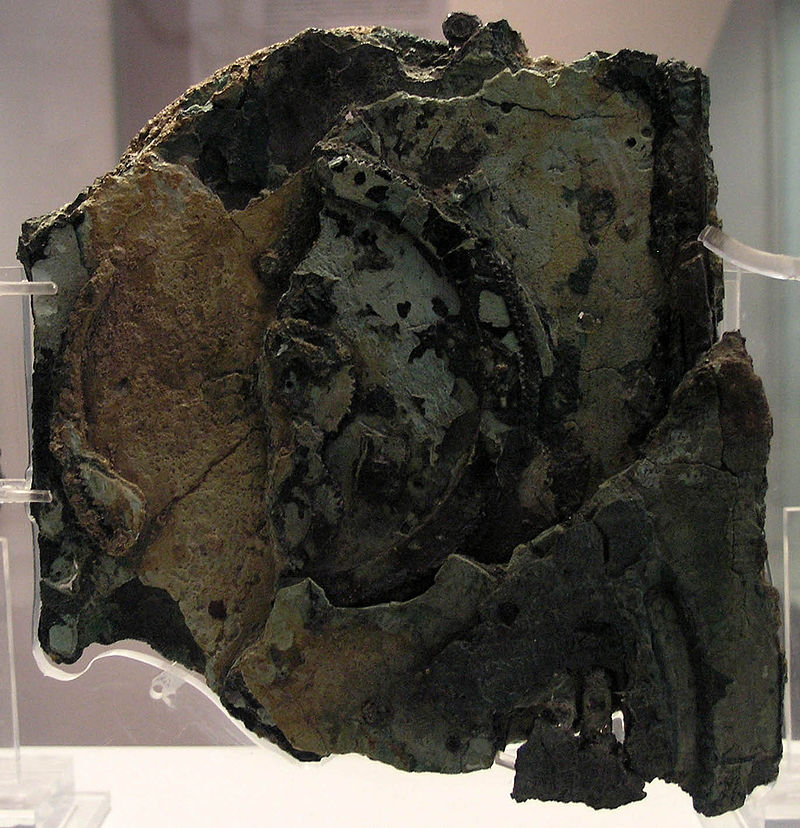
One of the fragments of the mechanism (source: Wikipedia)
The mechanism itself, as it turned out relatively recently, is an analog computer, which was used, perhaps, to predict the motion of celestial bodies. In particular, scientists suggest that the computer of antiquity could show priests where a solar or lunar eclipse could happen. More recently, it was discovered that, along with the mechanism, its creators sent instructions for use. The size of the mechanism was supposedly 33 × 18 × 10 cm. The Antikythera Mechanism Research Project (AMRP)
has been working on the study of the Antikythera mechanism for many years . At the disposal of specialists - all the latest achievements of science and technology. To read the instructions and study the mechanism, tomography, computer simulation, fluoroscopy and much more are used.
Read the instructions only now. By "handwriting" it was possible to determine that two people were inscribing. Most likely they worked in the same workshop. Moreover, you can even determine the approximate location of the ancient workshop. This is most likely the island of Rhodes. The fact is that the mechanism was configured to work with astronomical events at 35 degrees north latitude.
The instruction was engraved with 1.2 mm symbols on a bronze surface. Scientists were able to identify 3,400 characters (approximately 500 words). Most likely, there were several times more words - about 2000-2500.
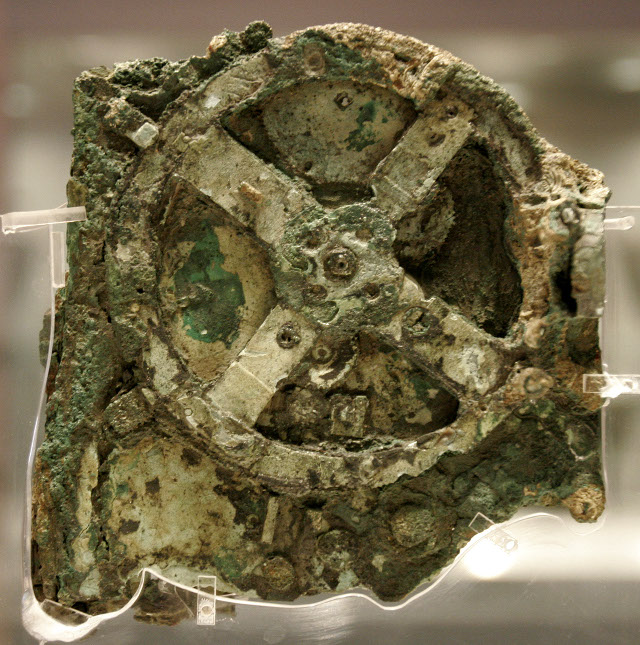
Photo: The Associated Press
Perhaps, with the help of the apparatus, the Greeks tried to predict the future. And not only his people, but also all the civilization known at that time to the Greeks. In the instructions discovered by scientists, the observer is told about what he can see during the operation of the mechanism. The phenomena themselves are not explained in any way - most likely, this should have been understood by the person who was carrying the analog computer.
Presumably, the creation device are related ancient Greek scholars such as Hipparchus (190-120 gg. BC. E.) And Geminus(I century BC). They worked on the island of Rhodes. Scientists do not know anything about other famous astronomers of the time who lived and worked near Rhodes or on the island itself. So it is likely that the creators of the device are precisely two ancient astronomers, which were mentioned above.
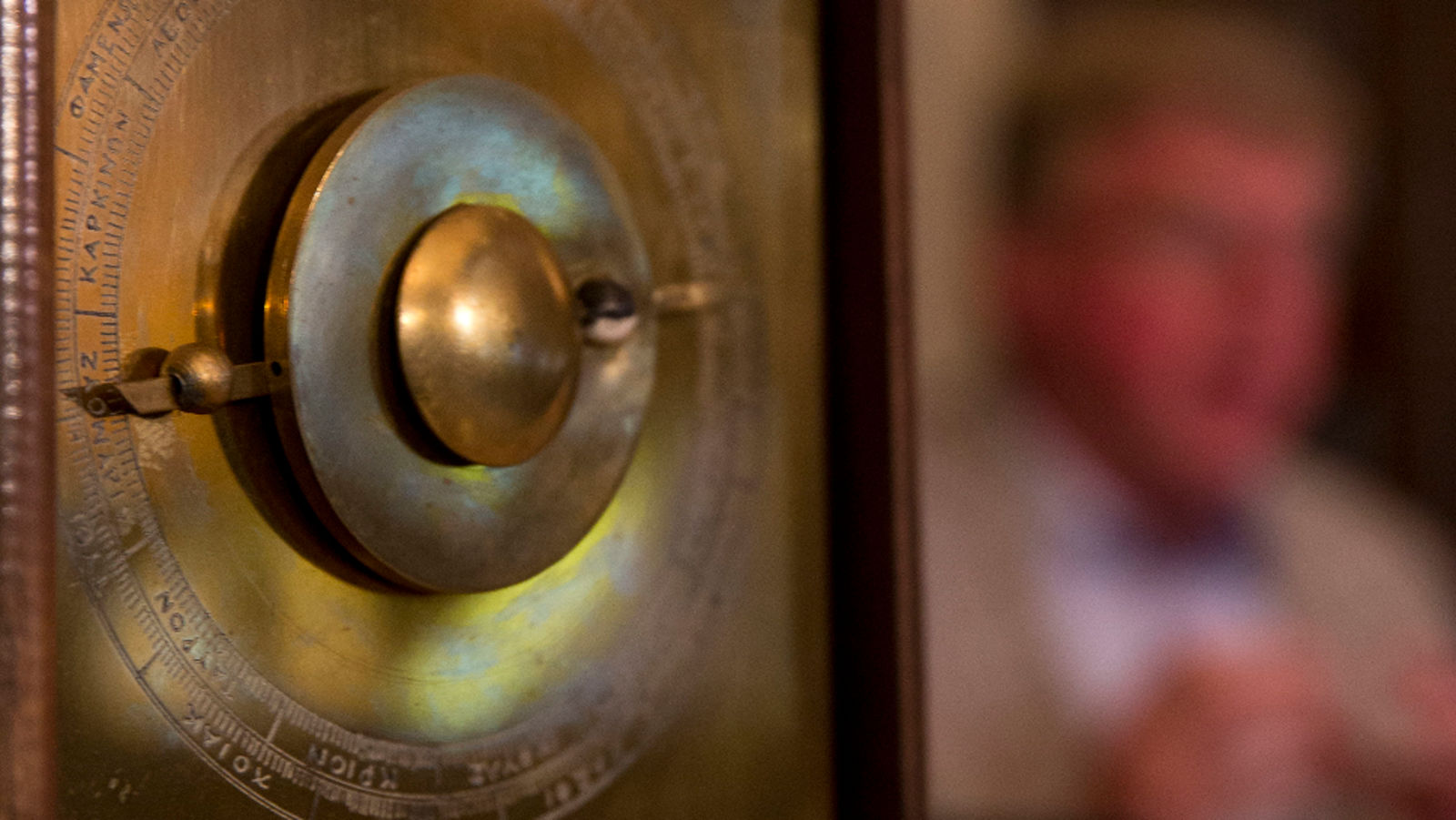
Photo: Petros Giannakouris / Associated Press
The remains of a man at the site of the wreck of the Greeks were found as a result of previously planned excavations. It may well be that scientists will soon be able to find something else that will shed additional light on the origin of the Antikythera mechanism.