September 3, 2016 at 17:51
ROM of the Apollo 3 computer found in the garbage
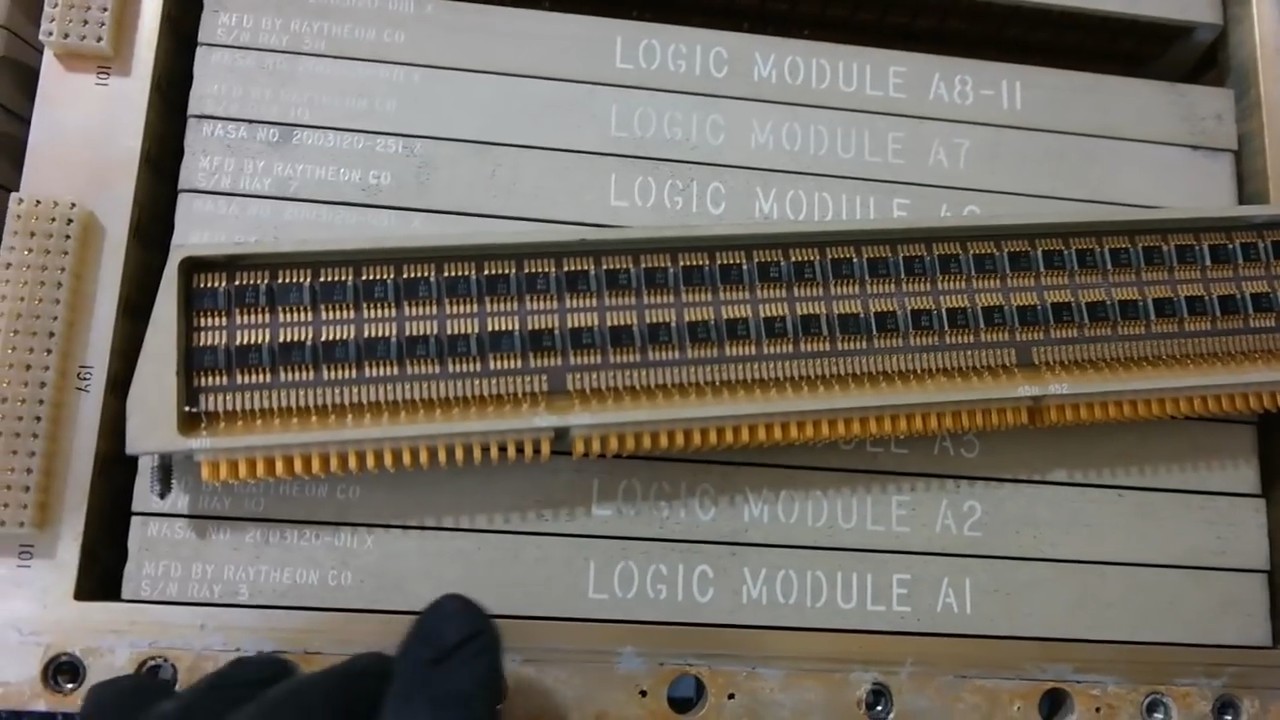
Logical modules of the Apollo spacecraft computer. Video shot: Francois Rautenbach
On August 25, 1966, the command and service compartments of the Apollo 3 Module (Apollo Command Module) were installed on the Saturn-1B launch vehicle and sent to the AS-202 unmanned test mission at an altitude of 1,136 km. This launch was the third test launch of Saturn-1B after AS-201 and AS-203. But he became the first flight of the ship with installed control and orientation systems. The first time the on-board computer AGC (Apollo Guidance Computer) took to the sky. These tests were to prove that the Apollo ship was able to deliver people to the moon and return it back.
Follow-up mission software exists and is published on Github, the on-board computer emulator runs even in the browser . But the hardware and software of the first experimental missions are poorly studied . For a long time, part of the equipment was generally considered lost.
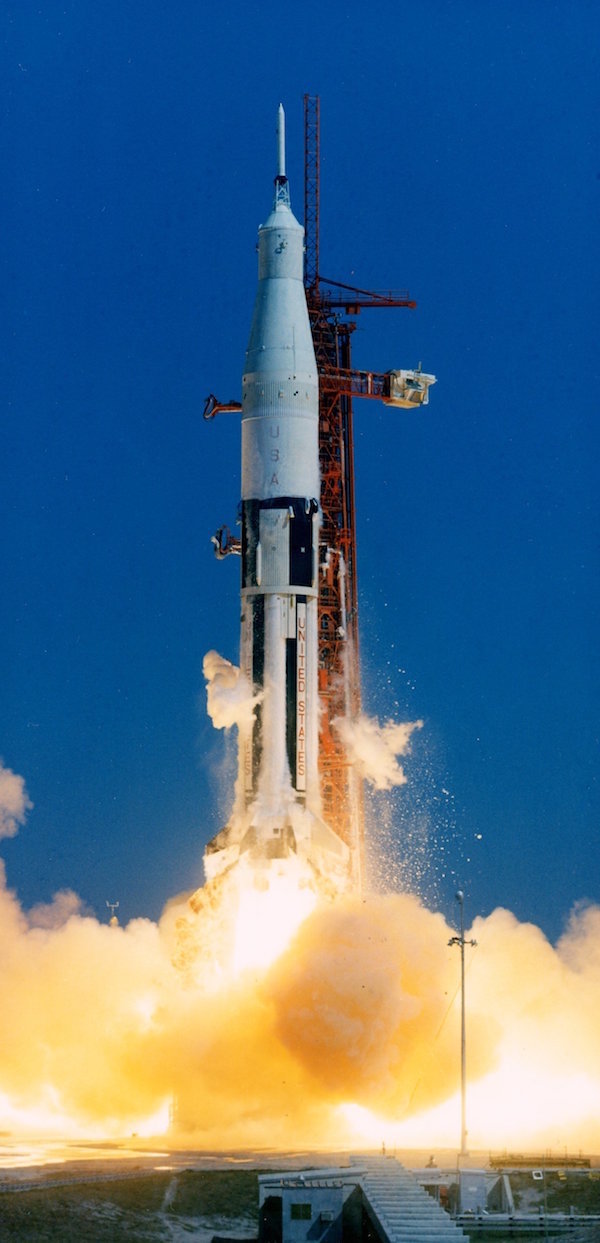
Launch of AS-201 from the launch pad LC-34, February 26, 1966 (launch of AS-202 took place from the same launch pad after 180 days). Photo: NASA
Fortunately, now something has finally been found. South African engineer Francois Rautenbach discovered in the garbage memory modules from the first-ever on-board computer for automatic control and orientation in space. The very same computer installed on the American ship, which we now call the Apollo 3.
The engineer carefully studied the find and read the data from the memory using an ingenious design from a variety of relays and an oscilloscope.
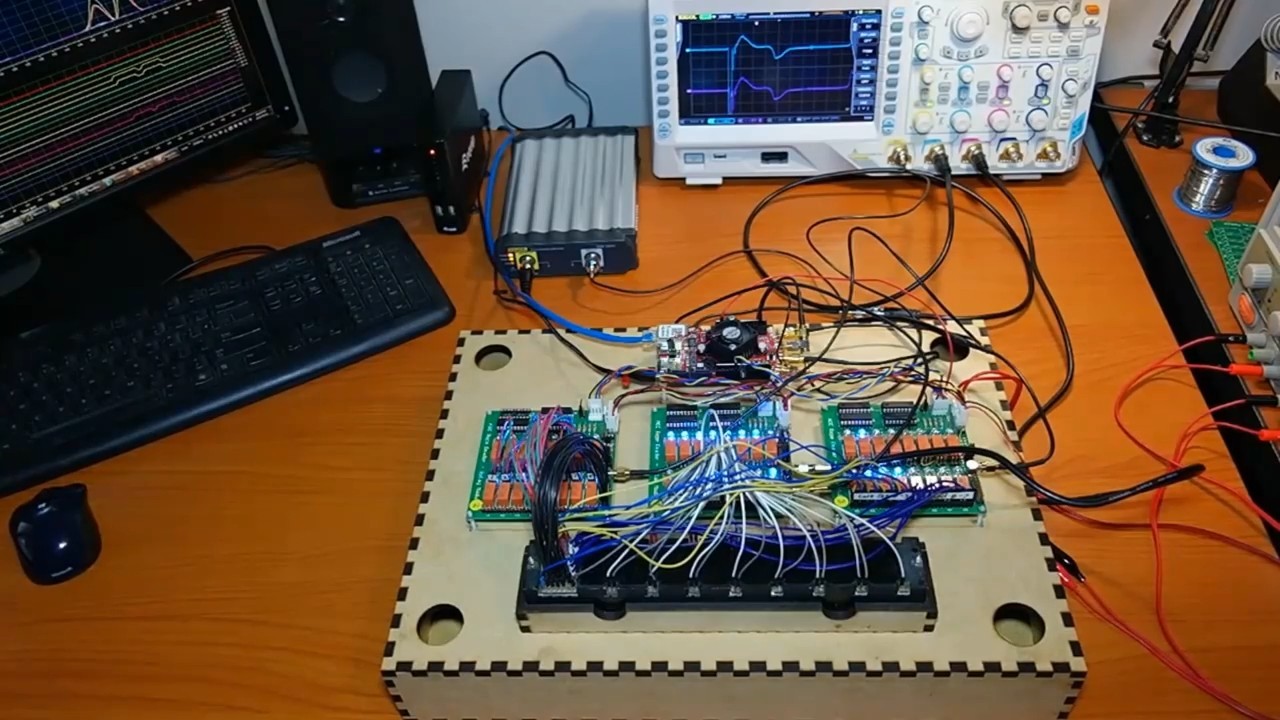
Reading memory from the AGC module. Shot from the video: Francois Rautenbach
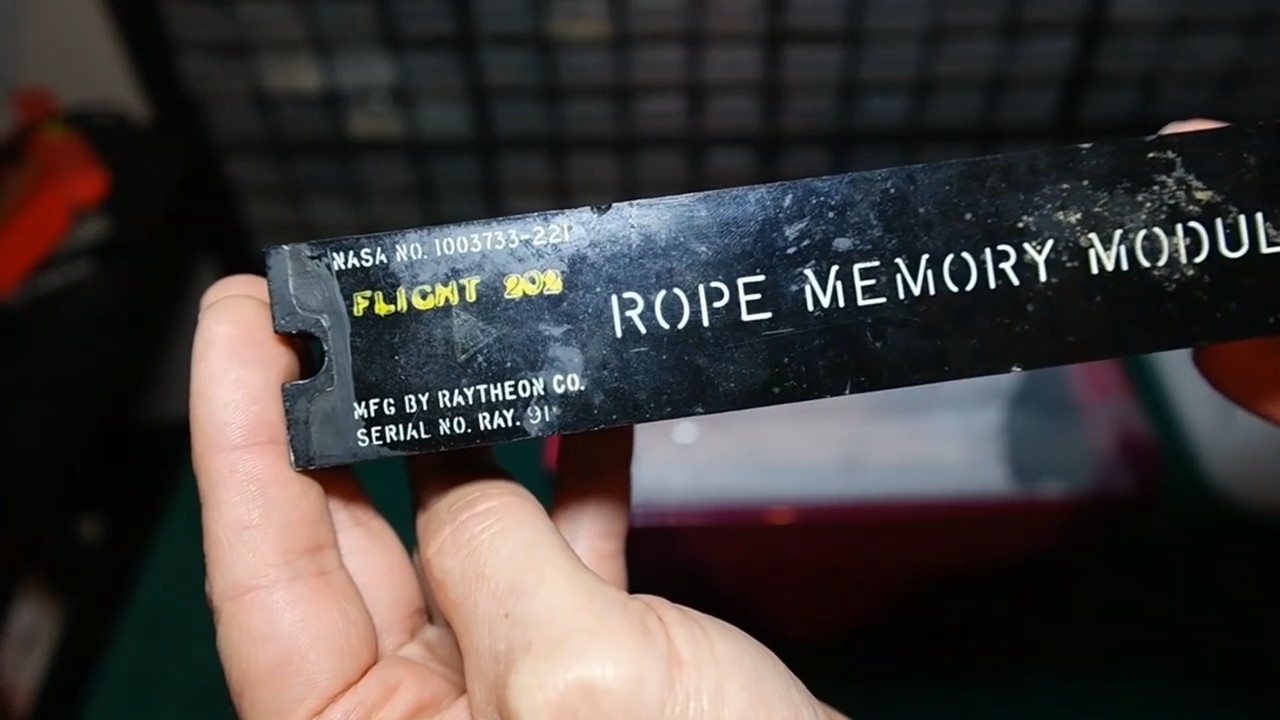
Permanent storage device. Shot from the video: Francois Rautenbach
First of all, the engineer had to disassemble the giant backplane installed on the back of each memory module in the pin. Francois found documentation with a description of the pinout, carefully studied the circuitry, and managed to reverse engineer the interface, which has not been released for a long time.
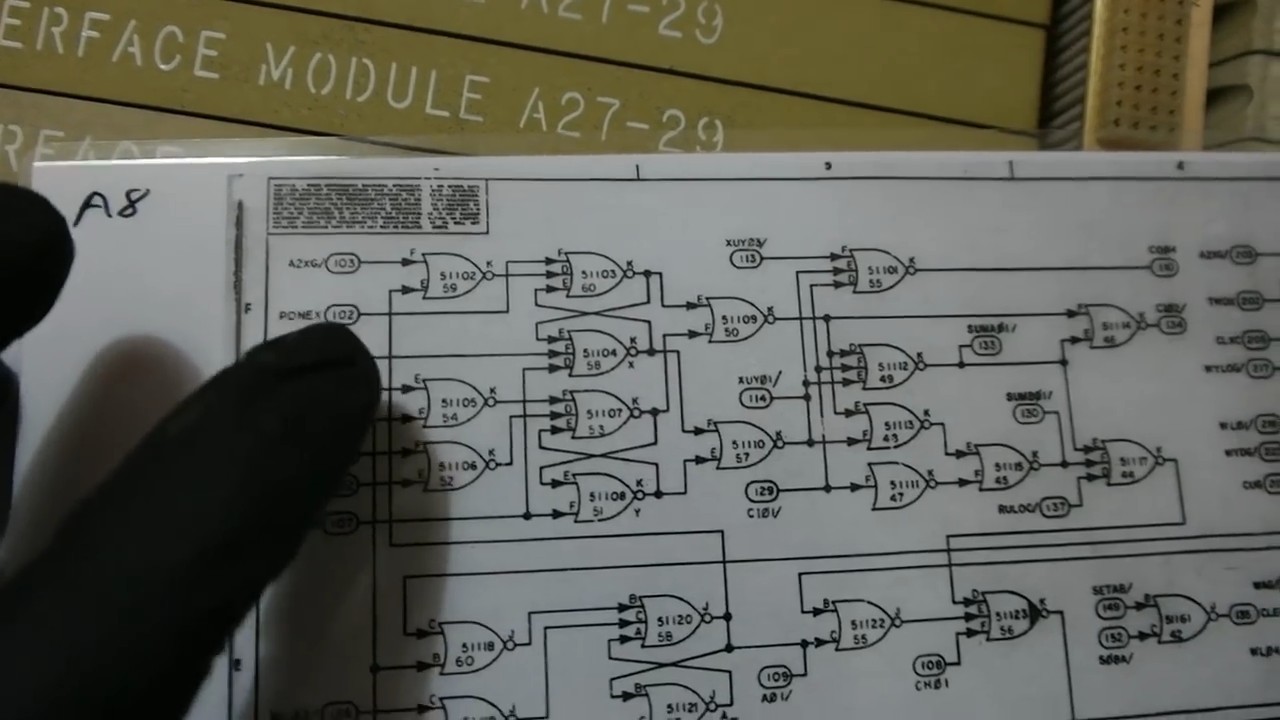
Documentation describing the pinout. Frame from video: Francois Rautenbach
In the next step, he enlightened the module with an x-ray emitter in order to understand its internal structure. The engineer was helped by a familiar cardiologist, Dirk Pretorius, at the local Gateway hospital, which provided access to the X-ray machine. The module was placed on the couch for the patient - and enlightened.
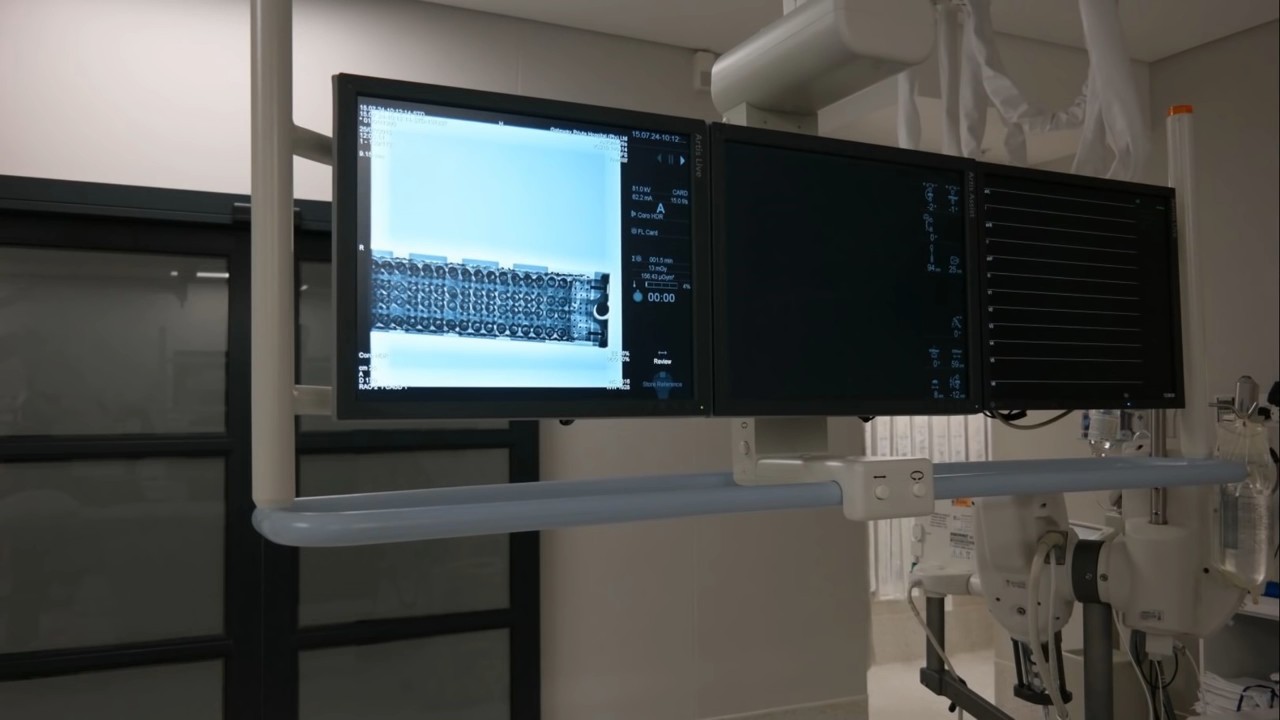
Clearance of ROM by X-ray emitter. Shot from the video: Francois Rautenbach
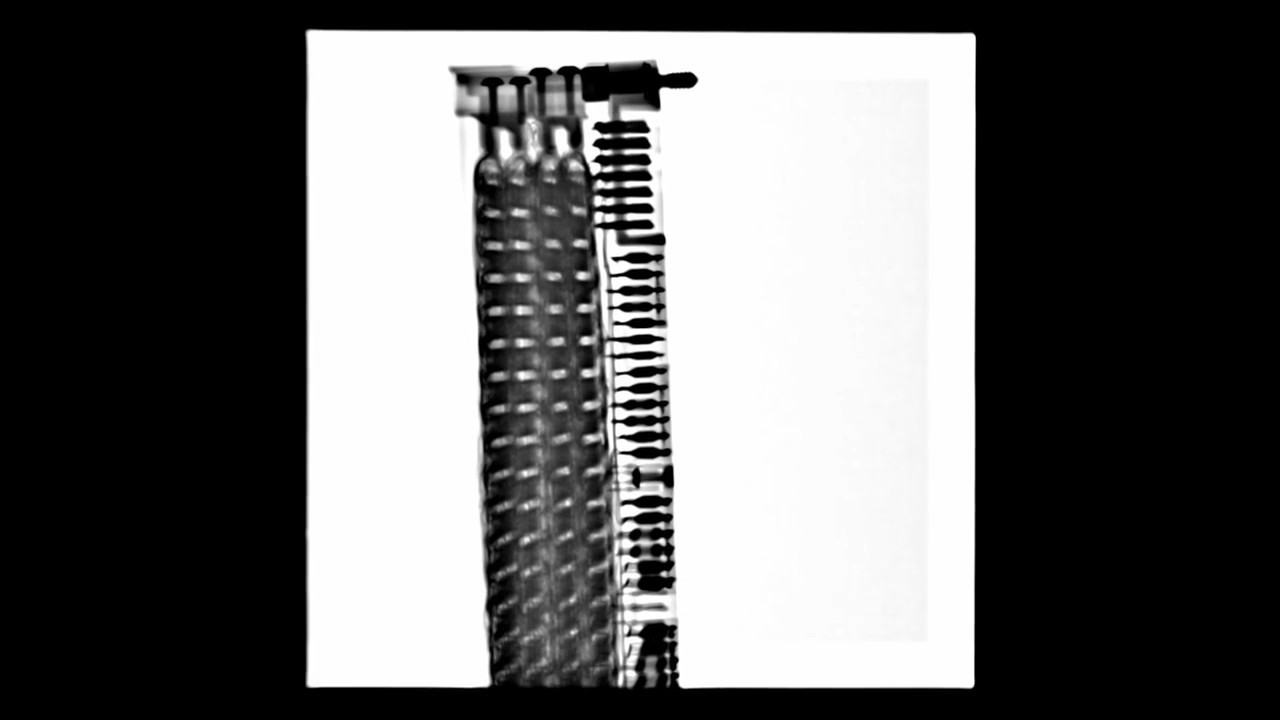
Glow of ROM by X-ray emitter. Shot from the video: Francois Rautenbach
You need to be very careful here, because these modules are the only surviving media for the Apollo 3 software. Every bit that can be counted from there is of the highest value and represents a remarkable achievement of technological archeology.
According to the engineer, this is not just the first copy of the computer used in the Apollo program, but in general the world's first microcomputer. He was far ahead of commercial microcomputers such as Datapoint 2200 manufactured by CTC (1970), Altair 8800 (1974) and others.
A copy of this artifact from AS-202 later flew to the lunar orbit on the Apollo 11 ship and controlled the descent of the lunar module.
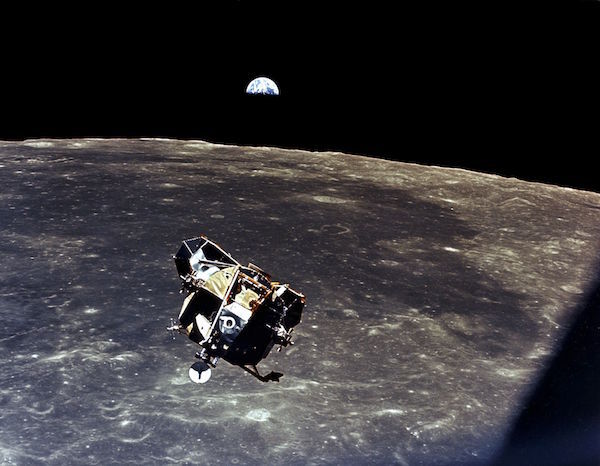
The lunar module of the Apollo spacecraft. Photo: NASA
François shot the disassembly procedure in all details on a video that he posted on YouTube a few days ago .
Read only memory Part 1. Introduction (9:03)
Permanent storage device. Part 2. Construction (8:53)
On-board control computer of the Apollo spacecraft. External examination (6:12)
It is likely that these first few episodes will not be the last, and François Rautenbach will continue his research work.
The find of the South African engineer is certainly one of the greatest discoveries of computer history made in the 21st century. It is all the more surprising that the modest Francois Rautenbach does not seek to attract attention. The publication of his videos on YouTube went completely unnoticed, and only a few days later they noticed it in the local media .
The history of the find is also interesting. According to the engineer, he became interested in lunar computers after reading Frank O'Brien's book Apollo Computers. Leadership: Architecture and Operation"Published in 2010. From this book, he learned that AGC was an extremely advanced and powerful computer, and began to search for additional materials on this topic.
A friend from Houston once sent him photographs of the garbage left over from the launch of the AS-202 in 1966. In the photographs, he saw objects that looked very much like ROM modules from an on-board computer. The engineer studied photographs and documents on the construction of the AGC - and realized that these are indeed the very memory modules on which the program code from the first microcomputer in human history is recorded.
He calculated the source of the photographs. It turned out that a certain person was trying to sell these modules and other Apollo computer modules at an eBay auction along with a three-ton pile of scrap metal that was in the backyard of the house. But FBI agents came to him and asked to explain where he got these things. The man was able to find an invoice for the purchase of scrap metal, but removed it from the auction. He did not want anyone in the United States to know about these details, so he turned to the buyer outside the country. “Being non-American is sometimes beneficial,” Rautenbach jokes.
Francois says he has long been interested in computer history. He was professionally engaged in the development of hardware and programming in various fields: from firmware to highly secure systems, recently he has been engaged in payment systems. The spacecraft of the 1960s are far from the professional field of Francois, but his experience in the related fields of electronics development and programming allowed him to quite professionally “sequence” the historical find.
Last year, an engineer flew to Houston - and made sure the modules were authentic. After that, he paid for the delivery of scrap metal to South Africa and contacted Eldon Hall, one of the developers of the AGC computer and the author of The Journey to the Moon. History of Apollo spacecraft on-board control computer". With his help, the enthusiast found out that the computer with the AS-202, like other artifacts of the lunar program, is now stored on the legendary aircraft carrier USS Hornet, which was turned into a museum. But memory modules and other computer components were sold as garbage in 1976. And NASA did not have a single copy of the software from the first microcomputer.
If the South African engineer continues his work, soon NASA experts and everyone else will be able to get acquainted with this unique copy of computer history. Francois Rautenbach timed the publication of videos to the 50th anniversary of the launch of the AS-202.
The same seller, whom the FBI visited, asked to keep his name a secret.