A monkey driving a wheelchair and a VR avatar by the power of thought is real
Welcome to the iCover Blog Pages ! A team of researchers from Duke University, led by Miguel Nikolelisom successfully completed a series of experiments and the development of a new version of the BMI interface, allowing the monkey to control a wheelchair using the power of thought.
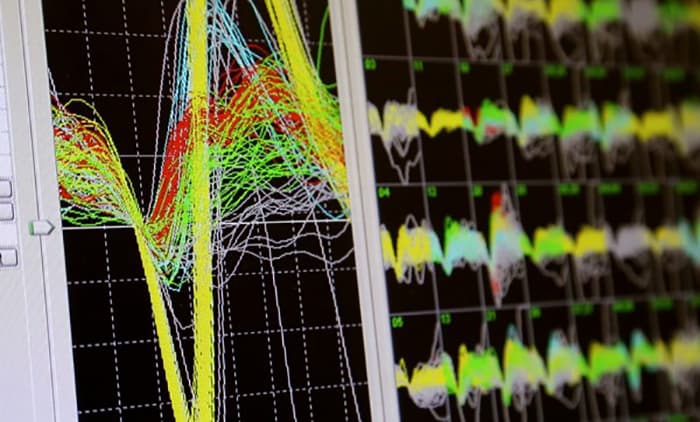
The scientific world perfectly remembered the years 2011 - 2013, when, under the supervision of world-famous scientist and philosopher Professor Miguel Nicolelis from Duke University, conducted with primates, scientists were able to train monkeys to be active and respond to changes in virtual reality. After implantation of special implants into the animal’s brain, for the first time in the history of mankind, a functioning bi-directionalthe brain-machine-brain interface (BMBI) and two-way interaction between the brain of the primate and the virtual environment is implemented. At the same time, the capabilities of the implemented technology allowed the avatars of the monkeys not only to manage the virtual environment, but also to evaluate and respond to the information that it generates. At the level of experience with the monkeys, the organization of such a feedback channel allowed them to feel what the objects of the virtual world are to the touch.

Purposeful training over time taught the monkeys to confidently manage their virtual avatar with the help of thoughts in the complete absence of any movements of the physical body. In virtual space, the monkey avatar learned to sit on the floor, feel for objects, select objects with a specific surface texture, which was set using a simple combination of electrical signals of a certain configuration transmitted to the animal’s brain.
The study of the brain's ability to control computers through thought has recently been considered by scientists as one of the priority and most promising areas. The results of multifaceted studies at the intersection of neurobiology, microelectronics and robotics formed the basis for the creation of various types of direct brain-computer interface (Brain-Machine Interface, BMI). It is they, according to the scientists’s plan, that will make it possible to realize a person’s long-standing dream - to effectively transmit thoughts and manage non-living objects and information from a distance, using this ability in a wide variety of fields: from medicine to comprehensive over-intensive learning processes. Of particular importance is the possibility of such mental control for people with completely or partially limited motor capabilities.
One of the already proven ways to organize a communication channel within the BMI interface is to use the capabilities of non-invasive technology of electroencephalography ( EEG ). In this case, the exchange of useful information is carried out through special hats stuffed with electric sensors and allowing you to read the signals of the nervous activity of the brain in real time, decipher them and, having encoded in an understandable machine, transmit them as a control command.
At the same time, such an approach as EEG at this stage for a completely paralyzed person with a severe form of disability who is unable to blink, Miguel Nikolelis believes, is associated with a number of technological limitations and can only be considered promising today.
Given the specific state of a paralyzed person, specialists from Duke University, as in the case of the experiments on primates described above, proposed to consider the invasive correction method as a much more effective alternative by introducing special intracranial implants that provide direct, directional and accurate reading of relayed signals .
The implant developed in the laboratory of Miguel Nicolesis is fundamentally different from everything that was previously proposed. Representing a peculiar matrix of electrodes, it consists of hundreds of microfilaments, a thickness less than a human hair. The implantation process involves the installation of an implant in the premotor and somatosensory areas of the brain, from where the necessary signals are subsequently removed. In this way, the implants were implanted into the brain of two test monkeys.

It should be noted that the first work in this direction was started back in 2012 and a group of scientists led by the same professor Nicolelis then managed to train the monkeys to ride a bowl with food on a bicycle. Over the past time, not only the technology itself has been finalized. Significant changes have also been made to software that allows you to transcode brain signals into digital commands familiar to a wheelchair computer.
It is interesting that the same monkeys, already trained previously in the mental control of a bicycle, having transferred to a chair, immediately adapted to the new situation. It was enough for them only to think about the bowl in front and the chair began its movement. Of course, the shortest route was not immediately selected - the primates had to stare along a slightly curved path for some time. But very soon after the start of a new series of experiments, the animals were able to optimize the route and reduce the time and distance on the way to the goal.
Analyzing the results accumulated as a result of the experiments, the scientists came to an amazing conclusion: the signals associated with estimating the distance to the food bowl at the beginning and end of the experiment were fundamentally different. “This means,” said Nicolelis, “that the monkey’s brain assimilated the gained experience and made the necessary conclusions, which testifies to the flexibility of the brain and its ability to adapt to surrounding changes over a very wide range and in a short time.”
To date, scientists have learned to capture, process, and efficiently use signals sent by no more than 300 individual neurons. Initially, one implant is designed to safely and efficiently read signals from 2,000 neurons. Currently, the Miguel Nicolesis group is working to complement the information vacuum by making better use of idle reserves. In turn, an increase in the number of neurons involved in the exchange of information will dramatically improve the accuracy of signal processing in the BMI control system under consideration.
More with the calculation
Dear readers, we are always happy to meet and wait for you on the pages of our blog. We are ready to continue to share with you the latest news, review materials and other publications, and will try to do our best to make the time spent with us useful for you. And, of course, do not forget to subscribe to our columns .
Our other articles and events
The scientific world perfectly remembered the years 2011 - 2013, when, under the supervision of world-famous scientist and philosopher Professor Miguel Nicolelis from Duke University, conducted with primates, scientists were able to train monkeys to be active and respond to changes in virtual reality. After implantation of special implants into the animal’s brain, for the first time in the history of mankind, a functioning bi-directionalthe brain-machine-brain interface (BMBI) and two-way interaction between the brain of the primate and the virtual environment is implemented. At the same time, the capabilities of the implemented technology allowed the avatars of the monkeys not only to manage the virtual environment, but also to evaluate and respond to the information that it generates. At the level of experience with the monkeys, the organization of such a feedback channel allowed them to feel what the objects of the virtual world are to the touch.
Purposeful training over time taught the monkeys to confidently manage their virtual avatar with the help of thoughts in the complete absence of any movements of the physical body. In virtual space, the monkey avatar learned to sit on the floor, feel for objects, select objects with a specific surface texture, which was set using a simple combination of electrical signals of a certain configuration transmitted to the animal’s brain.
Recent Research by Dr. Nicolelis
The study of the brain's ability to control computers through thought has recently been considered by scientists as one of the priority and most promising areas. The results of multifaceted studies at the intersection of neurobiology, microelectronics and robotics formed the basis for the creation of various types of direct brain-computer interface (Brain-Machine Interface, BMI). It is they, according to the scientists’s plan, that will make it possible to realize a person’s long-standing dream - to effectively transmit thoughts and manage non-living objects and information from a distance, using this ability in a wide variety of fields: from medicine to comprehensive over-intensive learning processes. Of particular importance is the possibility of such mental control for people with completely or partially limited motor capabilities.
One of the already proven ways to organize a communication channel within the BMI interface is to use the capabilities of non-invasive technology of electroencephalography ( EEG ). In this case, the exchange of useful information is carried out through special hats stuffed with electric sensors and allowing you to read the signals of the nervous activity of the brain in real time, decipher them and, having encoded in an understandable machine, transmit them as a control command.
At the same time, such an approach as EEG at this stage for a completely paralyzed person with a severe form of disability who is unable to blink, Miguel Nikolelis believes, is associated with a number of technological limitations and can only be considered promising today.
Given the specific state of a paralyzed person, specialists from Duke University, as in the case of the experiments on primates described above, proposed to consider the invasive correction method as a much more effective alternative by introducing special intracranial implants that provide direct, directional and accurate reading of relayed signals .
The implant developed in the laboratory of Miguel Nicolesis is fundamentally different from everything that was previously proposed. Representing a peculiar matrix of electrodes, it consists of hundreds of microfilaments, a thickness less than a human hair. The implantation process involves the installation of an implant in the premotor and somatosensory areas of the brain, from where the necessary signals are subsequently removed. In this way, the implants were implanted into the brain of two test monkeys.
It should be noted that the first work in this direction was started back in 2012 and a group of scientists led by the same professor Nicolelis then managed to train the monkeys to ride a bowl with food on a bicycle. Over the past time, not only the technology itself has been finalized. Significant changes have also been made to software that allows you to transcode brain signals into digital commands familiar to a wheelchair computer.
It is interesting that the same monkeys, already trained previously in the mental control of a bicycle, having transferred to a chair, immediately adapted to the new situation. It was enough for them only to think about the bowl in front and the chair began its movement. Of course, the shortest route was not immediately selected - the primates had to stare along a slightly curved path for some time. But very soon after the start of a new series of experiments, the animals were able to optimize the route and reduce the time and distance on the way to the goal.
Analyzing the results accumulated as a result of the experiments, the scientists came to an amazing conclusion: the signals associated with estimating the distance to the food bowl at the beginning and end of the experiment were fundamentally different. “This means,” said Nicolelis, “that the monkey’s brain assimilated the gained experience and made the necessary conclusions, which testifies to the flexibility of the brain and its ability to adapt to surrounding changes over a very wide range and in a short time.”
To date, scientists have learned to capture, process, and efficiently use signals sent by no more than 300 individual neurons. Initially, one implant is designed to safely and efficiently read signals from 2,000 neurons. Currently, the Miguel Nicolesis group is working to complement the information vacuum by making better use of idle reserves. In turn, an increase in the number of neurons involved in the exchange of information will dramatically improve the accuracy of signal processing in the BMI control system under consideration.
More with the calculation
Dear readers, we are always happy to meet and wait for you on the pages of our blog. We are ready to continue to share with you the latest news, review materials and other publications, and will try to do our best to make the time spent with us useful for you. And, of course, do not forget to subscribe to our columns .
Our other articles and events
- Gator Caref Watch. Caring for your baby
- KitchenAid Spring Discounts
- Sale of useful gadgets and interesting pieces
- Logitech Extends Color-Backlit Mechanical Gaming Keyboards
- A selection of smart watches today. What changed?
- The perfect gadget backpack for the father of the family
- As a case, my iPhone did not save. Choose the right one