“In the eyes of the beast” - MLF provides an opportunity to see the forest from the inside
I bring to your attention a translation of the article "In the Eyes of the Animal - MLF virtualise a forest through the eyes of its creatures" .
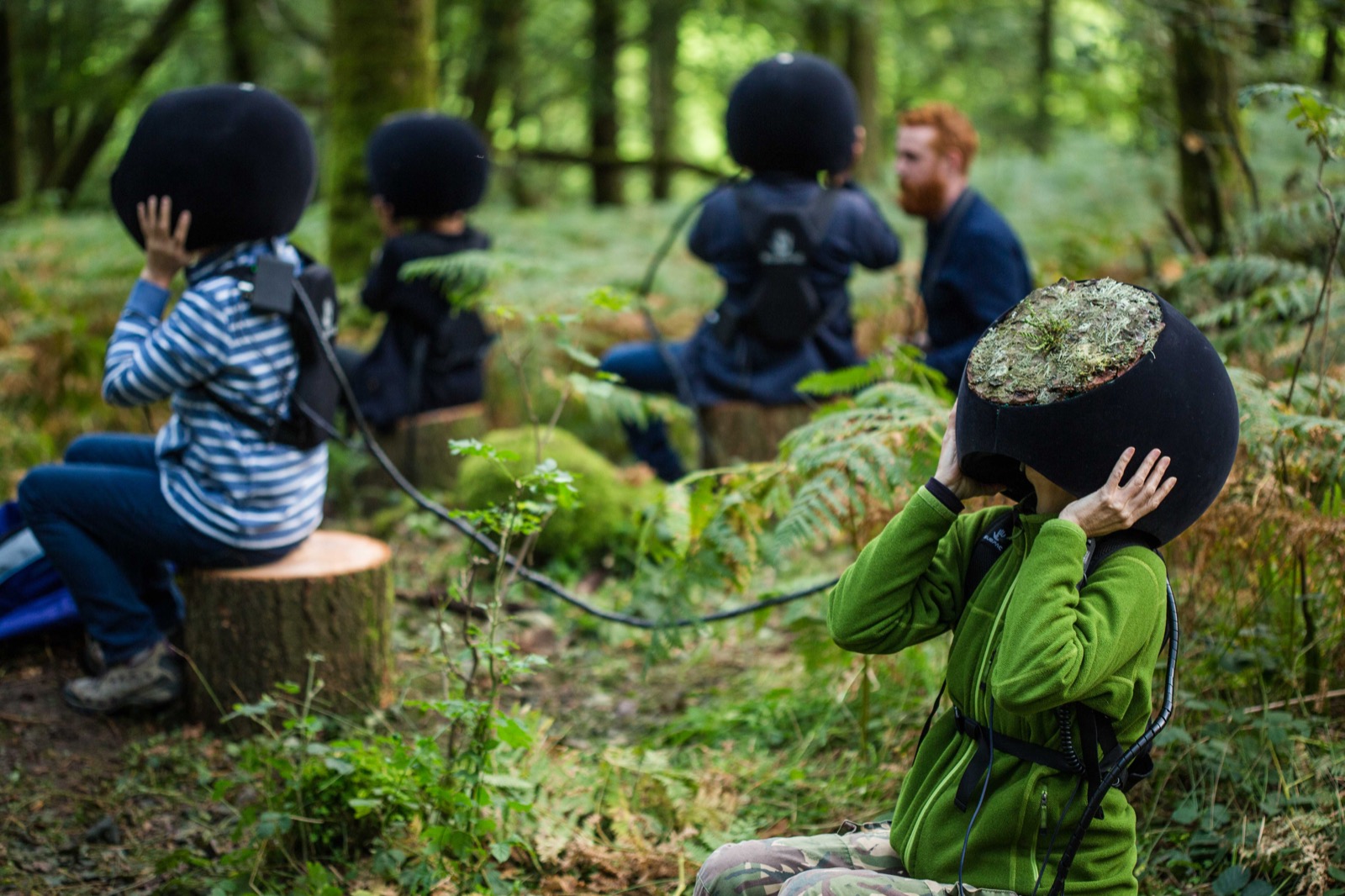
“In the Beast’s Eyes” is the latest installation from the Marshmallow Laser Feast Design Studio, commissioned for the AND Festival and located in the English Gridale Forest Park. The project invites visitors on an exciting journey, giving them the opportunity to fly over the forest canopy, face face-to-face creatures created with high definition, materialize various animals and how they roam around Grindale Park.
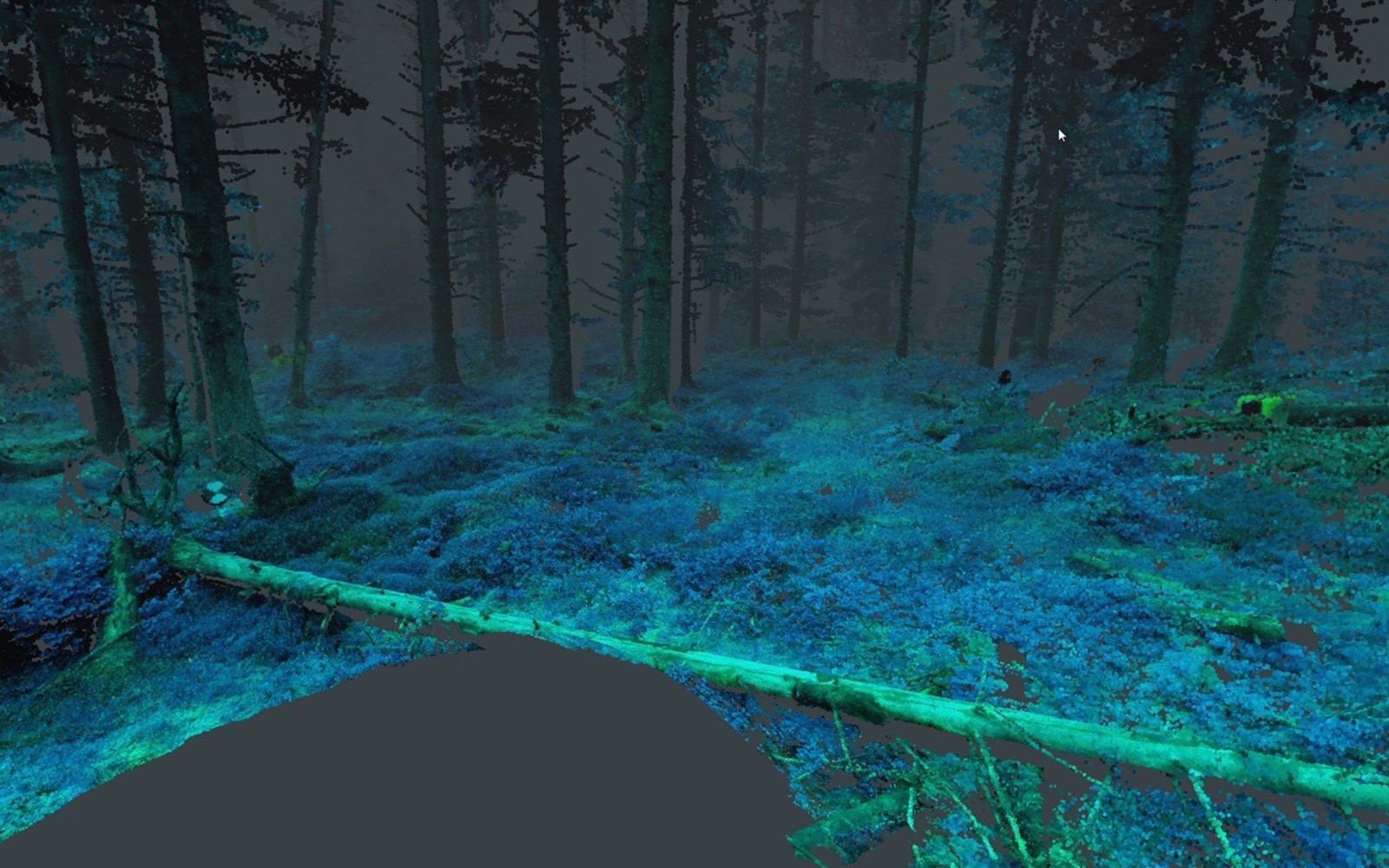
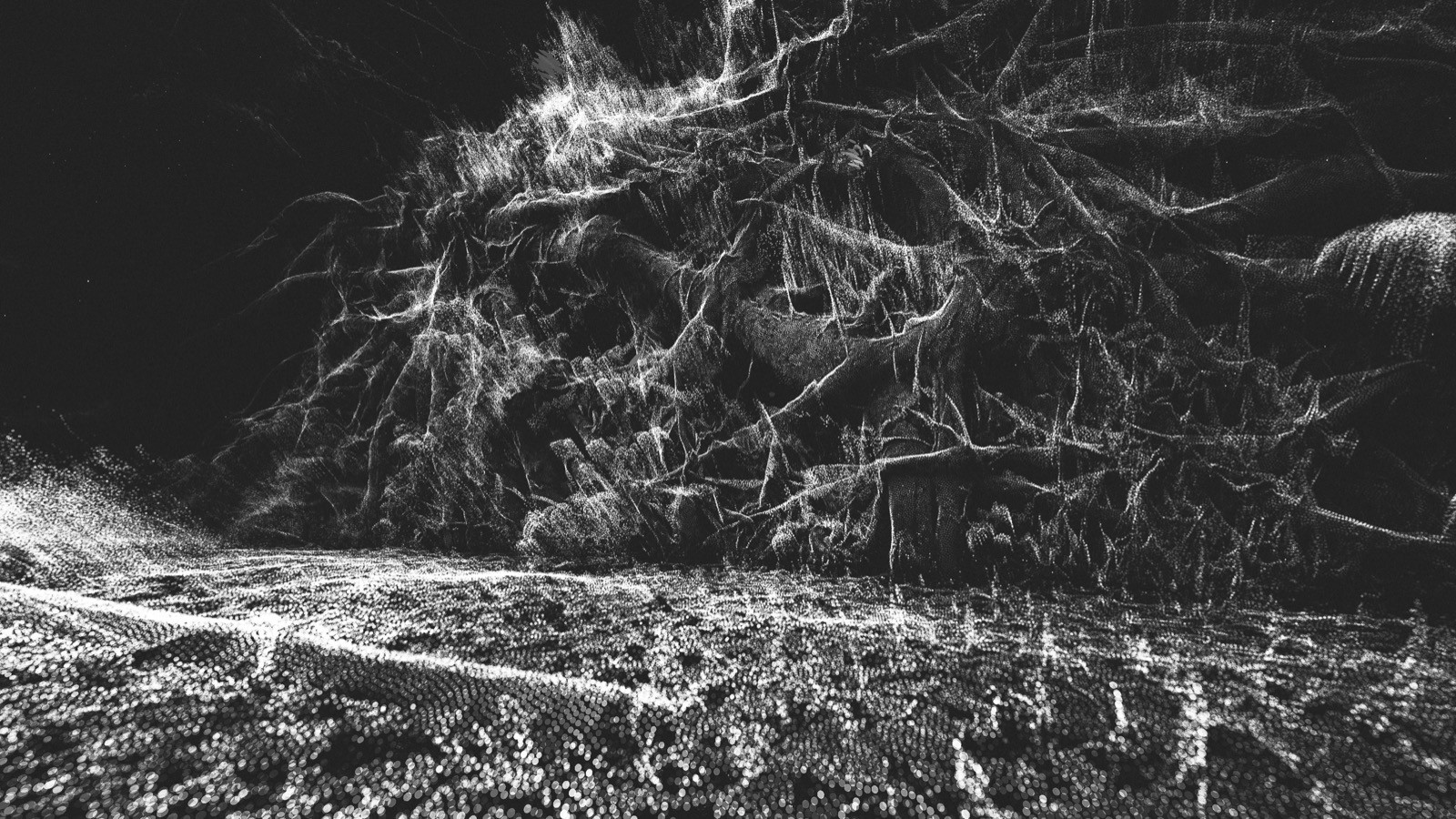
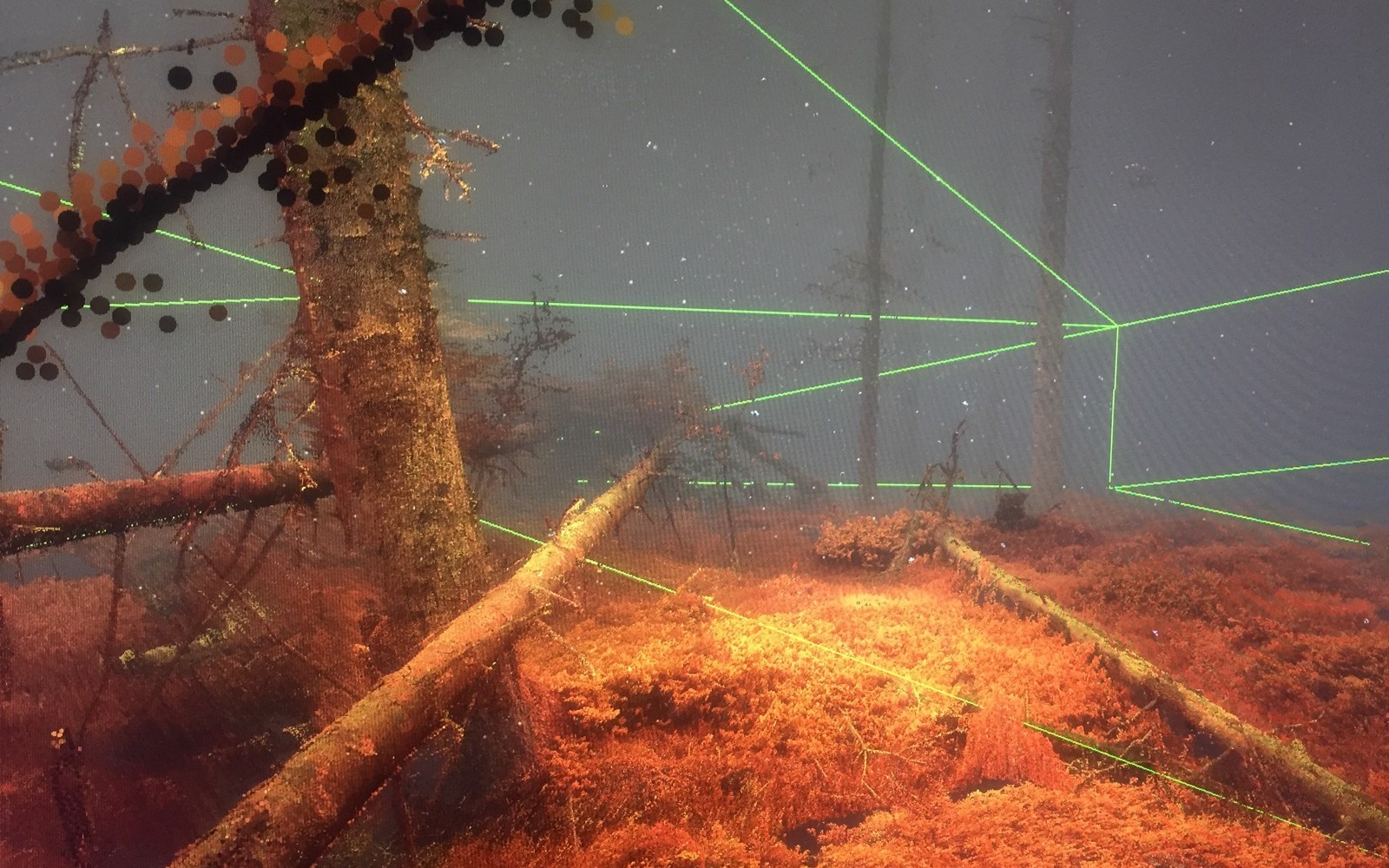
The project continues the study of these lidars, begun by the team earlier this year. Having completed the development of the concept, the team took a picture of the Greendale Forest park with the Faro X 330 optical sensor. The GPU produced an image of 800 million pixels. Subsequently, the resolution was reduced to the level necessary for normal transmission in real time.
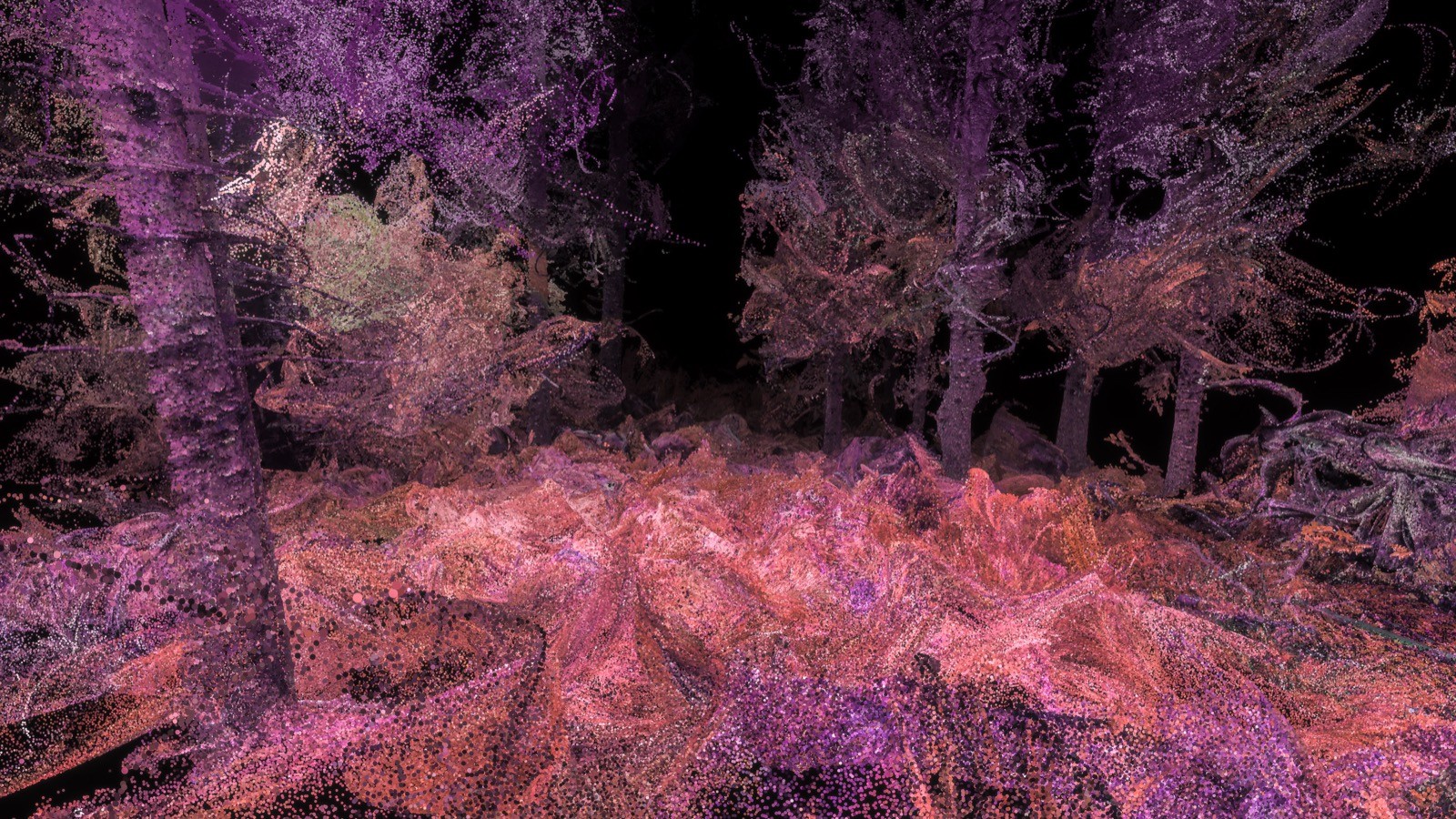
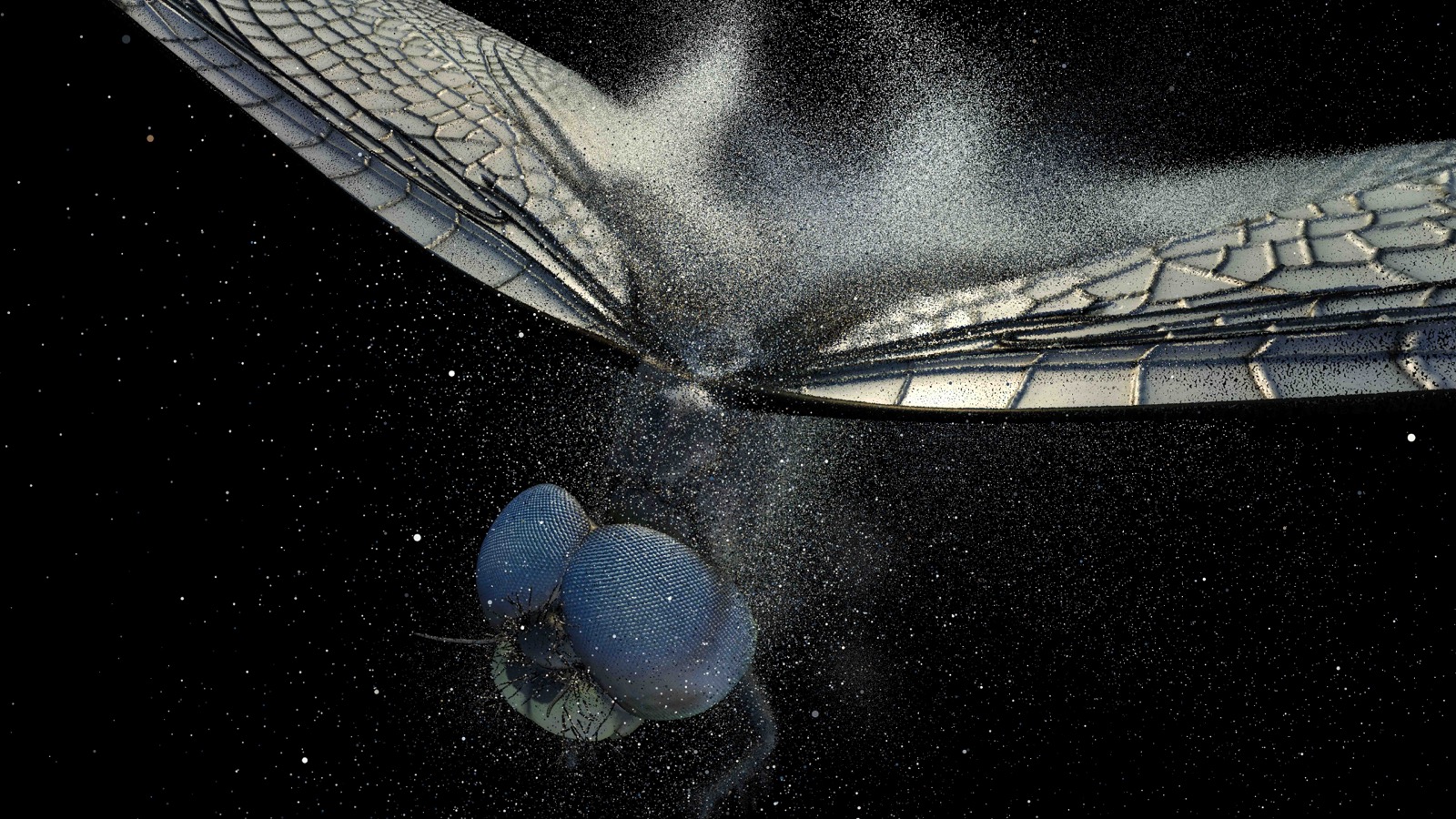
In this project, technologies for obtaining and processing remote sensing information using active optical systems (lidars), computed tomography and photogrammetry harmoniously interact, despite the difference in the principles of their work. Each scene of the plot contains numerous sets of environmental fragments obtained from lidars, and fragments in motion, which were obtained by making computer tomograms of insects and animals. AMD Festival visitors are offered a unique opportunity to see the forest through the eyes of its inhabitants.
The main goal of the event was to create an understanding of how animals process optical information and, thus, give people the opportunity to reflect on their own visual perception of the forest.
To use the real-time video engine, the vvvv program (a program for creating controlled multimedia spectacles on many screens) was used with the built-in shadow creation function based on HLSL and audio engines on Max MSP with a unique library of sounds in spatial transmission from Two Big Ears. The video engine develops and transmits the surrounding space in real time with special details that make each scene unique. The video engine interacts with the spatial audio engine using OSC to transmit location data, as well as tracking data for the rotation of the user's head from inertial sensors from a multimedia helmet. The sound uses "Binaural soundtrack" - a technology that mimics the natural functioning of the ear,
It gives the effect of maximum immersion. The sounds recorded at Gridale Park were given surround sound using custom-made spatial sound processing tools from Two Big Ears. The listener is surrounded by sounds from all sides in a circle, as well as bottom and top. Sound depends on the trajectory of the head and video images in front of his eyes.
The sensations of playing sound go beyond the headphone range and go to the whole body due to low-frequency vibration. Using M1 from SubPac, listeners could feel the vibrations of the body, as if transforming into breathing, flying and screaming animals. SubPac is an audio device with simultaneous exposure to humans through several channels of perception, transmitting low frequencies to the bones and muscles of the human body. The combination of these types of information allows the spatial audio engine to connect dynamic elements with sound sources that are given spatial sound to enhance the effect of immersion in virtual reality.
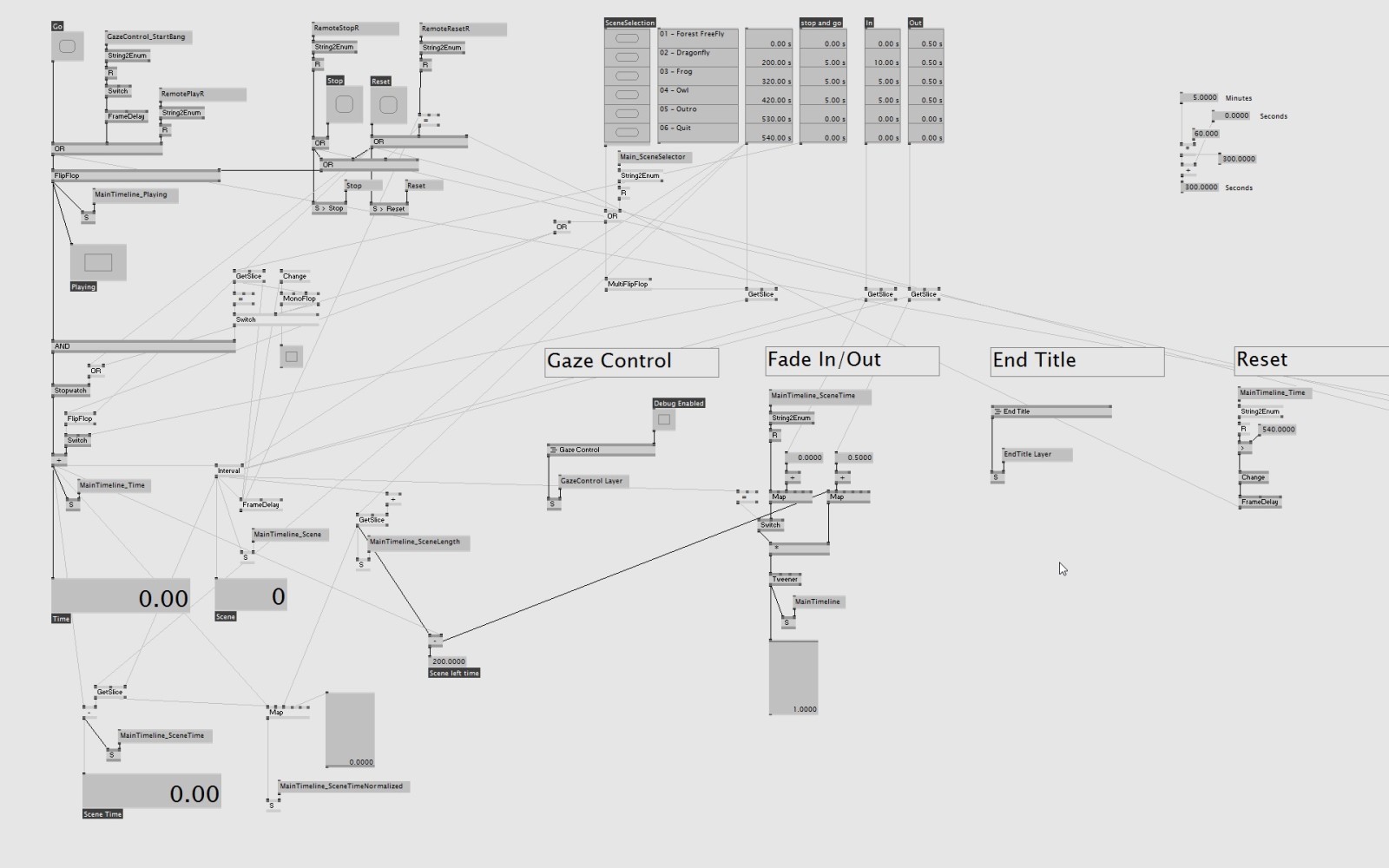
Main timeline
The installation consists of 7 workstations with a Quadro M6000 graphics card, which makes it possible to simultaneously reproduce many images simulated in virtual reality.
We used such auxiliary programs as: vvvv, Max MSP, Lidar Scanning, CT Scanning, Photogrammetry, SubPac M1, Oculus Rift DK2, HLSL Shading and DX11. The stereo sound was developed by sound artist Antoine Bertin from Sound Doesn Travel, a creative recording studio.
The project was created as a feature of AND Festival, using the technical experience gained by the research project Project Daedalus, funded by Nesta and designed to explore the creative potential of drones and aerial cameras with a 360 ° view.
Management: Abandon Normal Devices (the new regional festival of contemporary cinema, digital culture and art) and the Art Preservation Department of England, run by the State Forestry Commission.
“In the Beast’s Eyes” is the latest installation from the Marshmallow Laser Feast Design Studio, commissioned for the AND Festival and located in the English Gridale Forest Park. The project invites visitors on an exciting journey, giving them the opportunity to fly over the forest canopy, face face-to-face creatures created with high definition, materialize various animals and how they roam around Grindale Park.
The project continues the study of these lidars, begun by the team earlier this year. Having completed the development of the concept, the team took a picture of the Greendale Forest park with the Faro X 330 optical sensor. The GPU produced an image of 800 million pixels. Subsequently, the resolution was reduced to the level necessary for normal transmission in real time.
In this project, technologies for obtaining and processing remote sensing information using active optical systems (lidars), computed tomography and photogrammetry harmoniously interact, despite the difference in the principles of their work. Each scene of the plot contains numerous sets of environmental fragments obtained from lidars, and fragments in motion, which were obtained by making computer tomograms of insects and animals. AMD Festival visitors are offered a unique opportunity to see the forest through the eyes of its inhabitants.
The main goal of the event was to create an understanding of how animals process optical information and, thus, give people the opportunity to reflect on their own visual perception of the forest.
To use the real-time video engine, the vvvv program (a program for creating controlled multimedia spectacles on many screens) was used with the built-in shadow creation function based on HLSL and audio engines on Max MSP with a unique library of sounds in spatial transmission from Two Big Ears. The video engine develops and transmits the surrounding space in real time with special details that make each scene unique. The video engine interacts with the spatial audio engine using OSC to transmit location data, as well as tracking data for the rotation of the user's head from inertial sensors from a multimedia helmet. The sound uses "Binaural soundtrack" - a technology that mimics the natural functioning of the ear,
It gives the effect of maximum immersion. The sounds recorded at Gridale Park were given surround sound using custom-made spatial sound processing tools from Two Big Ears. The listener is surrounded by sounds from all sides in a circle, as well as bottom and top. Sound depends on the trajectory of the head and video images in front of his eyes.
The sensations of playing sound go beyond the headphone range and go to the whole body due to low-frequency vibration. Using M1 from SubPac, listeners could feel the vibrations of the body, as if transforming into breathing, flying and screaming animals. SubPac is an audio device with simultaneous exposure to humans through several channels of perception, transmitting low frequencies to the bones and muscles of the human body. The combination of these types of information allows the spatial audio engine to connect dynamic elements with sound sources that are given spatial sound to enhance the effect of immersion in virtual reality.
Main timeline
The installation consists of 7 workstations with a Quadro M6000 graphics card, which makes it possible to simultaneously reproduce many images simulated in virtual reality.
We used such auxiliary programs as: vvvv, Max MSP, Lidar Scanning, CT Scanning, Photogrammetry, SubPac M1, Oculus Rift DK2, HLSL Shading and DX11. The stereo sound was developed by sound artist Antoine Bertin from Sound Doesn Travel, a creative recording studio.
The project was created as a feature of AND Festival, using the technical experience gained by the research project Project Daedalus, funded by Nesta and designed to explore the creative potential of drones and aerial cameras with a 360 ° view.
Management: Abandon Normal Devices (the new regional festival of contemporary cinema, digital culture and art) and the Art Preservation Department of England, run by the State Forestry Commission.