And again about smart watches: a battle of concepts and a week of battery life
At one time, I bought myself a smart watch Samsung Galaxy Gear on Android 4.2.2. And purely out of greed - well, he spent about $ 500 - he wore them for a couple of months, but then these distortions had to be stopped. Firstly, for my hand, this watch is still large. Secondly, notifications, a pedometer and other basic options for such gadgets are, of course, great, but frankly tired of charging the clock once a day. And even more often.
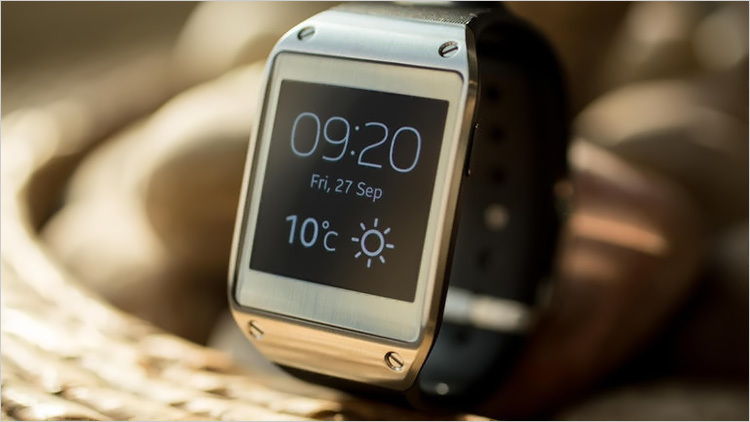
Later, in the summer of 2014, Samsung released a new firmware for the Galaxy Gear, in which Android changed to Tizen. As a result, I made a “double two” and carried the clock for another three weeks. I must admit that it has become better: in a similar mode of operation, the watch has "lived" with me for two days. Of course, there is some progress. And yet - horror, horror. I’m used to the usual quartz watch, where you need to change the battery every two years. In two years - and not in two days. So I had to refuse a smart watch. However, I still follow the market situation.
And I can say this. Manufacturers feel that a “watch with brains” is a very promising niche. But while it is at the very beginning of its development. And really successful devices can be counted on the fingers. A watch on Android Wear personally does not impress me even once - not only does the concept of this “watch OS”, built around Google Now and voice commands, seem a little far-fetched, but the devices themselves turned out to be very strange. Let me give you an analogy. I remember when it was already clear to everyone that Microsoft was friends with Nokia and eventually bought it, HTC released a number of devices on Windows Phone. Strange devices made without a soul ... They were made just to fulfill certain "promises" given at the time of the Redmond Corporation. That's the same with Android Wear watches. LG Motorola, Samsung - they at one time “subscribed” to participate in this project, however, apparently not being enthusiastic about the Android Wear concept, they developed products for show. The Moto 360 in the pictures looks pretty, but in real life, the watch is thick and clumsy. The same applies to the LG G Watch R: in the pictures it’s almost Casio G-Shock, but in life it’s an article made of inexpensive plastic.

Moto 360

watch. LG G Watch R.
A separate question “WHY?” Qualcomm Snapdragon 200 chipset with 4-core processor deserves to be used on Android Wear watches. Why so much happiness to such a small gadget? As a result, the watch on Android Wear works without recharging for about a day ...
The Samsung watch has a slightly different concept, and I like it more. Thanks to the use of Tizen, Korean chronometers work longer (about two days). However, here everything is crossed out by the lack of versatility: as you know, Samsung watches can only function in conjunction with Samsung smartphones and tablets. I recently changed Samsung Galaxy S5 to Meizu MX4, and what should I do with Galaxy Gear now? Right, sell it. Or put on a shelf.
In short, until recently, I considered Pebble models to be the most successful smartwatch. Successful, but still a compromise. They require recharging on average once a week, and this is a big plus: with such a long “life” the device can already be more or less comfortable to use. But the wretched (in my humble opinion) monochrome interface displayed on the Sharp Memory LCD screen, of course, upsets. Yes, one problem - the problem of energy consumption - is solved thanks to the "paper-like" screen. But another appeared: smart watches do not look high-tech, which for me personally is quite important.

Pebble Watches
Here would be the time to close the topic of smart watches again and wait another year or two, until more worthy options appear on the market. But the Omate X watch fell into my hands (or rather, on my hand). Looking ahead - they have a color LCD screen and they also work for about a week.

Omate X Watch
At the heart of this watch is the MediaTek Aster platform. What it is? System on a Chip (SoC) with an area of 5.4 x 6 mm for wearable electronics. It is not just small, but the smallest in the world at the moment - if we take into account exactly the solutions for smart watches. Thanks to the above dimensions, Aster allows you to create models that do not differ in size from ordinary watches. As for computing “power”, the developers rightly decided that for such devices the ARM7 processor architecture (frequency - up to 260 MHz) is quite enough - that is, quite old, but at the same time extremely economical by today's standards. The battery capacity is 400 mAh - they really worked for me for 6 and a half days! It is a fact. And I am pleased with this fact. Therefore, I will briefly describe what these watches can do.

The functional of the model is not overloaded, to deal with the options and fully use the device should not be difficult even for "dummies". In my case, the first Bluetooth pairing (Bluetooth 4.0) went without question, then the connection was established automatically.

Oddly enough, but the Omate X watch ... shows the time. There are several options for screensavers - with analog or digital display. Synchronize the date / time over the network or configure it yourself - at the user's choice.


Omate X show the list of calls, by tapping the item, an attempt to call the subscriber is immediately activated. The phone book, of course, is synchronized, the names written in Cyrillic are displayed without coding errors. Again, the call of the required person is available from here. To quickly search for contacts, open a dialog with a virtual keyboard.


An incoming call can be accepted or rejected, while the subscriber number is displayed. Although smart watches inform not only about calls, but also about SMS. The model has a speaker and a microphone, so if you want, you can completely get your smartphone out of your pocket - the volume is enough to hear speech intelligibly. The interlocutor complained of interference only in strong winds, in which case I blocked the case with the palm of my other hand.

Remote control is available for the music player: start the music, switch between files right from the clock. There is also remote access to the camera - an interesting feature, but, unfortunately, in reality it is almost useless: try holding a smartphone with one hand and try to press the Omate X screen with it. There
are few additional applications, by and large it is only an alarm clock. In YouTube at one of the exhibitions, the developers talked about the open SDK of the watch, so that over time all kinds of small programs may appear.

As for appearance, here I put Omate X a strong “five”, there’s nothing to complain about. Given that for me, appearance is very important when it comes to such a technological device. The case is made of metal, of plastic (matte) only the bottom plate. There are only two physical buttons: return to the screen saver / power and “rollback” to the previous dialog box. The second is available right on the screen, by swipe (with a sliding gesture) from the left edge of the display to the right.


The protective "glass" of the curved 1.54-inch screen (its resolution is 240 x 240 pixels) is made of artificial sapphire. I am not aware of the presence of an oleophobic coating, but no matter how I tried, I could not slap the display so as to noticeably reduce the readability of the information. The sensitivity is high, I did not repeat the commands twice.

Subjectively, the weight of the watch is around 100 g. As such, the weight on the arm is not felt, and in general there is no discomfort about wearing the Omate X. Any 22 mm straps are suitable for the model - another very competent solution that extremely reduces the dependence on the manufacturer’s accessories in such an important issue. The default strap is a leather item, authored by Moretti Milano Italian comrades. The quality is felt, and the strap looks purely outwardly expensive - to match the metal watch itself.


Using Omate X as an example, I state a encouraging fact: the problem with the autonomy of smart watches is being solved, and quite effectively. Taiwanese MediaTek has shown that it is extremely interested in the development of the wearable electronics segment and is ready to pay special attention to this issue, rather than stupidly sculpt multi-core processors for marketing races. It is worth believing that in 2015 many worthy alternatives of the same Omate X will be available, and very inexpensive ones. For comparison, the watch from the review costs $ 129, which is more than two times cheaper than the models on Android Wear and most Samsung watches.
Later, in the summer of 2014, Samsung released a new firmware for the Galaxy Gear, in which Android changed to Tizen. As a result, I made a “double two” and carried the clock for another three weeks. I must admit that it has become better: in a similar mode of operation, the watch has "lived" with me for two days. Of course, there is some progress. And yet - horror, horror. I’m used to the usual quartz watch, where you need to change the battery every two years. In two years - and not in two days. So I had to refuse a smart watch. However, I still follow the market situation.
And I can say this. Manufacturers feel that a “watch with brains” is a very promising niche. But while it is at the very beginning of its development. And really successful devices can be counted on the fingers. A watch on Android Wear personally does not impress me even once - not only does the concept of this “watch OS”, built around Google Now and voice commands, seem a little far-fetched, but the devices themselves turned out to be very strange. Let me give you an analogy. I remember when it was already clear to everyone that Microsoft was friends with Nokia and eventually bought it, HTC released a number of devices on Windows Phone. Strange devices made without a soul ... They were made just to fulfill certain "promises" given at the time of the Redmond Corporation. That's the same with Android Wear watches. LG Motorola, Samsung - they at one time “subscribed” to participate in this project, however, apparently not being enthusiastic about the Android Wear concept, they developed products for show. The Moto 360 in the pictures looks pretty, but in real life, the watch is thick and clumsy. The same applies to the LG G Watch R: in the pictures it’s almost Casio G-Shock, but in life it’s an article made of inexpensive plastic.
Moto 360
watch. LG G Watch R.
A separate question “WHY?” Qualcomm Snapdragon 200 chipset with 4-core processor deserves to be used on Android Wear watches. Why so much happiness to such a small gadget? As a result, the watch on Android Wear works without recharging for about a day ...
The Samsung watch has a slightly different concept, and I like it more. Thanks to the use of Tizen, Korean chronometers work longer (about two days). However, here everything is crossed out by the lack of versatility: as you know, Samsung watches can only function in conjunction with Samsung smartphones and tablets. I recently changed Samsung Galaxy S5 to Meizu MX4, and what should I do with Galaxy Gear now? Right, sell it. Or put on a shelf.
In short, until recently, I considered Pebble models to be the most successful smartwatch. Successful, but still a compromise. They require recharging on average once a week, and this is a big plus: with such a long “life” the device can already be more or less comfortable to use. But the wretched (in my humble opinion) monochrome interface displayed on the Sharp Memory LCD screen, of course, upsets. Yes, one problem - the problem of energy consumption - is solved thanks to the "paper-like" screen. But another appeared: smart watches do not look high-tech, which for me personally is quite important.
Pebble Watches
Here would be the time to close the topic of smart watches again and wait another year or two, until more worthy options appear on the market. But the Omate X watch fell into my hands (or rather, on my hand). Looking ahead - they have a color LCD screen and they also work for about a week.
Omate X Watch
At the heart of this watch is the MediaTek Aster platform. What it is? System on a Chip (SoC) with an area of 5.4 x 6 mm for wearable electronics. It is not just small, but the smallest in the world at the moment - if we take into account exactly the solutions for smart watches. Thanks to the above dimensions, Aster allows you to create models that do not differ in size from ordinary watches. As for computing “power”, the developers rightly decided that for such devices the ARM7 processor architecture (frequency - up to 260 MHz) is quite enough - that is, quite old, but at the same time extremely economical by today's standards. The battery capacity is 400 mAh - they really worked for me for 6 and a half days! It is a fact. And I am pleased with this fact. Therefore, I will briefly describe what these watches can do.
The functional of the model is not overloaded, to deal with the options and fully use the device should not be difficult even for "dummies". In my case, the first Bluetooth pairing (Bluetooth 4.0) went without question, then the connection was established automatically.
Oddly enough, but the Omate X watch ... shows the time. There are several options for screensavers - with analog or digital display. Synchronize the date / time over the network or configure it yourself - at the user's choice.
Omate X show the list of calls, by tapping the item, an attempt to call the subscriber is immediately activated. The phone book, of course, is synchronized, the names written in Cyrillic are displayed without coding errors. Again, the call of the required person is available from here. To quickly search for contacts, open a dialog with a virtual keyboard.
An incoming call can be accepted or rejected, while the subscriber number is displayed. Although smart watches inform not only about calls, but also about SMS. The model has a speaker and a microphone, so if you want, you can completely get your smartphone out of your pocket - the volume is enough to hear speech intelligibly. The interlocutor complained of interference only in strong winds, in which case I blocked the case with the palm of my other hand.
Remote control is available for the music player: start the music, switch between files right from the clock. There is also remote access to the camera - an interesting feature, but, unfortunately, in reality it is almost useless: try holding a smartphone with one hand and try to press the Omate X screen with it. There
are few additional applications, by and large it is only an alarm clock. In YouTube at one of the exhibitions, the developers talked about the open SDK of the watch, so that over time all kinds of small programs may appear.
As for appearance, here I put Omate X a strong “five”, there’s nothing to complain about. Given that for me, appearance is very important when it comes to such a technological device. The case is made of metal, of plastic (matte) only the bottom plate. There are only two physical buttons: return to the screen saver / power and “rollback” to the previous dialog box. The second is available right on the screen, by swipe (with a sliding gesture) from the left edge of the display to the right.
The protective "glass" of the curved 1.54-inch screen (its resolution is 240 x 240 pixels) is made of artificial sapphire. I am not aware of the presence of an oleophobic coating, but no matter how I tried, I could not slap the display so as to noticeably reduce the readability of the information. The sensitivity is high, I did not repeat the commands twice.
Subjectively, the weight of the watch is around 100 g. As such, the weight on the arm is not felt, and in general there is no discomfort about wearing the Omate X. Any 22 mm straps are suitable for the model - another very competent solution that extremely reduces the dependence on the manufacturer’s accessories in such an important issue. The default strap is a leather item, authored by Moretti Milano Italian comrades. The quality is felt, and the strap looks purely outwardly expensive - to match the metal watch itself.
Using Omate X as an example, I state a encouraging fact: the problem with the autonomy of smart watches is being solved, and quite effectively. Taiwanese MediaTek has shown that it is extremely interested in the development of the wearable electronics segment and is ready to pay special attention to this issue, rather than stupidly sculpt multi-core processors for marketing races. It is worth believing that in 2015 many worthy alternatives of the same Omate X will be available, and very inexpensive ones. For comparison, the watch from the review costs $ 129, which is more than two times cheaper than the models on Android Wear and most Samsung watches.