Biotech Company Conexeu Sciences Goes Public on Nasdaq with Tissue Regeneration Technology
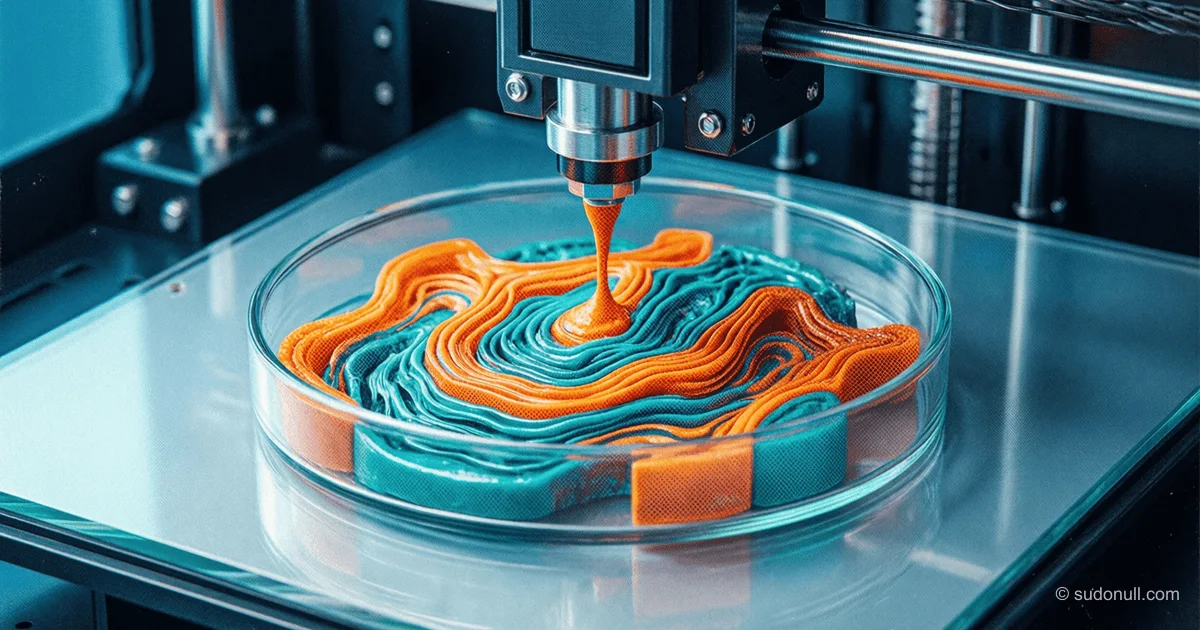
The company went public with the CXU platform for 3D bioprinting of breast matrix, targeting the reconstructive surgery and wound care markets.
IPO from Scratch: Why Conexeu Sciences Went Public Without Revenue but with 3D-Printed Breasts
[The Gist]: What's Really Happening
On May 21, 2026, Conexeu Sciences went public on Nasdaq via a direct listing under the ticker CNXU. No underwriters, no new capital raised, no revenue, and operating losses of $3.9 million in 2025. On paper, it's almost madness.
But the news isn't about finance. It's about a paradigm shift that the company is trying to sell to investors. Conexeu promises not just a new product, but a new class of products—regenerative matrices instead of implants.
Company CEO Miles Harrison stated directly: "For the last 50 years, breast reconstruction has been defined by replacement—replacing lost tissue with a foreign body. We are shifting the paradigm from replacement to restoration."
What's really happening? The venture capital market for biotech is cooling after the COVID boom, making Series B or C rounds harder to secure. A direct listing is a way to access the public market without going through the bottleneck of venture capital funds. Conexeu didn't raise new capital in the listing, but its shareholders gained liquidity, and the company gained public status and access to cheaper capital in the future. A smart move when you have only $6 million in the bank.
Timeline and Context
2022: Conexeu founded in Reno, Nevada. Technology licensed from the University of British Columbia.
October 2025: The company raises $5 million via Regulation Crowdfunding—the maximum allowed amount in 12 months.
January 2026: Conexeu demonstrates the first 3D printing of tissue structures using its CXU platform. This is a technical demo noticed only by industry publications.
March 2026: Private placement of 486,970 shares at $4 each. Company valuation: $84 million.
May 21, 2026: Direct listing on Nasdaq. Shares open at $13.50—more than three times the March valuation. Market cap at launch: about $20 million (based on 9.5 million registered shares).
The density of events in the last four months—from tech demo to IPO. They were in a hurry. Because cash on hand ($6 million) with operating expenses of $1.7 million per quarter gives a runway of just over a year. The direct listing isn't a strategy; it's a necessity.
Who Wins and Who Loses
Winners: Early investors from Equifund and Regulation Crowdfunding. They got in at $4 (and some even earlier, at valuations around $1-2). At the open, shares traded around $13-15. Potential returns: 300-700%. However, lock-up periods in direct listings are softer than in traditional IPOs, so some of those shares may have already been sold.
Winner: The regenerative medicine market as a whole. Conexeu's listing came on a wave of positive news from Integra LifeSciences (IART up 24% after earnings) and Pacira BioSciences (PCRX +22% since early 2025). The entire sector gained attention.
Losers: Manufacturers of silicone implants (Establishment Labs, Mentor, Allergan). Their business is built on "permanent" devices that require replacement every 10-15 years. If Conexeu's technology works, the reconstructive surgery market will shrink in the long term—because each patient is treated once.
Losers: Sellers of short-term solutions. Conexeu's target markets include wound care and periodontics. This is a direct threat to traditional dressings and bone substitutes that don't stimulate regeneration but simply fill defects.
What the Media Isn't Saying
The most important insight—missing from press releases—concerns regulatory strategy. Conexeu states it plans to file a 510(k) submission with the FDA in early 2027.
For those not in the know: 510(k) is an accelerated pathway for devices that are "substantially equivalent" to already marketed devices. It's not the path for "revolutionary" technologies.
Insight: If their technology is truly as novel as they claim, the FDA will require them to go through the full de novo or PMA process—years of additional trials and millions of dollars. By choosing 510(k), Conexeu implicitly admits that their device isn't that revolutionary from a regulatory perspective.
A Chinese 3D printing site directly calls this a "logical contradiction"—the technology is positioned as groundbreaking, but the regulatory path chosen is the most conservative.
The second unspoken point: they have no published preclinical data specifically for breast tissue. Their entire base is 11 publications, but they cover general ECM technology, not B.R.E.A.S.T.™. They extrapolate data from other tissues to the breast. In biotech, this is called "risk extrapolation"—sometimes it works, but often it doesn't.
Forecast: Next 30 Days and 90 Days
Next 30 Days (by end of June 2026):
- CNXU shares will experience 15-25% volatility. Trading volume is low (about 32,000 shares per day), so any news will cause sharp movements.
- Expect CEO Miles Harrison interviews in industry media—need to maintain investor interest. Key theme: "Why 510(k) is the right choice, not a sign of technological immaturity."
- One of the large early-round shareholders will start selling shares. Without lock-up restrictions, it's only a matter of time.
Next 90 Days (by end of August 2026):
- Conexeu will announce preclinical results for B.R.E.A.S.T.™, likely from a porcine model. If data is poor, shares will crash 40-50%. If good, they'll rise 30%, but not for long.
- News of a partnership with a major 3D printer manufacturer will emerge—most likely Stratasys (SSYS), which has experience in medical 3D production.
- Most importantly: the FDA will provide preliminary feedback on the 510(k) strategy. If the regulator says "go the de novo path," it's a disaster for the stock. If it approves the accelerated path, shares will soar 50-100%.
What I'll be tracking personally: The reaction of Elutia (ELUT)—a company working in the same bioscaffold space for reconstructive surgery. Their stock rose 15% in the week around Conexeu's IPO. If Elutia announces its own 3D bioprinting results in the next two months, it confirms Conexeu's thesis. If they stay quiet, it means they don't believe in the technology themselves.
For now: a biotech with no product, no revenue, no preclinical data on its main indicator—and with 3D printing that exists only in presentation slides—has gone public on Nasdaq. This is either a genius exit at the peak of hype or a road to nowhere paved by founders while investors still remember what "regeneration" means. The next 90 days will show who is Mirakel and who is Theranos 2.0.
— Editorial Team










No comments yet.