May 12, 2018 at 12:51
Marvin Minsky's “The Emotion Machine”: Chapter 3 “Freud, mood control and character”
- Transfer
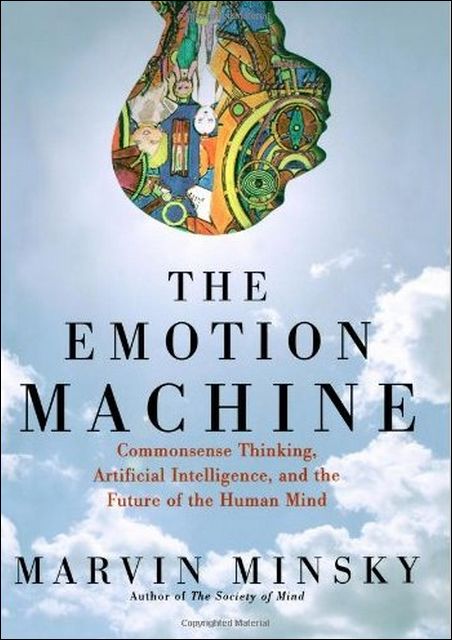
The father of artificial intelligence is thinking about how to make a machine that would be proud of us . Marvin Minsky was a rather tough scientist and the fact that he, with his “scalpel of knowledge” explores the topic of feelings and emotions, which makes us human beings, is quite interesting and useful. The book is an excellent example of how to try to comprehend the "human" with the "IT approach": values, ideals, love, pain, common sense.
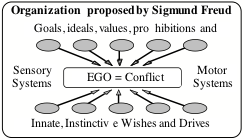
In Freud’s three-dimensional consciousness model, many resources work at the same time, but all of them do not always have the same goals. Instead, the mind, according to Freud, is a battlefield between animal instincts and social constraints. These two forces are often incompatible with each other and the rest of the mind must constantly struggle to find a compromise between the two forces, which he does, mainly due to various tricks. One way to deal with restrictions is to suppress the resource that is responsible for this restriction. Another way to circumvent restrictions is to disguise or present a suppressed action in such a way that none of the internal Critics or Censors respond to it. Freud used the word “sublimation” to describe this phenomenon.
Only a few modern “cognitive psychologists” support Freud’s architectural decisions. He was one of the first to realize that the problems we face every day are much more difficult to solve than was previously assumed when this activity was assigned to only one dominant process. Instead, Freud saw the human mind as the product of a variety of activities, most of which are involved in the resolution of problem situations and the inconsistencies of our vision of the world with its real representation.
“Sometimes a person gets into a state in which everything seems cheerful and bright, although nothing has changed from the outside. At other times, nothing can please you: the world around you seems gloomy and dark, and your friends say that you have become depressed. “
If you could turn off all your internal Critics, then it would seem that nothing around has flaws. You would have very few worries, worries and goals left, and people around you could describe your condition as“ euphoric ”,“ crazy "Or" manic. "
However, if you include too many Critics, you will see flaws in every detail of the world around you. The whole world will seem filled with flaws, covered by a flood of ugliness. You will look for flaws and mistakes for your own purposes, and in this case you will not have any desire to correct the current situation and will not respond to any praise.
This means that our inner Critics should be monitored6 if you include them too much you will never do anything. But if you turn off all Critics, then it will seem to you that all your goals have been achieved and again you will not be able to achieve great results.
However, in everyday life there is a wide range in which the number of Critics on and off can vary. Sometimes you feel like adventurers, prone to feeling new experiences. In other cases, you feel like a conservative, trying to avoid any uncertainty. And when you are in an emergency (for example, when you are in danger), you don’t have time to think about what can be done, so you need to make quick decisions without considering most of the factors. In such a situation, you need to postpone long-term plans, suspend some resources that are related to friends, expose yourself to stress and pain, and also do other things that you may regret later. To go into this state, you will have to suppress your internal suppressors,
We use terms such as “character traits” and “mood” to describe a person’s general condition. But such terms are rather difficult to define, because a very large number of processes are involved in the formation of a specific state of a person. Some of these conditions affect our perception of reality, while others affect the goals that we pursue, the strategies that we choose, and the details that we focus on. Other processes are involved in the functioning of the transitions between the use of various abstract models, for example, we can first think about the physical things of the world around us, then start thinking about some kind of social affairs, and then start thinking about some long-term plans.
What determines these time intervals that our mind spends in each of the above conditions? These time intervals can span huge ranges of values. A flash of anger or fear, or an understanding of the presence of sexual connotation, can last a very short time. Other moods can last minutes or hours, and some conditions persist for weeks and years. “John is evil” means that John is evil now, but the phrase “evil man” can describe a lifelong trait. The duration of these mental states may depend on how we regulate the mechanisms responsible for these state transitions.
In § 7-2 we will reflect on how our Critics can be organized. To what extent are they independent - like those demons who constantly inspect places of action, waiting for a moment to intervene? To what extent are they controlled by special, more centralized mechanisms? How can we introduce new Censors and Critics? Can critics criticize themselves for taking certain actions? Is a more organized mind the product of a better internal organization of critics?
More than a century has passed since Sigmund Freud raised such questions, but were so ignored that we still cannot adequately answer them. Perhaps this situation will change when we can see what happens inside a functioning brain.
Thanks for the translation, Stanislav Sukhanitsky
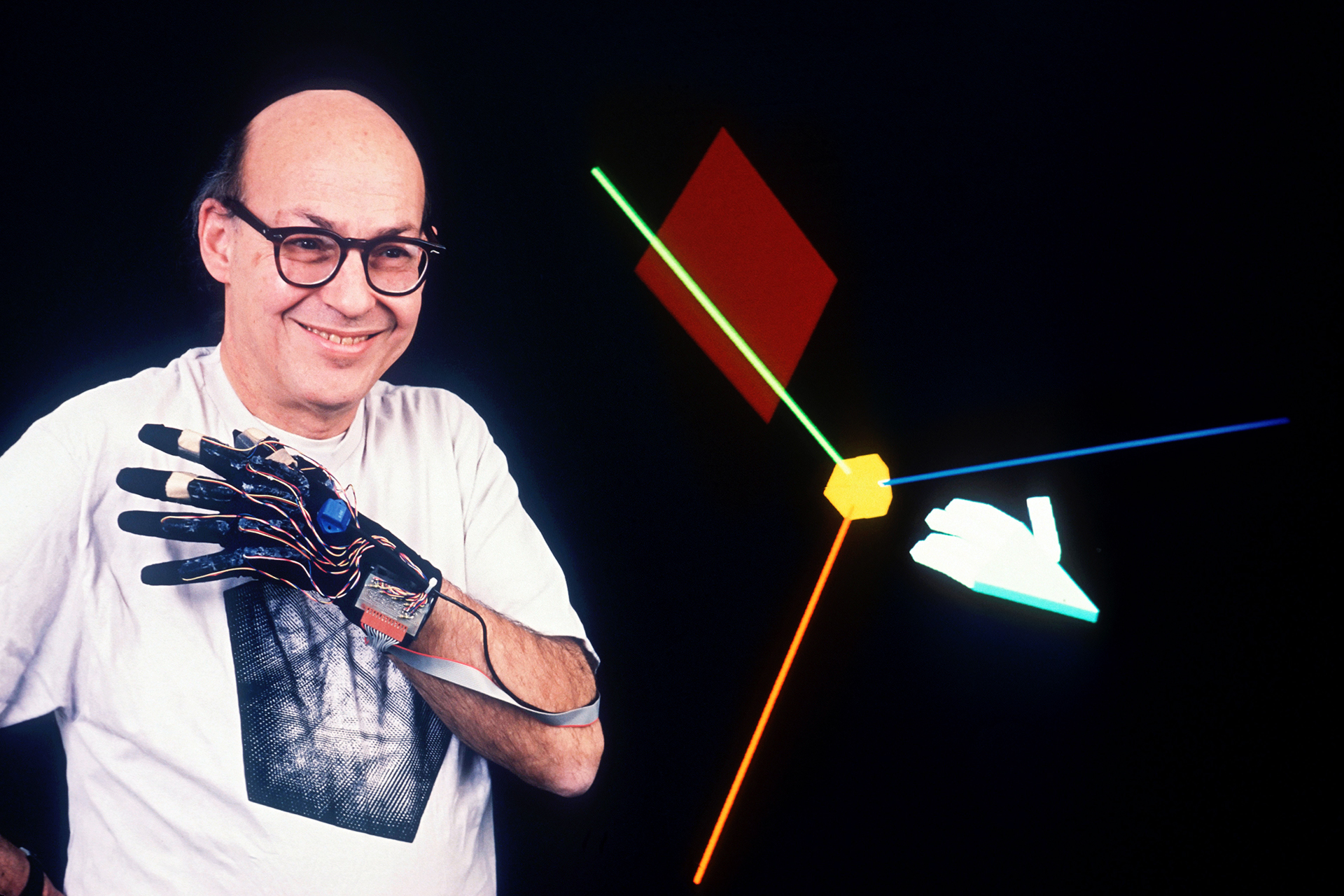
Marvin Lee Minsky (born Marvin Lee Minsky; August 9, 1927 - January 24, 2016) is an American scientist in the field of artificial intelligence, co-founder of the Laboratory of Artificial Intelligence at the Massachusetts Institute of Technology. [ Wikipedia ]
Interesting facts:
§3-6 Freudian sandwich
Luck is a chance, but the problem is thatOnly a handful of psychology textbooks mention how we choose what we should think about, or how we choose what we should not think about. One way or another, this question was extremely important for Sigmund Freud, who represented the mind as a system in which every thought must overcome certain barriers before manifesting itself in consciousness. The following describes his vision of the mind:
I came across it when I was wise,
And learned from failures and not from victories
- A. E. Housman
“... a huge room in which various mental excitations are collected, closely connected with each other, representing individual beings. Associated with this room is another, a kind of reception room, which is the seat of consciousness. At the threshold of the transition between these two rooms, there is a gatekeeper who checks various mental excitations, carefully examines them, and does not let them into the reception room if they do not pass the selection criteria. You will not notice the difference between when the gatekeeper does not immediately pass various thoughts to consciousness or when a thought enters the room to consciousness, but the gatekeeper immediately returns it. It all depends on the degree of his vigilance and the speed of work in recognizing those who failed the test. ”Thus, it is not enough to walk past the gatekeeper to reach consciousness. When thoughts pass through it, they first enter the reception room, which can be called "preconsciousness."
“Excitations in the unconscious, as well as in the preconscious, are not detected by the consciousness, because it is in a completely different room, so everything that did not get into the room to the consciousness remains unconscious. When thoughts move closer to the threshold of the room of consciousness, but the gatekeeper does not let them through, they become “impossible to realize” and we call these thoughts repressed thoughts. But even if the excitations pass through the gatekeeper, they may not necessarily become aware. "They can become conscious thoughts if only consciousness can notice them."Freud presented the mind as an obstacle course in which only those thoughts that go through all these obstacles can be worthy of the attention of consciousness. When passing one of the tests, which Freud called “denial,” the idea is consciously condemned, thus becoming useless, it helps to remember whether this idea was rejected earlier or not. In another form of testing, called “suppression”, the impulses of an idea are blocked at the earliest stages, without any awareness of this process on the part of the thinker. However, repressed thoughts can still manifest themselves due to various types of disguise.
In Freud’s three-dimensional consciousness model, many resources work at the same time, but all of them do not always have the same goals. Instead, the mind, according to Freud, is a battlefield between animal instincts and social constraints. These two forces are often incompatible with each other and the rest of the mind must constantly struggle to find a compromise between the two forces, which he does, mainly due to various tricks. One way to deal with restrictions is to suppress the resource that is responsible for this restriction. Another way to circumvent restrictions is to disguise or present a suppressed action in such a way that none of the internal Critics or Censors respond to it. Freud used the word “sublimation” to describe this phenomenon.
Only a few modern “cognitive psychologists” support Freud’s architectural decisions. He was one of the first to realize that the problems we face every day are much more difficult to solve than was previously assumed when this activity was assigned to only one dominant process. Instead, Freud saw the human mind as the product of a variety of activities, most of which are involved in the resolution of problem situations and the inconsistencies of our vision of the world with its real representation.
§ 3-7. Controlling our Moods and Character Traits
“Love, as he believed, turns a person into a fool, but his current emotion was not stupidity, but wisdom; voice of wisdom, serenity, accuracy. ... She seemed to him such a perfect product of nature and circumstances that thinking about the future use of his invention caused a breath-taking fear. As if it could diminish or destroy her beautiful personal harmony ... ”In § 1-2, we described some ways that can change a person’s state of mind:
- Henry James in“ The American ”
“Sometimes a person gets into a state in which everything seems cheerful and bright, although nothing has changed from the outside. At other times, nothing can please you: the world around you seems gloomy and dark, and your friends say that you have become depressed. “
If you could turn off all your internal Critics, then it would seem that nothing around has flaws. You would have very few worries, worries and goals left, and people around you could describe your condition as“ euphoric ”,“ crazy "Or" manic. "
However, if you include too many Critics, you will see flaws in every detail of the world around you. The whole world will seem filled with flaws, covered by a flood of ugliness. You will look for flaws and mistakes for your own purposes, and in this case you will not have any desire to correct the current situation and will not respond to any praise.
This means that our inner Critics should be monitored6 if you include them too much you will never do anything. But if you turn off all Critics, then it will seem to you that all your goals have been achieved and again you will not be able to achieve great results.
However, in everyday life there is a wide range in which the number of Critics on and off can vary. Sometimes you feel like adventurers, prone to feeling new experiences. In other cases, you feel like a conservative, trying to avoid any uncertainty. And when you are in an emergency (for example, when you are in danger), you don’t have time to think about what can be done, so you need to make quick decisions without considering most of the factors. In such a situation, you need to postpone long-term plans, suspend some resources that are related to friends, expose yourself to stress and pain, and also do other things that you may regret later. To go into this state, you will have to suppress your internal suppressors,
We use terms such as “character traits” and “mood” to describe a person’s general condition. But such terms are rather difficult to define, because a very large number of processes are involved in the formation of a specific state of a person. Some of these conditions affect our perception of reality, while others affect the goals that we pursue, the strategies that we choose, and the details that we focus on. Other processes are involved in the functioning of the transitions between the use of various abstract models, for example, we can first think about the physical things of the world around us, then start thinking about some kind of social affairs, and then start thinking about some long-term plans.
What determines these time intervals that our mind spends in each of the above conditions? These time intervals can span huge ranges of values. A flash of anger or fear, or an understanding of the presence of sexual connotation, can last a very short time. Other moods can last minutes or hours, and some conditions persist for weeks and years. “John is evil” means that John is evil now, but the phrase “evil man” can describe a lifelong trait. The duration of these mental states may depend on how we regulate the mechanisms responsible for these state transitions.
In § 7-2 we will reflect on how our Critics can be organized. To what extent are they independent - like those demons who constantly inspect places of action, waiting for a moment to intervene? To what extent are they controlled by special, more centralized mechanisms? How can we introduce new Censors and Critics? Can critics criticize themselves for taking certain actions? Is a more organized mind the product of a better internal organization of critics?
More than a century has passed since Sigmund Freud raised such questions, but were so ignored that we still cannot adequately answer them. Perhaps this situation will change when we can see what happens inside a functioning brain.
Thanks for the translation, Stanislav Sukhanitsky
Table of Contents for The Emotion Machine
Introduction
Chapter 5. LEVELS OF MENTAL ACTIVITIES
Chapter 6. COMMON SENSE
Chapter 7. Thinking.
Chapter 8. Resourcefulness.
Chapter 9. The Self.
Chapter 1. Falling in Love
Chapter 2. ATTACHMENTS AND GOALS
Chapter 3. FROM PAIN TO SUFFERING
Chapter 4. CONSCIOUSNESS Chapter 5. LEVELS OF MENTAL ACTIVITIES
Chapter 6. COMMON SENSE
Chapter 7. Thinking.
Chapter 8. Resourcefulness.
Chapter 9. The Self.
about the author
Marvin Lee Minsky (born Marvin Lee Minsky; August 9, 1927 - January 24, 2016) is an American scientist in the field of artificial intelligence, co-founder of the Laboratory of Artificial Intelligence at the Massachusetts Institute of Technology. [ Wikipedia ]
Interesting facts:
- Minsky was friends with the critic Harold Bloom of Yale University, who spoke of him as nothing more than "the sinister Marvin of Minsky."
- Isaac Asimov described Minsky as one of two people who are smarter than himself; the second, in his opinion, was Karl Sagan.
- Marvin is a robot with artificial intelligence from the Douglas Adams cycle of hitchhikers in the galaxy and the movie Hitchhiker's Guide to the Galaxy (film).
- Minsky has a contract to freeze his brain after death in order to be "resurrected" in the future.
- In honor of Minsky, the dog is named the main character in the movie Tron: Legacy. [ Wikipedia ]
About #philtech
#philtech (technologies + philanthropy) are open, publicly described technologies that align the standard of living of as many people as possible by creating transparent platforms for interaction and access to data and knowledge. And satisfying the principles of filtech:
1. Open and copyable, not competitively proprietary.
2. Built on the principles of self-organization and horizontal interaction.
3. Sustainable and perspective-oriented, rather than pursuing local benefits.
4. Built on [open] data, not traditions and beliefs
5. Non-violent and non-manipulative.
6. Inclusive, and not working for one group of people at the expense of others.
Accelerator of social technology startups PhilTech- A program for the intensive development of early stage projects aimed at equalizing access to information, resources and capabilities. The second stream: March – June 2018.
Chat in Telegram A
community of people developing filtech projects or simply interested in the topic of technologies for the social sector.
#philtech news
Telegram channel with news about projects in the #philtech ideology and links to useful materials.
Subscribe to the weekly newsletter
#philtech (technologies + philanthropy) are open, publicly described technologies that align the standard of living of as many people as possible by creating transparent platforms for interaction and access to data and knowledge. And satisfying the principles of filtech:
1. Open and copyable, not competitively proprietary.
2. Built on the principles of self-organization and horizontal interaction.
3. Sustainable and perspective-oriented, rather than pursuing local benefits.
4. Built on [open] data, not traditions and beliefs
5. Non-violent and non-manipulative.
6. Inclusive, and not working for one group of people at the expense of others.
Accelerator of social technology startups PhilTech- A program for the intensive development of early stage projects aimed at equalizing access to information, resources and capabilities. The second stream: March – June 2018.
Chat in Telegram A
community of people developing filtech projects or simply interested in the topic of technologies for the social sector.
#philtech news
Telegram channel with news about projects in the #philtech ideology and links to useful materials.
Subscribe to the weekly newsletter