March 5, 2018 at 22:00
Prospects for the development of the video surveillance industry: the capabilities of modern video analytics systems
According to the agency Transparency Market Research, by 2022 the total turnover of the video surveillance market will reach 71 billion US dollars and will increase by at least 16.5% annually. Although demand is currently fueled by factors such as the increased danger of terrorist attacks and the continued tightening of legislative requirements for security infrastructure and access control, in the near future, emphasis will shift to industries such as retail, industry, healthcare and others. The reason for such changes is the rapid development of intelligent video analytics systems that can significantly expand the functionality of familiar IP cameras.
The world's first video surveillance system was developed by Siemens in 1942 specifically for the Peenemünde training ground, where the V-2 missiles were tested. It was designed by engineer Walter Bruch - the “father” of the PAL analogue color television standard, adopted in 1966 as a state standard in Germany, Great Britain and other countries of Western Europe. With all the advantages, this solution had one significant drawback: the operator could not leave the workplace for a second, since the signal was not fixed in any way. This continued until 1951, when video tape recorders (Video Tape Recorder, VTR) appeared, created by Ampex under the direction of electrical engineer Alexander Ponyatov, who emigrated to the United States in the late 1920s.
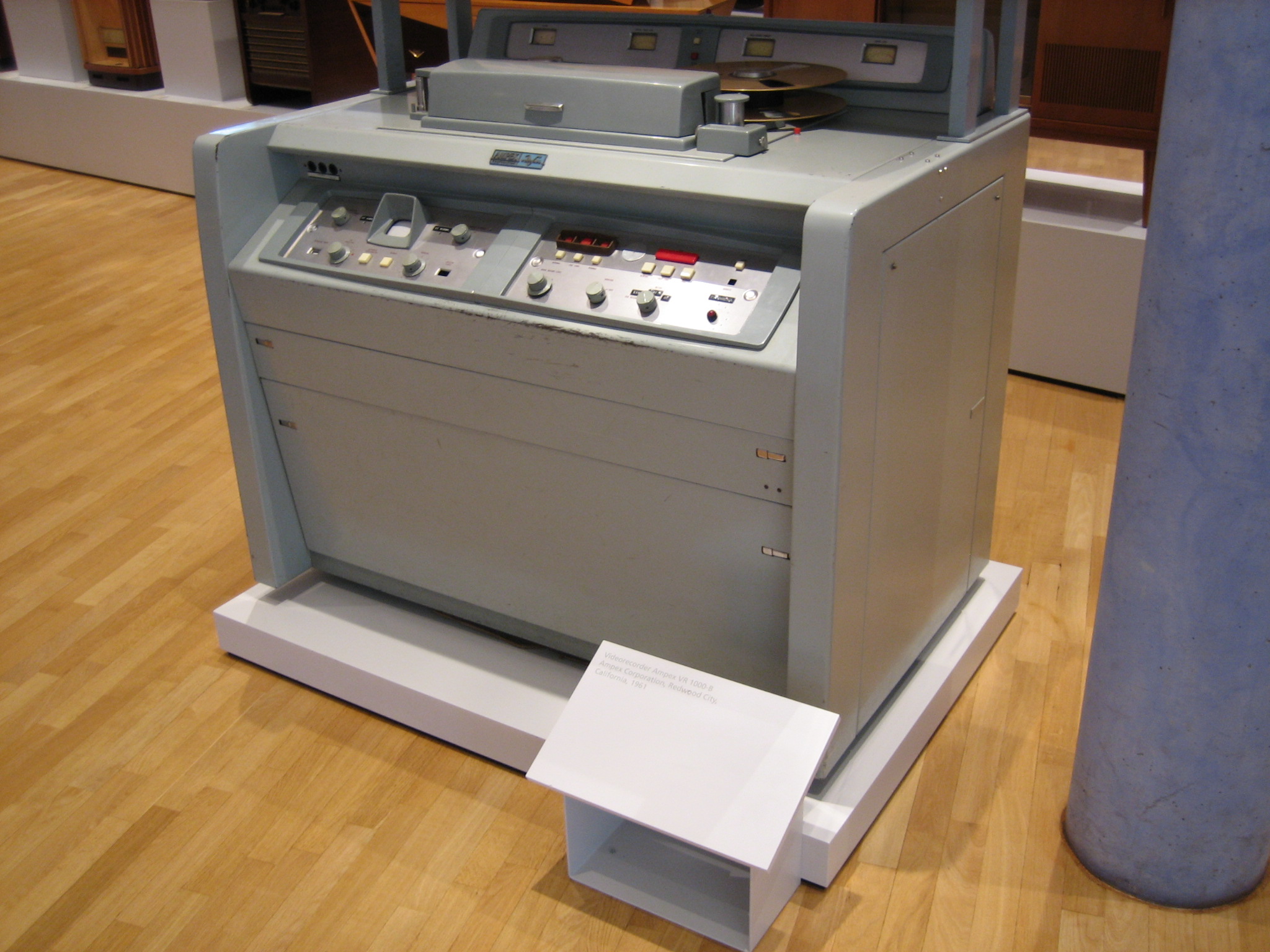
First Ampex VR 1000B VCR
The importance of this invention for the industry can not be overestimated, because, according to IMS Research, even a physically healthy, well-rested person begins to miss up to 45% of the critical events occurring on the monitor after 12 minutes of work, and after another 10 minutes this indicator tends to around 95%. Given this fact, the IP boom in 2014 does not seem so strange. Despite the advent of AHD (Analog High Definition - Analog High Definition Video), network cameras were much more in demand than the analog solutions common at that time. And it's not just the quality of the picture. The main thing here is the vast opportunities that digital devices open to their owners. After all, if earlier the analysis of the information received was carried out only after the fact, today security systems allow you to solve a wide range of tasks in real time. Modern IP cameras are very different from their progenitor Axis Neteye 200, created back in 1996.
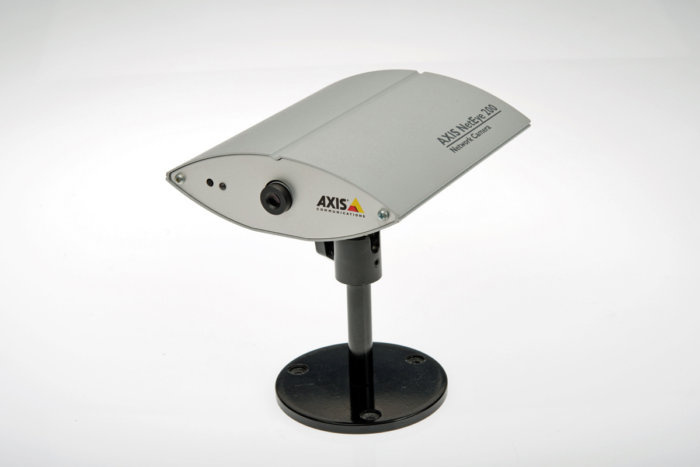
Axis Neteye 200 IP Camera
Many models of network cameras are already completely self-sufficient, and the IoT concept provides the ability to create a combined infrastructure that combines previously disparate devices: burglar alarms, smoke detectors, access control systems and other modules that can exchange data even without server participation. In practice, this allows you to implement many different scenarios. So, for example, a network of several cameras will be able to accurately track a suspicious machine, passing the baton from one observation point to another and, thus, forming an integral picture of what is happening. Another scenario: if one of the cameras turns out to be disabled by an attacker, the neighboring ones will automatically take a blind spot under surveillance, and an alarm will be sent to the operator’s console.
Often, such systems even help to prevent an offense. For an example we will take the simple four-component circuit functioning without server participation. A thermal imager is used to protect the perimeter. In the event of an emergency (an intruder penetrates an object at night), the thermal imager sends a signal to a PTZ camera, which rotates in the indicated direction. At the same time, the external illumination is turned on and the loudspeaker is activated, transmitting a pre-recorded message with a request to immediately leave the protected area. According to Alarm.org, this approach can prevent up to 74% of illegal intrusions.
The emergence of additional functionality and improved technical characteristics led to a significant expansion of the scope of CCTV systems. One of the most promising areas, no matter how strange it may sound, turned out to be retail. Analysts at Transparency Market Research consider retail one of the main drivers for further development of the industry, since here video analytics systems allow solving various marketing problems.
A typical scenario is to determine the conversion rate based on information about the number of visitors and the number of customers who have passed through the cash desks. If you add a face recognition system here, integrating it with the existing loyalty program, you can study customer behavior with reference to socio-demographic factors for the subsequent formation of personalized offers (individual discounts, bundles at a bargain price, etc.). Simpler use cases are no less effective, helping to save on staff and improve customer experience. For example, the Chinese mega-corporation Baidu successfully refused not only to sell tickets to its amusement parks, but also from the tickets themselves. From now on, face recognition terminals are installed at the checkpoint,

At Baidu, tickets were replaced with racks with tablets.
The whole procedure takes no more than 0.6 seconds, and recognition accuracy reaches 99.77%! Alipay users even got the opportunity to pay for online purchases using a selfie, and all thanks to the integration of the payment service with the Face ++ visual identification platform created by the Megvii startup. Currently, it is also successfully used by the Chinese division of UBER.
High technologies also open up new horizons in the field of combating petty theft in supermarkets. It is extremely difficult to resist this phenomenon, as professional thieves act as part of organized groups, whose members play special roles (in particular theft, the distraction of the guards, cover, etc.). The face recognition system can automatically establish the fact that the same people regularly visit the store at the same time, even if they go separately, and transmit information about their presence to the security post. If the suspicions are confirmed and it really turns out to be thieves, their faces will be entered into the retailer’s database and an alarm will be triggered when intruders appear in any branch of the retail network.
Everything looks good on paper, but what about implementation? If we talk about a face recognition system like the one described above, its implementation is fraught with significant costs. It’s one thing to scan a person’s face in front of a checkpoint, and it’s completely different in a stream, at different angles and under different lighting conditions. Here, only three-dimensional real-time modeling of faces using stereo cameras and convolutional neural network algorithms can demonstrate sufficient efficiency, which will inevitably require upgrading the existing infrastructure, as well as increasing the capacity of data warehouses. But many business representatives are not ready to incur additional costs, even when it comes to classic security systems.
According to Denis Mikhailov, a senior expert in the video technology department of the Forensic Science Center of the Ministry of Internal Affairs of the Russian Federation, the vast majority of videos are unsuitable for conducting investigative measures because of the desire of entrepreneurs to save on data storage. A typical situation is the creation of a two-component registration system: the main server stores records for the last week in high resolution at a frequency of 25 frames per second, and only a clipped picture with a frame rate of 5 frames per second gets into the archive. Unfortunately, such a video cannot help to identify the attacker, and in some cases it is not even possible to recognize car numbers. Sometimes it comes to the ridiculous: the victims give the assembled DVRs for examination,
Some entrepreneurs go for outright fraud. The contract indicates the fact of installing high-definition PTZ cameras, but in fact, cheap devices are installed that write pictures in 800x600 format and do not support remote control. With a favorable set of circumstances, such systems can work for years, and owners will learn about their complete failure only in case of force majeure, when the outdated infrastructure can not cope with the tasks.
However, even if we ignore conscious abuse and stinginess, related industries suffer from quite objective problems. One of the promising areas for the development of video analytics is the use of machine vision in industrial production.
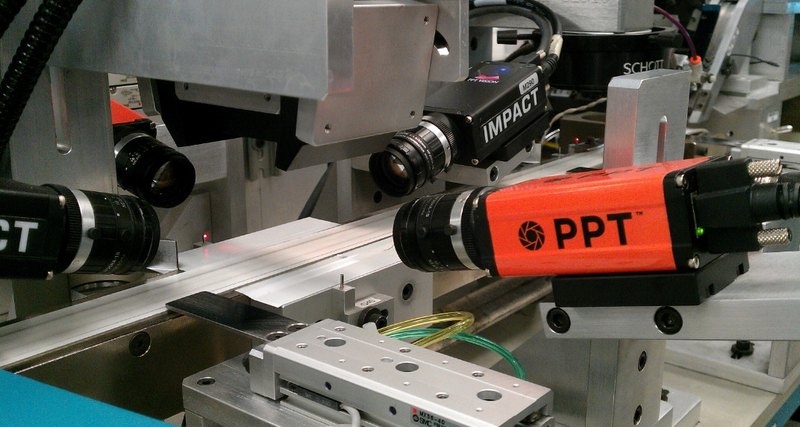
The use of machine vision in industry
The technology can be used to detect product defects, measure overall cargo parameters, monitor employees' access, and for other purposes. In the future, this would allow to put on stream the creation of fully automated production complexes capable of functioning under the supervision of several operators. However, according to the same Transparency Market Research, the growth rate of this market segment is much more modest: the forecast for 2022 is $ 28.5 billion (compared to 71 billion in the security sector). If we recall that in 2014 this figure was 15.7 billion, the output gives an increase of less than 2 times in eight years.
There are exactly three constraints. The first is the lack of specialists with the necessary set of skills for managing such systems. The second - high requirements for the quality and security of equipment. The third is the lack of uniform industry standards. “When it comes to security, one of the important advantages of video surveillance systems is versatility. Whatever the protected object (office, warehouse, supermarket, hotel), the pool of tasks is identical, that is, once developed hardware can be used anywhere, additional functionality can be implemented at the software level. At the same time, each industrial enterprise is characterized by the uniqueness of production processes, and automation tasks can no longer be solved by standard means - each of them requires unique development, ”
Indeed, even the most complex of the scenarios described above for the needs of retail can be implemented on the basis of the same equipment that is used in security systems, because its capabilities depend primarily on the potential of video analytics algorithms and their proper use. The infrastructure created at the factory has a lot of additional requirements - from the stability of its components to the effects of aggressive environmental factors (relevant for heavy industry) to the creation of unique quality control devices for microchips, welds or motor blocks. Although there is nothing impossible in the development of the latter, the client himself will finance it, since due to the specificity of the periphery it is unlikely to be used elsewhere.
If the introduction of machine vision systems at an enterprise is really a difficult task and the very possibility of developing such an infrastructure is seriously influenced by macroeconomic factors, then when it comes to small and medium-sized businesses, the problem of limited budget can be solved by optimizing and scaling existing capacities. So, for example, increasing the density of data storage will help to save on renting the space allocated for data centers, and the use of “colder” drives will reduce operating costs for electricity and air conditioning.
Given all of the above, Western Digital has developed the concept of Core to Edge storage for Surveillance, offering customers a comprehensive set of modern solutions for camera-to-server video recording systems. The combination of advanced technologies, reliability, capacity and productivity allows you to build a harmonious ecosystem that can solve almost any task and optimize the cost of deploying and maintaining the infrastructure. The flagship line of our company is the family of specialized hard drives for CCTV systems WD Purple, globally updated in 2017. Among the main changes, it is necessary to indicate the appearance of a new 10 TB drive, the addition of support for simultaneous work with 64 high-definition cameras, as well as the ability to work as part of servers and NAS,
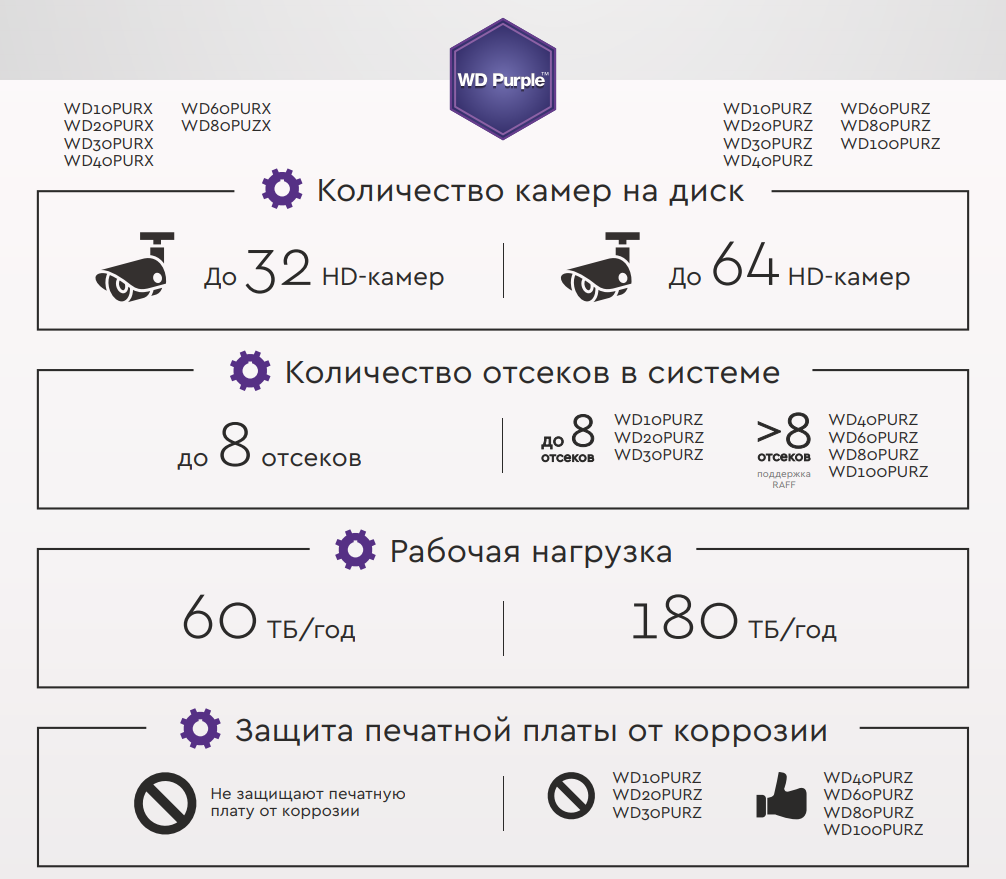
Comparison of different generations of WD Purple
All of the above is made possible by using the following technological solutions:
HelioSeal.The older models of the WD Purple line with a capacity of 8 and 10 TB are based on the HelioSeal platform. The enclosures of these drives are completely leakproof, and the internal cavities, as the name implies, are filled with rarefied helium. A decrease in the resistance force of the gaseous medium and turbulence indices made it possible to reduce the thickness of the magnetic plates, as well as to achieve a higher recording density by the PMR method due to the increased accuracy of head positioning (using Advanced Format Technology). As a result, the transition to WD Purple provides an increase in data storage capacity up to 33% without the need to scale the infrastructure (in the same racks). In addition, helium storage devices are 26% more energy efficient compared to conventional HDDs due to lower power consumption needed to spin and rotate the spindle.
AllFrame.The slightest interruptions during recording can lead to the loss of critical video data, making it impossible to further analyze the information received. To prevent this, support for the optional Streaming Feature Set section of the ATA protocol has been introduced into the firmware of the “purple” series drives. Among its capabilities, it is necessary to highlight the optimization of the cache usage depending on the number of processed video streams and the control of the priority of the read / write commands, due to which it is possible to minimize the probability of frame skipping and the appearance of image artifacts. In turn, the innovative set of AllFrame algorithms provides the ability to use hard drives in systems that process a significant number of isochronous streams: WD Purple drives support simultaneous operation with 64 high-definition cameras.
TLER. The key tasks that have to be addressed when designing video surveillance systems are increasing the uptime and reducing downtime due to malfunctions. One of the most common problems when working with highly loaded servers is the spontaneous decomposition of a RAID array with redundancy caused by exceeding the allowable error correction time. The Time Limited Error Recovery option helps to avoid disconnecting the HDD if the timeout goes beyond 7 seconds: to prevent this from happening, the drive will give the RAID controller the appropriate signal, after which the correction procedure will be postponed until the system is idle.
RAFF.WD Purple capacities of 4, 6, 8, and 10 TB have acquired the Rotary Acceleration Feed Forward (RAFF) adaptive vibration compensation mechanism, which reduced performance losses due to rotational vibration to a record 4% (in conventional desktop hard drives, this reaches 76%). This was made possible by calculating the compensatory trajectory of the writing heads in real time based on differential signals received from built-in accelerometers that record both linear and angular acceleration.
In addition, all models of the updated line received a special coating that protects the circuit board from corrosion and exposure to aggressive chemical agents, which provides additional protection for both the devices themselves and the stored information.
After the acquisition of SanDisk, Western Digital's portfolio was replenished with SanDisk Industrial memory cards with capacities from 8 to 128 GB, oriented for use in car and personal DVRs, as well as in stationary cameras (as backup storage or buffer memory). Among their features, it is necessary to highlight the support of the ECC error correction function, which guarantees data integrity even in case of power outages, as well as the wear leveling algorithm, which can significantly increase the product’s working life. The ability to bind to the host and OTP identifier exclude data corruption or theft during attacks like MITM in IP-video surveillance systems. Finally, a wide range of operating temperatures (from –40 to 85 ° C),
The world's first video surveillance system was developed by Siemens in 1942 specifically for the Peenemünde training ground, where the V-2 missiles were tested. It was designed by engineer Walter Bruch - the “father” of the PAL analogue color television standard, adopted in 1966 as a state standard in Germany, Great Britain and other countries of Western Europe. With all the advantages, this solution had one significant drawback: the operator could not leave the workplace for a second, since the signal was not fixed in any way. This continued until 1951, when video tape recorders (Video Tape Recorder, VTR) appeared, created by Ampex under the direction of electrical engineer Alexander Ponyatov, who emigrated to the United States in the late 1920s.
First Ampex VR 1000B VCR
The importance of this invention for the industry can not be overestimated, because, according to IMS Research, even a physically healthy, well-rested person begins to miss up to 45% of the critical events occurring on the monitor after 12 minutes of work, and after another 10 minutes this indicator tends to around 95%. Given this fact, the IP boom in 2014 does not seem so strange. Despite the advent of AHD (Analog High Definition - Analog High Definition Video), network cameras were much more in demand than the analog solutions common at that time. And it's not just the quality of the picture. The main thing here is the vast opportunities that digital devices open to their owners. After all, if earlier the analysis of the information received was carried out only after the fact, today security systems allow you to solve a wide range of tasks in real time. Modern IP cameras are very different from their progenitor Axis Neteye 200, created back in 1996.
Axis Neteye 200 IP Camera
Many models of network cameras are already completely self-sufficient, and the IoT concept provides the ability to create a combined infrastructure that combines previously disparate devices: burglar alarms, smoke detectors, access control systems and other modules that can exchange data even without server participation. In practice, this allows you to implement many different scenarios. So, for example, a network of several cameras will be able to accurately track a suspicious machine, passing the baton from one observation point to another and, thus, forming an integral picture of what is happening. Another scenario: if one of the cameras turns out to be disabled by an attacker, the neighboring ones will automatically take a blind spot under surveillance, and an alarm will be sent to the operator’s console.
Often, such systems even help to prevent an offense. For an example we will take the simple four-component circuit functioning without server participation. A thermal imager is used to protect the perimeter. In the event of an emergency (an intruder penetrates an object at night), the thermal imager sends a signal to a PTZ camera, which rotates in the indicated direction. At the same time, the external illumination is turned on and the loudspeaker is activated, transmitting a pre-recorded message with a request to immediately leave the protected area. According to Alarm.org, this approach can prevent up to 74% of illegal intrusions.
Alternative scenarios for the use of modern video surveillance systems
The emergence of additional functionality and improved technical characteristics led to a significant expansion of the scope of CCTV systems. One of the most promising areas, no matter how strange it may sound, turned out to be retail. Analysts at Transparency Market Research consider retail one of the main drivers for further development of the industry, since here video analytics systems allow solving various marketing problems.
A typical scenario is to determine the conversion rate based on information about the number of visitors and the number of customers who have passed through the cash desks. If you add a face recognition system here, integrating it with the existing loyalty program, you can study customer behavior with reference to socio-demographic factors for the subsequent formation of personalized offers (individual discounts, bundles at a bargain price, etc.). Simpler use cases are no less effective, helping to save on staff and improve customer experience. For example, the Chinese mega-corporation Baidu successfully refused not only to sell tickets to its amusement parks, but also from the tickets themselves. From now on, face recognition terminals are installed at the checkpoint,
At Baidu, tickets were replaced with racks with tablets.
The whole procedure takes no more than 0.6 seconds, and recognition accuracy reaches 99.77%! Alipay users even got the opportunity to pay for online purchases using a selfie, and all thanks to the integration of the payment service with the Face ++ visual identification platform created by the Megvii startup. Currently, it is also successfully used by the Chinese division of UBER.
High technologies also open up new horizons in the field of combating petty theft in supermarkets. It is extremely difficult to resist this phenomenon, as professional thieves act as part of organized groups, whose members play special roles (in particular theft, the distraction of the guards, cover, etc.). The face recognition system can automatically establish the fact that the same people regularly visit the store at the same time, even if they go separately, and transmit information about their presence to the security post. If the suspicions are confirmed and it really turns out to be thieves, their faces will be entered into the retailer’s database and an alarm will be triggered when intruders appear in any branch of the retail network.
Constraining factors in the development of video surveillance systems
Everything looks good on paper, but what about implementation? If we talk about a face recognition system like the one described above, its implementation is fraught with significant costs. It’s one thing to scan a person’s face in front of a checkpoint, and it’s completely different in a stream, at different angles and under different lighting conditions. Here, only three-dimensional real-time modeling of faces using stereo cameras and convolutional neural network algorithms can demonstrate sufficient efficiency, which will inevitably require upgrading the existing infrastructure, as well as increasing the capacity of data warehouses. But many business representatives are not ready to incur additional costs, even when it comes to classic security systems.
According to Denis Mikhailov, a senior expert in the video technology department of the Forensic Science Center of the Ministry of Internal Affairs of the Russian Federation, the vast majority of videos are unsuitable for conducting investigative measures because of the desire of entrepreneurs to save on data storage. A typical situation is the creation of a two-component registration system: the main server stores records for the last week in high resolution at a frequency of 25 frames per second, and only a clipped picture with a frame rate of 5 frames per second gets into the archive. Unfortunately, such a video cannot help to identify the attacker, and in some cases it is not even possible to recognize car numbers. Sometimes it comes to the ridiculous: the victims give the assembled DVRs for examination,
Some entrepreneurs go for outright fraud. The contract indicates the fact of installing high-definition PTZ cameras, but in fact, cheap devices are installed that write pictures in 800x600 format and do not support remote control. With a favorable set of circumstances, such systems can work for years, and owners will learn about their complete failure only in case of force majeure, when the outdated infrastructure can not cope with the tasks.
However, even if we ignore conscious abuse and stinginess, related industries suffer from quite objective problems. One of the promising areas for the development of video analytics is the use of machine vision in industrial production.
The use of machine vision in industry
The technology can be used to detect product defects, measure overall cargo parameters, monitor employees' access, and for other purposes. In the future, this would allow to put on stream the creation of fully automated production complexes capable of functioning under the supervision of several operators. However, according to the same Transparency Market Research, the growth rate of this market segment is much more modest: the forecast for 2022 is $ 28.5 billion (compared to 71 billion in the security sector). If we recall that in 2014 this figure was 15.7 billion, the output gives an increase of less than 2 times in eight years.
There are exactly three constraints. The first is the lack of specialists with the necessary set of skills for managing such systems. The second - high requirements for the quality and security of equipment. The third is the lack of uniform industry standards. “When it comes to security, one of the important advantages of video surveillance systems is versatility. Whatever the protected object (office, warehouse, supermarket, hotel), the pool of tasks is identical, that is, once developed hardware can be used anywhere, additional functionality can be implemented at the software level. At the same time, each industrial enterprise is characterized by the uniqueness of production processes, and automation tasks can no longer be solved by standard means - each of them requires unique development, ”
Indeed, even the most complex of the scenarios described above for the needs of retail can be implemented on the basis of the same equipment that is used in security systems, because its capabilities depend primarily on the potential of video analytics algorithms and their proper use. The infrastructure created at the factory has a lot of additional requirements - from the stability of its components to the effects of aggressive environmental factors (relevant for heavy industry) to the creation of unique quality control devices for microchips, welds or motor blocks. Although there is nothing impossible in the development of the latter, the client himself will finance it, since due to the specificity of the periphery it is unlikely to be used elsewhere.
Affordable and productive solutions for small businesses
If the introduction of machine vision systems at an enterprise is really a difficult task and the very possibility of developing such an infrastructure is seriously influenced by macroeconomic factors, then when it comes to small and medium-sized businesses, the problem of limited budget can be solved by optimizing and scaling existing capacities. So, for example, increasing the density of data storage will help to save on renting the space allocated for data centers, and the use of “colder” drives will reduce operating costs for electricity and air conditioning.
Given all of the above, Western Digital has developed the concept of Core to Edge storage for Surveillance, offering customers a comprehensive set of modern solutions for camera-to-server video recording systems. The combination of advanced technologies, reliability, capacity and productivity allows you to build a harmonious ecosystem that can solve almost any task and optimize the cost of deploying and maintaining the infrastructure. The flagship line of our company is the family of specialized hard drives for CCTV systems WD Purple, globally updated in 2017. Among the main changes, it is necessary to indicate the appearance of a new 10 TB drive, the addition of support for simultaneous work with 64 high-definition cameras, as well as the ability to work as part of servers and NAS,
Comparison of different generations of WD Purple
All of the above is made possible by using the following technological solutions:
HelioSeal.The older models of the WD Purple line with a capacity of 8 and 10 TB are based on the HelioSeal platform. The enclosures of these drives are completely leakproof, and the internal cavities, as the name implies, are filled with rarefied helium. A decrease in the resistance force of the gaseous medium and turbulence indices made it possible to reduce the thickness of the magnetic plates, as well as to achieve a higher recording density by the PMR method due to the increased accuracy of head positioning (using Advanced Format Technology). As a result, the transition to WD Purple provides an increase in data storage capacity up to 33% without the need to scale the infrastructure (in the same racks). In addition, helium storage devices are 26% more energy efficient compared to conventional HDDs due to lower power consumption needed to spin and rotate the spindle.
AllFrame.The slightest interruptions during recording can lead to the loss of critical video data, making it impossible to further analyze the information received. To prevent this, support for the optional Streaming Feature Set section of the ATA protocol has been introduced into the firmware of the “purple” series drives. Among its capabilities, it is necessary to highlight the optimization of the cache usage depending on the number of processed video streams and the control of the priority of the read / write commands, due to which it is possible to minimize the probability of frame skipping and the appearance of image artifacts. In turn, the innovative set of AllFrame algorithms provides the ability to use hard drives in systems that process a significant number of isochronous streams: WD Purple drives support simultaneous operation with 64 high-definition cameras.
TLER. The key tasks that have to be addressed when designing video surveillance systems are increasing the uptime and reducing downtime due to malfunctions. One of the most common problems when working with highly loaded servers is the spontaneous decomposition of a RAID array with redundancy caused by exceeding the allowable error correction time. The Time Limited Error Recovery option helps to avoid disconnecting the HDD if the timeout goes beyond 7 seconds: to prevent this from happening, the drive will give the RAID controller the appropriate signal, after which the correction procedure will be postponed until the system is idle.
RAFF.WD Purple capacities of 4, 6, 8, and 10 TB have acquired the Rotary Acceleration Feed Forward (RAFF) adaptive vibration compensation mechanism, which reduced performance losses due to rotational vibration to a record 4% (in conventional desktop hard drives, this reaches 76%). This was made possible by calculating the compensatory trajectory of the writing heads in real time based on differential signals received from built-in accelerometers that record both linear and angular acceleration.
In addition, all models of the updated line received a special coating that protects the circuit board from corrosion and exposure to aggressive chemical agents, which provides additional protection for both the devices themselves and the stored information.
After the acquisition of SanDisk, Western Digital's portfolio was replenished with SanDisk Industrial memory cards with capacities from 8 to 128 GB, oriented for use in car and personal DVRs, as well as in stationary cameras (as backup storage or buffer memory). Among their features, it is necessary to highlight the support of the ECC error correction function, which guarantees data integrity even in case of power outages, as well as the wear leveling algorithm, which can significantly increase the product’s working life. The ability to bind to the host and OTP identifier exclude data corruption or theft during attacks like MITM in IP-video surveillance systems. Finally, a wide range of operating temperatures (from –40 to 85 ° C),