February 27, 2018 at 15:57
From a box of matches to 411 stores: the history of the new IKEA Museum
In this blog, we mainly talk about startup programs, developments, prospects and generally what lies ahead. What about the “accelerator to the past”? A year and a half ago, in the Swedish city of Elmhult, where the history of IKEA began, instead of the IKEA Through the Ages exhibition, a new large museum was opened. We invite you to an excursion under the cat.
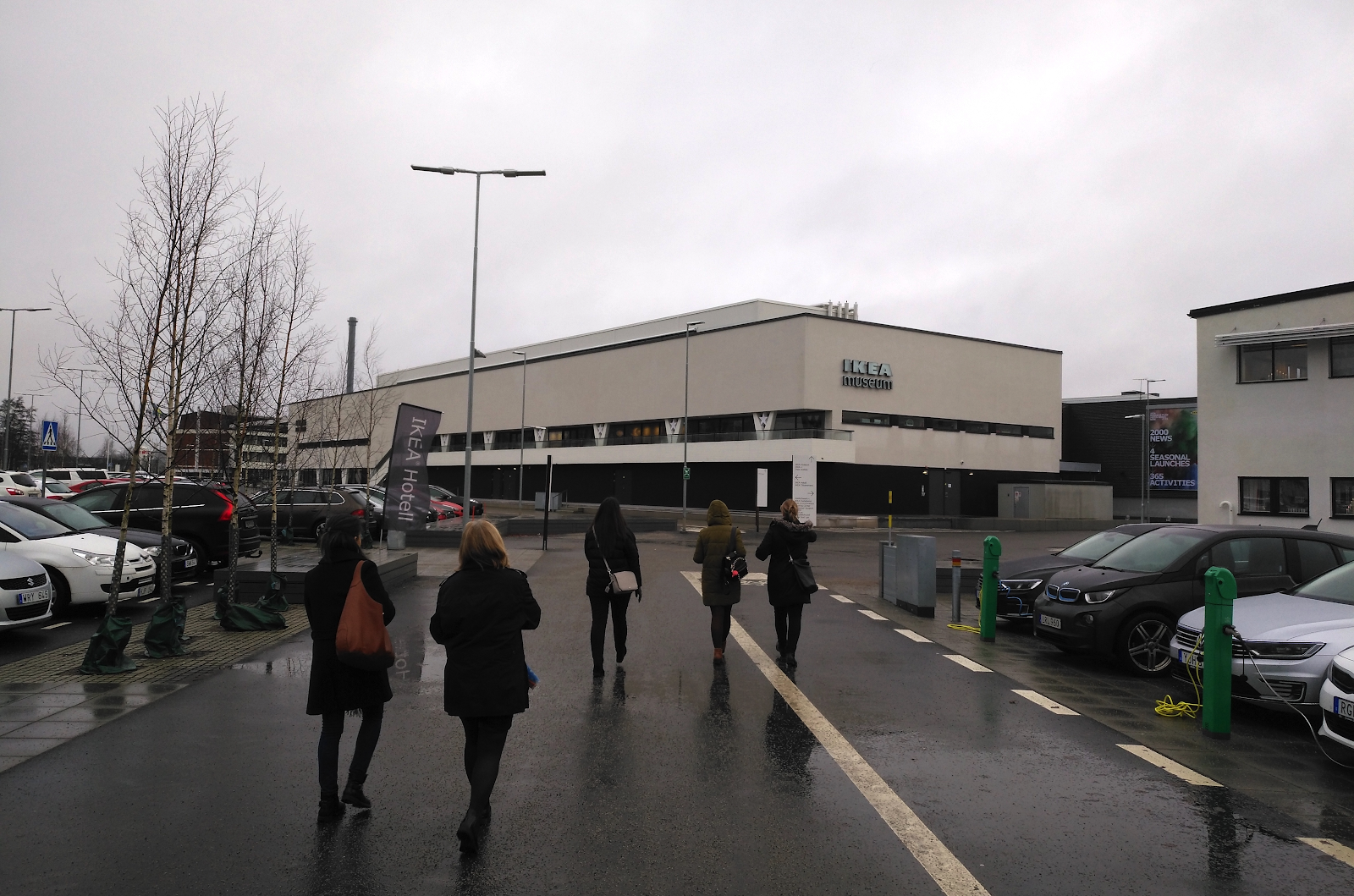
The IKEA Museum is located in the same building where the first full-fledged store of the company was opened in 1958. Since then, the building has not changed much.
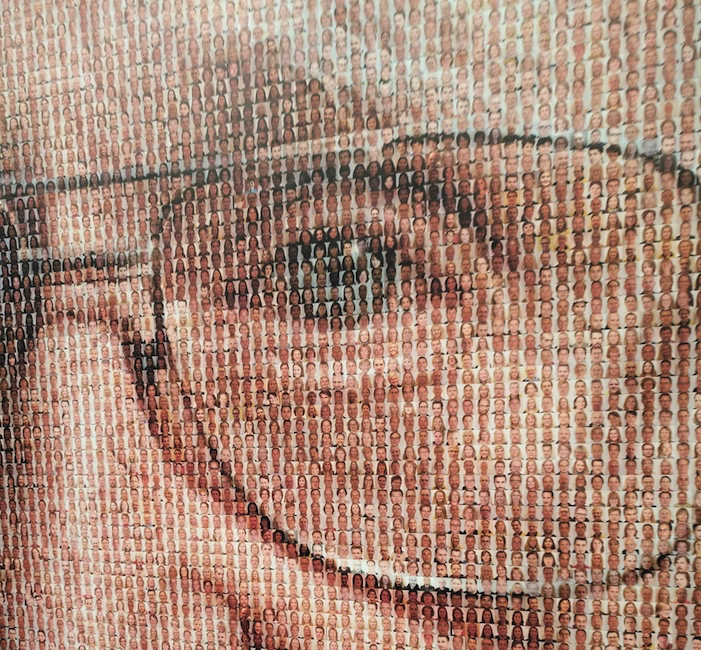
At the entrance we are met by the founder of IKEA, Ingvar Kamprad. His portrait is composed of miniature photographs of IKEA employees. This simultaneously indicates the importance of each employee and refers us to the main goal of the company - (literally) "to create a better everyday life for many people."

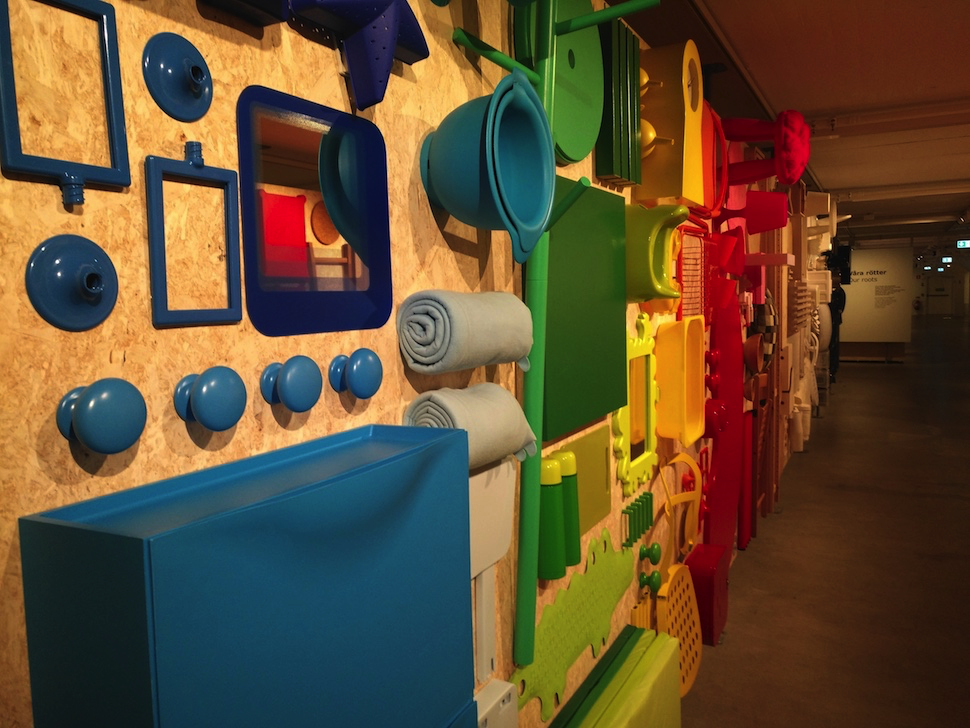
The path to the main exposition lies through a bright corridor with IKEA branded products. Today in the assortment of approximately 10 thousand products, approximately a quarter changes annually.
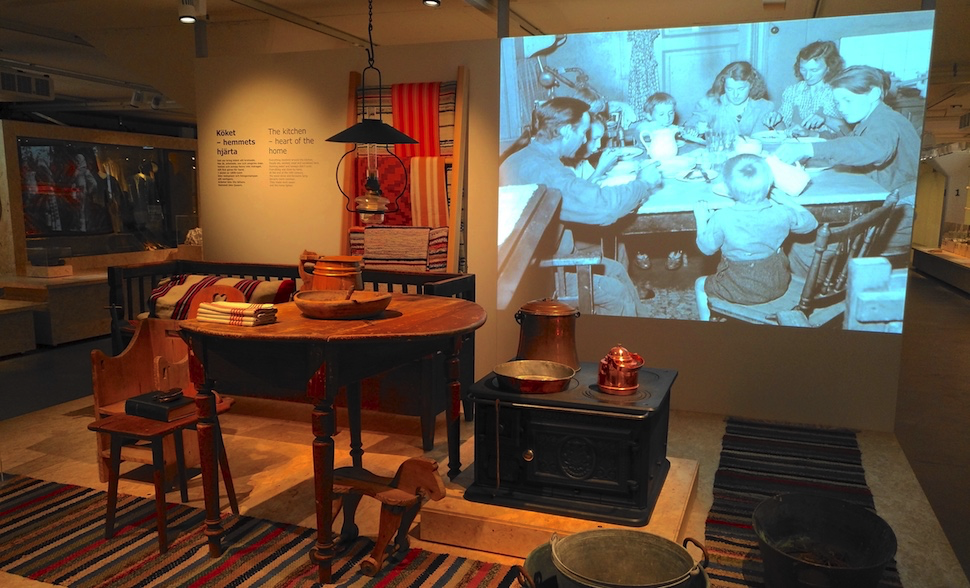
To appreciate the scale of diversity, it’s enough to go back one and a half hundred years ago, when everything was not so fun. The tour begins with a typical Swedish home of the time:
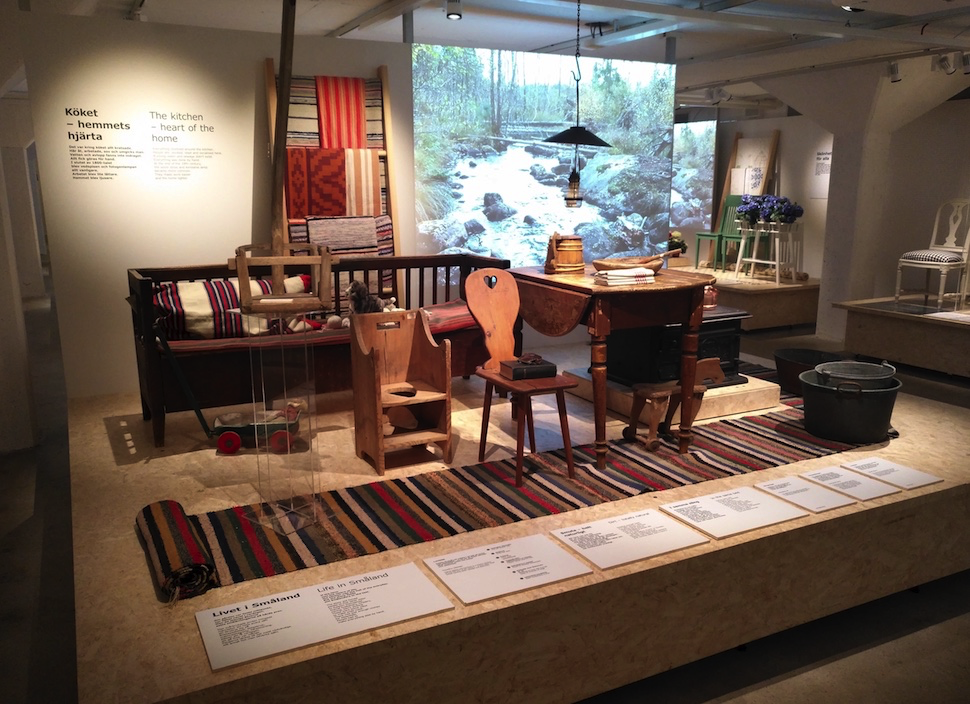
The Swedes lived mainly in large families in small rural houses. In the photo above is the kitchen. Often it was the only room in the house and was used as a living room, a nursery, a bedroom, etc. In such conditions, functionality came to the forefront. Tablecloths turned into bedspreads. The tables were folding. The beds had drawers for things. People tried to sleep together to keep warm. Baby cots hung from the ceiling so that infants were next to their mother and at the same time were away from the fire of open hearths, and subsequently from kerosene lamps. Iron products that could make life easier were not widely distributed due to their high cost.
The harsh Swedish climate impeded agriculture, which was limited mainly to livestock farming. Forest resources helped in some way, but life was still very difficult. From the end of the 19th century, about a third of the population of Sweden left the country within 30-40 years. They left mainly to America.
At this time in Sweden, the idea of a simple and high-quality furnishings in a light-colored house was spread. They were developed by the Swedish writer Ellen Kay, as well as the Karin and Karl Larsson family. Karl was an artist, and Karin was an interior designer. They embodied their ideas in small paintings, which became very popular in Sweden. In these paintings houses of the future are depicted - those in which the Swedes would like to live. Subsequently, the Larsson projects influenced the entire work of IKEA.
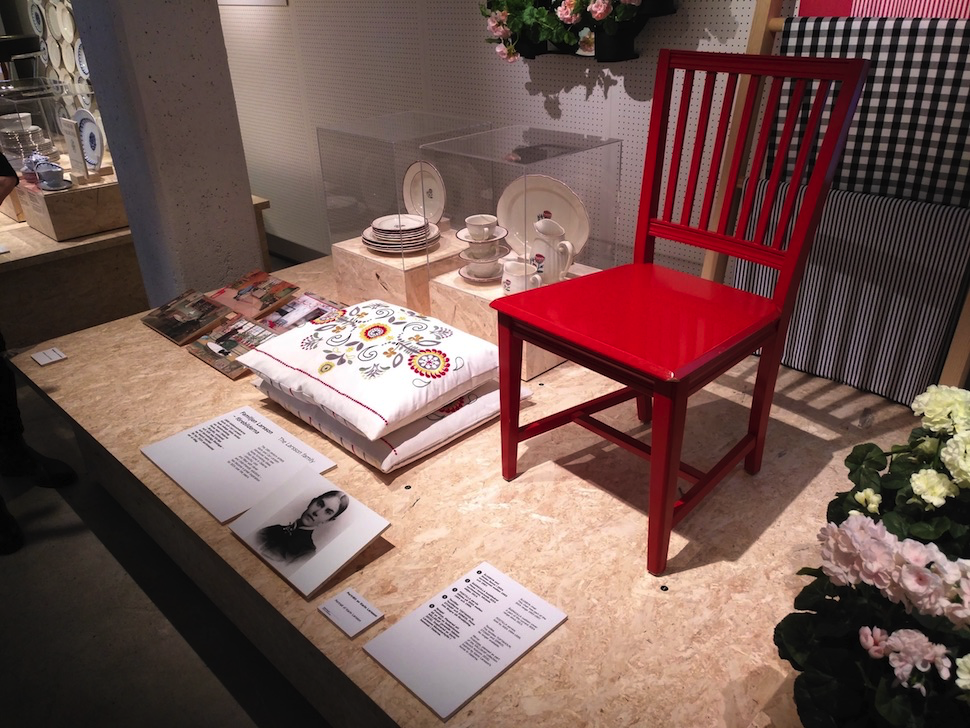
Swedish writer Ellen Kay and home furnishings that fit her ideas.
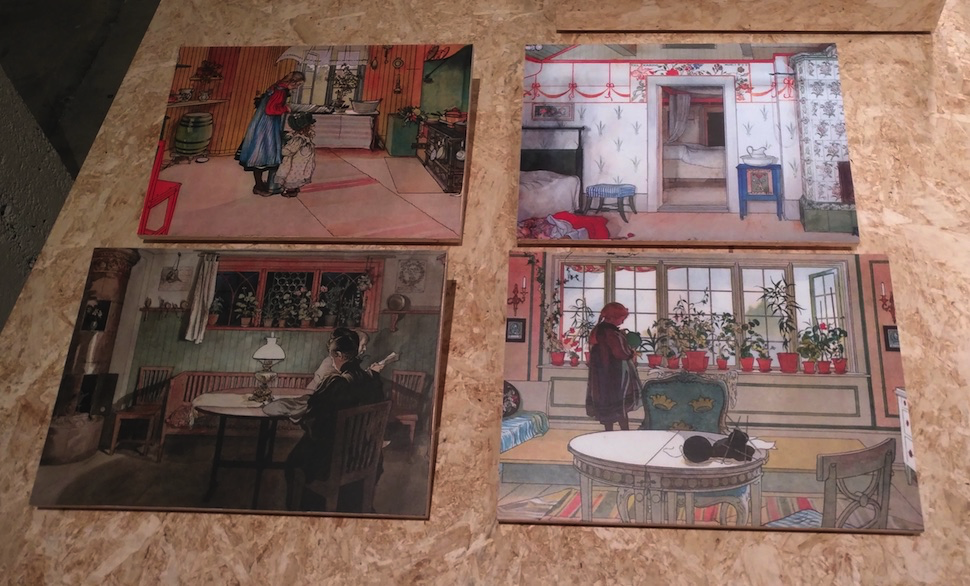
Works of the Larsson family, common in Sweden.
Dreams of a better life led people from villages to cities. The most significant relocation occurred in the 1930s. But in the cities everything was even worse: diseases spread and people continued to leave the country. The Swedish government has embarked on the standardization and improvement of urban housing conditions. This became the main theme of the 1930 Stockholm exhibition, where young architects and designers presented many solutions for lighting, efficient use of space, mass production. The new trend is called "functionalism."
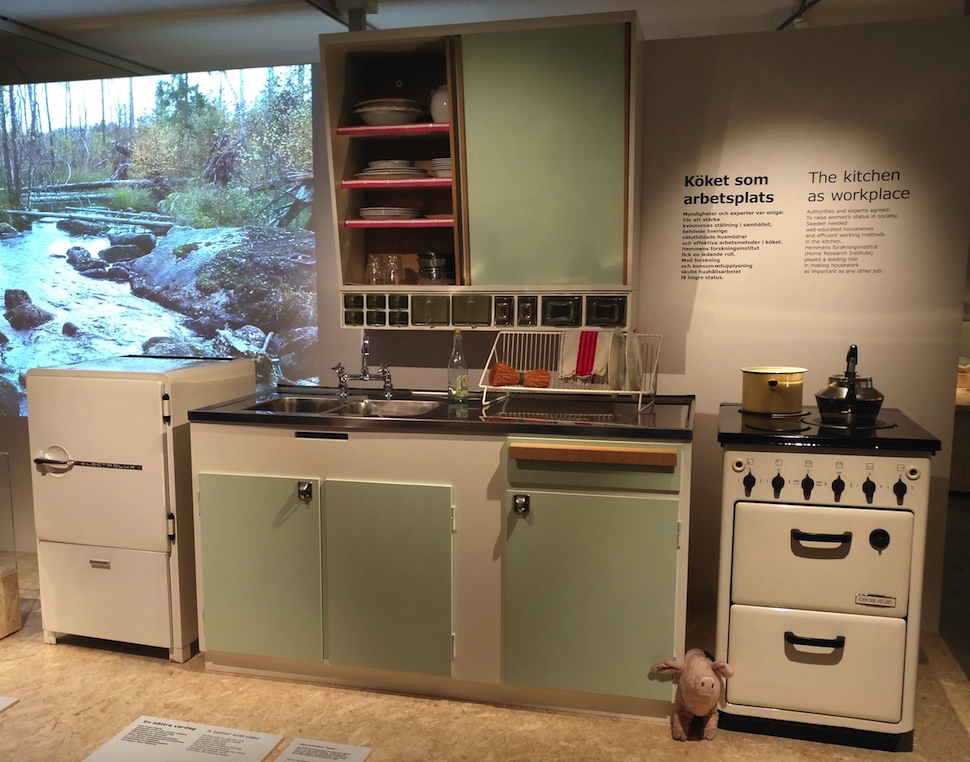
An example of functional Swedish cuisine of the time. Gas, electricity, everything was done to save time. At that time, it was believed that both men and women should work in the family: this made it possible to collect more taxes and, accordingly, improve the lives of citizens faster. As a result, even free dental care appeared.
At that time, Ingvar Kamprad, the future founder of IKEA, started his first business in Agunnarude. Things on the farm of his grandfather and grandmother went badly, the family was in need. To help the family, six-year-old Ingvar bought large blocks of matches at a Stockholm store and then sold them in boxes. Business abilities developed rapidly, the boy actively explored the surroundings in terms of supply and demand. Ingvar began to sell seeds, pens, fish, Christmas cards ... in general, a lot of all sorts of useful things.
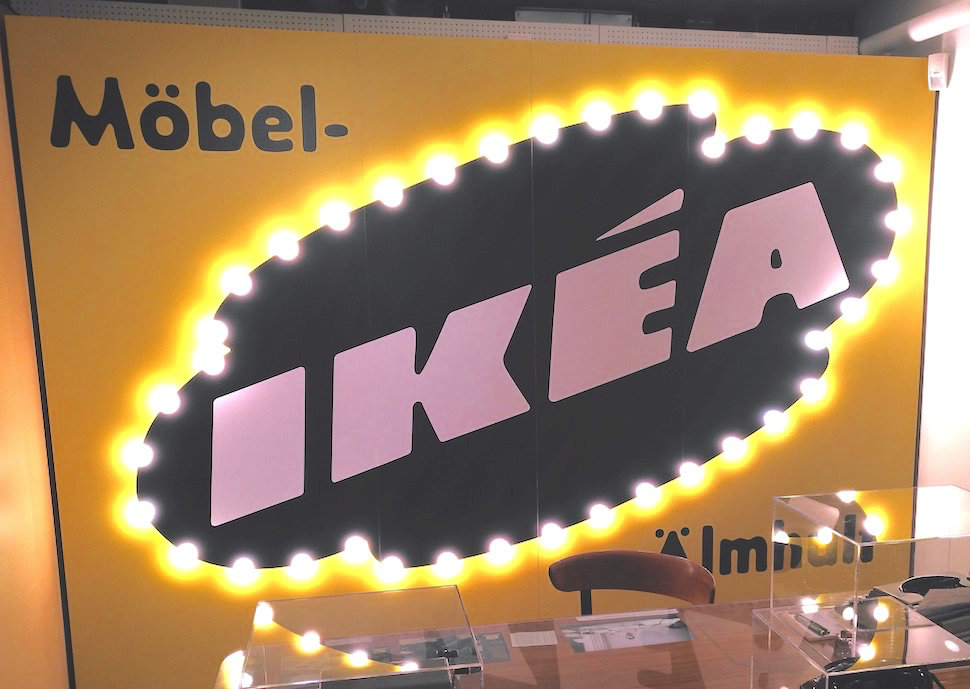
One of the first IKEA logos
In the summer of 1943, Ingvar received permission to establish his own company. IKEA stands for IK - Ingvar Kamprad, E - Elmtaryd (the farm Ingvar grew up on), A - Agunnaryd (Ingvar's hometown). Fortunately, the name coined by the founder is easily pronounced in all corners of the world, so that over time it did not have to be changed.
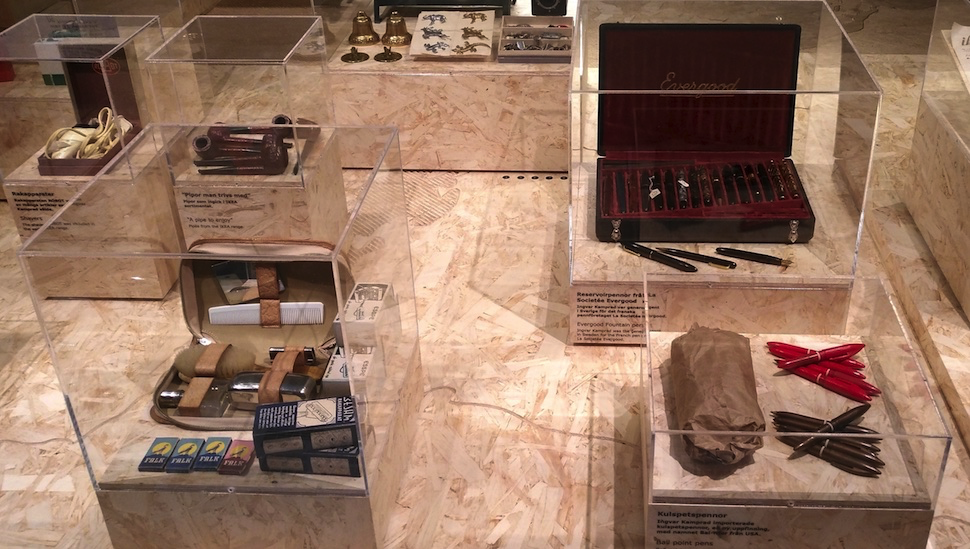
One of the first IKEA products.
At first, IKEA sold everyday items, from ballpoint pens and watches to handsets and combs. All this could be bought from his house or ordered with delivery: Ingvar himself delivered goods on a bicycle. But the competition in this segment was very great.
In 1948, a local furniture designer knocked on the door of Ingvar's house. “Do you want to sell furniture at IKEA?” He asked. “Yes, but I don’t know how to do this,” Ingvar answered and called his mother for advice. Mom solved the problem quickly by pointing to two armchairs and a coffee table in the room. So in the assortment of the company appeared the first furniture. But to stand out from the competition, regular sales were not enough.
In 1953, IKEA acquired an old store in Elmhult and made a showroom out of it, where people could look at furniture before ordering. An unusual step was successful: the company was talked about all over the country, and customers began to come from afar. Two years later, to counter collusion of suppliers, IKEA begins to develop furniture with its own design.
As a result, in 1958, here in Elmhult, not far from the showroom, the first IKEA was opened - the largest furniture store in Northern Europe. The store is rapidly gaining popularity: buyers from all over Sweden and from other countries come to it, and lines are lined up.
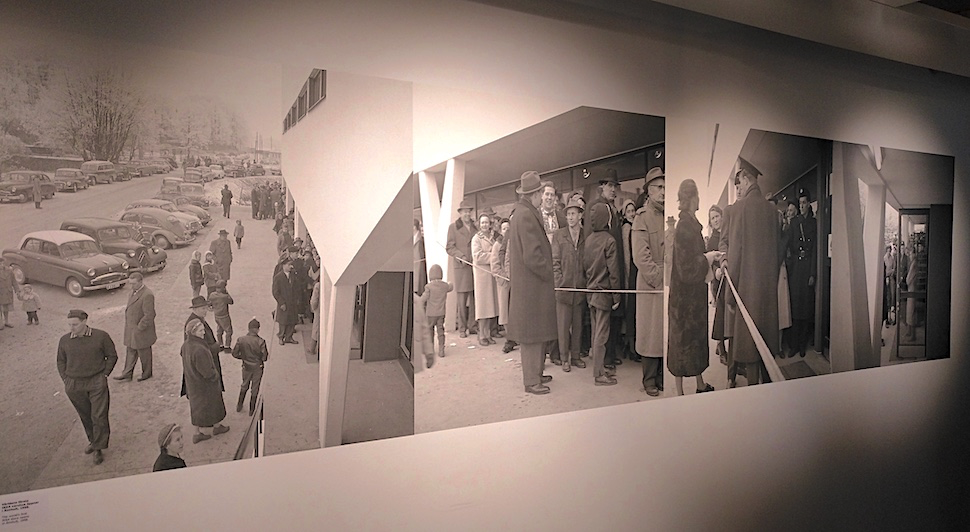
The store employees knew the assortment very well and had an idea of the principles of home design. IKEA was actively recruiting employees among housewives who better understood household problems and needs. Such employees were considered experts and were very much appreciated in stores: customers could pre-order personal tours with them on IKEA. During the tours, experts gave advice on home furnishings, noted products that customers showed interest in. Small purchases could be immediately taken home, orders for overall furniture were sent to suppliers.
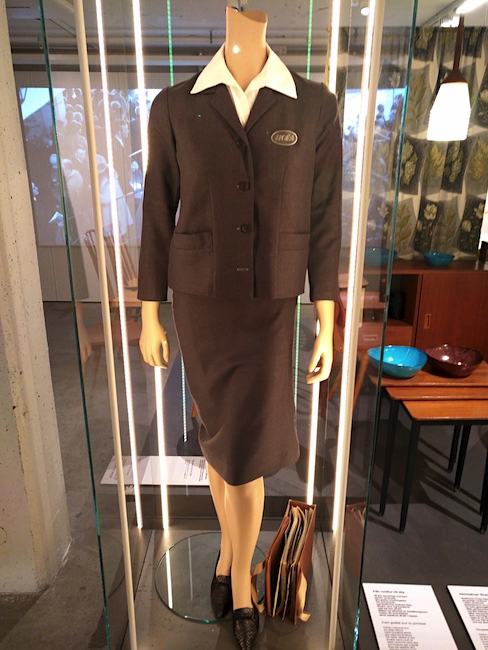 Uniform of an IKEA Worker of the 50s and Her Catalog Folder
The catalog of that time contained a questionnaire of 20 questions, as well as an insert of "graph paper" on which customers could arrange furniture approximately. With all of this information, IKEA employees made individual offers.
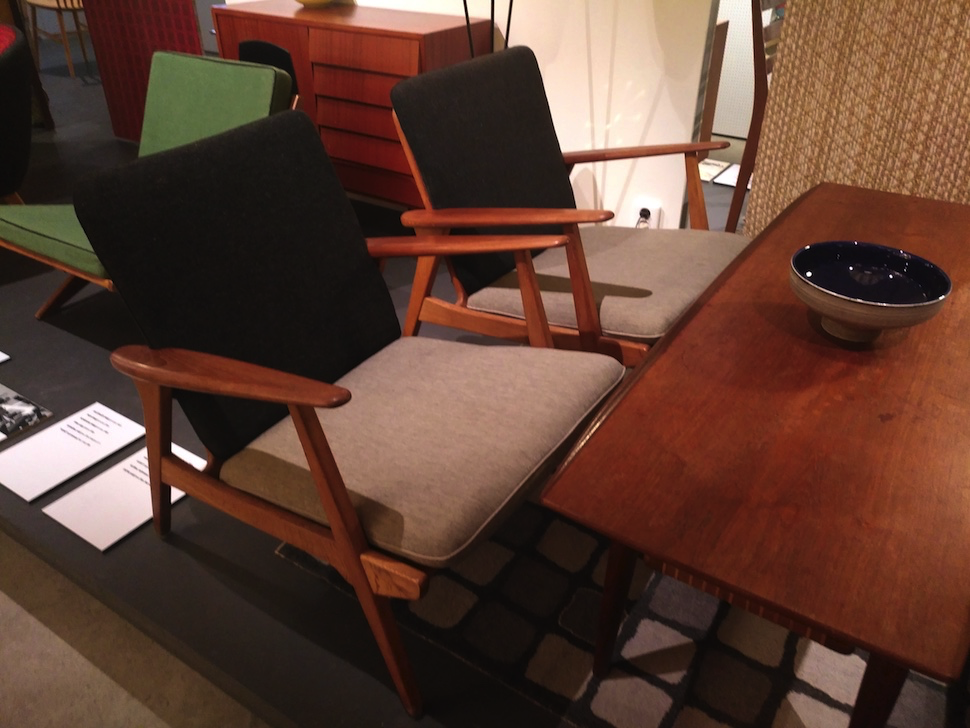
One of the first products in the IKEA range. The green armchair in the background in a slightly modified form is still sold.
In the 60s, a new round of competition war ensued. The suppliers of raw materials in Sweden began to present an ultimatum: "If you want to work with us, then you will have to end relations with IKEA." Many did so. But this time, the company found a way out.
At that time, furniture was made mainly from dark woods - teak and walnut. By exploring the foreign market, IKEA discovered a large amount of wood suitable for furniture in Poland. It was a light oak. Buyers liked the new color, and since then this breed has been actively used in production. By the way, Poland is one of the five largest countries producing furniture IKEA together with China, Sweden, Lithuania and India.
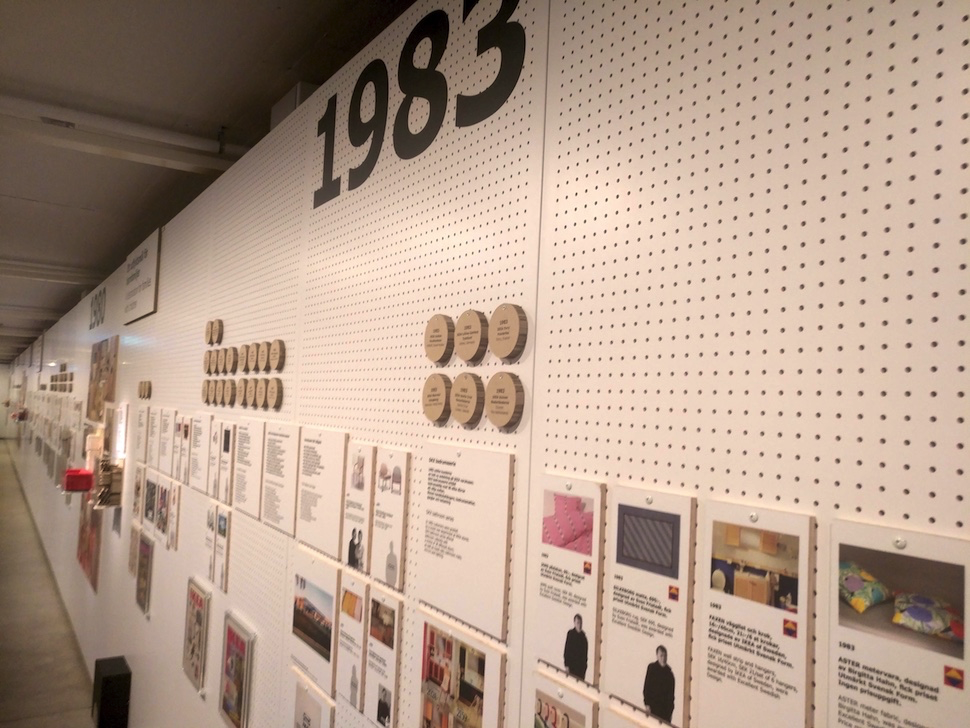
The museum hall is surrounded by a "chronological wall." Rectangles show important milestones in history, and circles show open stores. The largest is now in Seoul, and the largest in assortment is still here in Elmhult.
The tour is logical to complete with something very important for IKEA. We come to the five principles of "democratic design", which must meet the company's products - Form, Function, Quality, Low Price, Sustainability. This concept is so important that a separate wall is set aside for it in the museum.
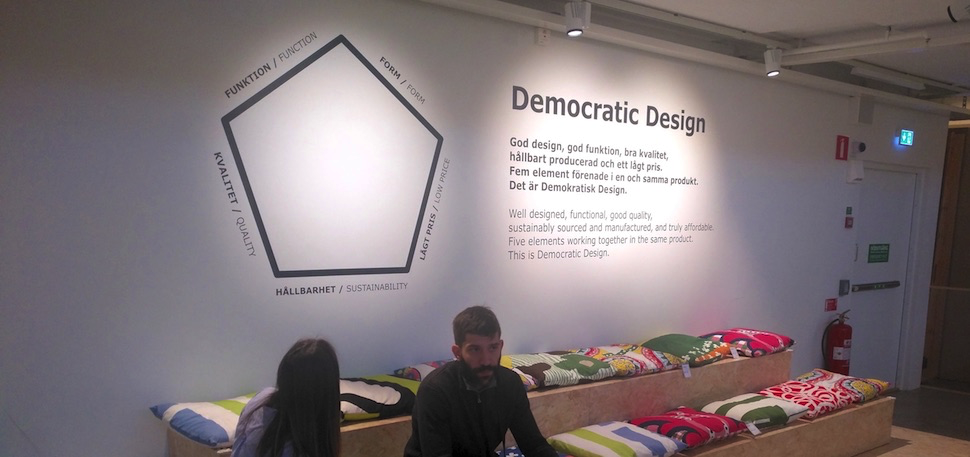 These principles are reinforced by a set of rules called IWAY, consisting of 80 paragraphs on labor, social conditions, environmental protection and other things. A book with these rules is in every IKEA store.
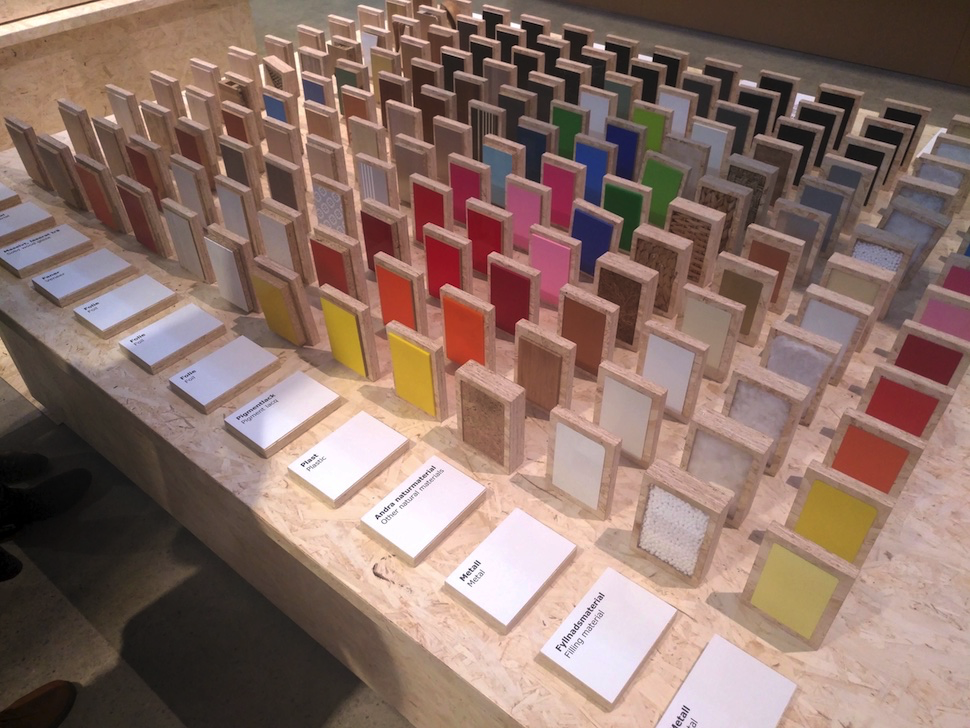
All colors used in IKEA products, with reference to materials. The same palette is for them separately.
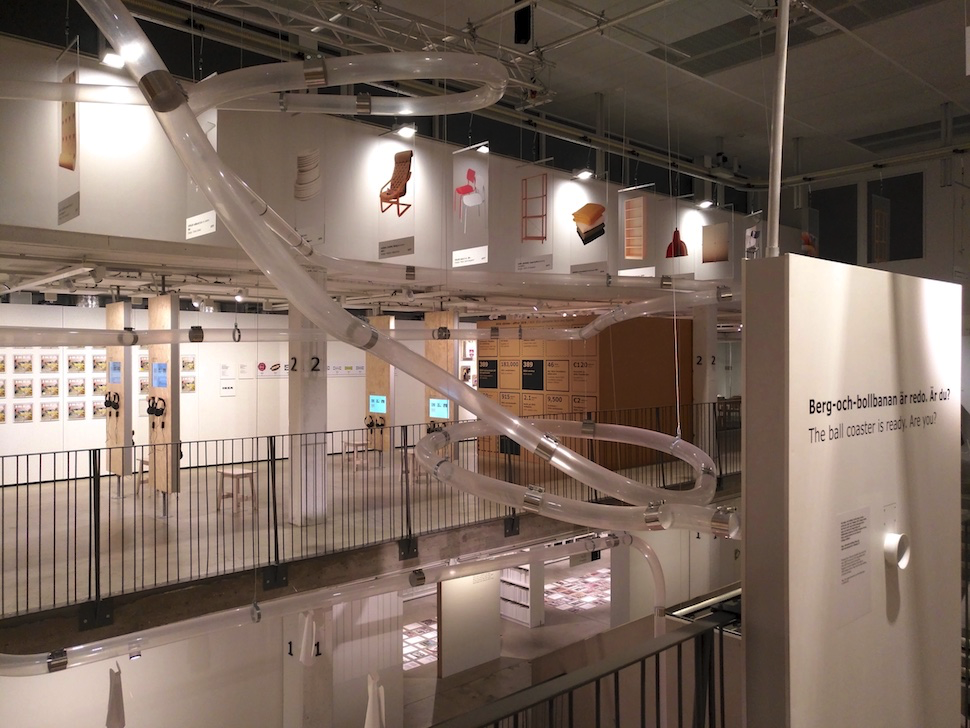
What can you do in the museum besides studying the history of IKEA? For example, launch plastic balls from the upper floor to the lower through a pneumatic labyrinth. Around this maze are circled posters with goods from the current assortment of the store. You can take a picture in the interior from the current cover of the IKEA catalog and get your own fun option.
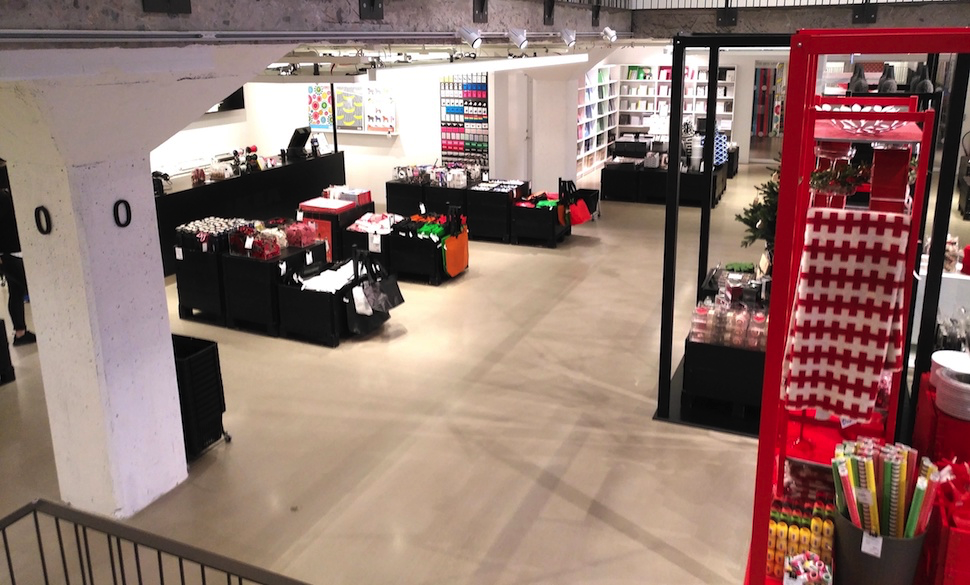
But the most interesting is the store on the ground floor. It seems that ordinary IKEA products are collected here - however, the peculiarity is that they are sold only in the museum: exclusively small chairs, original dishes, designer figurines, posters and other things.
IKEA continues to develop the museum and for this purpose leaves several copies of each new product for the future. So over time, everything will be even more interesting.
The IKEA Museum is located in the same building where the first full-fledged store of the company was opened in 1958. Since then, the building has not changed much.
At the entrance we are met by the founder of IKEA, Ingvar Kamprad. His portrait is composed of miniature photographs of IKEA employees. This simultaneously indicates the importance of each employee and refers us to the main goal of the company - (literally) "to create a better everyday life for many people."
The path to the main exposition lies through a bright corridor with IKEA branded products. Today in the assortment of approximately 10 thousand products, approximately a quarter changes annually.
To appreciate the scale of diversity, it’s enough to go back one and a half hundred years ago, when everything was not so fun. The tour begins with a typical Swedish home of the time:
The Swedes lived mainly in large families in small rural houses. In the photo above is the kitchen. Often it was the only room in the house and was used as a living room, a nursery, a bedroom, etc. In such conditions, functionality came to the forefront. Tablecloths turned into bedspreads. The tables were folding. The beds had drawers for things. People tried to sleep together to keep warm. Baby cots hung from the ceiling so that infants were next to their mother and at the same time were away from the fire of open hearths, and subsequently from kerosene lamps. Iron products that could make life easier were not widely distributed due to their high cost.
The harsh Swedish climate impeded agriculture, which was limited mainly to livestock farming. Forest resources helped in some way, but life was still very difficult. From the end of the 19th century, about a third of the population of Sweden left the country within 30-40 years. They left mainly to America.
At this time in Sweden, the idea of a simple and high-quality furnishings in a light-colored house was spread. They were developed by the Swedish writer Ellen Kay, as well as the Karin and Karl Larsson family. Karl was an artist, and Karin was an interior designer. They embodied their ideas in small paintings, which became very popular in Sweden. In these paintings houses of the future are depicted - those in which the Swedes would like to live. Subsequently, the Larsson projects influenced the entire work of IKEA.
Swedish writer Ellen Kay and home furnishings that fit her ideas.
Works of the Larsson family, common in Sweden.
Dreams of a better life led people from villages to cities. The most significant relocation occurred in the 1930s. But in the cities everything was even worse: diseases spread and people continued to leave the country. The Swedish government has embarked on the standardization and improvement of urban housing conditions. This became the main theme of the 1930 Stockholm exhibition, where young architects and designers presented many solutions for lighting, efficient use of space, mass production. The new trend is called "functionalism."
An example of functional Swedish cuisine of the time. Gas, electricity, everything was done to save time. At that time, it was believed that both men and women should work in the family: this made it possible to collect more taxes and, accordingly, improve the lives of citizens faster. As a result, even free dental care appeared.
At that time, Ingvar Kamprad, the future founder of IKEA, started his first business in Agunnarude. Things on the farm of his grandfather and grandmother went badly, the family was in need. To help the family, six-year-old Ingvar bought large blocks of matches at a Stockholm store and then sold them in boxes. Business abilities developed rapidly, the boy actively explored the surroundings in terms of supply and demand. Ingvar began to sell seeds, pens, fish, Christmas cards ... in general, a lot of all sorts of useful things.
One of the first IKEA logos
In the summer of 1943, Ingvar received permission to establish his own company. IKEA stands for IK - Ingvar Kamprad, E - Elmtaryd (the farm Ingvar grew up on), A - Agunnaryd (Ingvar's hometown). Fortunately, the name coined by the founder is easily pronounced in all corners of the world, so that over time it did not have to be changed.
One of the first IKEA products.
At first, IKEA sold everyday items, from ballpoint pens and watches to handsets and combs. All this could be bought from his house or ordered with delivery: Ingvar himself delivered goods on a bicycle. But the competition in this segment was very great.
In 1948, a local furniture designer knocked on the door of Ingvar's house. “Do you want to sell furniture at IKEA?” He asked. “Yes, but I don’t know how to do this,” Ingvar answered and called his mother for advice. Mom solved the problem quickly by pointing to two armchairs and a coffee table in the room. So in the assortment of the company appeared the first furniture. But to stand out from the competition, regular sales were not enough.
In 1953, IKEA acquired an old store in Elmhult and made a showroom out of it, where people could look at furniture before ordering. An unusual step was successful: the company was talked about all over the country, and customers began to come from afar. Two years later, to counter collusion of suppliers, IKEA begins to develop furniture with its own design.
As a result, in 1958, here in Elmhult, not far from the showroom, the first IKEA was opened - the largest furniture store in Northern Europe. The store is rapidly gaining popularity: buyers from all over Sweden and from other countries come to it, and lines are lined up.
The store employees knew the assortment very well and had an idea of the principles of home design. IKEA was actively recruiting employees among housewives who better understood household problems and needs. Such employees were considered experts and were very much appreciated in stores: customers could pre-order personal tours with them on IKEA. During the tours, experts gave advice on home furnishings, noted products that customers showed interest in. Small purchases could be immediately taken home, orders for overall furniture were sent to suppliers.
The catalog of that time contained a questionnaire of 20 questions, as well as an insert of "graph paper" on which customers could arrange furniture approximately. With all of this information, IKEA employees made individual offers.
One of the first products in the IKEA range. The green armchair in the background in a slightly modified form is still sold.
In the 60s, a new round of competition war ensued. The suppliers of raw materials in Sweden began to present an ultimatum: "If you want to work with us, then you will have to end relations with IKEA." Many did so. But this time, the company found a way out.
At that time, furniture was made mainly from dark woods - teak and walnut. By exploring the foreign market, IKEA discovered a large amount of wood suitable for furniture in Poland. It was a light oak. Buyers liked the new color, and since then this breed has been actively used in production. By the way, Poland is one of the five largest countries producing furniture IKEA together with China, Sweden, Lithuania and India.
The museum hall is surrounded by a "chronological wall." Rectangles show important milestones in history, and circles show open stores. The largest is now in Seoul, and the largest in assortment is still here in Elmhult.
The tour is logical to complete with something very important for IKEA. We come to the five principles of "democratic design", which must meet the company's products - Form, Function, Quality, Low Price, Sustainability. This concept is so important that a separate wall is set aside for it in the museum.
These principles are reinforced by a set of rules called IWAY, consisting of 80 paragraphs on labor, social conditions, environmental protection and other things. A book with these rules is in every IKEA store. All colors used in IKEA products, with reference to materials. The same palette is for them separately.
What can you do in the museum besides studying the history of IKEA? For example, launch plastic balls from the upper floor to the lower through a pneumatic labyrinth. Around this maze are circled posters with goods from the current assortment of the store. You can take a picture in the interior from the current cover of the IKEA catalog and get your own fun option.
But the most interesting is the store on the ground floor. It seems that ordinary IKEA products are collected here - however, the peculiarity is that they are sold only in the museum: exclusively small chairs, original dishes, designer figurines, posters and other things.
IKEA continues to develop the museum and for this purpose leaves several copies of each new product for the future. So over time, everything will be even more interesting.