Speed reading: works or not? Part 1
Is it possible to read the “summer program” in a week and study the recommended literature for the exam in one night? We understand a question that has always been relevant for students.
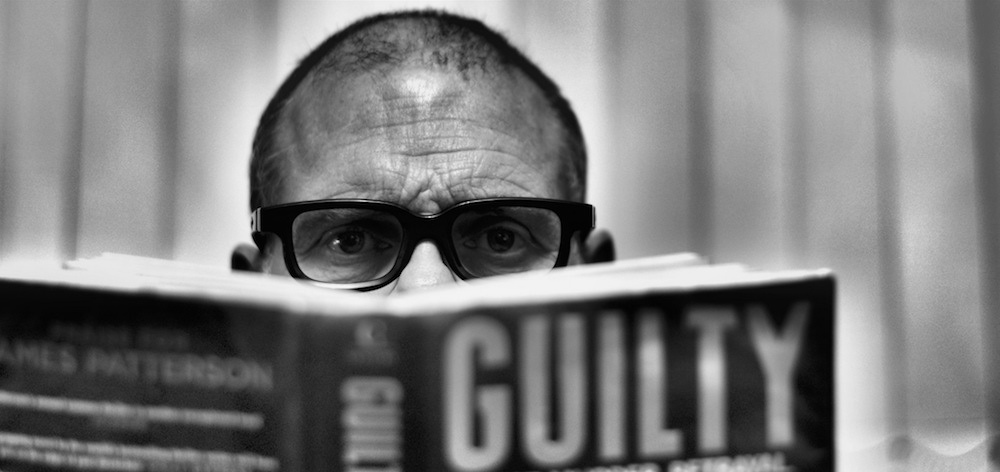 / Photo by Craig Sunter / CC
Each of us, on average, manages to read 200-400 words per minute, while “scribblers,” according to their admission, can increase this indicator by 3-4 times (up to 1,000 or even 1,700 words per minute, respectively). Perhaps one of the most famous scavengers is US President John F. Kennedy. In his own words, he not only possessed this skill and (according to some estimates) read at a speed of 1,200 words per minute, but also sought to ensure that his team members also learned speed reading and attended the courses of Evelyn Wood ( Evelyn Wood in the late 1950s In the 1990s, she developed the basics of teaching speed reading, which became the basis for her textbook and the school of “dynamic reading”).
However, Kennedy’s success is fading against other "stars of speed reading" - Kim Peek (Kim Peek), a prototypehero of Dustin Hoffman from the movie "Rain Man", could read at a speed of 10,000 words per minute (8-10 seconds per standard book spread). At the same time, he could “parallelize processes” - to read two pages of a book at the same time. Such an amazing ability, however, was achieved not only (and not so much) by exercises: The peak was born with a congenital malformation, which is characterized by the absence of a corpus callosum in the brain (this plexus of nerve fibers provides a connection between the hemispheres of the brain), and therefore (according to some assumptions) it hemispheres could process information independently of each other.
However, a record of 10,000 words per minute was broken. Materials from an American study in 1963 reported a pugilist who managed to read more than 17,000 words per minute. According to the Guinness Book of Records (1990 edition), the fastest reader in the world was Howard Berg, who claimed to read books at 25,000 words per minute (an average of over 80 standard pages of text in 60 seconds) ) Reading a book in this mode just looks like a quick page turn!
The results that the scouts have achieved are truly astounding. Nevertheless, far from all of them should be taken at face value - we will talk about this a bit later, but for now it’s worthwhile to figure out how fast reading differs from “ordinary reading”, and what researchers think about this.
Despite the fact that reading seems to us a continuous and smooth process, this is not entirely true. When reading, our gaze is fixed on a word or group of words (this takes about a quarter of a second). Then we look to the next group. Such spasmodic movements of the gaze across the page are called “ saccades ” and by themselves they take about one tenth of a second from us.
After several jumps, we stop again to “digest” the phrase or sentence we read. It usually takes another 0.3-0.5 seconds. Therefore, Keith Rayner , a psycholinguist at the University of Massachusetts at Amherst, admittedthat most people who have reading skills at the level of a high school student or student and who read “for fun” do it at about the same speed - about 300 words per minute.
Of course, when speed reading, we (most often) in the same way move our eyes around the page, lingering for a while on groups of words or symbols. However, the techniques that are commonly used in speed reading are different from how "usually" they read the text. Some of the most popular speed reading techniques are: surface reading, text tracking, quick sequential visual presentation, and some others.
Text tracking- One of the oldest techniques that speed up the reading process. In its simplest form, this is the use of a pointer (finger, ruler), which must be taken along the lines (somewhat reminiscent of how children learn to read). More complex variations on the topic of tracking the text also suggest the search for specific keywords, which (according to adherents of this technique) helps to further speed up the process.
Rapid serial visual presentation (Rapid Serial Visual Presentation) - a method that is used most often in modern programs for speed reading training. It consists in the fact that the text is displayed on the screen of the device word by word. As you learn, the speed of changing words on the screen increases (one of the most famous examples of projects teaching this speed reading technique is Spritz ) [about applications, projects and techniques that help to read, if not faster, then better, we will describe in detail in the second part of the material ].
A superficial reading is, in essence, “viewing” the text, helping to find the most important parts of it (keywords, theses) and weed out superfluous, “complete” all the text in its part. Perhaps this speed reading technique causes the most debate.
Superficial reading is primarily aimed at "sifting" the text for unnecessary or unimportant information and does not imply reading the text as such. Therefore, according to some authors, it does not apply to speed reading, since it does not affect the speed of reading and does not allow to evaluate all the information presented in the text (according toresearch , our ability to perceive information during surface reading is noticeably lower than when reading in normal mode).
Other authors, on the contrary, believe that almost all speed reading techniques are somehow related to the surface reading and screening of the "superfluous":
Journalist Timothy Noah, in his assumptions, is not alone - Keith Reiner, already familiar to us, agreed with him. His research, as well as the work of some other scientists, can be reduced to the following conclusion:
Reiner's conclusions are not groundless: the author called the scientific work in which they were published, “ Eye movements in reading and information processing: 20 years of research ”. In this work, Reiner confirms that the proportion of people reading "at the college student level" (in this case, it means that the subject has a basic education and can read not "by syllables"), falling in reading speed in the range from 200 to 400 words per minute, is 95% (the average reading speed, again, is approximately 300 words per minute).
Literally reads faster without a significant loss of understanding of the meaning of what they read. And therefore, speed reading techniques that promise to teach almost any person to read several times faster have one, but a very significant minus - they do not allow to fully understand the meaning of what was written:
Ronald Carver (Ronald Carver), the author of the book "The reasons for the high and low achievement in reading» ( «of The Causes of of High and the Low the Reading Achievement» ) (published in 1990) and a professor in the field of pedagogy and psychology at the University of Missouri in Kansas City, He also actively studied reading speed. He carefully studied various techniques of “accelerating" reading and conducted a number of his own research. In particular, for testing, he selected a group of 16 "superstars" of speed reading. It included winners of speed reading contests, as well as professionals whose job responsibilities included reading a large amount of texts (among them, New Yorker columnist Fred Shapiro and editor of a medical journal).
Carver invited test participants to read excerpts from the Readers Digest. It turned out that not one of the subjects was able to read materials with a speed higher than 600 words per minute, while maintaining a sufficient (75% and higher) understanding of the content of the text. Of course, this is two times faster than the standard reading speed, but up to tens of thousands of words per minute, the speed readers were far away.
But maybe Carver gathered a too small group of volunteers? Or they were not qualified enough in hacking - in the end, not every patron can set a world record. Such objections are well-founded, however, this study gave rise to doubt the "super-achievements" of the industry, which had existed for several decades by the time of testing.
Unfortunately, the outstanding results of many scribblers (with the exception of Kim Peak) are due to their ego and not their real capabilities. All the same, Carver notes that Kennedy’s achievements in reality could be more modest - most likely, he could read at a speed of 500-600 words per minute, and quickly skim through the text at a speed of about 1000 words per minute (although this is still two times faster than "normal" reading).
How then did the figure of 1200 words per minute? Kennedy biographer Richard Reeves believesthat she was actually "taken from the ceiling" - as suggested by one of the Time magazine reporters who worked in the White House. The reporter contacted the Evelyn Wood school, where he studied Kennedy speed reading, but did not receive the results of his final test - it was not carried out since Kennedy did not complete the course.
As for the other outstanding results, the 1963 study (a case of a speed reader reading 17,040 words per minute) is classified as anecdotal evidence. At that time, specialized tests were not used to record achievements, and the results were based on the subject’s self-esteem - which was unlikely to be accurate.
The same applies to the achievements of Howard Berg. According toMark Pennington, Reading Specialist, “Guinness World Records at that time weren’t very fond of double-checking the records they published, and this record was not set by them personally. They took Berg's word, and he probably just made up his record. ”
By the way, in 1998, Berg was brought to justice by the US Federal Trade Commission for “incorrect” and “misleading” marketing practices related to the sale of his products to increase reading speed. As a result, Berg was forbidden to advertise his product as "a system that allows anyone - a child, an adult, a person with a disability - to learn to read at a speed of 800 words per minute and higher."
We read discretely - we look from one group of words to another. Such races, or saccades, as well as the need to comprehend and say to yourself what was read, take away valuable time from us.
Speed reading is a combination of various mechanics that save time on studying text material (by reducing the number of eye movements along the line, the ability to draw up a mnemonic diagram of the material, and a number of other techniques). Speed reading
differs from ordinary reading - not only in terms of “mechanics of work”, but also because an increase in reading speed is impossible without loss of understanding of the text.
Super-scribbler results - usually the result of self-promotion. If you want to learn any method of speed reading, you should rely on the fact that you can read at a speed of 500-600 words per minute without a significant loss of understanding of the text. A result of several thousand (or tens of thousands) words per minute is hardly achievable. But even 600 words per minute is twice as fast as the average reading speed of almost everyone who graduated from high school or university.
In the second part of the material, we will focus on which methods of speed reading can save time and which have nothing to do with physiology and real human capabilities. And also we will tell you what other methods and life hacks help to learn more from books and articles in less time.
PS Other materials from ITMO University:
/ Photo by Craig Sunter / CCFantastic features of "fast reading"
Each of us, on average, manages to read 200-400 words per minute, while “scribblers,” according to their admission, can increase this indicator by 3-4 times (up to 1,000 or even 1,700 words per minute, respectively). Perhaps one of the most famous scavengers is US President John F. Kennedy. In his own words, he not only possessed this skill and (according to some estimates) read at a speed of 1,200 words per minute, but also sought to ensure that his team members also learned speed reading and attended the courses of Evelyn Wood ( Evelyn Wood in the late 1950s In the 1990s, she developed the basics of teaching speed reading, which became the basis for her textbook and the school of “dynamic reading”).
However, Kennedy’s success is fading against other "stars of speed reading" - Kim Peek (Kim Peek), a prototypehero of Dustin Hoffman from the movie "Rain Man", could read at a speed of 10,000 words per minute (8-10 seconds per standard book spread). At the same time, he could “parallelize processes” - to read two pages of a book at the same time. Such an amazing ability, however, was achieved not only (and not so much) by exercises: The peak was born with a congenital malformation, which is characterized by the absence of a corpus callosum in the brain (this plexus of nerve fibers provides a connection between the hemispheres of the brain), and therefore (according to some assumptions) it hemispheres could process information independently of each other.
However, a record of 10,000 words per minute was broken. Materials from an American study in 1963 reported a pugilist who managed to read more than 17,000 words per minute. According to the Guinness Book of Records (1990 edition), the fastest reader in the world was Howard Berg, who claimed to read books at 25,000 words per minute (an average of over 80 standard pages of text in 60 seconds) ) Reading a book in this mode just looks like a quick page turn!
The results that the scouts have achieved are truly astounding. Nevertheless, far from all of them should be taken at face value - we will talk about this a bit later, but for now it’s worthwhile to figure out how fast reading differs from “ordinary reading”, and what researchers think about this.
Reading and speed reading: what is the difference
Despite the fact that reading seems to us a continuous and smooth process, this is not entirely true. When reading, our gaze is fixed on a word or group of words (this takes about a quarter of a second). Then we look to the next group. Such spasmodic movements of the gaze across the page are called “ saccades ” and by themselves they take about one tenth of a second from us.
After several jumps, we stop again to “digest” the phrase or sentence we read. It usually takes another 0.3-0.5 seconds. Therefore, Keith Rayner , a psycholinguist at the University of Massachusetts at Amherst, admittedthat most people who have reading skills at the level of a high school student or student and who read “for fun” do it at about the same speed - about 300 words per minute.
What does speed reading look like?
Of course, when speed reading, we (most often) in the same way move our eyes around the page, lingering for a while on groups of words or symbols. However, the techniques that are commonly used in speed reading are different from how "usually" they read the text. Some of the most popular speed reading techniques are: surface reading, text tracking, quick sequential visual presentation, and some others.
Text tracking- One of the oldest techniques that speed up the reading process. In its simplest form, this is the use of a pointer (finger, ruler), which must be taken along the lines (somewhat reminiscent of how children learn to read). More complex variations on the topic of tracking the text also suggest the search for specific keywords, which (according to adherents of this technique) helps to further speed up the process.
Rapid serial visual presentation (Rapid Serial Visual Presentation) - a method that is used most often in modern programs for speed reading training. It consists in the fact that the text is displayed on the screen of the device word by word. As you learn, the speed of changing words on the screen increases (one of the most famous examples of projects teaching this speed reading technique is Spritz ) [about applications, projects and techniques that help to read, if not faster, then better, we will describe in detail in the second part of the material ].
A superficial reading is, in essence, “viewing” the text, helping to find the most important parts of it (keywords, theses) and weed out superfluous, “complete” all the text in its part. Perhaps this speed reading technique causes the most debate.
Superficial reading is primarily aimed at "sifting" the text for unnecessary or unimportant information and does not imply reading the text as such. Therefore, according to some authors, it does not apply to speed reading, since it does not affect the speed of reading and does not allow to evaluate all the information presented in the text (according toresearch , our ability to perceive information during surface reading is noticeably lower than when reading in normal mode).
Other authors, on the contrary, believe that almost all speed reading techniques are somehow related to the surface reading and screening of the "superfluous":
Browsing is not reading. If you have not previously read the text you are viewing, you will miss a ton of information. And speed reading courses teach just viewing, not reading, although (for the most part) they don’t recognize this
- Timothy Noah , writer, editor of Politico, lead author at Slate (2000–2011)
Journalist Timothy Noah, in his assumptions, is not alone - Keith Reiner, already familiar to us, agreed with him. His research, as well as the work of some other scientists, can be reduced to the following conclusion:
Speed reading is not reading [whatever that means]
Reiner's conclusions are not groundless: the author called the scientific work in which they were published, “ Eye movements in reading and information processing: 20 years of research ”. In this work, Reiner confirms that the proportion of people reading "at the college student level" (in this case, it means that the subject has a basic education and can read not "by syllables"), falling in reading speed in the range from 200 to 400 words per minute, is 95% (the average reading speed, again, is approximately 300 words per minute).
Literally reads faster without a significant loss of understanding of the meaning of what they read. And therefore, speed reading techniques that promise to teach almost any person to read several times faster have one, but a very significant minus - they do not allow to fully understand the meaning of what was written:
I graduated from speed reading courses — we were forced to slide our fingers along the pages — and I read War and Peace in twenty minutes. There is something about Russia
- Woody Allen
Ronald Carver (Ronald Carver), the author of the book "The reasons for the high and low achievement in reading» ( «of The Causes of of High and the Low the Reading Achievement» ) (published in 1990) and a professor in the field of pedagogy and psychology at the University of Missouri in Kansas City, He also actively studied reading speed. He carefully studied various techniques of “accelerating" reading and conducted a number of his own research. In particular, for testing, he selected a group of 16 "superstars" of speed reading. It included winners of speed reading contests, as well as professionals whose job responsibilities included reading a large amount of texts (among them, New Yorker columnist Fred Shapiro and editor of a medical journal).
Carver invited test participants to read excerpts from the Readers Digest. It turned out that not one of the subjects was able to read materials with a speed higher than 600 words per minute, while maintaining a sufficient (75% and higher) understanding of the content of the text. Of course, this is two times faster than the standard reading speed, but up to tens of thousands of words per minute, the speed readers were far away.
But maybe Carver gathered a too small group of volunteers? Or they were not qualified enough in hacking - in the end, not every patron can set a world record. Such objections are well-founded, however, this study gave rise to doubt the "super-achievements" of the industry, which had existed for several decades by the time of testing.
What is behind the impressive scatterbird results
Unfortunately, the outstanding results of many scribblers (with the exception of Kim Peak) are due to their ego and not their real capabilities. All the same, Carver notes that Kennedy’s achievements in reality could be more modest - most likely, he could read at a speed of 500-600 words per minute, and quickly skim through the text at a speed of about 1000 words per minute (although this is still two times faster than "normal" reading).
How then did the figure of 1200 words per minute? Kennedy biographer Richard Reeves believesthat she was actually "taken from the ceiling" - as suggested by one of the Time magazine reporters who worked in the White House. The reporter contacted the Evelyn Wood school, where he studied Kennedy speed reading, but did not receive the results of his final test - it was not carried out since Kennedy did not complete the course.
As for the other outstanding results, the 1963 study (a case of a speed reader reading 17,040 words per minute) is classified as anecdotal evidence. At that time, specialized tests were not used to record achievements, and the results were based on the subject’s self-esteem - which was unlikely to be accurate.
The same applies to the achievements of Howard Berg. According toMark Pennington, Reading Specialist, “Guinness World Records at that time weren’t very fond of double-checking the records they published, and this record was not set by them personally. They took Berg's word, and he probably just made up his record. ”
By the way, in 1998, Berg was brought to justice by the US Federal Trade Commission for “incorrect” and “misleading” marketing practices related to the sale of his products to increase reading speed. As a result, Berg was forbidden to advertise his product as "a system that allows anyone - a child, an adult, a person with a disability - to learn to read at a speed of 800 words per minute and higher."
So in short:
We read discretely - we look from one group of words to another. Such races, or saccades, as well as the need to comprehend and say to yourself what was read, take away valuable time from us.
Speed reading is a combination of various mechanics that save time on studying text material (by reducing the number of eye movements along the line, the ability to draw up a mnemonic diagram of the material, and a number of other techniques). Speed reading
differs from ordinary reading - not only in terms of “mechanics of work”, but also because an increase in reading speed is impossible without loss of understanding of the text.
Super-scribbler results - usually the result of self-promotion. If you want to learn any method of speed reading, you should rely on the fact that you can read at a speed of 500-600 words per minute without a significant loss of understanding of the text. A result of several thousand (or tens of thousands) words per minute is hardly achievable. But even 600 words per minute is twice as fast as the average reading speed of almost everyone who graduated from high school or university.
In the second part of the material, we will focus on which methods of speed reading can save time and which have nothing to do with physiology and real human capabilities. And also we will tell you what other methods and life hacks help to learn more from books and articles in less time.
PS Other materials from ITMO University: