How we assembled a car in Baumanka: why did the student team need PLM technologies
Hello! I study at the Moscow State Technical University named after N. E. Bauman at the department E2 “Piston engines”. In this article I want to talk about what conclusions we have drawn by participating in Formula SAE - international engineering competitions for student teams to create racing cars of the Formula type, and why they decided to switch to digital design. Now we are starting to implement in our laboratory, where the car is assembled, a product life cycle management system (Product Lifecycle Management, PLM). The first stage is training, and LANIT helps us in this.. Our experience may be useful to students of technical specialties who work on similar tasks or want to assemble their university team to participate in Formula SAE, as well as a small design bureau who are already thinking about switching to digital design. Habrahabr Photos

The history of Formula SAE, or “Formula Student,” dates back nearly 40 years. Organized by the Society of Automotive Engineers (SAE) in Texas in 1978, student racing car design competitions have significantly expanded their geography.

Today, in addition to the United States, the official stagesFormula SAE are held in Australia, Brazil, Italy, England, Japan, Austria and Germany. For us, the last two are most interesting. Firstly, the auto industry is actively developing here, which gives rise to new solutions and approaches to design and production. Secondly, the selection in Formula SAE is the most stringent. Everyone passes a kind of qualification - they pass tests for knowledge of the regulations, solve engineering problems. Teams that correctly and quickly completed the tasks are allowed to attend the stage. This guarantees a high level of competition. Germany has become a kind of “Formula Student” center in Europe.
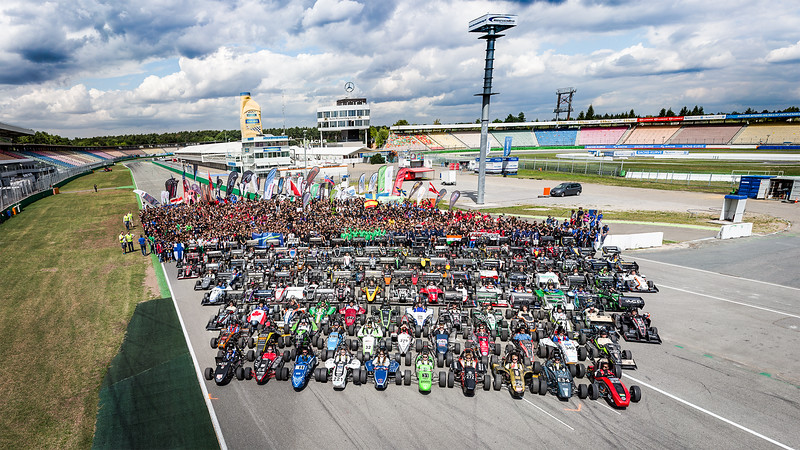
Formula Student Germany 2016. 113 teams from around the world.
When we started our Bauman Racing Team project.in 2012, there were only three teams in Russia. Today there are more than thirty. Half of them have a ready-made car. For comparison, in Germany there are more than 70 teams with cars. We don’t build cars because they cannot find a sponsor, and they cannot find a sponsor because sponsors do not understand why the Formula Student is needed and what gives the student participation in it.
The idea to participate in Formula SAE arose in 2012, and we immediately received the approval of the rector. So the Bauman Racing Team appeared. At that time, teams already existed at the Moscow Automobile and Road State University (MADI), the Moscow Polytechnic University and the Peoples' Friendship University of Russia. Details of the creation of our team can be found in the post “ Bauman Racing Team - A Taste of Speed History ” on Geektimes . There are also descriptions of the main components of our car. In this article, we will focus primarily on the technological aspect of the Bauman Racing Team and the conclusions that have been drawn after participating in international stages.
My future profession is related to engine building, and in the project I began to deal with the engine, to which Formula SAE regulations have certain requirements. Although it is allowed to create your own version, this solution is not popular because of the complexity for students. Our engine had its own characteristics: a Roots type drive compressor and a dry sump system created in the second year. My task was to refine this system for a third machine. We conducted tests and, based on their results, changed the details.
The car was designed using SolidWorks, Ansys, Matlab, OptimumLap software. For the first year, this set was enough, the university had enough licenses.

Ansys aerodynamics study of one of the first body kit options
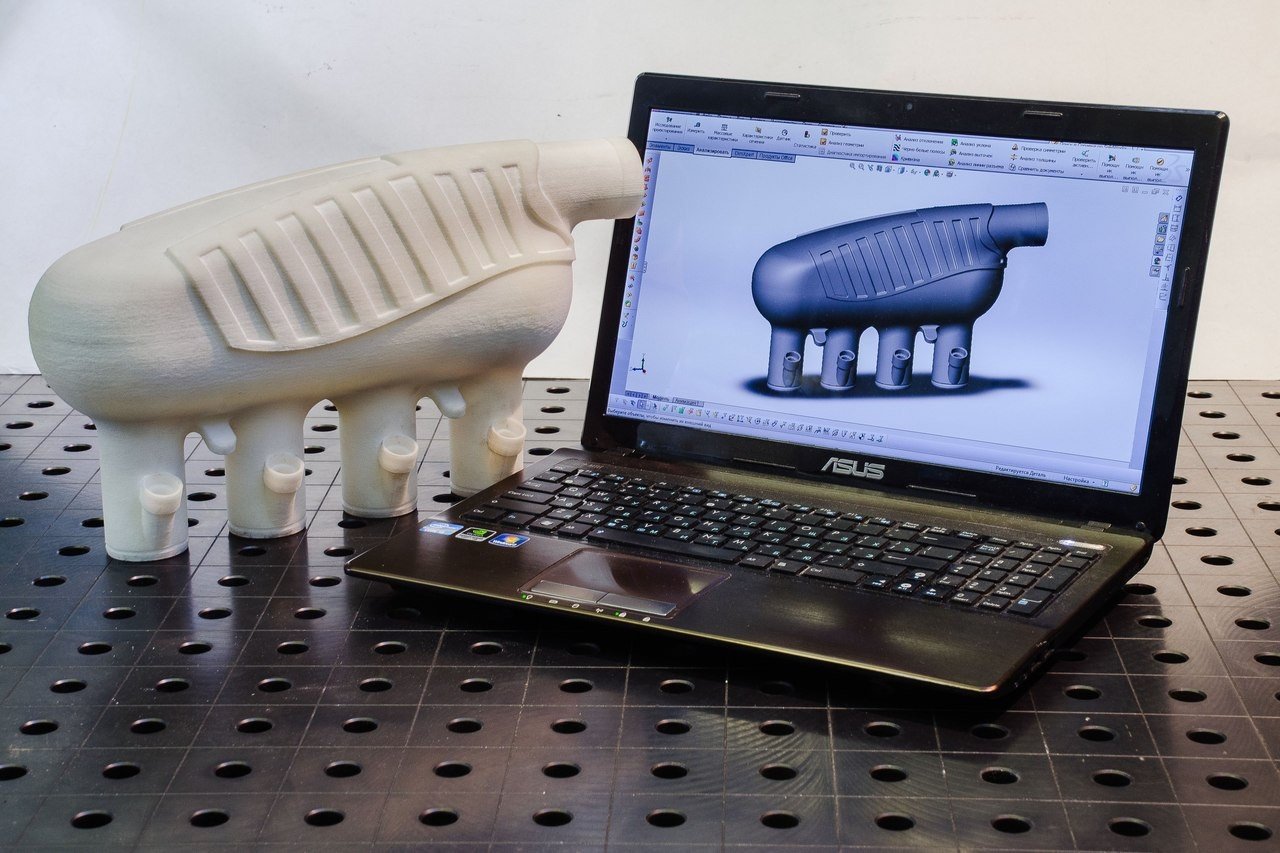
3D model of the intake manifold in SolidWorks and the real printed part
There was a lot of work, little experience. As a result, we went to Italy with a disassembled car ...
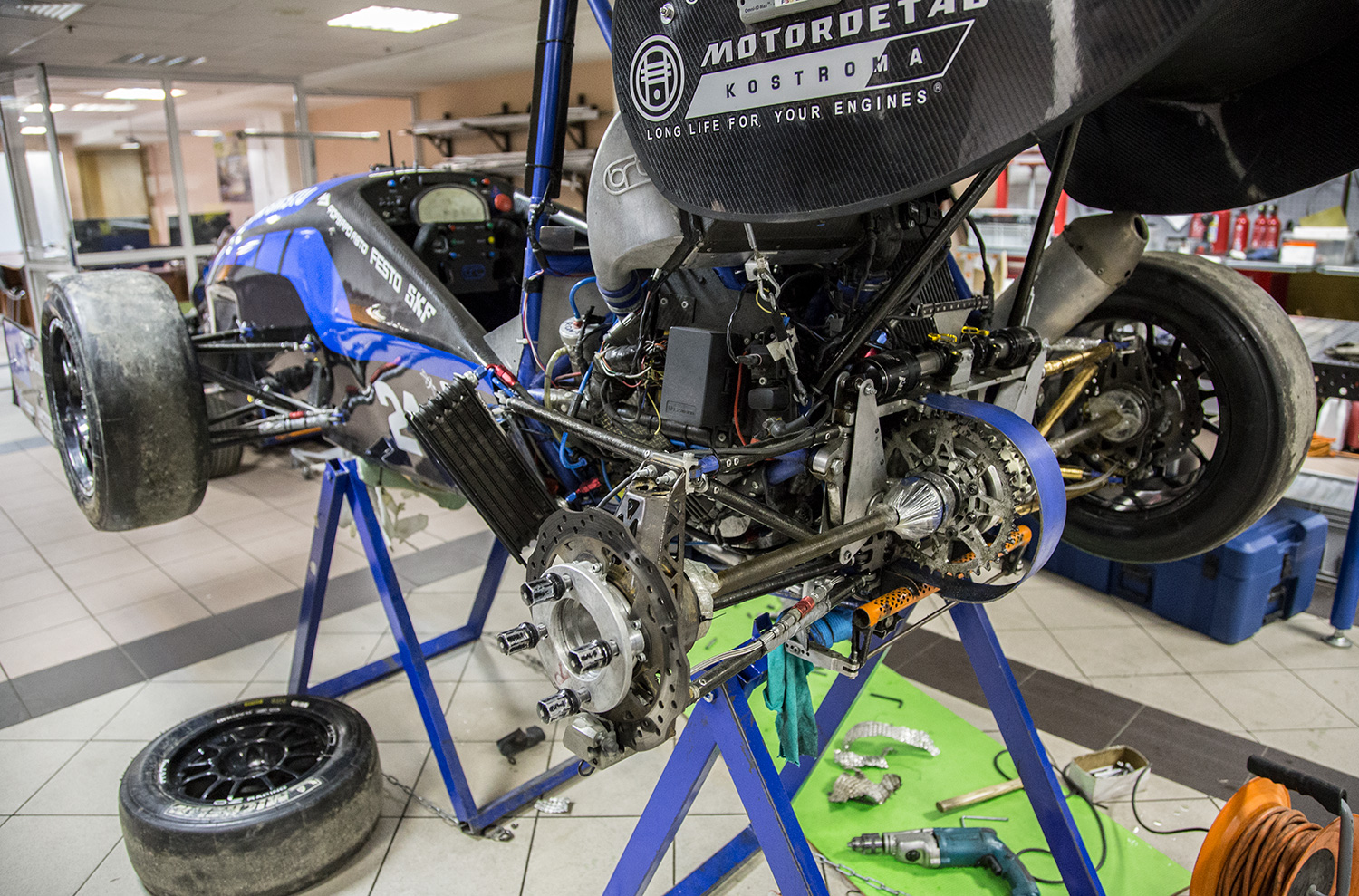
Photo by Habrahabr
The organizers, considering our luggage, were sure that in one night it would not work to assemble a full-fledged car from this "designer". Many recommended not to waste time. Nevertheless ...

tirelessly
By morning, our car was presented for technical inspection, during which the judges had to check it for compliance with the requirements, and we had to prove the correctness of the calculations and the validity of the decisions.
Based on the results of the check, we received a half sheet of comments that needed to be addressed if we wanted to get to the track. For the second day, we once again completely went over our car. This, incidentally, is an extremely rare case, there is something to be proud of.
As a result, we were admitted to dynamic disciplines. While the engineers were preparing the machine, the guys involved in static disciplines defended the business plan and cost report. According to the terms of the assignment, we need to produce 1000 cars, the price of which is calculated by the cost of parts and assembly work of our car. The standard tables are taken as a basis, which include the smallest details that affect the cost of production. Despite the fact that teams can use parts from previous cars, the price report includes the price of new parts. In other words, even with the cheapening of its own production, a full calculation is provided. This is a good practice for future technologists.
After protecting the cost report, the teams show a business plan. According to the assignment, we have developed a new car and for its successful production we must protect the business plan in front of the judges-professionals of the automotive industry, acting as investors. They evaluate the completeness and attractiveness of the developed business plan.
This stage is followed by the most interesting, in my opinion, part - dynamic competitions. Here, in real conditions, everything created and calculated in detail in the laboratories is checked.
For Formula SAE, it’s normal if less than half the car reaches the finish line. Leaders can also leave the race. And our first race cars broke before the finish line. Rolled drive shafts, problems with the brake and fuel systems ... Some breakdowns occurred due to design errors, others because of a banal marriage.

Piston breakdown due to overheating. Germany, 2016

Sometimes more spectacular problems happen. On average, 1-2 cars light up per stage. Fortunately, our car burned only once, and these were tests.
In 2015, our car was among the 29 lucky ones who finished (71 cars were launched in total). The winner of Formula SAE is the team that scores the most out of a possible 1000 points.
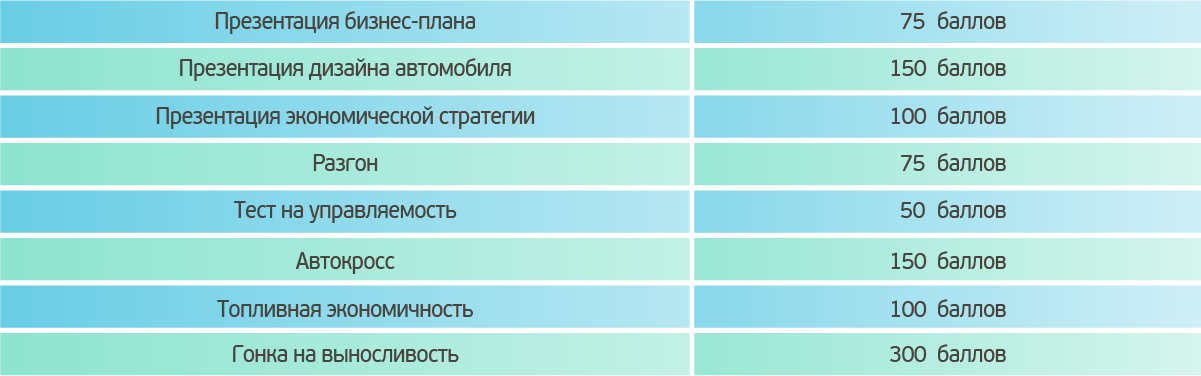
The important thing is that the “Formula Student” is a comprehensive classification. For example, if you are the first in the endurance race, but the last in the presentation of a business plan, then most likely you will not become a winner. Although you will get experience anyway.
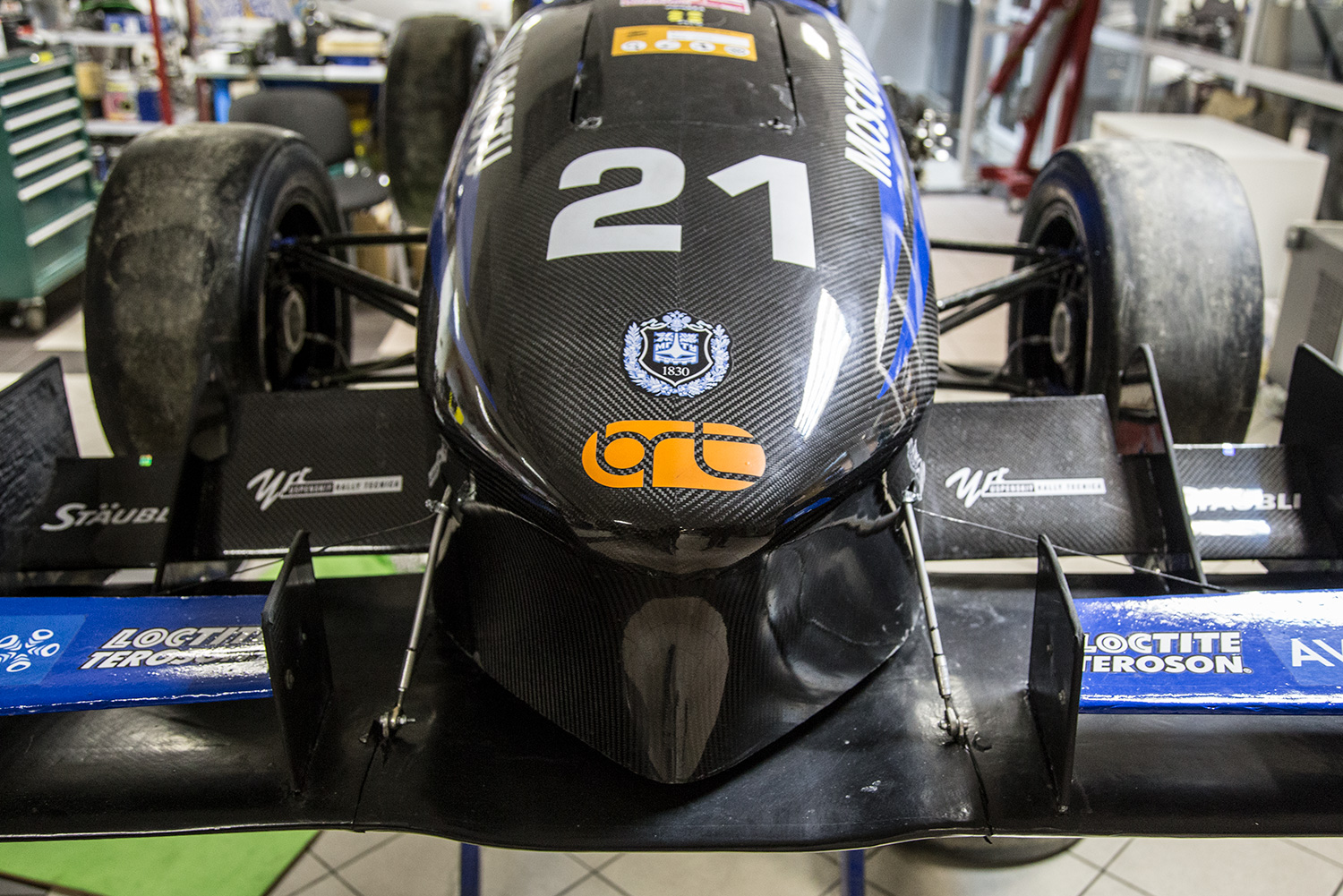
Habrahabr Photos
1. More than 20 people are working on the car, and there should be a relationship between them both at the level of communication and at the software level.
Until recently, we used the usual Dropbox. File hosting does not imply any collaboration. It has neither versioning nor statistics about who worked with the files. As a result, there were errors at the physical level: we save the file, after which someone else from the team saves their file with the same name, and after choosing the “write” button, the file we created irretrievably disappears. And there are many such situations. To solve the technical problems of teamwork, we tried several software options and finally decided - we need to implement PLM.
The transition to PLM technology implies the use of a data management system (Product Data Management, PDM), which provides information on who worked, what changes have been made and in what particular state the work is currently at. The PDM system also makes it possible to initially lay down all the necessary requirements for the car, which will allow not only to design the car and check the geometry, but also to maintain its relevance in real time.
One of the main ideas for implementing PLM technology is that everyone works in context with the entire model, and each engineer can see the work of the other. This design approach allows you to quickly make the necessary changes. All files that are designed are linked by “links” to the final assembly. At the same time, the time required for the change is significantly reduced, as the process becomes more automated.
Since the result of the final assembly depends on the work of each project participant, the implementation of PLM-technology is exactly the kind of collaboration we were aiming for. Of course, for a team of five people this may be superfluous, but in our case, when 20 people work on the car in two shifts, a PLM system is necessary.
2. Designed parts are not gathering dust, they need to be manufactured, and therefore work with various enterprises. They need the right design documentation.
The computer-aided design (CAD) market grew by leaps and bounds: first there was a pencil and paper, then the so-called electronic culman. The next stage is the means of three-dimensional modeling by primitives: a ball, a cube, etc. Using the simplest tools, it was possible to build a three-dimensional model - to visualize the drawing.
Now we are at the stage when the three-dimensional model is not just important, it is a single source of relevant data. Previously, a three-dimensional model was used to form drawings, because people did not understand how to make an object out of it: there were no dimensional lines in 3D, no callouts, or roughness. The model itself was, but to make it was unrealistic. Now it has become possible to apply the necessary information to a three-dimensional model, which will make it possible to produce it on a machine with numerical control. Of course, drawings can be made from it, if necessary, but they will be just casts from the current model, and not their source.
3. The car changes during the design process, and sometimes quite seriously: the right things should be kept as much as possible, and the wrong things should be fixed quickly.
Having examined the options for PLM systems on the market, we settled on the Siemens NX product in conjunction with TeamCenter. It intelligently saves all files and provides quick access to them. The leadership of the team is important to control the work of various engineers, since the car must be made on time. The faster developers can make changes, the faster the team progresses.
4. Sometimes we need a “backup plan”, and at some point we realized that PLM is not just a combination of letters, but a real need.
We are already learning how to work together in the PLM system, we are studying requirements and configuration management technologies. After that, let's move on to the implementation process. It cannot be said that this will be the same as at the enterprise, where the implementation takes place in several stages. In our case, LANIT will provide us with a specialized training course, and based on the knowledge gained, we will independently implement the PLM system in our laboratory.
Now, when only a few classes took place, it is obvious that when we switch to PLM technology, we can reduce the time for designing a car and simplify the process of redesigning a structure if necessary. It is also important that we learn to work in a modern design bureau at the university. This will help you quickly adapt to real work in enterprises using PLM technologies.
In the next article, I will talk more about our experience with the transition to digital design technology.
✎ Co-author of the text vsevolod_grigorev
From a wooden car to a racing car
The history of Formula SAE, or “Formula Student,” dates back nearly 40 years. Organized by the Society of Automotive Engineers (SAE) in Texas in 1978, student racing car design competitions have significantly expanded their geography.
Today, in addition to the United States, the official stagesFormula SAE are held in Australia, Brazil, Italy, England, Japan, Austria and Germany. For us, the last two are most interesting. Firstly, the auto industry is actively developing here, which gives rise to new solutions and approaches to design and production. Secondly, the selection in Formula SAE is the most stringent. Everyone passes a kind of qualification - they pass tests for knowledge of the regulations, solve engineering problems. Teams that correctly and quickly completed the tasks are allowed to attend the stage. This guarantees a high level of competition. Germany has become a kind of “Formula Student” center in Europe.
Formula Student Germany 2016. 113 teams from around the world.
When we started our Bauman Racing Team project.in 2012, there were only three teams in Russia. Today there are more than thirty. Half of them have a ready-made car. For comparison, in Germany there are more than 70 teams with cars. We don’t build cars because they cannot find a sponsor, and they cannot find a sponsor because sponsors do not understand why the Formula Student is needed and what gives the student participation in it.
Experience students get at Formula SAE
- cooperation with professional engineers;
- putting knowledge into practice: students collect all the components of a racing car on their own;
- implementation of the most daring ideas: the rules of competition allow the creation of original author's models;
- cooperation in the framework of the work of a full-fledged design bureau (this can be considered the main idea of the existence of the “Formula Student”);
- exchange of experience with students from other universities and countries;
- the opportunity to receive an invitation to an internship to the automaker;
- experience in finding project financing.
A few words about Bauman Racing Team
The idea to participate in Formula SAE arose in 2012, and we immediately received the approval of the rector. So the Bauman Racing Team appeared. At that time, teams already existed at the Moscow Automobile and Road State University (MADI), the Moscow Polytechnic University and the Peoples' Friendship University of Russia. Details of the creation of our team can be found in the post “ Bauman Racing Team - A Taste of Speed History ” on Geektimes . There are also descriptions of the main components of our car. In this article, we will focus primarily on the technological aspect of the Bauman Racing Team and the conclusions that have been drawn after participating in international stages.
My future profession is related to engine building, and in the project I began to deal with the engine, to which Formula SAE regulations have certain requirements. Although it is allowed to create your own version, this solution is not popular because of the complexity for students. Our engine had its own characteristics: a Roots type drive compressor and a dry sump system created in the second year. My task was to refine this system for a third machine. We conducted tests and, based on their results, changed the details.
The car was designed using SolidWorks, Ansys, Matlab, OptimumLap software. For the first year, this set was enough, the university had enough licenses.
Ansys aerodynamics study of one of the first body kit options
3D model of the intake manifold in SolidWorks and the real printed part
There was a lot of work, little experience. As a result, we went to Italy with a disassembled car ...
Photo by Habrahabr
Technical requirements for the car
The engine
Must be a piston with a four-cycle thermal cycle, the working volume of which does not exceed 710 cm 3 . A circular cross-section restrictor should be installed downstream of the throttle in front of any compressor not exceeding 20 mm for gasoline engines or 19 mm for ethanol-fueled engines. Drivers and turbochargers are allowed. Liquid cooling.
Suspension
The minimum suspension travel is 50 mm. The minimum wheelbase is 1525 mm.
Aerodynamics
More than half of the teams use advanced aerodynamic packages.
Weight
There are no rules for limiting weight. Typically, the weight of the average machine does not exceed 230 kg. In 2009, the importance (in the overall classification) of the fuel economy point increased, which determined the trend towards weight reduction. Now teams prefer four-, two- or single-cylinder engines. To reduce weight and reduce fuel consumption, teams are switching to single-cylinder engines.
Safety
The car must have: a frame of the specified thickness and alloy; tested energy absorber; two hydraulic brake circuits and seat belts. The driver's location in the cab must conform to the geometric pattern, and the equipment must be homologated by the International Automobile Federation (FIA).
Indoor kitchen Formula SAE
The organizers, considering our luggage, were sure that in one night it would not work to assemble a full-fledged car from this "designer". Many recommended not to waste time. Nevertheless ...
tirelessly
By morning, our car was presented for technical inspection, during which the judges had to check it for compliance with the requirements, and we had to prove the correctness of the calculations and the validity of the decisions.
Technical Inspection Stages
- Technical inspection. Checked the car, additional equipment and equipment of drivers.
- Test on an inclined table. The car is tilted sideways by 45 degrees to prevent leakage of fuel and operating fluids. In addition, resistance to lateral tipping is checked, for which the angle of inclination is increased to 60 degrees.
- Checking the noise level.
- Testing the brake system. The main condition is that when braking all wheels must be blocked, and the car should not change the line of movement.
Based on the results of the check, we received a half sheet of comments that needed to be addressed if we wanted to get to the track. For the second day, we once again completely went over our car. This, incidentally, is an extremely rare case, there is something to be proud of.
As a result, we were admitted to dynamic disciplines. While the engineers were preparing the machine, the guys involved in static disciplines defended the business plan and cost report. According to the terms of the assignment, we need to produce 1000 cars, the price of which is calculated by the cost of parts and assembly work of our car. The standard tables are taken as a basis, which include the smallest details that affect the cost of production. Despite the fact that teams can use parts from previous cars, the price report includes the price of new parts. In other words, even with the cheapening of its own production, a full calculation is provided. This is a good practice for future technologists.
After protecting the cost report, the teams show a business plan. According to the assignment, we have developed a new car and for its successful production we must protect the business plan in front of the judges-professionals of the automotive industry, acting as investors. They evaluate the completeness and attractiveness of the developed business plan.
This stage is followed by the most interesting, in my opinion, part - dynamic competitions. Here, in real conditions, everything created and calculated in detail in the laboratories is checked.
Dynamic competitions - series of races:
- acceleration from standstill to a distance of 75 m;
- on maneuverability, in which the vehicle’s ability to move with lateral overload on a G8-type track is checked;
- two-lap drive for a while along a closed highway with a length of about 800 m for precision control (perform a set of elements);
- endurance race with a separate start of 22 km along a closed track with a mandatory pilot change in the middle of the race.
For Formula SAE, it’s normal if less than half the car reaches the finish line. Leaders can also leave the race. And our first race cars broke before the finish line. Rolled drive shafts, problems with the brake and fuel systems ... Some breakdowns occurred due to design errors, others because of a banal marriage.
Piston breakdown due to overheating. Germany, 2016
Sometimes more spectacular problems happen. On average, 1-2 cars light up per stage. Fortunately, our car burned only once, and these were tests.
In 2015, our car was among the 29 lucky ones who finished (71 cars were launched in total). The winner of Formula SAE is the team that scores the most out of a possible 1000 points.
The important thing is that the “Formula Student” is a comprehensive classification. For example, if you are the first in the endurance race, but the last in the presentation of a business plan, then most likely you will not become a winner. Although you will get experience anyway.
Habrahabr Photos
What do we understand after several seasons
1. More than 20 people are working on the car, and there should be a relationship between them both at the level of communication and at the software level.
Until recently, we used the usual Dropbox. File hosting does not imply any collaboration. It has neither versioning nor statistics about who worked with the files. As a result, there were errors at the physical level: we save the file, after which someone else from the team saves their file with the same name, and after choosing the “write” button, the file we created irretrievably disappears. And there are many such situations. To solve the technical problems of teamwork, we tried several software options and finally decided - we need to implement PLM.
The transition to PLM technology implies the use of a data management system (Product Data Management, PDM), which provides information on who worked, what changes have been made and in what particular state the work is currently at. The PDM system also makes it possible to initially lay down all the necessary requirements for the car, which will allow not only to design the car and check the geometry, but also to maintain its relevance in real time.
One of the main ideas for implementing PLM technology is that everyone works in context with the entire model, and each engineer can see the work of the other. This design approach allows you to quickly make the necessary changes. All files that are designed are linked by “links” to the final assembly. At the same time, the time required for the change is significantly reduced, as the process becomes more automated.
Since the result of the final assembly depends on the work of each project participant, the implementation of PLM-technology is exactly the kind of collaboration we were aiming for. Of course, for a team of five people this may be superfluous, but in our case, when 20 people work on the car in two shifts, a PLM system is necessary.
2. Designed parts are not gathering dust, they need to be manufactured, and therefore work with various enterprises. They need the right design documentation.
The computer-aided design (CAD) market grew by leaps and bounds: first there was a pencil and paper, then the so-called electronic culman. The next stage is the means of three-dimensional modeling by primitives: a ball, a cube, etc. Using the simplest tools, it was possible to build a three-dimensional model - to visualize the drawing.
Now we are at the stage when the three-dimensional model is not just important, it is a single source of relevant data. Previously, a three-dimensional model was used to form drawings, because people did not understand how to make an object out of it: there were no dimensional lines in 3D, no callouts, or roughness. The model itself was, but to make it was unrealistic. Now it has become possible to apply the necessary information to a three-dimensional model, which will make it possible to produce it on a machine with numerical control. Of course, drawings can be made from it, if necessary, but they will be just casts from the current model, and not their source.
3. The car changes during the design process, and sometimes quite seriously: the right things should be kept as much as possible, and the wrong things should be fixed quickly.
Having examined the options for PLM systems on the market, we settled on the Siemens NX product in conjunction with TeamCenter. It intelligently saves all files and provides quick access to them. The leadership of the team is important to control the work of various engineers, since the car must be made on time. The faster developers can make changes, the faster the team progresses.
4. Sometimes we need a “backup plan”, and at some point we realized that PLM is not just a combination of letters, but a real need.
We are already learning how to work together in the PLM system, we are studying requirements and configuration management technologies. After that, let's move on to the implementation process. It cannot be said that this will be the same as at the enterprise, where the implementation takes place in several stages. In our case, LANIT will provide us with a specialized training course, and based on the knowledge gained, we will independently implement the PLM system in our laboratory.
Now, when only a few classes took place, it is obvious that when we switch to PLM technology, we can reduce the time for designing a car and simplify the process of redesigning a structure if necessary. It is also important that we learn to work in a modern design bureau at the university. This will help you quickly adapt to real work in enterprises using PLM technologies.
In the next article, I will talk more about our experience with the transition to digital design technology.
✎ Co-author of the text vsevolod_grigorev