What to expect: US IT trends in 2017 in the government and the public sector
- Transfer
- Recovery mode
The United States is one of the main suppliers of information technology to the world market, and state and state structures have been working with IT for more than half a century. Therefore, it is interesting to look at the inner kitchen of federal and regional agencies (especially with the election of a new president), to find out their main problems and immediate plans.
Moreover, the CIO feds give very interesting answers, and sometimes unexpected explanations. For example, we very much remembered the recognition that a significant part of state IT equipment in the USA from the 60s to the present day still operates “on 16 million lines of COBOL code and 7 million lines of Assembler”, as a result of which provide them cybersecurity at the current level is quite difficult .
We hope you find this translation interesting and useful.

The cost of public IT in the United States is an impressive part of the technical costs in general. Here are a couple of ideas about what taxpayer money will be spent on in 2017.
Today the statement is widespread: “The government should work as a business!” But how often in business enterprises is the chief executive and his entire managerial staff changing every four years?
Nevertheless, IT in the public sector has a significant impact on the IT market as a whole. Government agencies are usually one of the largest, if not the largest employer in their region, be it at the federal, state, county, or individual city levels. Any knowledgeable supplier pays attention to him.
Although government agencies have a reputation as consumers of obsolete technology, they can also lead technology trends because of the size of the organization and the amount of data. “We were the first IBM customer with a lot of data,” said Rob Klopp, director of information technology at the Social Security Services (SSA), headquartered in Baltimore. According to SSA, its agency provides 5 percent of the US gross domestic product.
In other words, such serious injections come from state-owned enterprises that it is not possible to deny their influence on the development of IT technology. Therefore, it will be useful to consider the main IT trends of 2017 at the federal, district levels and the level of individual cities.
Rising to the federal level
With the election of Donald Trump as president, the potential for changing federal IT trends has increased. At least 10 CIOs at federal agencies are political appointments, which means they will be replaced by those loyal to the new administration (according to Jason Miller of Federal News Radio). Among them is Tony Scott, who came from VMware and was appointed by President Barack Obama as the third CIO (Chief Information Officer, deputy general director) in the United States.
Although this is not usually done, even the CIO of a federal agency may voluntarily leave the post. Even if the CIO is not appointed for political reasons, such can be put on his immediate superior, which, of course, also determines the general course. The result of this may be a slowdown in the federal development of IT over the course of several months, while new people are being appointed and groping for their feet.
Despite the possibility of serious upheaval, Klopp does not see global changes in major federal IT trends. “We see, as a rule, positive feedback about the new administration, and the only question is whether it will be financed or not,” he says. “This is not a matter of commitment, there are too many tasks - this is a matter of priorities.”
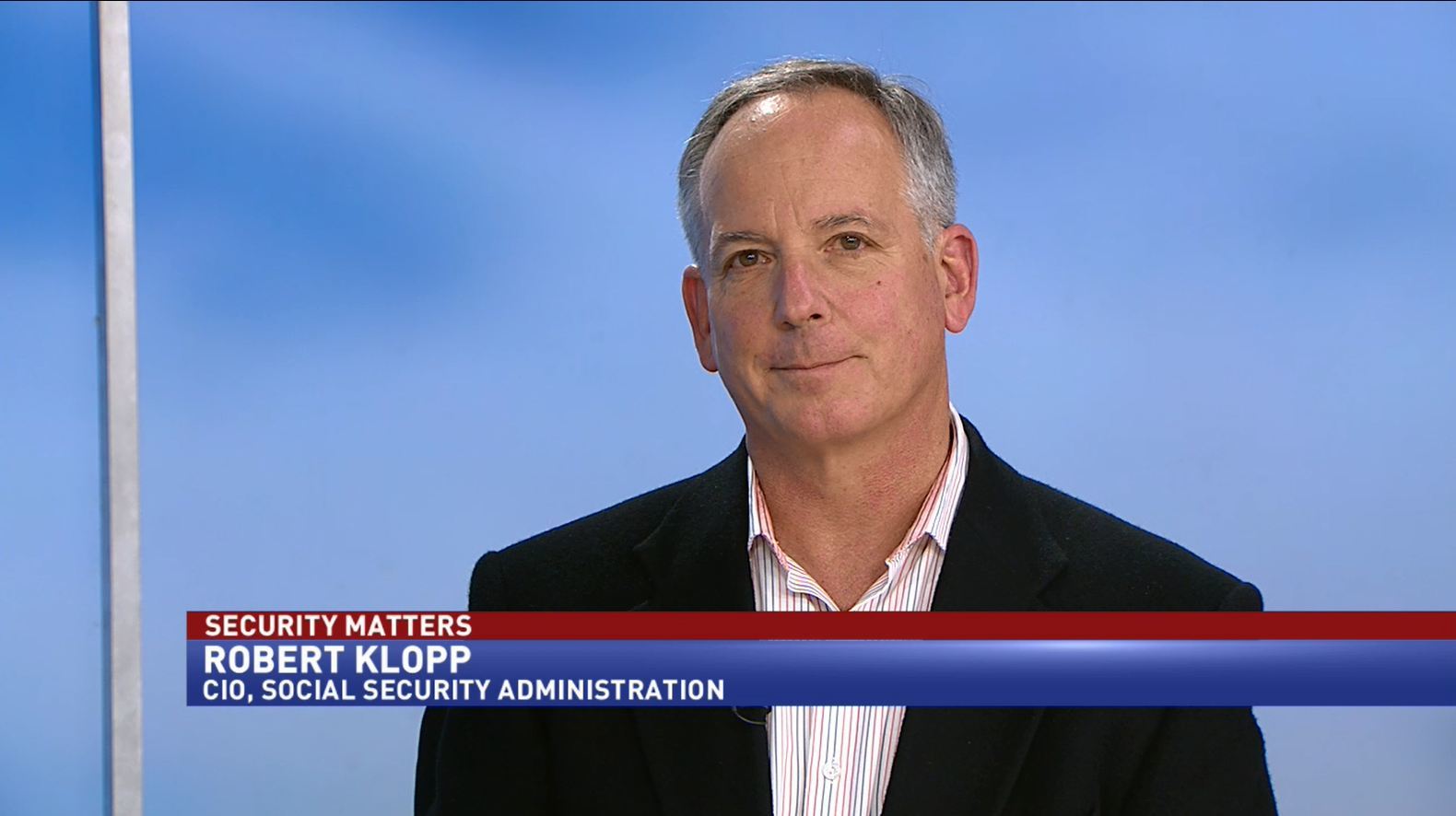
So what are these trends? “There is a huge demand for cybersecurity,” says Klopp. “As threats build up, we are trying to build up our ability to defend against them as quickly as possible.” The emphasis is on creating advanced protection capabilities. ”
Another significant federal trend is IT modernization, and SSA is one of the first in the line to solve this problem. “In fact, we started using computer technology in the 1960s, when we got too much data,” explains Klopp. The problem is that most SSA runs on older platforms, which is not so easy to upgrade. “All of these systems run on 16 million lines of COBOL code and 7 million lines of assembler,” he says. “We have problems finding investments to modernize this system, since it has become unpopular to spend more and more money on government tasks.”
The age of the systems only exacerbates the state of cybersecurity, as they often need updating to build protection, explains Klopp.
At the end of 2016, the US Congress passed a bill to provide funding for IT modernization. “It is expected that this bill will be quickly transformed by Congress,” Klopp says and adds that he hopes Congress will recognize that upgrading IT infrastructure requires the same investment as upgrading conventional infrastructure — roads and electricity.
No matter what happens, Klopp will not see this. The Obama administration hired Klopp in the private sector, where he worked for startups such as Greenplum. Now he is returning to his roots. “I was going to do it regardless of the election results,” he says. - During my work at the post, I completely reorganized the system and assembled my own team of federal-level professionals responsible for everything that happens. When I leave, these people will support the organization until the new administration appoints a new CIO. Nobody knows what will happen in the near future, whether it will take a year or a week, but the organization is ready to continue without me. ”
Statewide IT
In the administration at the state and district levels, there were no such large shifts as in the federal one, but the balance of forces has changed in some places. Somewhere, they are still working on introducing changes made after the previous elections, as well as on recovering from the global economic crisis.
According to Ed Toner, CIO of Nebraska, one of the main trends in public administration of IT was the reduction of costs and optimization of operations through consolidation. “In 2016, we combined technical support systems and groups for the state network and for server administration,” says Toner. In 2017, he expects the continuation of emerging trends. “The consolidation processes in Nebraska increase the efficiency and quality of IT services. Successfully working with other government agencies to develop this initiative, we will complete the third and final stage of our annual consolidation plan: Q1 2017 Desktop Support. ”

Ed Toner, CIO of Nebraska
Government IT organizations at all levels are also forced to deal with the so-called “silver tsunami”. When the economy was in a recession, government officials who were facing retirement held on to their jobs; as the economy improves, a wave of retirements is expected. At the same time, when hiring new employees, state IT organizations have to fight for every shot, because they offer lower salaries and less interesting work than in the private sector.
Toner is also constantly dealing with this. “The work culture in Nebraska is changing as we try to provide more opportunities for young professionals,” he says, referring to internship programs. “Our agency employs at least 25 interns from state universities and local colleges who have been hired and currently work for us as interns or were recruited to close these positions. They are building their own ecosystem, a work environment that maintains a high level of work enthusiasm and has a positive impact on the professional level of employees. ”
The state of affairs at the district level
Not all government agencies can afford a special CIO, and this is one of the main problems of government IT at the city and district level. City and municipal budgets are smaller, so the maintenance of these systems and all of their personnel is not an easy task. And, as part of state administration, city and district administrations may be limited in their powers. For example, some cities created a municipal broadband network in an effort to provide better Internet access for their citizens, but some states have passed laws prohibiting cities from doing so.
As is the case with federal and state IT, cybersecurity is a serious problem for city and district IT, especially if institutions cannot provide themselves with the necessary personnel of the required level. Therefore, city and district administrations can be considered as the most vulnerable to hacker attacks.
“A new wave of extortion and attacks on the Internet of Things (IoT) in the current cyber war will force government IT to be on the alert and prepare for these threats in 2017,” predicts Brian D. Kelly, Porto County CIO in Ravenna, Ohio. - Cybersecurity experts and FBI representatives warn of a surge in extortion and cyber attacks in 2017. So at Portage, we are building up network monitoring capabilities, educating and informing employees, and strengthening our cybersecurity program. ”
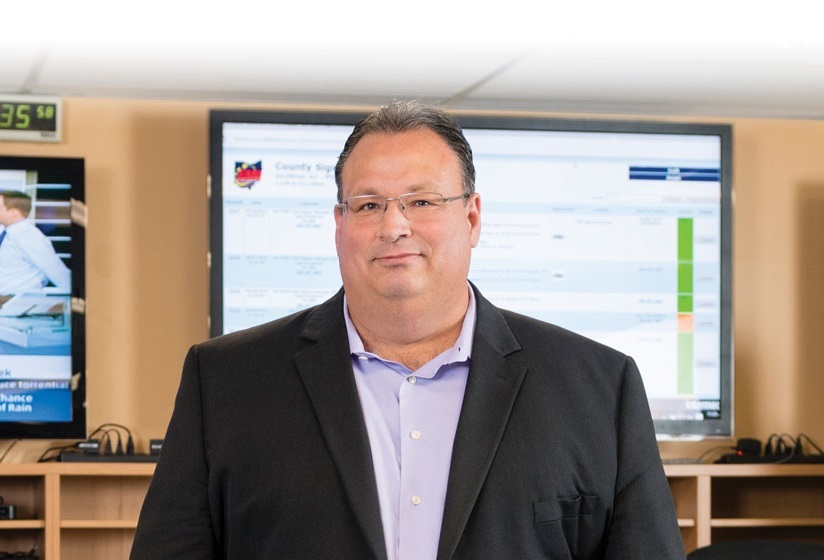
Brian D. Kelly, Portage County CIO
At the same time, since this is the level of government administration closest to the people, the city and the district are able to have a significant impact on the lives of citizens. In addition, since city and district administrations are smaller than state and federal authorities, so program development is not so difficult. For example, in a number of cities, state-owned IT tools were used to simplify the filing of documents, for obtaining business permits, for reporting potholes on roads, and Portage is no exception.
“In 2017, government IT will continue to focus on smart city projects, initiatives for building municipal broadband networks, connecting IoT, and expanding the delivery and delivery of information by citizens online,” predicts Kelly, who is also executive director of GMIS International, a worldwide professional association of government IT leaders. - We see these trends in US municipalities and around the world. In Portage, in 2017 we plan to study municipal initiatives to create broadband gigabit networks common with surrounding districts, as well as expanding electronic government representation on the new web portal. ”
As they say, the government exists to help us, and IT will be a decisive factor in providing this assistance.