February 3, 2017 at 13:49
Price Games: Buyer Strategies and Psychology
- Transfer

A lot has already been said about pricing strategies. Even those who do not engage in marketing professionally know that the consumer is actively manipulated, reducing the cost of the goods in his eyes with various techniques. Today we suggest you read the translation of the latest Jory MacKay post on this sensitive topic, in which he considers some of the features of our psychology and lists the chips that help make the price of any product more attractive to the buyer.
“Despite the fact that in some circles it is still not accepted to talk about money, the fact remains that we live by charging a fee for the work we do and for the products we produce.
But “value” refers to those concepts which, even if they are thrown with ease, turn out to be very difficult, if you think carefully.
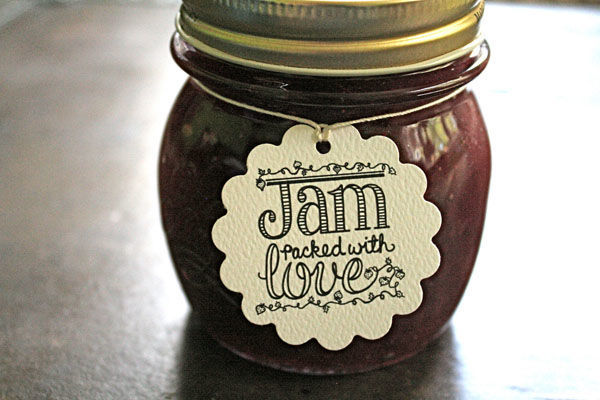
Many fall into the trap of the labor theory of value, according to which the price of a service is determined by how much labor time was spent on its production. That is why we are ready to spend $ 12 on a jar of jam, if the label says that it is "handmade" or "home". It seems to us that the "artist" has invested more in the process than the "artisan".
Those who believe that value is determined by the buyer fall into the other extreme: if people agree to pay as much as you ask, then that price is justified.
$ 500 for a webinar? So what? X company takes so much. 9.99 $ per month? Fine. This is the price of two glasses of good coffee.
But such a superficial analysis does not take into account one circumstance: an overestimated or understated price for a product can destroy your business.
Good pricing should be considered. It is created taking into account all the work that you have done to understand your audience and build a business , and creates an offer that consumers perceive as honest, acceptable and, most importantly, valuable.
But how to achieve this? Although a lot depends on your business model and research results, there are several reliable studies that can help you understand what customers see when they look at the price tag.
1. What we see, what we want
Thanks to the peculiarities of the human psyche, known as the “anchor effect”, in the end we choose what we saw first.
The effect of the anchor is a cognitive mechanism according to which in the decision-making process we attach too much importance to the first impression (that is, the “anchor”). If discussing or pondering a purchase, you were the first to see the price of $ 20, then the final amount is likely to be closer to 20 than to $ 30.
How to benefit from this?
Here is a paradoxical example: an analyst at McKinsey found that one semiconductor company, having launched a new version of the product on the market, did not reduce the price of the old offer (as most of us would do), but rather increased it. As a result, they not only received additional profit from the sale of the old product, but also set a high anchor price, which encouraged new buyers to pay the amount requested for the fresh version .
We always have doubts when raising the price, but remember: the higher it is at the start, the higher it will be in the end.
2. It is very important how the price sounds and looks
There is a lot of research on how price performance affects consumers' perceptions. The subtlest nuances decide which verdict will be issued: whether the goods are worth the money that they ask for or not.
Here are some of my favorite techniques:
- Choose non-round numbers. An ancient trick, but it still works. It is called “Charm pricing,” and it is based on what we like when the very first digit in a number changes . It is on it that our brain encodes the entire value as a whole. Therefore, we do not attach much importance to the discount from $ 9.99 to $ 9.19, but if the price dropped from $ 9.01 to $ 8.99, then this is already perceived as a significant difference.
- Say the price out loud. An article in the Journal of Consumer Psychology magazine cited a study according to which prices consisting of long words seem to buyers much more. This is due to how quickly and easily we read the number. The more difficult it is to pronounce it, the more unpleasant it is for us. In this regard, the cost of $ 422.99 (four hundred twenty-two dollars ninety-nine cents) seems to people more expensive than $ 503 (five hundred and three dollars). With each syllable, the price rises in our perception.
- People like visually compact numbers. Studies show that if you place the price at the bottom of the page, and not at the top, it will appear to visitors below . Moreover, the size of the numbers itself can affect perception, including emotional perception. Small print and the price looks less.
- Be as precise as possible when making a discount. Researchers at Cornell University claim that buyers spend more money when prices are very specific (i.e., $ 362,978 instead of $ 350,000). You may decide that it’s easier to bargain, but research has shown that the reason is different in our perception of numbers. Think: in what cases do you indicate prices accurate to the dollar? Most likely when it comes to small amounts. It does not matter that you spend hundreds or even thousands of dollars - the psychological effect still works.
3. Spending money is painful. Relieve customer pain.
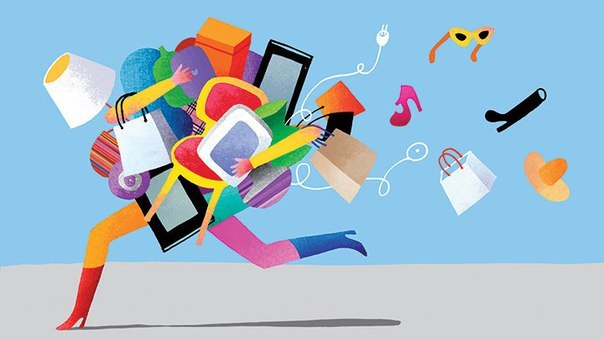
Have you ever experienced post-shopping remorse? The sudden feeling that you made a terrible mistake after paying for your purchase?
The purchase of goods and services may ultimately be a pleasure, but the moment of the transaction itself is always painful: after all, we make a decision that will affect our capabilities in the future (these $ 20 spent, which means that they can no longer be spent on anything else).
A study by MIT and Carnegie Mellon University found that the strength of this painful sensation depends on two factors :
- Visibility of payment (that is, it’s harder for us when we see how money passes from hand to hand).
- Payment time (that is, it’s harder for us to pay after the product or service has already been consumed).
How to organize the payment process in such a way as to make it painless? Remember Uber.
In a regular taxi, the client observes the entire trip as the readings on the meter change, and then, already in place, one has to give cash. Uber does not have a meter or pay on arrival. Everything happens out of sight, as if nothing had happened.
If you want the client to be happy and satisfied with your services, prepayment is a good option.
4. Raise the price by the "invisible" value.
We all dream of earning as much as possible. But what if there is a way to raise the price so that buyers do not notice anything?
According to Weber's Law, the new stimulus must differ by a value proportional to the original stimulus in order to be perceptible. What does it mean? In fact, any change, including a change in price, is conceptualized relative to the initial state. The simplest example: to be heard in a noisy room, you have to scream, but in a quiet room there will be enough whispers.
It seems to be primitive, right? But this means that approaching the initial state (for example, the initial price) at some point we reach a threshold beyond which changes are already imperceptible.
Weber's theses are widely used in marketing, and although this is not a magic number, most agree that the change in price should be at least 10%so people start to notice him. This means that you can theoretically throw 2%, 5% or 8%, and no one will pay attention.
On the other hand, this means that the size of the discount should exceed 10% if you want buyers to value the benefits.
5. Do not strive to sell cheaper than everyone (without context)
Whether you succeed or not, you will still lose. Of course, if you go head to head with competitors, this can help to “discourage” their audience. However, Stanford researchers found that price comparisons can have a negative effect if you don't give people a reason to compare. Without context, it turns out that you are asking customers to directly compare your product with the competition, and as a result you may lose their trust.
According to Stanford researchers, an explanation is needed why you have the lowest price, otherwise the offer to compare the cost will cause the buyer to fear that they are trying to deceive him .
All these studies help us understand why customers perceive prices in one way or another, but they do not negate the fact that any product passes the real test.
Quoting Basecamp's Jason Fried :
It makes no sense to ask people who have not yet paid how much they are willing to pay. It doesn’t matter what they answer, because any answer - at least “yes”, at least “no”, at least “$ 20”, at least “$ 100” - they cost nothing.
The only answer that matters is the money they spent. When people pay for your product, they answer your question. And only this is worth listening to. ”