December 23, 2016 at 12:22
Project Thematic Roadmaps: The First Step to Innovation
- Transfer
Do you want to accelerate growth, increase competitiveness, and break ahead? Then maybe it's time to rethink your approach to product planning. Jenna Bestow of Invision shares on the company’s blog the experience of introducing thematic roadmaps into the workflow and talks about the benefits that the team brought this decision.
Project thematic roadmaps are not a step-by-step technique; they do not impose strict rules and do not bind you to a particular product or program. In essence, this is simply a flexible approach to strategy development.
It looks like this:
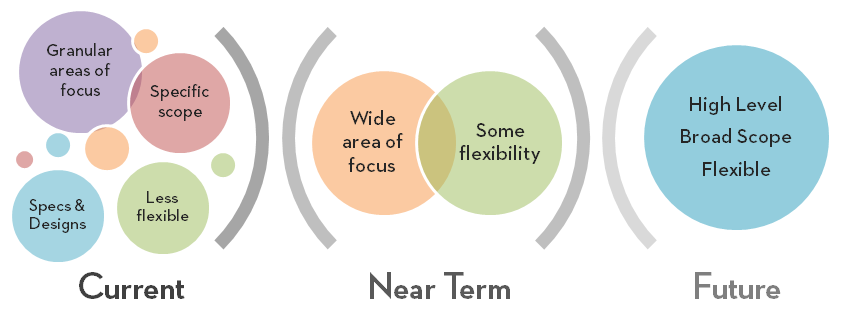
But it sounds like this:
“What the future holds, we do not know. Therefore, here is a list of what we want to do, in general terms, and we will make adjustments along the way. ”
With thematic roadmaps, work begins with a statement of the problem and moves toward finding the optimal solution. The process does not have to be customized to predefined schemes and deadlines. At your disposal is a document that can be freely changed in accordance with the needs of customers and the goals that they set for you.
Thematic roadmaps are a strategy development strategy that leaves you room for a real breakthrough. A minimum of restrictions means a maximum of creativity, cooperation, innovation.
Its main goal is to clearly and clearly define the priorities for all so that the team can work for common goals.
- What problems need an immediate solution?
- What would you like to achieve at the moment?
- What can be postponed until later?
Each column of the map represents a specific time plan, allowing you to build an approximate hierarchy of priorities. Three time plans are highlighted in the presented diagram, but their number can vary:

Now - what you are working on at the moment.
In the near future - that will require your attention very soon.
In the long run , this is what you would like to do in the future, although you will need a lot of preparatory work before you can begin.
Each card identifies a topic or issue that you want to resolve. They can be rearranged and interchanged if the priorities change - but most likely it will.
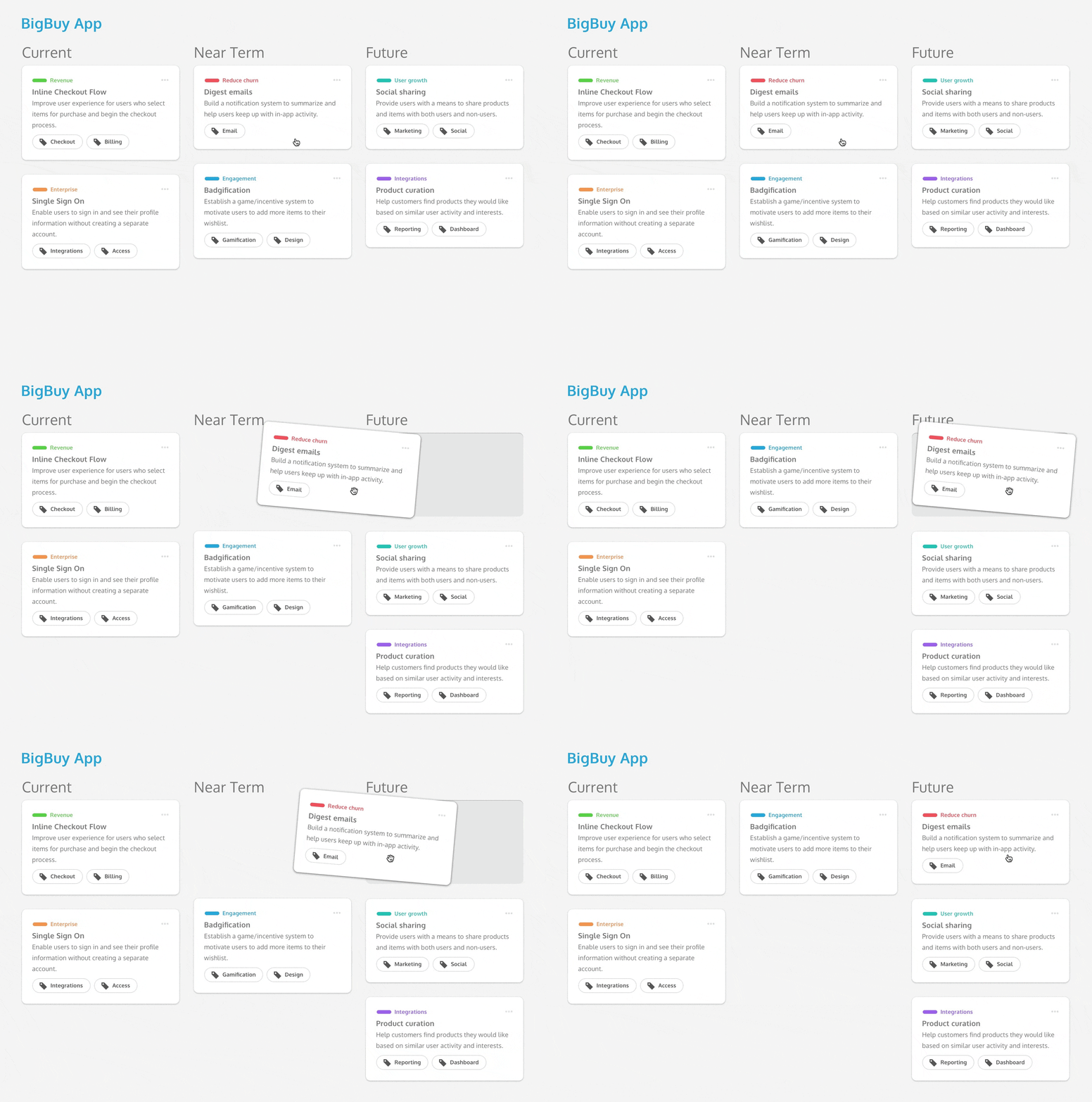
Thus, you can be flexible and urgently raise the appropriate card in case it turns out that a minor, as you thought, flaw actually affects the entire user base. Conversely, the solution to too global problems that you are currently unable to cope with can be shifted to a later date.
Look at the root of the problem. It's best to start with a backlog and user reviews - there you will find many clues. Recording exactly what difficulties your users are facing or what exactly they want to achieve is half the battle.
However, keep in mind: reviews reveal only symptoms and pain points. In formulating topics, you should not think about how small improvements can improve the user experience, but how to change the approach to satisfy the maximum possible number of consumers.
The topic is a major problem that needs to be resolved, which is behind scattered complaints about particulars.
As an example, the author cites the following case. Let's say you have the following set of user reviews:
"It is not clear where the product is added - to the wishlist or to the basket."
"After the purchase, I did not receive a notification letter."
“Why can’t you pay with PayPal?”
At first glance, it might seem that all this can be resolved with minor edits, but if you get to the root of the problem, a common theme starts to be seen : your payment scheme for the purchase does not work.
Therefore, it is better to ask yourself the question: "What is the best approach to the payment process so that it is convenient for the widest possible range of users?".
What is great in identifying the problem that underlies - you get the opportunity to be creative in resolving it. Do not discard ideas as too ambitious or ridiculous. The bottom line is to come up with more options and think outside the box so that you do not have to spend time and resources on short-sighted decisions.
Let's see how everyday problems are solved in this paradigm. Suppose users suggest you add social media access to the application. Here are some questions to ask yourself in order to understand the situation:
How many people are asking for this? Will this help you achieve your business goals?
Sometimes the problem may seem more serious than actually because of users who are actively expressing their complaints, while the silent majority is quite quite the current state of affairs. Is this the key moment or just a nice bonus for a small group of consumers?
Since your product does not have a social component, how do users exit the situation at the moment?
Examine user behavior to get an answer. Do they copy links to tweets manually? What are they referring to? It is possible that they do nothing to solve the problem - in this case, you can conclude that it is not as acute as it seemed.
Why do people want to share content? Why do they think this information is important to their environment?
Perhaps you will come to the conclusion that no one wants to post content publicly (for example, in the form of a tweet) - users would rather prefer to forward it by personal message on Facebook or through Whatsapp.
Place each decision you make up on a card with a stated topic and look further.

Successful products become successful not because they have the most functions, but because they solve problems in the best way. There is no point in expanding the functionality until you know exactly what the problem is. Trying to predict the future in your plans, you gain nothing.
The true advantage comes from the ability to observe users, maintain a balance between their needs and capabilities of the company and throw joint forces of all teams to achieve results.
Project thematic roadmaps are not a step-by-step technique; they do not impose strict rules and do not bind you to a particular product or program. In essence, this is simply a flexible approach to strategy development.
It looks like this:
But it sounds like this:
“What the future holds, we do not know. Therefore, here is a list of what we want to do, in general terms, and we will make adjustments along the way. ”
With thematic roadmaps, work begins with a statement of the problem and moves toward finding the optimal solution. The process does not have to be customized to predefined schemes and deadlines. At your disposal is a document that can be freely changed in accordance with the needs of customers and the goals that they set for you.
Thematic roadmaps are a strategy development strategy that leaves you room for a real breakthrough. A minimum of restrictions means a maximum of creativity, cooperation, innovation.
What is a thematic roadmap?
Its main goal is to clearly and clearly define the priorities for all so that the team can work for common goals.
- What problems need an immediate solution?
- What would you like to achieve at the moment?
- What can be postponed until later?
Each column of the map represents a specific time plan, allowing you to build an approximate hierarchy of priorities. Three time plans are highlighted in the presented diagram, but their number can vary:
Now - what you are working on at the moment.
In the near future - that will require your attention very soon.
In the long run , this is what you would like to do in the future, although you will need a lot of preparatory work before you can begin.
Each card identifies a topic or issue that you want to resolve. They can be rearranged and interchanged if the priorities change - but most likely it will.
Thus, you can be flexible and urgently raise the appropriate card in case it turns out that a minor, as you thought, flaw actually affects the entire user base. Conversely, the solution to too global problems that you are currently unable to cope with can be shifted to a later date.
How to identify a topic?
Look at the root of the problem. It's best to start with a backlog and user reviews - there you will find many clues. Recording exactly what difficulties your users are facing or what exactly they want to achieve is half the battle.
However, keep in mind: reviews reveal only symptoms and pain points. In formulating topics, you should not think about how small improvements can improve the user experience, but how to change the approach to satisfy the maximum possible number of consumers.
The topic is a major problem that needs to be resolved, which is behind scattered complaints about particulars.
As an example, the author cites the following case. Let's say you have the following set of user reviews:
"It is not clear where the product is added - to the wishlist or to the basket."
"After the purchase, I did not receive a notification letter."
“Why can’t you pay with PayPal?”
At first glance, it might seem that all this can be resolved with minor edits, but if you get to the root of the problem, a common theme starts to be seen : your payment scheme for the purchase does not work.
Therefore, it is better to ask yourself the question: "What is the best approach to the payment process so that it is convenient for the widest possible range of users?".
Consider many solutions for each problem.
What is great in identifying the problem that underlies - you get the opportunity to be creative in resolving it. Do not discard ideas as too ambitious or ridiculous. The bottom line is to come up with more options and think outside the box so that you do not have to spend time and resources on short-sighted decisions.
Let's see how everyday problems are solved in this paradigm. Suppose users suggest you add social media access to the application. Here are some questions to ask yourself in order to understand the situation:
How many people are asking for this? Will this help you achieve your business goals?
Sometimes the problem may seem more serious than actually because of users who are actively expressing their complaints, while the silent majority is quite quite the current state of affairs. Is this the key moment or just a nice bonus for a small group of consumers?
Since your product does not have a social component, how do users exit the situation at the moment?
Examine user behavior to get an answer. Do they copy links to tweets manually? What are they referring to? It is possible that they do nothing to solve the problem - in this case, you can conclude that it is not as acute as it seemed.
Why do people want to share content? Why do they think this information is important to their environment?
Perhaps you will come to the conclusion that no one wants to post content publicly (for example, in the form of a tweet) - users would rather prefer to forward it by personal message on Facebook or through Whatsapp.
Place each decision you make up on a card with a stated topic and look further.
Conclusion
Successful products become successful not because they have the most functions, but because they solve problems in the best way. There is no point in expanding the functionality until you know exactly what the problem is. Trying to predict the future in your plans, you gain nothing.
The true advantage comes from the ability to observe users, maintain a balance between their needs and capabilities of the company and throw joint forces of all teams to achieve results.