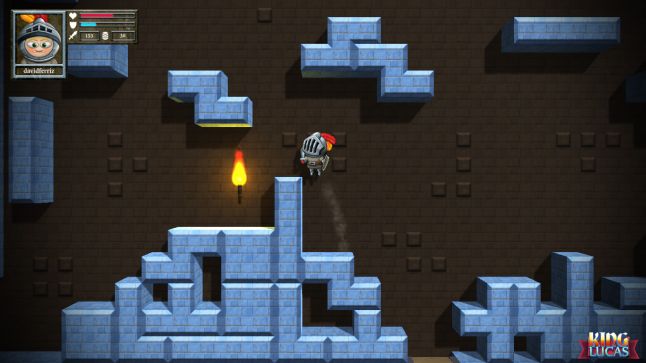
Creating a castle with 1000 rooms
- Transfer
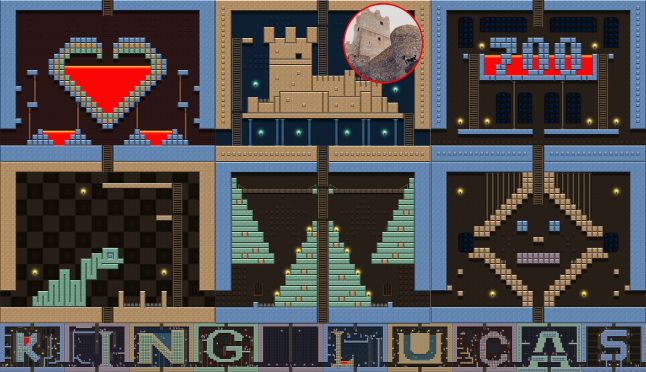
1000 rooms is a round number, it is well perceived by ear, and therefore, when we launched the Greenlight campaign, the press wrote articles with headlines like “A game of 1000 levels!” 1000 rooms are a great number for advertising, but it’s actually inaccurate . King Lucas Castle consists of more rooms, namely 1223.
In previous posts about King Lucas, I talked about how we abandoned the procedural creation of levels. Therefore, together with my partner Laura Suárez, I needed to create them one by one, drawing each individual tile, adjusting each jump and placing the dangers so that the player would find them in the right places. Designing such a number of rooms may seem like a difficult task (it is), but thanks to this work, we can penetrate the feelings of the player in each of the rooms to create a sufficient number of details, references, tense and relaxed moments that the algorithm could not calculate procedurally.
We set the rules
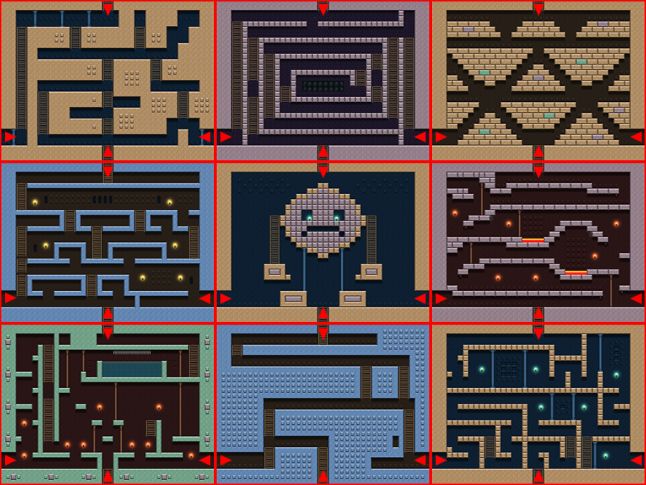
Although the level design is not procedural, the placement of rooms inside the castle grid was (almost) random. Therefore, after creating them, we needed to establish several rules in order to arrange them correctly:
- They are all the same size (40 x 30 tiles).
- Each has 4 doors for entry and exit.
- When a player enters a room, he must be able to reach at least one of the other doors.
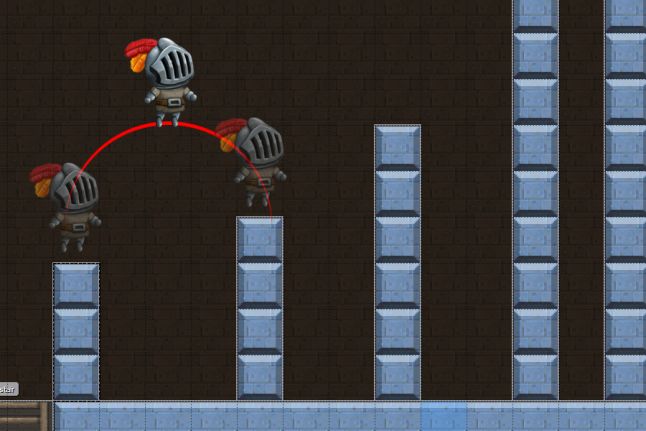
In addition to the rules for connecting rooms, we had to take into account the speed of the hero, as well as the height and length of his jumps, because in any platform game, it is very important for the player to feel that each tile makes sense (Super Mario games are a good example of this). Therefore, we developed several prototypes and tested them with users until we found the ideal speed and jumps for optimal character control (3 tiles in height and 4 tiles in length).
We know that the parameters of the character’s movement are far from the crazy canons established by other platformers (which allow the player to move faster, make double and triple jumps, and even push off walls). But this was a completely deliberate decision, because we always tried to make the character's movements as close as possible to the eight-bit classic.
Instruments
Completing the task of developing more than 1000 rooms was difficult. Therefore, we needed a tool to create them as simple as possible, as well as assemble them from tiles so that the game does not weigh several gigabytes (and loads very quickly). Taking these factors into account, we chose Tiled ( Tiled Map Editor ), a free tool that is great for designing 2D levels. Thanks to Tiled, we were able to create levels at the pace of 5-10 rooms per day and spent 5 months of full time working on the development of all rooms .
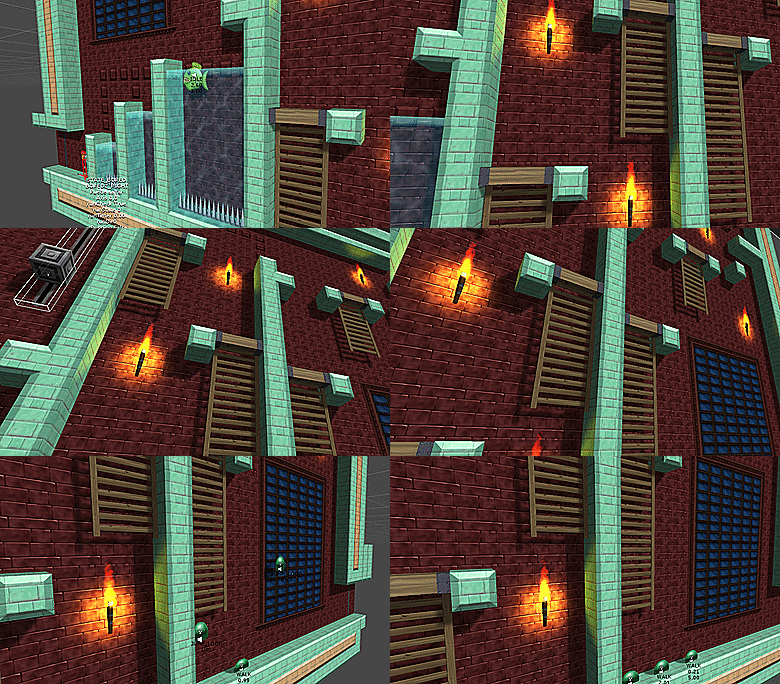
Although the game was supposed to be completely 2D, when we experimented with Unity features, we decided to stretch the platform tiles, giving them depth and getting a 2.5D style. This, as well as dynamic lighting, gave a more modern look to the graphics of the game.
Puzzle pieces
The elements used to create the castle rooms are entirely inspired by the eight-bit classic. As you can guess, they include lava pits, spikes, stairs, moving platforms, water, barrels, secret passages, enemies and NPCs.
When Laura and I started developing the rooms, the programmers could not work on this game all day long (they created several advertising games for third-party clients). Therefore, most of these elements have not yet been created, and we could not use them in the rooms. During the first weeks, we created approximately 100 rooms, in which there were only spikes and stairs. It's pretty boring, but we mastered Tiled well. In addition, these calm rooms added moments of relaxation to the narrative of the game. Programmers gradually realized the rest of the game elements, and with the release of each new we squeezed the maximum out of it. Therefore, sometimes you may find rooms full of slugs or spiders. It probably happened because in the development week of this level they were new elements, and we could not wait to use them! That's all!
The developers completed all the elements when we had about 700 rooms, so we had time to create hundreds more rooms with a more balanced number of different elements and thus get a more uniform castle.
sources of inspiration
Creating levels is interesting. This can be proved by the fact that many people even pay for it in games like Little Big Planet or Mario Maker . But the truth is that when you spend 8 hours a day on it, it’s very simple to exhaust ideas. Therefore, we found inspiration in our lives. You can notice from the rooms of King Lucas castle, for example, the moment when we celebrated the day of creating the 700th room, an expression of affection for my partner Laura, a lot of hidden messages, Christmas trees or even a castle from my city (Villena), where I usually walk with my dog Willy (who also became a character in the game).
When it all comes together
As I said in other posts, the main source of income for DevilishGames is the advertising games that we make at our Spherical Pixel advertising agency. Indie projects such as King Lucas become side-tasks for team members not working on other, more urgent projects.
Usually the development team is more busy than the art director. In a sense, this fact influenced the development of King Lucas, because for a long time we had to develop and test rooms, not being able to visualize the entire castle, the whole game. It may seem unbelievable, but in almost four years of development, we were able to test the full beta only four or five months ago. Then we managed to make sure that the rooms magically fit exactly the way we imagined (and even better). There is no doubt that this testing was a turning point that changed the strategy of our company. Now we will invest more in King Lucas, and not in finding external customers, as we usually did. We were right or wrong, only time and players on Steam will show!