August 12, 2016 at 21:27
Architecture Standards for Internet of Things
The other day I needed information about which IoT architecture is typical (reference). Such information could not be quickly found either on the "hub" or on other resources. It turned out that the first attempts to develop standards in this direction were made only two years ago, and work is still in the “project” stage. In this article, you will find a “slice” of the IEEE & ISO / IEC standards development status for the IoT Reference Architecture.

A source
Let's start with theholistic controversial topic of standardization.
World technological progress moves in the following direction: when the technology becomes sufficiently mature, it is time to standardize it, which is a step towards the so-called "open systems" with typical components and interfaces. If we consider the well-known Gartner Hype Cycle , then standardization can be carried out proactively, long before the technology is ready for mass implementation.
The whole world of technical (and not only) products is determined by standards, and without it, chaos would have covered us all.
As for IoT, the use of standards is also an important platform when working with large state and corporate customers, including in the field of applications important for security (safety critical, security critical, mission critical, etc.).
“Glorifying” standardization is impossible not to say about the “dark side of power”, which, in my opinion, includes:
- the existence of an excessive number of standards, the lack of a clear system, the presence of different organizations involved in standardization in the same field;
- incomplete and uneven coverage of standardization objects;
- “war of standards”, i.e. lobbying the interests of individual firms to the detriment of solving common problems of standardization;
- regulation of mainly only the simplest objects and mass processes;
- a bureaucratic procedure and a long development period of standards (on average, three to five years), which leads to their conservatism and lag behind practical needs.
Nevertheless, the world of standards exists, and we live in it.
Those who are faced with the world of standards know that in the field of IT this world is bipolar, since there are two generally recognized organizations: IEEE (Institute of Electrical and Electronics Engineers) and IEC (International Electrotechnical Commission - International Electrotechnical Commission, IEC).
In different areas of standardization, the mutual influence of IEEE and IEC is different, but “on average” (there are exceptions) America loves IEEE, and Europe loves IEC.
In some areas, IEC cooperates with ISO, for example, the area of interest to us is IoT, which is engaged in ISO / IEC JTC1 (Joint Technical Committee in International and Communication Technology).
Of course, there are other international standardization organizations, for example, CENELEC, which develops EN (European Normative), ITU-T (International Telecommunication Union Telecommunication Standardization Sector), the American NIST (National Institute of Standards and Technology) and many others.
IoT fell into the scope of IEEE and ISO / IEC JTC1 almost simultaneously. In July 2014, the IEEE P2413 working group was created and the first meeting was held to develop “Standard for an Architectural Framework for the Internet of Things (IoT)”. The working group included representatives from Cisco, Emerson, Hitachi, Honeywell, Huawei, Intel, Kaspersky Lab, Rockwell Automation, Schneider Electric, Siemens, STMicroelectronics, Toshiba, Yokogawa and others. Microsoft and Google were not seen.
In 2014-2016 rallies are held 4 times a year. Detailed information on the development status is not given on the group’s website; there are only high-level presentations.
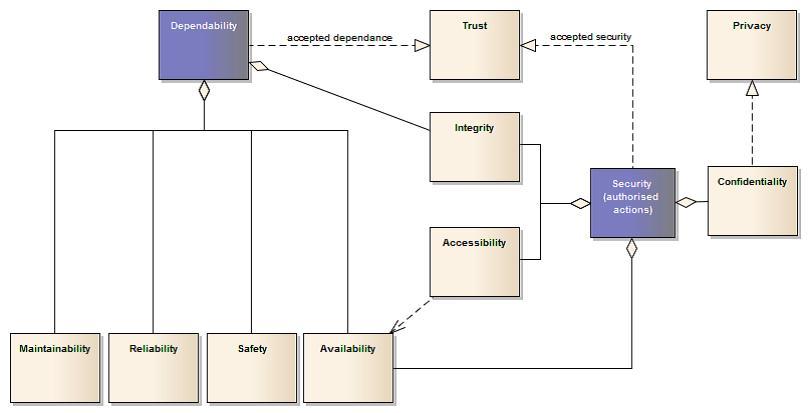
An interesting fact is the attentive attitude of the IEEE P2413 working groupto questions of ensuring reliability and safety (Dependability & Security).
Source
Consequently, IoT is planned for use in the field of the systems already mentioned that are important for safety (safety critical, security critical, mission critical, etc.). This is also confirmed by the participation in the development of the standard "monsters" of industrial automation.
The decision to create the “Working Group on Internet of Things (WG10)” working group was taken at the 2014 ISO / IEC JTC1 plenary meeting . In January 2015, the first meeting of WG10 took place, at which it was decided to develop the standard ISO / IEC 30141 “Internet of Things Reference Architecture (IoT-RA)”, since then such meetings have been held three times a year. The ISO / IEC JTC1 page contains an initial IoT report (Study Report on IoT Reference Architectures / Frameworks) and some of the results of “WG10 on IoT”. Let us dwell on the mentioned report.
What can be understood from meager facts?
Firstly, many provisions of the future IoT-RA standard are borrowed from related already standardized areas, such as:
- home electronic systems (Home Electronic Systems described in the standards of the ISO / IEC 14543 series);
- MPEG-V architecture for media management (Media context and control, described in the standards of the ISO / IEC 23005 series);
- Sensor Network Reference Architecture (SNRA described in the ISO / IEC 29182 series of standards).
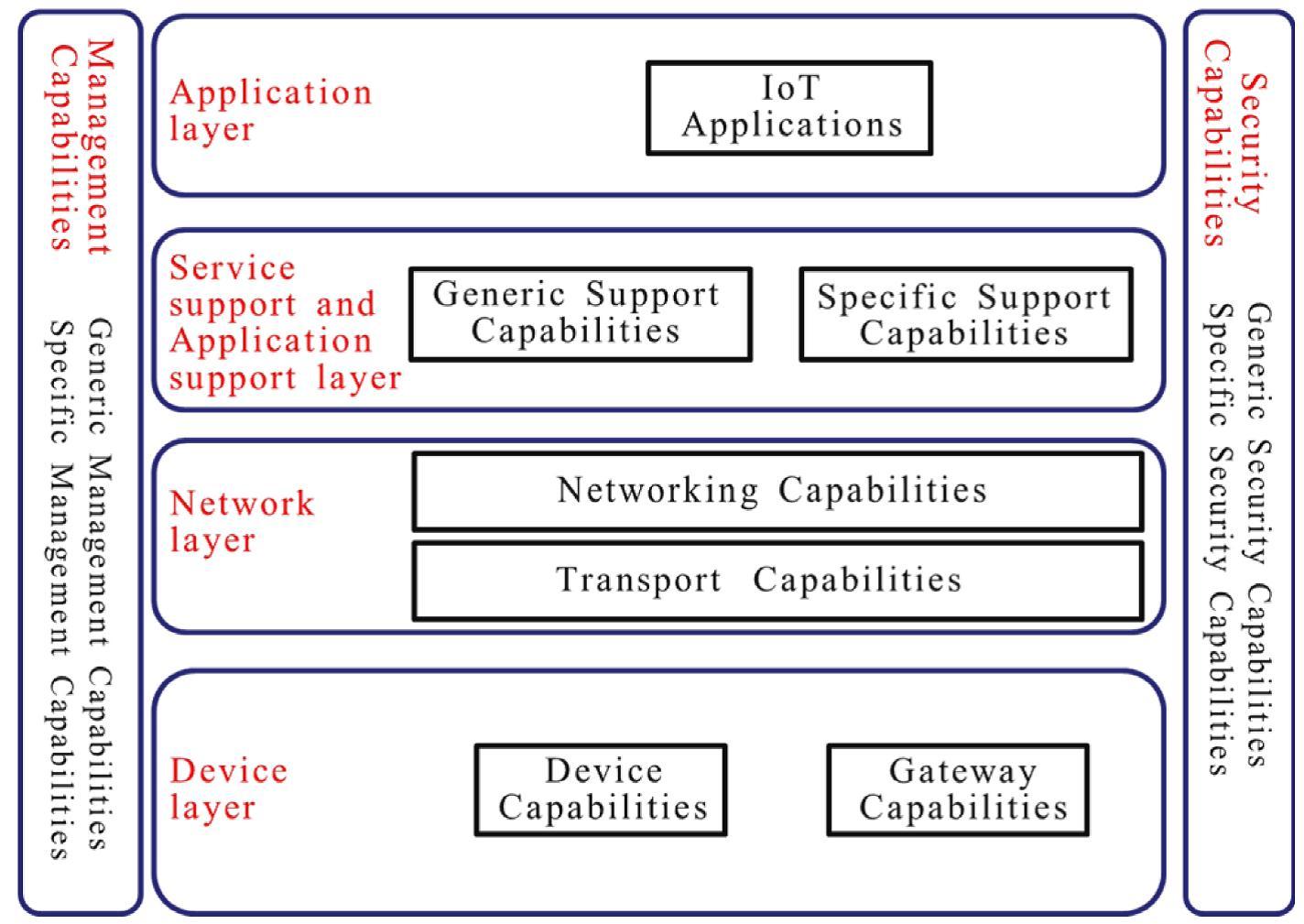
Regarding the latter architecture, it should be noted that it was it that was the standardized prototype of the IoT architecture, offering four typical levels: device, network, service, and application.
Secondly, the architecture description for IoT will be adapted from the ITU-T (International Telecommunication Union Telecommunication Standardization Sector) standards that have already existed since 2012, in particular ITU-T Y.2060 “Overview of the Internet of things”.
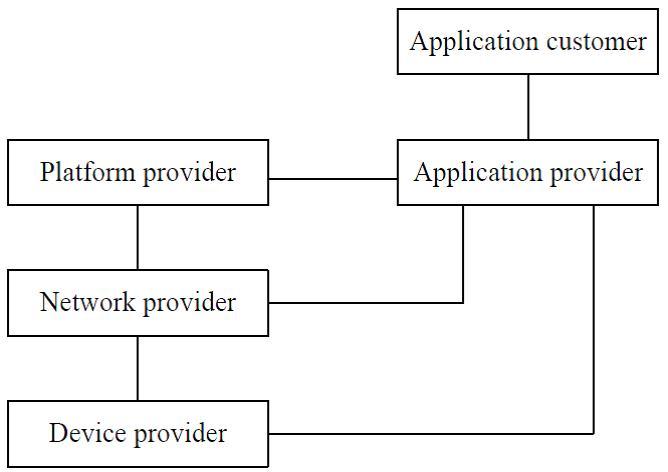
The corresponding levels of architecture and the relationship between them (the so-called “ecosystem”) are given below.
Source
Third, the developed requirements for IoT components will be structured according to the taxonomy proposed in ITU-T Y.2066 “Common requirements of the Internet of things”, which includes the following groups of requirements:
- Implementation and operability requirements;
- Non-functional requirements
- Application support requirements;
- Service requirements;
- Communication requirements;
- Device requirements;
- Data management requirements;
- Security and privacy protection requirements.
In the near future, it is planned to issue standards that describe the Reference Architecture for IoT. This fact brings IoT even closer to "open systems" with typical compatible components and interfaces.
Since 2014, the development of such standards has been carried out in parallel with the IEEE Working Group P2413 and the ISO / IEC “Working Group on Internet of Things (WG10)” . Having two standards will add headaches to component suppliers and system integrators.
There is not much open information about these developments. It is obvious that existing developments will be standardized, in particular, from ITU-Taccording to which the reference architecture includes four typical levels: device layer, network layer, service layer, and application layer.
A source
Why do we need standards?
Let's start with the
World technological progress moves in the following direction: when the technology becomes sufficiently mature, it is time to standardize it, which is a step towards the so-called "open systems" with typical components and interfaces. If we consider the well-known Gartner Hype Cycle , then standardization can be carried out proactively, long before the technology is ready for mass implementation.
The whole world of technical (and not only) products is determined by standards, and without it, chaos would have covered us all.
As for IoT, the use of standards is also an important platform when working with large state and corporate customers, including in the field of applications important for security (safety critical, security critical, mission critical, etc.).
“Glorifying” standardization is impossible not to say about the “dark side of power”, which, in my opinion, includes:
- the existence of an excessive number of standards, the lack of a clear system, the presence of different organizations involved in standardization in the same field;
- incomplete and uneven coverage of standardization objects;
- “war of standards”, i.e. lobbying the interests of individual firms to the detriment of solving common problems of standardization;
- regulation of mainly only the simplest objects and mass processes;
- a bureaucratic procedure and a long development period of standards (on average, three to five years), which leads to their conservatism and lag behind practical needs.
Nevertheless, the world of standards exists, and we live in it.
IEEE vs ISO / IEC
Those who are faced with the world of standards know that in the field of IT this world is bipolar, since there are two generally recognized organizations: IEEE (Institute of Electrical and Electronics Engineers) and IEC (International Electrotechnical Commission - International Electrotechnical Commission, IEC).
In different areas of standardization, the mutual influence of IEEE and IEC is different, but “on average” (there are exceptions) America loves IEEE, and Europe loves IEC.
In some areas, IEC cooperates with ISO, for example, the area of interest to us is IoT, which is engaged in ISO / IEC JTC1 (Joint Technical Committee in International and Communication Technology).
Of course, there are other international standardization organizations, for example, CENELEC, which develops EN (European Normative), ITU-T (International Telecommunication Union Telecommunication Standardization Sector), the American NIST (National Institute of Standards and Technology) and many others.
What IEEE does in IoT
IoT fell into the scope of IEEE and ISO / IEC JTC1 almost simultaneously. In July 2014, the IEEE P2413 working group was created and the first meeting was held to develop “Standard for an Architectural Framework for the Internet of Things (IoT)”. The working group included representatives from Cisco, Emerson, Hitachi, Honeywell, Huawei, Intel, Kaspersky Lab, Rockwell Automation, Schneider Electric, Siemens, STMicroelectronics, Toshiba, Yokogawa and others. Microsoft and Google were not seen.
In 2014-2016 rallies are held 4 times a year. Detailed information on the development status is not given on the group’s website; there are only high-level presentations.
An interesting fact is the attentive attitude of the IEEE P2413 working groupto questions of ensuring reliability and safety (Dependability & Security).
Source
Consequently, IoT is planned for use in the field of the systems already mentioned that are important for safety (safety critical, security critical, mission critical, etc.). This is also confirmed by the participation in the development of the standard "monsters" of industrial automation.
What does ISO / IEC JTC1 do in IoT
The decision to create the “Working Group on Internet of Things (WG10)” working group was taken at the 2014 ISO / IEC JTC1 plenary meeting . In January 2015, the first meeting of WG10 took place, at which it was decided to develop the standard ISO / IEC 30141 “Internet of Things Reference Architecture (IoT-RA)”, since then such meetings have been held three times a year. The ISO / IEC JTC1 page contains an initial IoT report (Study Report on IoT Reference Architectures / Frameworks) and some of the results of “WG10 on IoT”. Let us dwell on the mentioned report.
What can be understood from meager facts?
Firstly, many provisions of the future IoT-RA standard are borrowed from related already standardized areas, such as:
- home electronic systems (Home Electronic Systems described in the standards of the ISO / IEC 14543 series);
- MPEG-V architecture for media management (Media context and control, described in the standards of the ISO / IEC 23005 series);
- Sensor Network Reference Architecture (SNRA described in the ISO / IEC 29182 series of standards).
Regarding the latter architecture, it should be noted that it was it that was the standardized prototype of the IoT architecture, offering four typical levels: device, network, service, and application.
Secondly, the architecture description for IoT will be adapted from the ITU-T (International Telecommunication Union Telecommunication Standardization Sector) standards that have already existed since 2012, in particular ITU-T Y.2060 “Overview of the Internet of things”.
The corresponding levels of architecture and the relationship between them (the so-called “ecosystem”) are given below.
Source
Third, the developed requirements for IoT components will be structured according to the taxonomy proposed in ITU-T Y.2066 “Common requirements of the Internet of things”, which includes the following groups of requirements:
- Implementation and operability requirements;
- Non-functional requirements
- Application support requirements;
- Service requirements;
- Communication requirements;
- Device requirements;
- Data management requirements;
- Security and privacy protection requirements.
Conclusion
In the near future, it is planned to issue standards that describe the Reference Architecture for IoT. This fact brings IoT even closer to "open systems" with typical compatible components and interfaces.
Since 2014, the development of such standards has been carried out in parallel with the IEEE Working Group P2413 and the ISO / IEC “Working Group on Internet of Things (WG10)” . Having two standards will add headaches to component suppliers and system integrators.
There is not much open information about these developments. It is obvious that existing developments will be standardized, in particular, from ITU-Taccording to which the reference architecture includes four typical levels: device layer, network layer, service layer, and application layer.