July 25, 2016 at 14:38
Cambium ePMP 2000. The solution to the problem of interference at base stations

In an ideal world, the range and performance of radio communication channels is determined solely by the signal level at the receiver input. And at first glance, to improve this level and to expand the coverage area of the base station, it is enough to take a more powerful piece of hardware.
But it’s not so simple. Problem No. 1: interference from neighboring sectors. Problem number 2: interference from other sources. What to do? Boost power? This will only aggravate the first problem, in addition, sources of interference can also increase power. We held this “power race” 10 years ago in all major cities. You can’t leave to other frequencies - you were given specific values.
In the real world, it is impossible to get rid of interference, but their negative impact can be significantly reduced.
It is for this purpose that Cambium ePMP 2000 was created - a new generation of low-cost carrier-class radio access equipment.
Cambium ePMP 2000 is a development of the ePMP1000 series and takes into account many years of operating experience, as well as the wishes of operators. Despite the low price, ePMP2000 is designed to build high-speed Triple Play radio networks with QoS support for telephony and video. A feature of the ePMP2000 is just the ability to work well in conditions of interference, for which Cambium came up with several mechanisms at once, which we will talk about.
How ePMP 2000 was created
The first generation, ePMP1000, proved to be very popular with carriers because of its higher performance than Ubiquiti at a comparable price. In addition, it was in ePMP1000 that the first working intersector synchronization mechanism appeared, eliminating interference from the neighboring sector in a multi-sector base. Having solved the problem №1, Cambium proceeded to the solution of the problem №2 - elimination of interference from other networks. For any interference affecting the base is immediately reflected on all its subscribers.
Consider the most unpleasant situation when the subscribers are far from the base, and the interference is close. You can even find out a similar situation even without analyzing the ether - it is enough to measure the throughput, with a significant difference not in favor of uplink, the source of the problem is most likely interference to the base station. How does it propose to deal with the interference of neighboring networks ePMP 2000? The option of automatically calling the RFC when detecting interference, of course, was considered, but was recognized as low-tech and inhumane :-)
Therefore, two technologies were developed and implemented: Hypure and an additional band-pass filter. Technologies complement each other, although they work in completely different ways and with different sources of interference.
Hypure or “beamforming at the reception” (the opposite of Tx beamformingRuckus), that is, the formation within the sector of individual receiving radiation patterns for each subscriber.
Thus, the ePMP2000 base is physically detached from all, including equal-frequency interference, even in our sector. Depending on the angle between the subscriber and the source of interference, the gain can reach 15 dB SNR. And 15 DB SNR is two modulations or two-three-fold increase in base capacity!
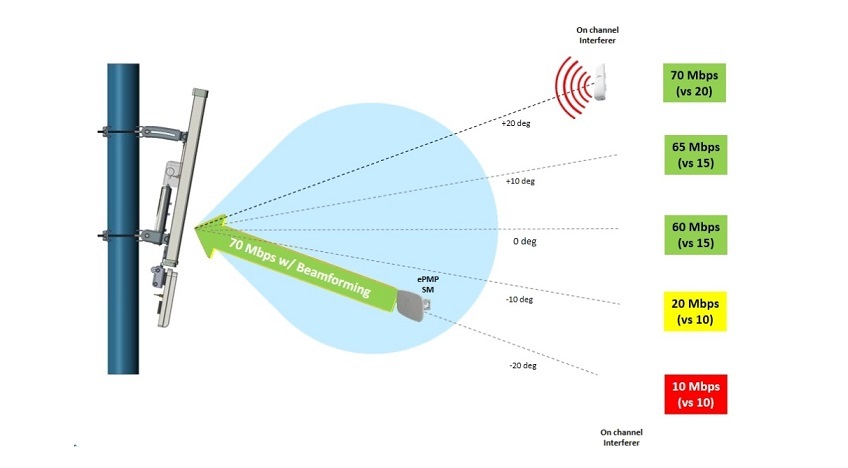
Within the sector, at different times, a narrowly focused receiving beam is formed for each subscriber, which allows reducing the influence of interference and increasing work productivity.
The second technology is an additional frequency filter that works both when receiving and transmitting a signal.
Unfortunately, the spectrum of the signal does not end at its “official” boundaries and a source with a 20 MHz signal at a frequency of 5320 will interfere with our 20 MHz signal at a frequency of 5340. The
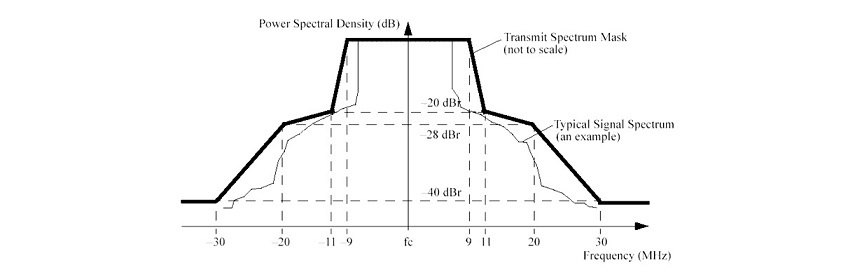
mask of the WiFi signal is 20M0 chip. Even by the standard, shoulders are visible in neighboring frequencies, and if we have a powerful (26-30 dBm) device, the mask will be even more vague.
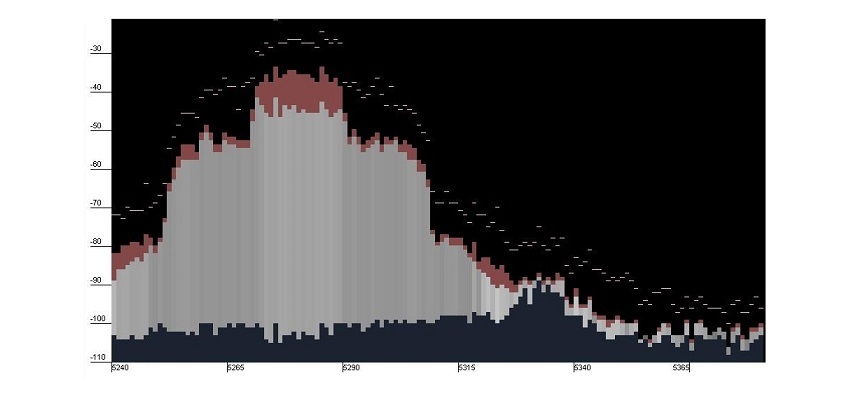
In order to reduce this effect (due to which, by the way, the protective interval between the sectors of the base station was previously required) in the 2000 series, a special filter is used that cuts out-of-band interference and allows you to win some more such important dB signal-to-noise ratios.
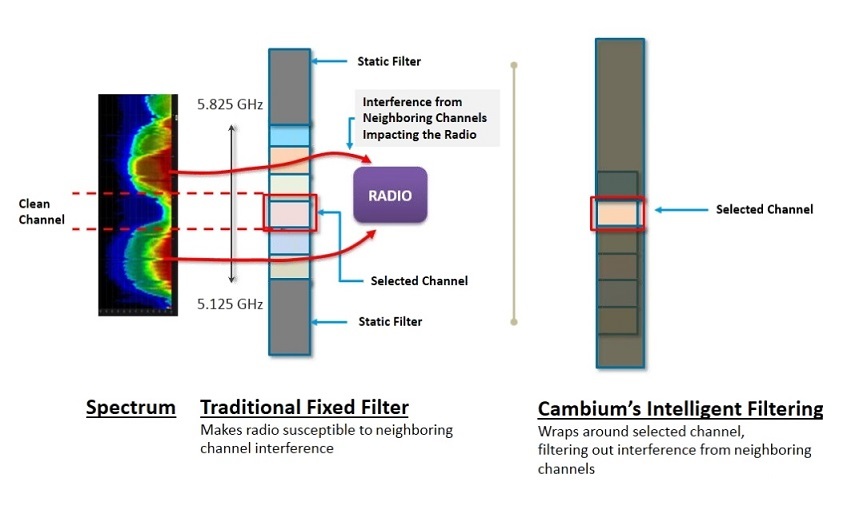
Moving from a direct amplification circuit to a heterodyne receiver circuit greatly improves immunity to out-of-band interference.
Unlike the ePMP 1000, the 2000 series base station consists of three components: access points, sector antennas and optional smart antennas, which complement each other and allow you to achieve better performance and, most importantly, for reasonable money.
If you work in a good broadcast environment, you can mount the system in a lightweight structure, without acquiring an intelligent antenna, and it will still work better than the 1000th series thanks to an out-of-band interference filter and a better hardware platform. If you have a difficult jamming environment - just add an additional antenna and get a significant performance gain. And most convenient, the 2000th platform allows you to work with existing low-cost subscriber devices EPMP 1000.
Key features of ePMP 2000:
- Hypure technology utilizes smart filters and Smart Beamforming capabilities to reduce interference in real-world environments better than ever before.
- Using existing ePMP 1000 series subscriber modules protects investments and facilitates the transition and upgrade of the network to ePMP 2000.
- Retains all the benefits of the ePMP 1000 series, including GPS synchronization and Fortify technology.
- High reliability, versatility, performance and scalability - all at an affordable price.
EPMP 2000 Access Point with Intelligent Filter System

The ePMP 2000 Access Point is the core of the ePMP 2000 system, which takes the system to a new level of immunity to interference always present in real-world broadcast environments. ePMP 2000 is a combination of versatility, scalability and frequency reuse thanks to integrated GPS synchronization. The ePMP 2000 system successfully works with worldwide deployed ePMP 1000 subscriber modules (including Force 180 and Force 200 series devices). This protects the investments of telecom operators and corporate customers, allowing you to increase the productivity of a significant network without the need for additional work in the field of installation of subscriber units.
- Support up to 120 clients per sector
- Frequencies 5.10 - 5.97 GHz
- Gigabit Ethernet Port
- Degree of protection IP55
Smart antenna ePMP 2000

Optional ePMP 2000 Smart Antenna implements the Smart Beamforming technology - beamforming antenna and is part of an innovative technology Hypure. The antenna is designed from scratch, designed to reduce the influence of interference present in real communication networks. An antenna is not a mandatory component, if you are sure that the network is not limited by uplink interference, then you can use only a sector antenna, without a smart antenna (but you can’t use a smart antenna without a sector antenna).
- Compatible only with ePMP 2000 devices
- Frequency 5.10 - 5.97 GHz
- IP65 degree of protection
EPMP sector antenna The

new compact antenna is suitable for all access points of the ePMP series (including the 1000 series), including the ePMP 2000 Smart Antenna, it has an even better 35 dB front-to-back Ratio ratio (Front-to-Back Ratio) wide range of frequencies. The sector antenna has an even null fill pattern, which gives the best quality of customer service. All factors together allow a simple and reliable installation of the antenna system. The manufacturer does not recommend the use of EPMP 2000 on third-party antennas and on the 1000-series antennas. And the fasteners on the 1000s antennas are different.
- 18 dBi gain
- Frequency 4.90 - 5.97 GHz
- 35 dB backward emissivity
- Degree of protection IP67
- 90 or 120 degree service angle
| Parameter | EPMP1000 Base Antenna | EPMP2000 Base Antenna |
| Gain | 18 dBi | 18 dBi |
| Front to back ratio | 30 db | 35 db |
| Frequencies | 4.90 - 5.97 GHz | 4.90 - 5.97 GHz |
| Mount for ePMP 1000 | Yes | Yes |
| Mount for ePMP 2000 | Not | Yes |
EPMP 2000

System The system in the maximum configuration: an active system and two antennas, resulting in a maximum configuration that gives carriers and their customers such advantages as scalability, reliable operation and reaching a whole new level in the fight against interference.
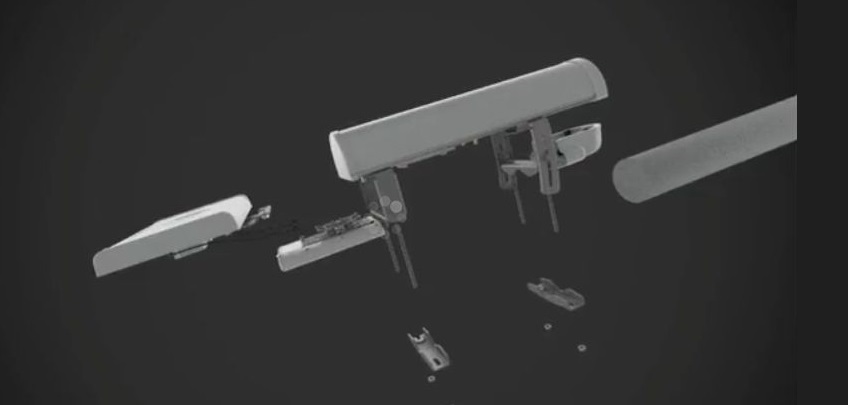
Disassembled same system (mast not included).
Innovative ePMP 2000
Hypure
Technology This technology consists of Smart Beamforming and Intelligent Filtering. In general, Hypure is an innovation designed to keep the network operational in a complex jamming environment.
Compatibility
Use of the ePMP 1000, Force 180, and Force 200 subscriber modules already proven in operation and deployed worldwide with the new ePMP 2000 modules.
Frequency Reuse
Thanks to frequency reuse and GPS synchronization, ePMP allows users to easily scale the network where other manufacturers cannot.
Scalability The
advanced scalability and network planning mechanism allows you to connect up to 120 subscribers per sector without compromising overall system performance.
Quality of service
The options for adjusting system configurations and service levels give the operator the opportunity to support a wide range of network services - exactly the kind that customers expect, including voice and even video broadcasts.
Flexibility
A wide range of operating modes allows you to select individual network settings.
Structural Strength The
robust industrial design of ePMP devices and constituent components allows the system to work in all climatic conditions at operating temperatures from -30 to +60 degrees Celsius.
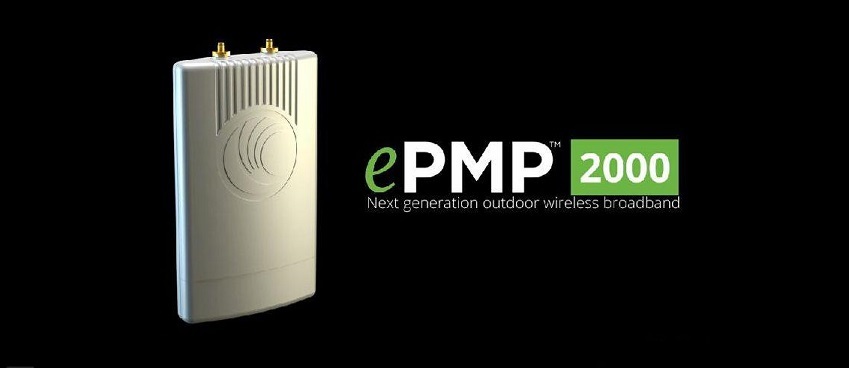
ePMP 2000 from all angles (360 degree rotation): http://bcove.me/0ukbgnim
In the near future we will conduct tests on a real wireless network in Moscow and tell you about the results. Already, ePMP 2000 networks are deployed in Italy, where operators saw a major gain in speed and capacity.

Now this tower delivers not only water, but also the Internet.
Tests the ePMP 1000 and ePMP 2000 equipment under conditions of interference in the direction of the base station at non-intersecting and intersecting frequencies.
| Equipment | Downstream traffic, Mbps | Upstream traffic, Mbps |
| ePMP 1000, pure ether | 94.88 | 85.09 |
| ePMP 1000, interference in its channel | 65.81 | 5.77 |
| ePMP 1000, adjacent channel interference | 94.86 | 51.67 |
| ePMP 2000, pure ether | 94.75 | 85.15 |
| ePMP 2000, interference in its channel | 71.09 | 41.16 |
| ePMP 2000 adjacent channel interference | 94.9 | 85.3 |
So, today we got acquainted with the 2000th ePMP series - budget radio access from Cambium, and we have an overview of several products ahead, including a fundamentally new generation that has replaced the PMP450 series of radio access, which promises to revolutionize all our ideas about the capacity of communication systems. The presentation of all new radio access systems will be in September, at our conference on wireless technologies - BESEDA-19 . We are waiting for everyone who loves radio technology as well as we do.