March 3, 2015 at 01:15
Martin Luther King Leadership Lessons
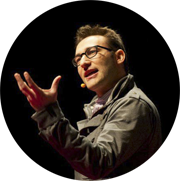 In September 2009, Simon Sinek, speaking at the TED conference , made, in my opinion, the best report on sales, in particular, and leadership in general. In it, he indirectly referred to the evangelism in IT, so characteristic of the marketing strategy of Apple and some other companies. In this interpretation, successful companies respond with their product to the question “why,” not “what,” in contrast to their failed colleagues. According to Simon, the main factor determining success is the law of the spread of innovation or, in other words, the diffusion of innovation.
This theory seeks to explain: how, why, and at what speed new ideas and technologies spread across different cultures. It was popularized by the American sociologist Everett Rogers in 1962. In the framework of the theory, it was assumed that in relation to new ideas, according to the order of adoption of innovations (the X axis is the time on the chart), people can be divided into several categories:

- Innovators - 2.5% - are entrepreneurial, well-educated, have many sources of information, are more prone to risk.
- The early followers - 13.5% - are social leaders, popular, well educated, willingly accept / try innovations, but more careful than innovators.
- The early majority — 34% —reasonable, more cautious than earlier followers, but accepting innovation earlier than the average follower, have many informal social contacts.
- Later, the majority - 34% - skeptics, accept innovation only when the majority has already accepted it, have a lower socio-economic status
- The lagging behind - 16% - are traditionalists who do not like changes, accept them only when they have become a generally accepted norm, tradition; neighbors and friends are the main sources of information.
Developing the theory, Simon says that people do not buy the “what” you do, they buy the “why” you do it. And what you do just proves what you believe. As a successful example, he cites the activities of one of the most important historical figures for the entire existence of the United States, Martin Luther King. As a key figure in the black civil rights movement, King was actively involved in preaching, which resulted in fiery charismatic speeches that are still parsed into quotes on the case and not. Some of his speeches are now considered classics of oratory.
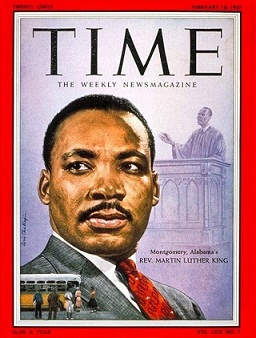
In the summer of 1963, 250 thousand people gathered in a square in Washington to listen to Dr. King's speech. There was no invitation, there was no website on which to check the date. How was that possible? Dr. King, by no means, was not the only person in America with outstanding oratorical abilities. He was not the only one who suffered from the mores of America in the period before the establishment of civil rights, and if to be honest some of his ideas were frankly bad, but he had a gift, a real gift of strategic genius.
He already understood then that it is useless to appeal to rational motives if you want to rekindle the masses. This in no way means that he himself suffered from a lack of rationality. At the level of his genius, the concepts of rationality and irrationality are closely intertwined. Thus, guided by rational motives, he appealed to the irrationality of human nature, to feelings, to faith and obsession. In his speeches you will not find concrete plans, and he never told people about what would have to be changed in the country specifically, but talked about what he believed in.
I have a dream, I have a dream, I have a dream, he said, and people who believed in the same things, perceived it, felt their involvement with it and told others about it. His elevation to the almost unique “living banner” of the whole movement, like nothing else, demonstrates to us his masterful mastery of the key qualities of strategic leadership.
The importance of these qualities should not be underestimated for modern managers who are interested in strengthening strategic effectiveness in uncertain, complex and ambiguous conditions. Therefore, we will try to reflect and derive some rules implicitly formulated by this genius.
Anticipate opposition
Dr. King foresaw what was needed to bring about change. He understood that a marginal group of people with a low level of education and meager economic opportunities can only be strong in mass. As a good chess player, he thought several steps ahead, starting with the support of local social organizations and voter registration organizations, and coordinated the transportation of a large number of blacks to polling stations. Thus, he outwitted the opposition, remaining within the framework of the law and practice of non-violence.
Spit on authority and question the status quo
His vision of the world made him advocate for social justice, and confront the most egregious violations of civil rights in the South. He was fearless in the fight against the arrogance of whites, well aware that he was playing with fire. This was shown by the brutal killings of other freedom fighters in the state of Mississippi. To achieve his goals, he often used unconventional tactical moves, including the famous Alabama boycott .
Use signed characters
King very carefully approached the choice of Selma, as the focal point for the escalation of the struggle for rights. This choice was based on an analysis of the local political scene, as well as the various scenarios that might follow.
Selma was the center of the agricultural region (cotton, livestock, pecans). During the American Civil War, tons of ammunition and warships of the Confederation were produced here. Units of the northerners' army led by General J. Wilson destroyed the military arsenal and factories, while burning almost the entire city.
His opposition movement was already faced with church bombings, lynching and brutal beatings. Recognizing and interpreting the political background, the moral awakening of the North, and the change in public morals, King strategically redirected political forces at the local and national levels.
Weigh risks
Dr. King and his team have always figured out several options when choosing goals and tactics, from non-violent civil disobedience to provocations that compromise segregation laws. Guided by an uncompromising vision of social justice, he always made calculated tactical decisions that took into account unforeseen consequences.
Build Strong Alliances
Martin King, even in his youth, was very clever in creating mutually beneficial alliances with local officials. He expertly sided with those in power, including President Johnson, as they slowly pushed society to accept the idea of changing voting rights. This lengthy process pushed the most careless politicians into the right direction, especially Johnson, who was one of the supporters of crude political methods.
Learn and adapt
Dr. King and his colleagues were faced with multiple setbacks and surprises at the start. King was jailed 29 times in just one campaign in Birmingham. He experimentally learned that not one, even the most perfect, plan can not withstand collisions with reality and requires constant corrections. Constantly evolving, King and his team were able to create a unique blend to create the required political pressure.
The above strategic leadership qualities have led to truly historic success and contain important leadership lessons, emphasizing the courage and perseverance needed to change the world. Leaders who would like to change their minds and overcome deeply rooted prejudices and prejudices in any industry should carefully study the biographies of such people, little by little, collecting the quintessence of leadership and leadership in general.
Martin Luther King said: “I have a dream, and I do not have a plan!” Listen to modern politicians with their comprehensive abstract plans, they do not inspire anyone, because there are formal leaders, and those who really lead us. Formal leaders hold high positions in power, but the people who lead us inspire us. It can be individuals or entire organizations. We follow those who lead us, not because we must, but because we ourselves want to. We follow them not for their sake, but for our own sake. It is those who start with the “why” that have the ability to inspire others or find others who inspire them.