Implementing OpenStack and where to go next?
Having considered the difference in design approaches in traditional OpenStack systems and cloud platforms , we can move on to the difference in approaches to building applications and a reliable and highly accessible infrastructure. OpenStack was created in order to ensure the mass launch of hundreds, thousands and even tens of thousands of the same type (usually) virtual servers for hosting applications with their own means of ensuring fault tolerance. The platform itself does not offer high availability for a single virtual server.

Many users of traditional systems often accept this as a flaw and immaturity of the OpenStack platform. However, this statement is based on a misunderstanding of the various design principles of legacy applications and cloud computing.
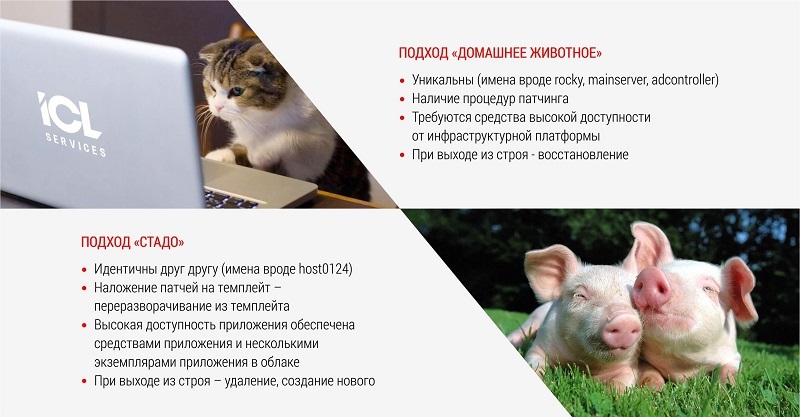
If we compare running instances of virtual servers with animals, then traditional platforms provide the principle of "pet", and OpenStack - the approach of "herd" (sometimes the term "pig farm" is used).
Each pet is unique: it has a name, its habits and character. Vasya’s cat is next door and your Murka is two completely different cats. If your cat is sick, you take him to the vet, you treat him, take care of his condition, you feed him and take care of him.
On the contrary, all the animals in the herd look the same to you. You feed them at the same time, vaccinate them all at once. If the animal dies, this is bad, but still another one can grow in the herd that will perform the required function. A comparison of approaches to virtual infrastructure is shown in the picture below:
Only by understanding this unusual difference in concept and approaches offered by the developers and ideologists of the OpenStack cloud platform, we can proceed to the questions of its practical application.
Before embarking on the introduction of another new technology (including OpenStack), you need to determine the economic feasibility of this action. For example, implementing OpenStack for hosting one or two dozen virtual servers is most likely impractical. Understanding the need to reduce infrastructure costs is pushing many customers to deploy OpenStack for all types of workloads, which is wrong and sometimes leads to negative consequences. It is necessary to accurately and competently assess all the risks, and first of all, the expected type of load for which the platform is being implemented. There are options for building an inexpensive virtualization platform based on other open technologies. Favorable conditions for using the OpenStack platform, from the point of view of ICL Services, are:
All these conditions stem from the specifics of using OpenStack and, above all, the lack of support for high availability of a single virtual server.
Some commercial OpenStack distributions offer high availability support for virtual servers. Of course, the range of use of such distributions is somewhat wider than described here.
Based on the conditions of use, we can offer the following scenarios for the effective application of solutions based on OpenStack:
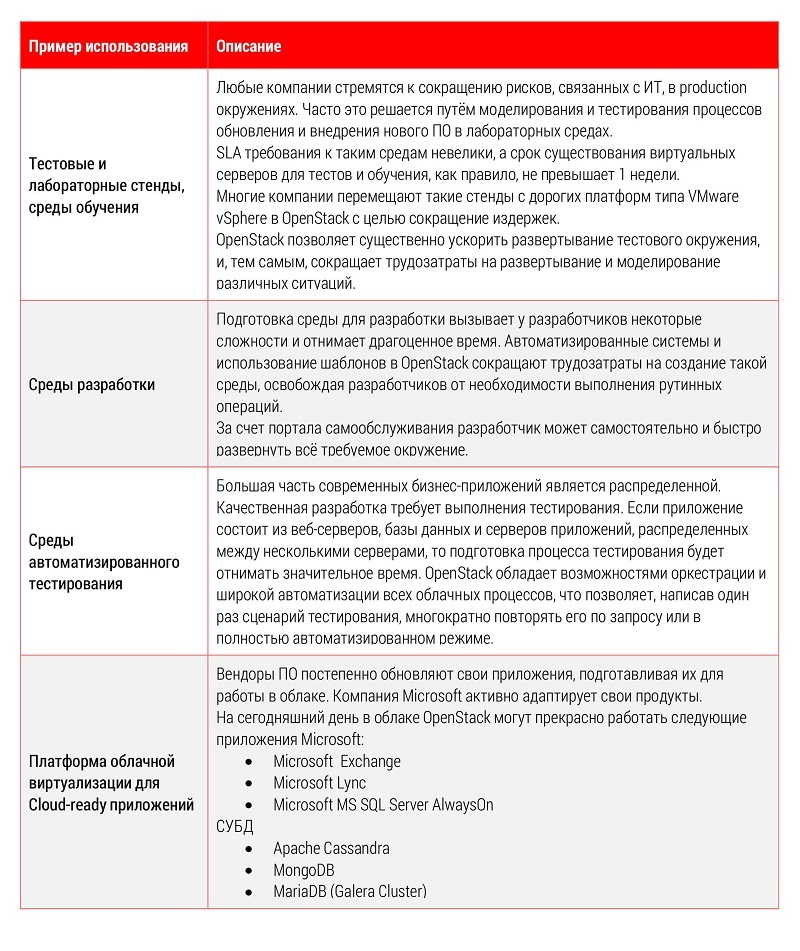
* Of course, other scenarios for using this product are possible.
ICL Services has rich experience in the design and implementation of solutions of any complexity based on Linux and Open Source technologies for foreign and Russian customers. The company has developed and implemented a cloud solution for corporate clients - ICL Cloud , which is actively used for internal needs, as well as to provide cloud services of its own design.

Many companies are wondering: “Which OpenStack distribution should I use to build a private cloud?” The answer to this question arises from the tasks that will be addressed by this platform, as well as the imposed requirements for reliability and SLA.
There are free and commercial builds of the OpenStack platform.
Free OpenStack assemblies ( Community OpenStack , RDO OpenStack ) may well be used to study this technology, build working models, as well as test functionality in order to determine the suitability of the product for certain tasks.
Free versions of OpenStack are attractive primarily because they are free (no license fees).
It is on the basis of free versions of OpenStack that many Russian (including large companies) now prefer to build their own cloud environments for testing and software development. They are easily reproducible and, if lost, can be recreated again without significant damage to the business. But the use of free versions of OpenStack in the Enterprise sector is very difficult due to the big risks and the lack of support by the vendor.

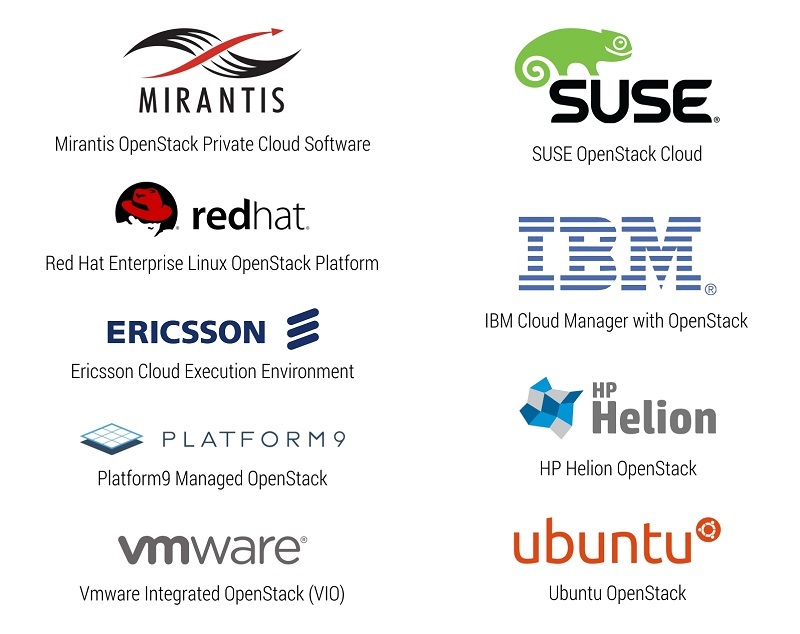
Growing demand for cloud solutions and a reluctance to lose market share lead leading software manufacturers to create their own OpenStack builds. Some manufacturers are developing certain features of OpenStack, which is their competitive advantage.
A short list of products is available below:
Free versions of OpenStack, as well as many commercial distributions, offer support for VMware vSphere. This allows you to combine all the reliability and functionality of VMware solutions with the flexibility of OpenStack cloud technology. In addition, VMware offers VMware Integrated OpenStack, already optimized for integration with vSphere virtualization products.
Limitations:
Many companies are implementing or intend to implement OpenStack on their own. It should be noted that the implementation and high-quality support of OpenStack requires the presence of highly qualified specialists with a fairly wide range of competencies. This is more pronounced when using free / free versions. Commercial distributions simplify the task due to the availability of automatic deployment, updating, etc.
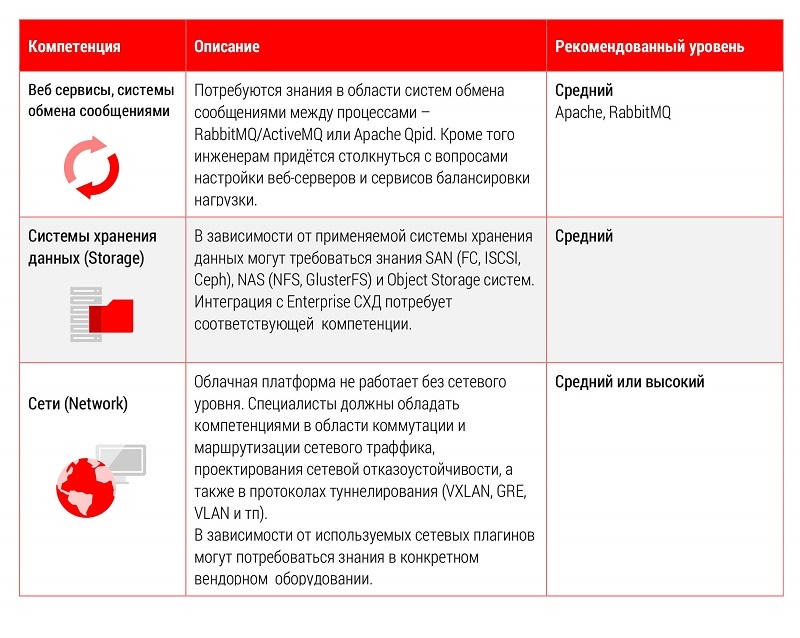
In addition, OpenStack interacts with a large number of infrastructure resources, which requires knowledge in various fields.
Key competencies for implementation and support professionals:

Some test installations of OpenStack can be implemented by medium and large companies on their own with highly qualified Linux specialists. Our practice shows that such implementations often frighten potential OpenStack users due to incorrect expectations, lack of expertise, and
poorly executed deployment. Companies spend a lot of resources and often give up half the way, starting to consider alternatives.
Industrial implementations, as a rule, require the involvement of expert companies specializing in cloud solutions, given the large number of risks and moments that require emphasis, as well as the complexity of inter-component communications and attention to detail. Attracting experts can significantly reduce implementation time and reduce risks.
The platform has rich functionality and covers most of the tasks. In addition, many OpenStack extensions are available to solve various problems. But, sooner or later, the needs of many customers go beyond the capabilities of the underlying OpenStack platform. The open source code and modular architecture of OpenStack allow you to expand the functionality of the solution by developing new or modifying existing platform modules.
Having two or more different virtualization platforms can be inconvenient. In cases where you need a single tool for managing various infrastructure providers (VMware, OpenStack, Amazon, Hyper-V), you may need to implement a hybrid cloud management platform that will provide users with single access through a single console, and the application will run certain virtual servers in the required platform.
Among similar platforms available on the market:
Examples of heterogeneous cloud management platforms:
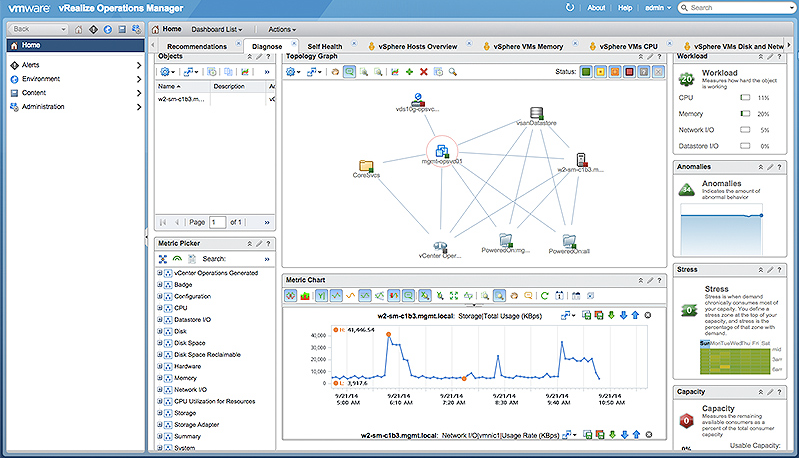
Vmware
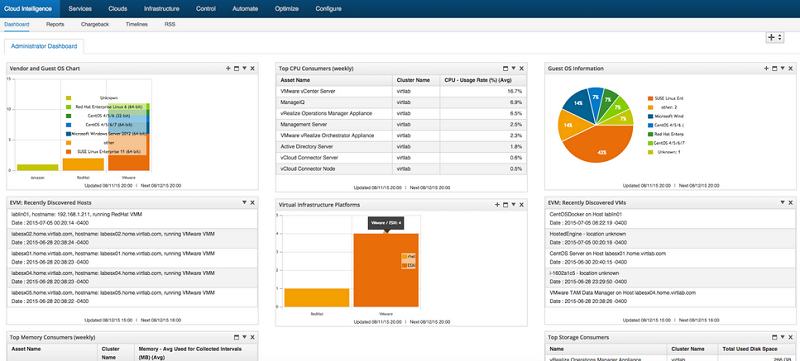
vRealize ManageIQ / Red Hat CloudForms

Ericsson Cloud Manager
By artemii
Many users of traditional systems often accept this as a flaw and immaturity of the OpenStack platform. However, this statement is based on a misunderstanding of the various design principles of legacy applications and cloud computing.
Part 2.
What is the difference between cloud approaches and traditional infrastructure?
If we compare running instances of virtual servers with animals, then traditional platforms provide the principle of "pet", and OpenStack - the approach of "herd" (sometimes the term "pig farm" is used).
Each pet is unique: it has a name, its habits and character. Vasya’s cat is next door and your Murka is two completely different cats. If your cat is sick, you take him to the vet, you treat him, take care of his condition, you feed him and take care of him.
On the contrary, all the animals in the herd look the same to you. You feed them at the same time, vaccinate them all at once. If the animal dies, this is bad, but still another one can grow in the herd that will perform the required function. A comparison of approaches to virtual infrastructure is shown in the picture below:
Only by understanding this unusual difference in concept and approaches offered by the developers and ideologists of the OpenStack cloud platform, we can proceed to the questions of its practical application.
When to think about implementing OpenStack?
Before embarking on the introduction of another new technology (including OpenStack), you need to determine the economic feasibility of this action. For example, implementing OpenStack for hosting one or two dozen virtual servers is most likely impractical. Understanding the need to reduce infrastructure costs is pushing many customers to deploy OpenStack for all types of workloads, which is wrong and sometimes leads to negative consequences. It is necessary to accurately and competently assess all the risks, and first of all, the expected type of load for which the platform is being implemented. There are options for building an inexpensive virtualization platform based on other open technologies. Favorable conditions for using the OpenStack platform, from the point of view of ICL Services, are:
- hosting servers and applications with a short lifespan (hours, days, weeks);
- cloud type of load of used applications;
- hosting of non-critical virtual servers and applications;
- Frequent deployment of servers of the same type .
All these conditions stem from the specifics of using OpenStack and, above all, the lack of support for high availability of a single virtual server.
Some commercial OpenStack distributions offer high availability support for virtual servers. Of course, the range of use of such distributions is somewhat wider than described here.
Based on the conditions of use, we can offer the following scenarios for the effective application of solutions based on OpenStack:
* Of course, other scenarios for using this product are possible.
ICL Services has rich experience in the design and implementation of solutions of any complexity based on Linux and Open Source technologies for foreign and Russian customers. The company has developed and implemented a cloud solution for corporate clients - ICL Cloud , which is actively used for internal needs, as well as to provide cloud services of its own design.
Which OpenStack distribution to choose?
Many companies are wondering: “Which OpenStack distribution should I use to build a private cloud?” The answer to this question arises from the tasks that will be addressed by this platform, as well as the imposed requirements for reliability and SLA.
There are free and commercial builds of the OpenStack platform.
Free OpenStack assemblies ( Community OpenStack , RDO OpenStack ) may well be used to study this technology, build working models, as well as test functionality in order to determine the suitability of the product for certain tasks.
Free versions of OpenStack are attractive primarily because they are free (no license fees).
It is on the basis of free versions of OpenStack that many Russian (including large companies) now prefer to build their own cloud environments for testing and software development. They are easily reproducible and, if lost, can be recreated again without significant damage to the business. But the use of free versions of OpenStack in the Enterprise sector is very difficult due to the big risks and the lack of support by the vendor.
Growing demand for cloud solutions and a reluctance to lose market share lead leading software manufacturers to create their own OpenStack builds. Some manufacturers are developing certain features of OpenStack, which is their competitive advantage.
A short list of products is available below:
Can I use OpenStack to manage resources in VMware vSphere?
Free versions of OpenStack, as well as many commercial distributions, offer support for VMware vSphere. This allows you to combine all the reliability and functionality of VMware solutions with the flexibility of OpenStack cloud technology. In addition, VMware offers VMware Integrated OpenStack, already optimized for integration with vSphere virtualization products.
Limitations:
- Integration is supported only with VMware vSphere
- VMware NSX-MH Licenses Required
What competencies are needed to implement and support OpenStack?
Many companies are implementing or intend to implement OpenStack on their own. It should be noted that the implementation and high-quality support of OpenStack requires the presence of highly qualified specialists with a fairly wide range of competencies. This is more pronounced when using free / free versions. Commercial distributions simplify the task due to the availability of automatic deployment, updating, etc.
In addition, OpenStack interacts with a large number of infrastructure resources, which requires knowledge in various fields.
Key competencies for implementation and support professionals:
Need OpenStack. What's next?
Some test installations of OpenStack can be implemented by medium and large companies on their own with highly qualified Linux specialists. Our practice shows that such implementations often frighten potential OpenStack users due to incorrect expectations, lack of expertise, and
poorly executed deployment. Companies spend a lot of resources and often give up half the way, starting to consider alternatives.
Industrial implementations, as a rule, require the involvement of expert companies specializing in cloud solutions, given the large number of risks and moments that require emphasis, as well as the complexity of inter-component communications and attention to detail. Attracting experts can significantly reduce implementation time and reduce risks.
The platform has rich functionality and covers most of the tasks. In addition, many OpenStack extensions are available to solve various problems. But, sooner or later, the needs of many customers go beyond the capabilities of the underlying OpenStack platform. The open source code and modular architecture of OpenStack allow you to expand the functionality of the solution by developing new or modifying existing platform modules.
I already have VMware vSphere and OpenStack. Where to go next?
Having two or more different virtualization platforms can be inconvenient. In cases where you need a single tool for managing various infrastructure providers (VMware, OpenStack, Amazon, Hyper-V), you may need to implement a hybrid cloud management platform that will provide users with single access through a single console, and the application will run certain virtual servers in the required platform.
Among similar platforms available on the market:
Examples of heterogeneous cloud management platforms:
Vmware
vRealize ManageIQ / Red Hat CloudForms
Ericsson Cloud Manager
By artemii