February 18, 2016 at 18:15
Murat Urtembaev - the first Soviet hacker
The first Soviet hacker was a graduate of Moscow State University Murat Urtembaev. In 1983, he hacked the AvtoVAZ software system, as a result of which the conveyor stopped working for three days. And this is one of the first “cyber attacks” in the USSR that was discovered.
The brilliant prospects in mathematics were prophesied to the young specialist, but he did not go into science and by distribution he got to AvtoVAZ. In managing the automatic system, programmers working on software and ordinary technicians worked for the supply of mechanical components to the conveyor, who maintained the system and were not related to software.

The work took place according to the following scheme: if necessary, the programmer could make changes to the software, while not writing in writing about his actions. That is, it was possible to change the system and go unnoticed.
This was used by the programmer Urtembaev, engaged in the maintenance of computers. Using a regular diskette (previously tested), he made his changes to the program that controls the supply of parts to the conveyor. In fact, Urtembaev developed a patch for the main counter program, which measures the supply cycles of nodes to the conveyor line. As a result, the rhythm of the counter went astray and the set part arrived late on the conveyor. Given that the process was calculated to seconds, the delay was simply unacceptable.
According to Murat’s plan, the “virus” was supposed to start at a certain hour. And in order to protect himself, the programmer took care of the alibi - he scheduled the start of the patch on the day he leaves vacation. According to the calculation, Urtembaev had to go to work, detect a failure and fix it, heroically saving the conveyor. But the plan failed, because the program started on its own several days earlier ...
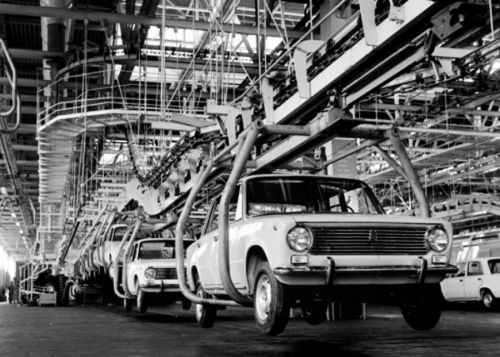
When the patch self-activated, the automation seemed furious. Details continued to arrive regularly on the conveyor, but only not at that time and not the ones that were required. The production cycle went astray, no one understood anything, real mechanical and logical chaos was happening around. As a result of a thorough check by the best specialists of all computer equipment, technical malfunctions were not found. But they found the faulty piece of code. Restarting the work program did not help, failures continued. It took about three days to normalize the workflow. The failure in the system caused serious material damage to the enterprise, since hundreds of cars did not get off the assembly line.
Murat himself admitted his deed. After checking and investigating the incident, it turned out that he was not the only one to break into the system. There were other programmers who deliberately created failures on the assembly line, after which they themselves eliminated them, receiving bonuses, awards and allowances for this.
The case went to court. But with the punishment a collapse arose. According to the law, the act did not fall within the category of a crime and did not provide for criminal punishment. Therefore, the first hacker was convicted of hooliganism and given a year and a half probation with a recognizance not to leave. Of course, Urtenbaev was fired from the post of programmer, but ordered to compensate for the damage caused. He practiced his punishment as a locksmith on the main assembly line.
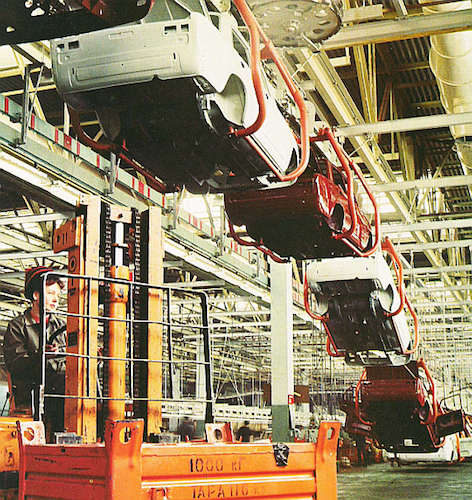
The story that happened became known throughout the Union and caused a lot of controversy about the act of Urtenbaev. The newspapers wrote that the system programmer of the Volga Automobile Plant modified the automated control system software of the main conveyor, as a result of which the work was stopped for three days. Two hundred cars did not go off the assembly line of the VAZ, while programmers were looking for the source of the crash. The damage amounted to millions of rubles.
The brilliant prospects in mathematics were prophesied to the young specialist, but he did not go into science and by distribution he got to AvtoVAZ. In managing the automatic system, programmers working on software and ordinary technicians worked for the supply of mechanical components to the conveyor, who maintained the system and were not related to software.
The work took place according to the following scheme: if necessary, the programmer could make changes to the software, while not writing in writing about his actions. That is, it was possible to change the system and go unnoticed.
This was used by the programmer Urtembaev, engaged in the maintenance of computers. Using a regular diskette (previously tested), he made his changes to the program that controls the supply of parts to the conveyor. In fact, Urtembaev developed a patch for the main counter program, which measures the supply cycles of nodes to the conveyor line. As a result, the rhythm of the counter went astray and the set part arrived late on the conveyor. Given that the process was calculated to seconds, the delay was simply unacceptable.
According to Murat’s plan, the “virus” was supposed to start at a certain hour. And in order to protect himself, the programmer took care of the alibi - he scheduled the start of the patch on the day he leaves vacation. According to the calculation, Urtembaev had to go to work, detect a failure and fix it, heroically saving the conveyor. But the plan failed, because the program started on its own several days earlier ...
When the patch self-activated, the automation seemed furious. Details continued to arrive regularly on the conveyor, but only not at that time and not the ones that were required. The production cycle went astray, no one understood anything, real mechanical and logical chaos was happening around. As a result of a thorough check by the best specialists of all computer equipment, technical malfunctions were not found. But they found the faulty piece of code. Restarting the work program did not help, failures continued. It took about three days to normalize the workflow. The failure in the system caused serious material damage to the enterprise, since hundreds of cars did not get off the assembly line.
Murat himself admitted his deed. After checking and investigating the incident, it turned out that he was not the only one to break into the system. There were other programmers who deliberately created failures on the assembly line, after which they themselves eliminated them, receiving bonuses, awards and allowances for this.
The case went to court. But with the punishment a collapse arose. According to the law, the act did not fall within the category of a crime and did not provide for criminal punishment. Therefore, the first hacker was convicted of hooliganism and given a year and a half probation with a recognizance not to leave. Of course, Urtenbaev was fired from the post of programmer, but ordered to compensate for the damage caused. He practiced his punishment as a locksmith on the main assembly line.
The story that happened became known throughout the Union and caused a lot of controversy about the act of Urtenbaev. The newspapers wrote that the system programmer of the Volga Automobile Plant modified the automated control system software of the main conveyor, as a result of which the work was stopped for three days. Two hundred cars did not go off the assembly line of the VAZ, while programmers were looking for the source of the crash. The damage amounted to millions of rubles.