The underground market of carders. Translation of KingPIN. Chapter 13. “Villa Siena”
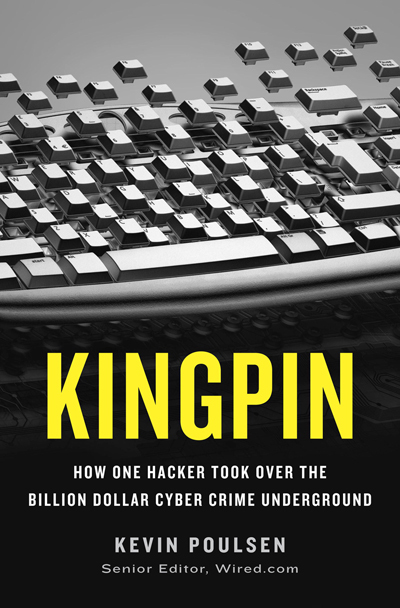 Kevin Poulsen, editor of WIRED magazine, and a blackhat hacker Dark Dante as a child, wrote a book about " one of his acquaintances ."
 The book shows the path from a teenage geek (but at the same time pitching), to a seasoned cyberpowder, as well as some methods of work of special services to capture hackers and carders.
The beginning and the translation plan is here: " Kingpin: students are translating a book about hackers ."
The logic of choosing a book for working with schoolchildren is as follows:
- books about hackers in Russian are few (one and a half)
- There are no books about carding in Russian at all ( UPD was found alone )
- Kevin Poulsen - WIRED editor, not a stupid fellow, authoritative
- to involve youth in translation and creativity on Habré and to receive feedback from seniors
- work in soldering schoolchildren-specialists are very effective for learning and shows the importance of work
- the text is not very hardcore and accessible to a wide range, but it touches on information security issues, vulnerabilities of payment systems, the structure of the carding underground, the basic concepts of Internet infrastructure
- the book illustrates that “feeding” in clandestine forums ends poorly
Who wants to help with the translation of other chapters, write in a personal magisterludi .
(Regarding the priority, I am asked a lot of questions and advised to publish the chapters in turn. I would also like that, but alas, because I work with a lot of people who, for example, have already transferred 80% of the chapter, and then they have force majeure by 2 weeks. On the one hand, I don’t feel like pushing them, on the other hand, postponing the publication of those people who have already translated the next chapter is not entirely honest with them. Therefore, what I have is publishing.)
Read the previous Chapter 12. “Free Amex ! "
Chapter 13. “Villa Siena”
(Thanks for transferring to Lorian_Grace habilitator ) Palm trees grewat the gates of Villa Siena, an extensive residential complex in Irvine, half a mile from John Wayne Airport. European-style fountains lapped behind the main entrance in the manicured courtyards, and four pools shimmered with shades of blue under the sunny sky of southern California. Inhabitants enjoyed the club, relaxed in the spa, trained in one of the three gyms, or perhaps talked with the concierge manager, making plans for the evening.
In one of the spacious apartments, Chris Aragon was engaged in his business. Curtains were dropped to conceal the abundance of technology that filled Ikea's tables and granite countertops. He turned on his card printer, and he woke up with a howling hum, the wheels spun, the motors pulled on ribbons, as tight as hospital sheets.
Max now pulled out dumps regularly, and when he got a new trophy, there was no time to waste - the data was stolen twice, and Chris had to deal with them before the scammers who bought or stole the numbers first used them or made mistakes and forced the companies mark these cards. Chris had to collect his last savings in order to invest about $ 15,000 in credit card printing equipment and an apartment for him.
Now the investment began to pay off.
He loaded blank PVC cards into the tray of a bulky oblong machine - a $ 5,000 Fargo HDP600 card printer, which was used to print corporate IDs. After a mouse click on the laptop, the machine pulled the card into its mouth and growled something once, another, third, finally fourth. Each sound marked a new color while the pigment was transferred to a clean print ribbon and quickly evaporated by the heating element, melting into the surface of the card. The latest clang from Fargo reported that the transparent laminate film took its place on the plastic.
Forty-four seconds from start to finish - and the car spat out a card, a shiny, vibrant, real work of art. It could be a bald eagle staring thoughtfully at the Capitol One logo, or the stern American Express centurion, or a simple spot of sky blue on a white background for a Sony brand MasterCard. For high-end cards, the process was the same, except that sometimes Chris started with the basics of gold or platinum, which, like the white ones, were ordered in hundreds.
Having a deck of freshly printed plastic cards, he moved on to the second point of his conveyor: a black and white printer for thin printing on the back of the card. If you suddenly needed a hologram, Chris removed a sheet of Chinese fakes from the stack, carefully placed it under the press and lowered the lever, cutting an oval or rounded rectangle the size of a stamp. A $ 2,000 Kwikprint Model 55 thermal puncher, reminiscent of a mixture of a drill press and a medieval torture instrument, fused the foil onto the surface of the plastic.
The embossing machine carried out the following stage: a huge mechanized wheel with letters and numbers, rustling like IBM Selectric, when it squeezed out the name, account number and expiration date by letter on plastic, filling them with silver or gold foil. From a Chinese provider, Chris learned special security keys for the winged V from Visa and the combined MC MasterCard - two distinctive convex signs that can only be found on credit cards, genuine and fake.
Verification systems do not check the name of the owner, which gave Chris the opportunity to choose any to print on the card; for those that he used, he preferred Chris Anderson. On a laptop, Chris edited the dumps received from Max so that the name in the magnetic strip matches what is outside. The name was not used to calculate CVV, unlike the rest of the data on the strip, so it could be changed as you like.
Finally, twice passing the card through the faithful MSR206 to program the dump, Chris received a fake credit card, almost no different from those that were in the pockets and wallets of American inhabitants.
But that was not the end.
A driver’s license was needed for orders with a high credit limit, and here again the “assembly line” Chris and the lessons of Shadowcrew did their job. For the driver’s license, he switched from PVC to Teslin, a thinner and more flexible plastic sold in 8x11 inch sheets. One sheet on the face, the second on the inside, and ten certificates on the sheet.
The California version of the rights had two security features that required additional tricks. The first was a translucent image of the seal of the state of California, repeated on the front side in the laminate. For the fake, Chris used Pearl Ex, a fine-colored powder sold in art stores for less than three dollars a can. The trick was to sprinkle a sheet of laminate with a mixture of gold and silver powder, feed it to a printer with a clear ink cartridge and print a mirror image of the pattern with this ink. The fact that the print was invisible did not matter, it was just the heat of the print head. The leaf came out with a pattern fused to the surface, and the excess powder was easily washed off in cold water.
Ultraviolet printing on the front side was no more difficult. An ordinary inkjet printer could do the job easily by emptying the cartridges and filling them with multicolored ultraviolet ink, bought in tubes.
After all these procedures, Chris had four sheets of material in his hands. He then folded two Teslin sheets between pieces of laminate and passed this sandwich through the laminator. After the card was cut out, you could admire the impressive result: swipe your fingers on the ID card and feel the smooth silky surface, turn it in your hands and see the ghostly seals of the state, put it under an ultraviolet lamp and see the ominously luminous flag: the red words "California Republic", and above them - a brown bear on the yellow top of the hill.
When the cards and IDs were ready, Chris picked up the phone and called his girls. He found that attractive college-age girls were best suited for cashing. There was Nancy, a girl of Latin descent with a “love” tattoo on her wrist, Lindsey, a pale brunette with brown eyes, Adrianna, a young Italian, Jamie, who worked as a waitress at Hooters in Newport Beach.
Besides them, Chris met two dark-haired twins, Liz and Michelle Esquer in the villa Siena, where they lived.
Michelle simply revolved around the group, but Liz was priceless: she worked in the mortgage industry, had a sharp mind, a good education and was responsible enough to entrust her with some administrative tasks, such as maintaining a pay table, in addition to regular shopping in stores.
Chris had a talent for picking people up. He could meet a new candidate in a restaurant and invite her to a party with his friends. Then she joined them in clubs, at expensive dinners, and drove in expensive rented limousines when one of them celebrated their birthday. She saw money everywhere. When the time came, maybe when several months passed, maybe when the girl admitted that she had unpaid bills or rent, Chris casually mentioned that he knew a way to make money quickly and easily. He told how it works, explained that this crime has no victim. Otherwise, the girls would tie this matter to a person. None of them knew where Chris got his credit card information from. When Chris talked about Max, he called him “Whistle,” and it was a mysterious superhacker that they would never see.
Chris's code name was "Bro." Now that the operation was well underway, Bro paid Swist about $ 10,000 a month for dumps, transferring money through a Green Dot prepaid debit card.
Green Dot from Visa or MasterCard was designed specifically for students and consumers with poor wealth, it was a credit card without a loan. The man paid the card in advance, by bank transfer, salary, cash. The latter made such a card an ideal way to transfer money from Chris in Orange and Max in San Francisco. Chris dropped in at nearby 7-Eleven or Walgreens and ordered a Green Dot payment number called MoneyPack for any amount up to $ 500. He sent Max a number via IM or email, and he used it for one of the cards on the company's website. Max could even use the card for daily purchases or withdraw money from ATMs in San Francisco.
As soon as his team was ready to go, Chris handed them their cards, divided into classic, with a low credit limit, and gold or platinum, with a high one. He recalled that with classic you should stick to small purchases, about $ 500. Those who got the gold had to make larger purchases, from $ 1,000 to $ 10,000. The girls were young, but under the influence of the stylish youth of Orange, they could hold on so that they easily entered Nordstorm's and took a pair of Coach bags without moving an eyebrow, then crossed the store and repeated the same at Bloomingdale's.
The newcomers were nervous at first, but after the first fake card worked at the checkout, they were hooked. Soon, the girls already sent Chris enthusiastic messages from their shopping trips: “Can I use Amex in the new Bloomingdale's?”, Or “I made 7000 on the mastercard! Hurray! ”
At the end of the day, they met in the parking lot and transferred purchases from the trunk to the trunk.
He paid them on the spot, 30 percent of the retail value, and carefully recorded each payment, like a real businessman. The "elegant fabric and sparkling buckles" of the bags ended up in boxes until Chris' wife, Clara, sold them on eBay.
Night fell on Villa Siena, lights turned on above the tennis courts, and outdoor foci were lit. Miles from here, the team celebrated success with a good dinner and a bottle of wine. As always, Chris paid.
To be continued
Finished translations and plan (as of September 7)
PROLOGUE (GoTo camp students)
1. The Key (Grisha, Sasha, Katya, Alena, Sonya)
2. Deadly Weapons (Young programmers of the FSB of the Russian Federation, Aug 23)
3. The Hungry Programmers (Young programmers of the FSB of the Russian Federation)
4. The White Hat (Sasha K, ShiawasenaHoshi )
5. Cyberwar! ( ShiawasenaHoshi )
6. I Miss Crime (Valentine)
7. Max Vision (Valentine, Aug 14)
8. Welcome to America (Alexander Ivanov, Aug 16)
9. Opportunities (jellyprol)
10. Chris Aragon (Timur Usmanov)
11.Script's Twenty-Dollar Dumps (George)
12. Free Amex! ( Social Technology Greenhouse )
13. Villa Siena (Lorian_Grace)
14. The Raid (George)
15. UBuyWeRush (Ungswar)
16. Operation Firewall (George)
17. Pizza and Plastic (done)
18. The Briefing (George)
19. Carders Market (Ungswar)
20. The Starlight Room (Ungswar)
21. Master Splyntr (Ungswar)
22. Enemies (Alexander Ivanov)
23. Anglerphish (Georges)
24. Exposure (Mekan)
25. Hostile Takeover (Fanre)
26. What's in Your Wallet? (al_undefined)
27. Web War One (Lorian_Grace)
28. Carder Court (drak0sha)
29. One Plat and Six Classics (Bilbo)
30. Maksik (workinspace)
31. The Trial
32. The Mall (Shuflin)
33. Exit Strategy
34. DarkMarket (Valera aka Dima)
35. Sentencing
36 . Aftermath
EPILOGUE
1. The Key (Grisha, Sasha, Katya, Alena, Sonya)
2. Deadly Weapons (Young programmers of the FSB of the Russian Federation, Aug 23)
3. The Hungry Programmers (Young programmers of the FSB of the Russian Federation)
4. The White Hat (Sasha K, ShiawasenaHoshi )
5. Cyberwar! ( ShiawasenaHoshi )
6. I Miss Crime (Valentine)
7. Max Vision (Valentine, Aug 14)
8. Welcome to America (Alexander Ivanov, Aug 16)
9. Opportunities (jellyprol)
10. Chris Aragon (Timur Usmanov)
11.Script's Twenty-Dollar Dumps (George)
12. Free Amex! ( Social Technology Greenhouse )
13. Villa Siena (Lorian_Grace)
14. The Raid (George)
15. UBuyWeRush (Ungswar)
16. Operation Firewall (George)
17. Pizza and Plastic (done)
18. The Briefing (George)
19. Carders Market (Ungswar)
20. The Starlight Room (Ungswar)
21. Master Splyntr (Ungswar)
22. Enemies (Alexander Ivanov)
23. Anglerphish (Georges)
24. Exposure (Mekan)
25. Hostile Takeover (Fanre)
26. What's in Your Wallet? (al_undefined)
27. Web War One (Lorian_Grace)
28. Carder Court (drak0sha)
29. One Plat and Six Classics (Bilbo)
30. Maksik (workinspace)
31. The Trial
32. The Mall (Shuflin)
33. Exit Strategy
34. DarkMarket (Valera aka Dima)
35. Sentencing
36 . Aftermath
EPILOGUE