SIEM Systems: Criteria for Implementation and Methods for Evaluating Effectiveness in Corporate Security
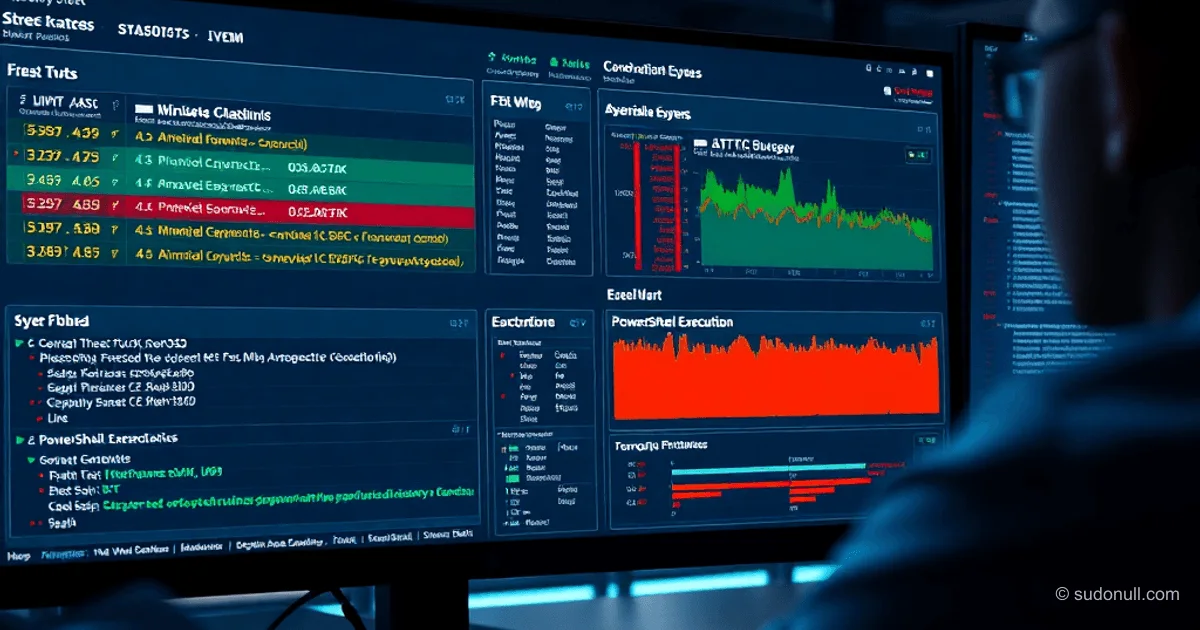
SIEM (Security Information and Event Management) transforms scattered logs into a unified threat detection system, but its value directly depends on proper operation. Many companies view SIEM as a universal solution, forgetting that without configured security processes and a qualified team, it turns into an expensive event archive. Key takeaway: SIEM enhances existing security measures but doesn't replace them. Its effectiveness shines in correlating events from different sources—for example, simultaneous password brute-forcing on a VPN and PowerShell launch on a server, which is impossible to detect with isolated analysis.
For successful implementation, two conditions must be met: availability of cybersecurity specialists capable of interpreting data, and preliminary setup of basic protective mechanisms (NGFW, antivirus software, vulnerability management systems). Only then does SIEM become a tool for reducing attack detection time (MTTD) and response time (MTTR).
Criteria for Justifying SIEM Implementation
The decision to adopt SIEM should be based on an analysis of the current maturity of cybersecurity processes. The system is justified when:
- The infrastructure has more than 50 nodes with heterogeneous event sources (network equipment, cloud services, DBMS)
- Compliance with standards (PCI DSS, GDPR) is required, which demand centralized log collection
- There are difficulties detecting multi-stage attacks through disparate monitoring systems
- The cybersecurity team spends >30% of its time on manual data collection and correlation from different sources
Important to understand: SIEM doesn't block attacks; it provides data for decision-making. As expert Ilya Kurilenko (Anlim) notes, even with a full suite of protections (SIEM, NTA, WAF), test attacks on the data center can succeed in just a few minutes without timely event analysis.
Common Mistakes During Implementation
Real-world cases reveal systemic issues:
- Unprioritized source coverage: Connecting all available systems without focusing on critical assets leads to noise. First, identify Tier-1 resources (payment systems, databases containing personal data) and set up monitoring for them.
- Incorrect source configuration: Example—full event stream from NGFW without filtering. This overloads the system, increasing TCO by 40-60% due to licenses and storage resources.
- Lack of rule customization: Relying solely on out-of-the-box rules is a mistake. Rules must be adapted to infrastructure specifics using the MITRE ATT&CK Framework.
- Ignoring false positives: Over 70% of alerts in unoptimized systems are false positives. This leads to alert fatigue and missing real incidents.
- Underestimating the human factor: Without regular training of SOC analysts on cyber ranges, SIEM effectiveness drops by 80%.
Methodology for Evaluating SIEM Effectiveness
To prove the value of SIEM investments, measure both quantitative and qualitative metrics. A formal approach includes:
- Infrastructure coverage assessment: Percentage of critical systems connected to SIEM (target—95%+ Tier-1 assets)
- Data quality analysis: Share of events with full contextual information (IP, user agent, session ID)—minimum threshold 85%
- BAS testing: Use Breach and Attack Simulation to verify detection scenarios (e.g., emulating Lateral Movement)
- SOC metrics: Average alert processing time (goal—<15 min), percentage of automated actions
- ROI via damage reduction: Compare the cost of potential incidents before and after implementation
Key indicator—MTTD reduction. In successful cases, this metric drops from 24+ hours to <1 hour. However, the first 6 months after implementation require active tuning: alert volume can increase by 200-300% until rules are optimized.
Practical Recommendations for Optimization
- Phased source connection: Start with 3-5 critical systems (AD, NGFW, cloud logs), then expand coverage
- UEBA implementation: User and Entity Behavior Analytics reduces false positives by 45-60% through anomaly analysis
- Regular rule audits: Remove unused rules (on average, 30% of rules don't trigger in 6 months)
- SOAR integration: Automate responses to standard scenarios (e.g., IP blocking on multiple failed logins)
- Data quality control: Set up log normalization and stream integrity checks via heartbeat mechanisms
Key Takeaways
- SIEM requires prior setup of basic protections (hardening, NTA, vulnerability management)
- System effectiveness directly depends on SOC analysts' qualifications and their regular training
- Key metrics: critical asset coverage, MTTD, percentage of processed alerts, BAS test results
- Avoid connecting all sources at once—focus on Tier-1 systems
- Regular rule optimization is essential to maintain system relevance
With proper operation, SIEM becomes the central element of the Security Operations Center, transforming raw logs into actionable intelligence. However, its value is realized only in tandem with human expertise and processes—without them, the system remains a "dead" event archive. Companies that ignore post-implementation optimization stages lose up to 70% of the solution's potential effectiveness.
— Editorial Team










No comments yet.