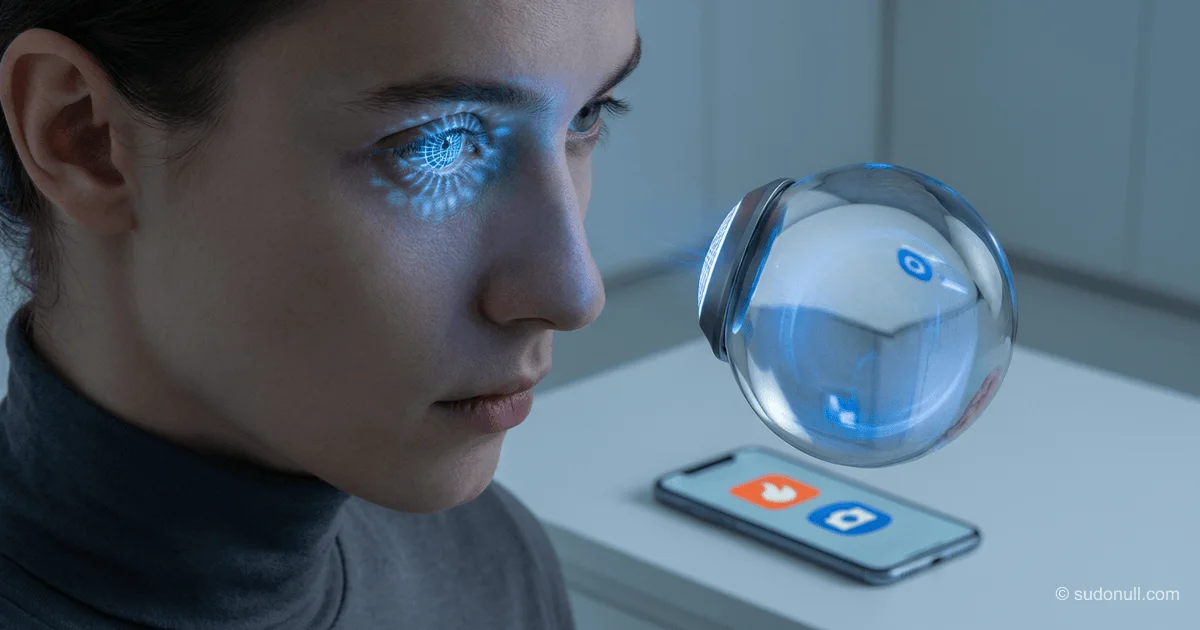
Biometrics for Convenience: Tinder and Zoom Adopt Eye Scanning from World
Major digital platforms are starting to use biometric verification to confirm user identities. Tinder and Zoom have announced partnerships with World, a company that offers iris scanning as a way to prove you are human. This technology aims to combat bots, deepfakes, and fraud, but raises questions about privacy and scalability.
How Verification via World Orb Works
The World system, developed with the involvement of Sam Altman, uses a physical device called the Orb to scan the iris. Users must personally visit a location where such a scanner is installed, after which they receive a digital proof of their "humanness." This information is then used by integrated services to mark verified accounts.
Tinder plans to roll out this system globally after a successful pilot in Japan. Users who complete verification will receive a special badge on their profile and five free "Boosts" — a feature that temporarily increases profile visibility. Zoom, in turn, uses World ID Deep Face technology: the system compares the image from the Orb with the user's face in real time and with the video stream seen by other call participants. If all three elements match, the person receives a Verified Human status.
New Applications for Biometrics
World is not limited to social services. The company has announced a Concert Kit package for ticketing platforms, aimed at combating scalpers. Ticket buyers will also be offered an eye scan to prove they are not bots. Thus, biometrics is gradually penetrating various segments of the digital economy — from dating to entertainment.
Privacy and Trust Issues
Critics point to several risks. First, biometric data cannot be changed in case of a leak — unlike passwords or bank cards. Second, World has previously faced criticism for promoting the Worldcoin cryptocurrency, which was distributed in exchange for eye scans, a practice many considered exploitation of vulnerable groups. Although the focus has now shifted to verification, questions about long-term data protection remain.
Infrastructure Limitations
Scaling the technology requires significant investment. World has stated plans to install 7,500 Orb devices in the US, but the actual number is unknown. The company reports 18 million verified users, but a significant portion comes from developing countries, where the incentive was cryptocurrency. Global coverage will require expanding the physical infrastructure, which could slow adoption.
Key Points
- Tinder and Zoom are integrating World's biometric verification to combat bots and deepfakes.
- Users are offered iris scanning in exchange for additional features or a verified account status.
- The technology raises concerns due to the irreversibility of biometric data and previous scandals surrounding Worldcoin.
- Mass adoption requires building a network of physical scanning locations, which has not yet been fully implemented.
- Partnerships with major platforms could make biometric verification a new norm on the internet.
Context and Implications
World's collaboration with Tinder and Zoom marks a transition from experimental projects to commercial use of biometrics in mass services. If users accept such verification, it could change security standards on the internet, but also increase dependence on centralized systems for storing sensitive data. Regulators will need to assess how well this practice aligns with personal data protection laws, especially in Europe and Latin America.
— Editorial Team










No comments yet.