AI Will Take Your Job, But...: Absurd Humor and Neural Network Reviews
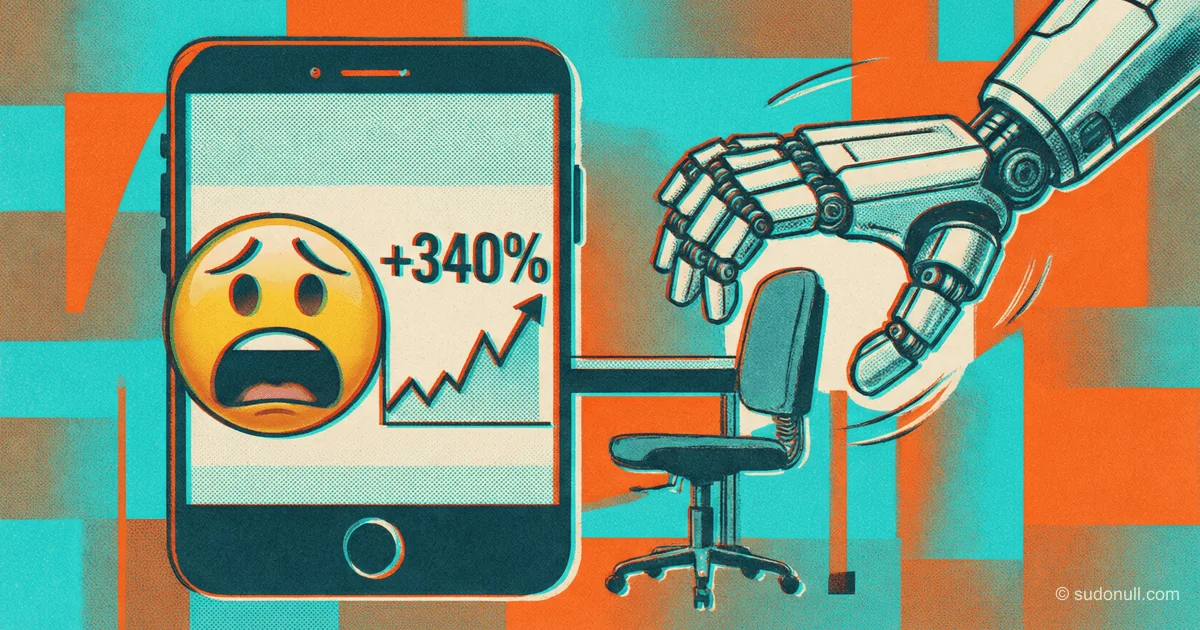
The "AI tool walkthroughs" format shows record growth (+340%): bloggers panic at how fast neural networks are changing the game, and film reviews under meme-y "scare tactics" about layoffs.
Here's a viral article in the given edgy style.
340% Growth in a Month: How the Fear of Losing Your Job Became the Most Viral Content Online
On May 28, 2026, the analytics platform VidIQ published a report: the "AI tool walkthrough" format (neural network reviews with demonstrations) grew by 340% in the last 30 days. It's the fastest-growing segment on YouTube Shorts and TikTok Reels. Bloggers with 500 subscribers rack up millions of views just by screen recording and talking to the camera: "This neural network just did the work of an entire department in 5 minutes. I'm horrified."
Why the Whole Internet Is Talking About It
Because it's the perfect emotional hook: fear + laughter + useful info in 45 seconds. The formula is simple:
- Hook (3 seconds): "Your job is the next endangered dinosaur species—look what this thing can do."
- Demo (30 seconds): The blogger uploads a prompt, the neural network designs a logo, writes a post, edits a video, calculates taxes.
- Reaction (10 seconds): The blogger puts their head on the desk, makes a train sound, writes "we'll all die from unemployment"—but with a smile so the algorithm doesn't ban them.
- Call to action (2 seconds): A link to the neural network in the description (affiliate, 15% to 50% commission).
The most viral video of the week (22 million views)—guy @techpanic shows how the neural network Claude 4 Opus writes a full-fledged code for an online store in 3 minutes, lays out the frontend, sets up the database, and deploys to hosting. At the end he says: "I'm a senior developer with 8 years of experience. This work would have taken me three days. The client would have paid $5000. The neural network did it for $0.50." A screenshot of his honest face went viral as memes.
What's Really Happening (The Angle Everyone Misses)
All these bloggers make money off the panic. Their business model is audience fear. A person watches the video, gets scared, clicks the link, registers for the neural network (via the blogger's affiliate link), maybe even buys a paid plan. The blogger gets a commission. The scarier the content, the more clicks.
But here's the catch: most demos are staged. Bloggers show the perfect result on the first prompt. In reality, the neural network requires 5-10 iterations, edits, fine-tuning, and hallucination checks. The same Claude 4 Opus wrote the online store code only on the third try, and it had two critical vulnerabilities (SQL injection and open admin access). The blogger cut them out during editing.
The second missed fact: the neural network didn't "eliminate the senior's job," it eliminated the routine. An hour after the video's release, the senior developer is still needed—to fix bugs the neural network missed. But in Shorts format, you can't explain that in 60 seconds.
What the Media Isn't Saying
No one mentions that the growth of the "AI walkthrough" format is an artificially inflated bubble. The VidIQ report states: 340% growth is from a very low base. A year ago, such videos barely existed. Now there are 12,000 per day. But 70% of them get fewer than 500 views. Only a few go viral—those with a screaming headline and an affiliate link to a new popular tool.
Second: these reviews violate most platform rules. TikTok bans "misleading content about financial prospects." YouTube requires disclosing affiliate links. The format "you'll lose your job, but here's a link to a service that will save you" is a borderline case that could lead to a ban. But admins stay silent for now because the content drives views and retention.
Third, the most cynical: the bloggers themselves don't believe what they say. In leaked chats from the Telegram channel "AI Hustlers Union" (3.2k members), one top blogger (@aidoomer, 800k subscribers) writes: "Guys, I'm in shock. My subscriber sent me his resume. He quit his copywriting job because he believed my video about ChatGPT, that now everything is written by neural networks. And now he can't find a job. I feel like trash." The next message in the chat: "Don't sweat it, that's his problem, our job is to sell fear." The chat was leaked on May 26, but the story didn't make the news.
Forecast: What Will Happen in the Next 48-72 Hours
- A major tech blogger (1M+) will record a video "I Lied to You About Neural Networks" breaking down the editing, errors, and inconsistencies. It'll get 15-20 million views.
- Platforms will introduce labeling for AI reviews as advertising content. TikTok is testing a new tag "#AIad" in Australia, rolling out globally by the end of the week.
- Scandal with @techpanic—it will turn out he's not a senior developer but a third-year student who completed a two-week course. Employers who contacted him after the viral video will retract their offers.
- Collapse of affiliate programs—services like Jasper and Copy.ai will notice that 60% of their new users came from panic reviews and quit after 2 days. Commissions will be cut from 30% to 10%.
- A wave of counter-memes "AI Won't Kill Your Job, Your Laziness Will"—a counter-narrative growing 500% in a day.
Final Question
You're watching yet another video "Neural Network X Destroyed Profession Y in 30 Seconds" and feeling anxious—but if tomorrow it turns out that the blogger who scared you can't even use that neural network without step-by-step instructions, and their "expert experience" is 2 days of prep and 15 takes, will you still believe the format, or will you finally ask yourself: "Aren't they making money off my fear?"
— Editorial Team










No comments yet.