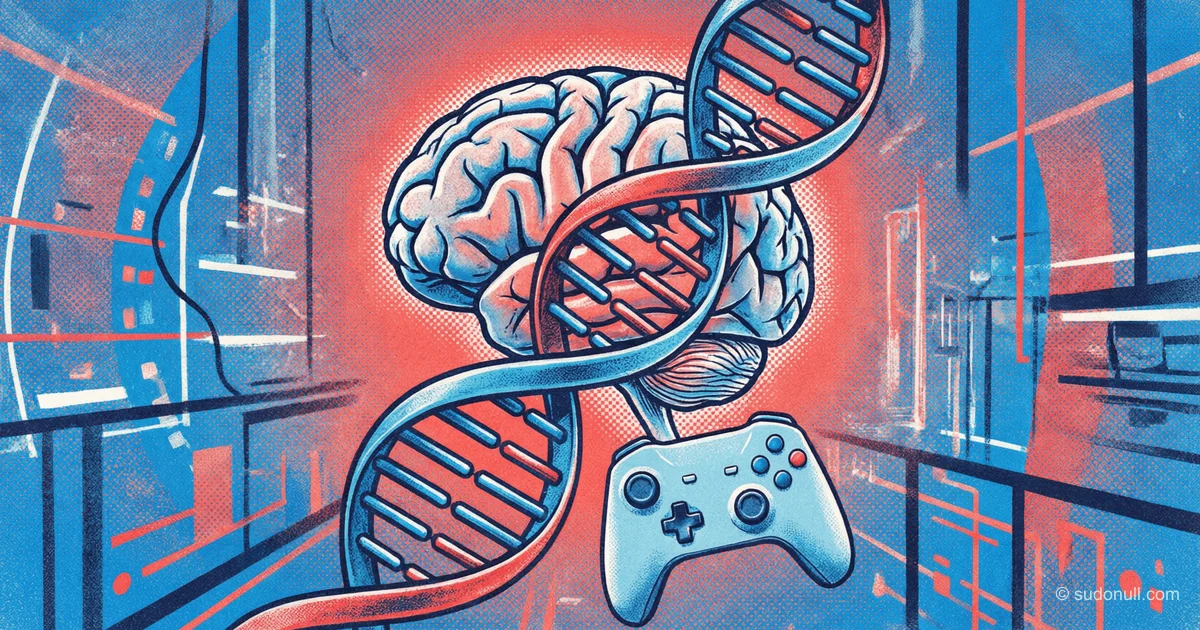
DeepMind Announces AI Revolutions in Medicine and Scientific Discovery
In an interview, DeepMind CEO Demis Hassabis revealed new AI breakthroughs, including Gemini for medical scans, an AI co-scientist to accelerate discoveries, and a partnership with EVE Online.
Analytical Article: Three Announcements in One Week. Why Hassabis Hit "Panic Mode" and What He's Hiding
Author: Independent Analyst with Insider Perspective
Date: 2026-05-28
May 24–26, 2026. Three major news items from DeepMind in 72 hours. First, Nature publishes work on Co-Scientist. Then, Hassabis tells Axios that AGI could be possible by 2029. Finally, news of a partnership with EVE Online to train AI in "long-term planning."
Mainstream media writes about "breakthroughs" and "revolutions." But if you think this is just a lucky PR week, you're missing the big picture.
These are three shots from the same weapon. And the weapon's target is to divert attention from the fact that DeepMind is losing the agent race.
[The Gist]: What's Really Happening
Formally, DeepMind announces three different initiatives. Informally, it's a coordinated attack on three fronts where the enemy is already breathing down their neck.
Front One: Scientific Discovery. Co-Scientist, published in Nature on May 19, is a multi-agent system based on Gemini that generates hypotheses, searches literature, ranks ideas, and proposes experiments. The paper shows how the system independently arrived at a mechanism of antibiotic resistance in two days, which another group of scientists later published in Cell.
But here's what the media isn't saying: *a similar system from Edison Scientific (Robin) appeared in the same issue of Nature***. Competitors are hot on their heels.
Front Two: AGI Predictions. On May 26, Hassabis tells Axios that AGI is possible "by 2029 or 2030" and that humanity stands "at the foot of the singularity." He uses Anthropic Mythos (an AI that finds software vulnerabilities) as a "warning shot": look what competitors can already do.
But this isn't a prediction. It's lobbying for regulation. Hassabis wants governments to mandate AI testing before release—then DeepMind, which has the resources for such testing, would gain an advantage over small startups.
Front Three: EVE Online. DeepMind took a minority stake in Fenris Creations (formerly CCP Games) for $120 million. EVE Online has been running for 23 years, with a complex economy, alliance politics, and long-term strategies. It's an ideal training ground for "long-term planning"—the very skill that current AIs catastrophically lack.
My Non-Obvious Insight: The choice of EVE Online is no coincidence. This game is notoriously known for allowing players to spend years building empires, joining alliances, and losing everything in one day due to a betrayal. If DeepMind teaches an AI to survive in EVE, it teaches it strategic thinking under incomplete information and human irrationality. This is a direct path to AI diplomats, AI generals, and AI CEOs.
Timeline and Context
Let's break it down by day:
— May 16 (Sunday): Pre-prints of the Co-Scientist paper begin circulating among journalists under embargo.
— May 19 (Wednesday): Nature publishes Co-Scientist. Official announcement.
— May 24 (Sunday): Hassabis gives an interview to Axios on the sidelines of Google I/O.
— May 26 (Tuesday): Axios publishes the interview. Headline: "AGI by 2029?"
— May 26 (Tuesday): Simultaneously, news breaks about the partnership with Fenris Creations/EVE Online.
Why such density? Because competitors aren't sleeping. In April, Anthropic released Mythos—a security AI that found real vulnerabilities. In May, OpenAI, according to rumors, is preparing to announce its own "AI researcher." DeepMind needed to occupy the information space and show that they are not lagging behind but setting the agenda.
Who Wins and Who Loses
Winners (Obvious):
- Scientists and Researchers. Co-Scientist promises to reduce the time from hypothesis to experiment from "months and years to minutes and hours." It's a real tool that has already helped find candidates for treating acute myeloid leukemia.
- Fenris Creations (formerly CCP). They got $120 million from the buyout from Pearl Abyss, plus investment from Google, plus a research partnership. The company is profitable and posted a record Q4 2025.
Winners (Non-Obvious):
- Academic labs without access to supercomputers. Co-Scientist runs on Gemini and is accessible via an interface. A small lab in a developing country can get a DeepMind-level AI assistant for a subscription. This is democratization of science.
- EVE Online players. DeepMind will work on an offline server, but the research results could return to the game as new NPCs or systems. Players will get smarter opponents.
Losers:
- OpenAI. They still haven't released Sora to the public. DeepMind, on the other hand, publishes research in Nature and opens access. This is a classic "OpenAI" vs. "ClosedAI" narrative that DeepMind uses for positioning.
- Small AI startups in the scientific field. Co-Scientist is a "free" (as part of Google Cloud) competitor to dozens of startups trying to build AI for hypothesis generation. Many of them are now unnecessary.
What the Media Isn't Saying
First omission: Co-Scientist hallucinates, and DeepMind admits it.
In an interview with The Naked Scientists, Annalisa Pawlosky (Google) directly says: "Any large language model can hallucinate. We do a lot of work to add checks and validation, but it's impossible to eliminate it 100%." Moreover, the system doesn't know about "negative data"—experiments that didn't work and weren't published. This means Co-Scientist might propose hypotheses that have already been disproven, but the results never made it into the literature.
Second omission: the AGI prediction for 2029 is marketing, not science.
Hassabis himself says in the same interview: "The industry has finally found the right technical path." He doesn't say AGI is already working. He says they know how to build it. That's a huge difference. And this prediction isn't for accuracy—it's to push regulators into action, specifically, to test models before release.
Third, and most important omission: Co-Scientist is a backdoor for accessing lab data.
When scientists use Co-Scientist, they upload their data, hypotheses, and experimental results into the system. Google gets access to this stream of scientific information. And although Google formally promises confidentiality, in a world where data is the new oil, Co-Scientist isn't just a tool—it's an intelligence network. Every researcher using the system inadvertently enriches Google's model.
Forecast: Next 30 Days and 90 Days
Next 30 Days (by end of June 2026):
Expect a wave of academic preprints listing Co-Scientist as a co-author. Examples already exist: the system helped in research on amyotrophic lateral sclerosis (ALS), finding unexpected links to other diseases. By the end of June, the first labs not affiliated with Google will publish results where Co-Scientist played a key role.
Also expect a reaction from OpenAI. Most likely, they will announce something in response—perhaps expanded access to their AI for scientific research.
Next 90 Days (by end of August 2026):
The most interesting development will be at the intersection of Co-Scientist and EVE Online. DeepMind might announce that an AI trained in EVE for long-term planning has been integrated into Co-Scientist to improve its ability to "think years ahead" about the consequences of scientific discoveries.
A political scandal is also possible: some lab might discover that Co-Scientist proposed a hypothesis that turned out to be someone else's unpublished know-how, sparking debates about intellectual property and AI "idea theft."
My prediction: Co-Scientist will become the de facto standard in biomedical research within 12 months. Not because it's better than scientists, but because it works 24/7, doesn't ask for grants, and doesn't require weekends. And if you're not using an AI co-scientist, your competitor is.
Three announcements in one week? That's not chaos. It's a well-planned operation to shift the narrative: DeepMind is no longer "the lab that made AlphaFold" but "the company building AGI and openly sharing results." The irony is that they don't share everything. And they never have.
— Editorial Team









No comments yet.