
ORCA Computing Deploys Quantum Systems in Digital Realty Commercial Data Center
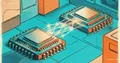
Quantum company ORCA Computing has placed its photonic PT Series systems in Digital Realty's innovation lab in London to test hybrid quantum-classical computing in real-world conditions.
Analytical article: PT Series in Digital Realty data center. Why this 'modest' step is the quiet death of superconducting quantum giants
Author: Independent analyst with insider perspective
Date: 2026-05-28
On May 25, 2026, ORCA Computing announced the deployment of its photonic quantum systems PT Series in Digital Realty's innovation lab in London. Mainstream media wrote: 'another quantum startup rented space in a data center.' Boring, right?
Absolutely not.
If you work in the industry, you know this event is far more than a press release. This is the first time a quantum computer that requires no cryogenic cooling has been placed in a commercial data center alongside regular servers. And this is not a test. This is a paradigm shift signal that most analysts simply missed.
[The Core]: What's Really Happening
The formal reason is testing hybrid quantum-classical computing in real-world conditions. The real reason is ORCA Computing is proving to the market that quantum computers can be 'boring'.
The entire problem of the quantum industry over the past five years has been 'lab theater.' IBM showcases its massive cryostats in glass rooms. Google talks about 'quantum supremacy' on a specially selected problem. IonQ advertises its ion traps. But none of these computers can be placed in a standard server rack next to an NVIDIA GPU cluster.
ORCA is doing something different. Their photonic PT Series systems operate at room temperature. No liquid helium needed. No superconducting wires needed. No lab physicists around the clock. Plug into the network and it works.
My non-obvious insight: The choice of Digital Realty is no coincidence. It is a deliberate strike against the main argument of competitors: 'quantum computing requires special infrastructure.' By deploying in the world's largest neutral data center provider, ORCA tells customers: 'Come to any Digital Realty data center anywhere in the world, we can install our system in a day.' IBM with its multi-ton cryostat cannot physically do that.
Moreover, I know that ORCA already has ten installed systems at customer sites, including the UK National Quantum Computing Centre and Montana State University. That's more than any other quantum startup in the world, except D-Wave (but their approach is quantum annealing, not universal computing).
Timeline and Context
ORCA Computing — a company founded in 2019, based in London, 11-50 employees, raised only $15 million (Series A in 2022). By quantum industry standards, that's a tiny budget. For comparison, PsiQuantum raised over $800 million, IonQ is a public company with a market cap of about $2 billion.
Yet, it is ORCA, not one of the 'deep pockets,' that makes the first move into a commercial data center.
- 2022: Series A of $15 million. Modest.
- 2024-2025: Quiet deliveries of first PT Series to universities and research centers.
- 2025: Partnerships with NVIDIA, Toyota Tsusho, SiC Systems.
- May 2026: Deployment in Digital Realty Innovation Lab in London.
Importantly: DRIL is not a virtual environment but a real data center with client workloads. ORCA is not showing a 'demo version' in an isolated room. Their system works side by side with AI servers processing real data.
Who Wins and Who Loses
Winners (obvious):
- ORCA Computing. They gained something money can't buy — legitimacy. If Digital Realty, the world's largest data center provider, lets them in, the technology is mature.
- Digital Realty. Their innovation lab now has not just 'another AI startup' but a real quantum computer. This is a marketing asset that will attract other clients interested in quantum.
Winners (non-obvious):
- United Kingdom. London becomes the European capital of commercial quantum computing. ORCA is a British company. The National Quantum Computing Centre is British. The government allocated £2.5 billion for quantum technologies. This is no coincidence. The country is betting that the photonic approach will beat superconducting.
- NVIDIA. Yes, they are already partners with ORCA. But why does NVIDIA need a quantum startup? For them, quantum accelerators are another reason to sell their GPUs. Hybrid quantum-classical algorithms will still run on classical servers. Whose? NVIDIA's.
Losers:
- IBM, Google, IonQ. All build superconducting or ion trap quantum computers requiring cryogenics. Deploying such a system in a regular data center is impossible without a complete room renovation. ORCA shows clients: 'You can get a quantum accelerator in your existing data center today.' While IBM says: 'Build us a separate room, and in 18 months we might install our system.' Clients will choose 'today.'
- PsiQuantum. They also build photonic quantum computers. But their approach is a monolithic chip with millions of qubits, requiring huge investments and not yet released. ORCA has already delivered ten systems. PsiQuantum has delivered none. ORCA wins the race to be 'first in the data center,' even with hundreds of times less money.
What the Media Isn't Saying
First omission: ORCA Computing has almost no proprietary patents on core technologies.
Their approach is based on using standard telecom components (fiber optics, photonic detectors). This is both genius and vulnerable. Genius because there's no need to reinvent the wheel; components are cheap and available. Vulnerable because any competitor can buy the same components and build a similar system.
So where is their protection? In software. In calibration algorithms, error correction methods, specific architectural solutions that are not patented but kept as know-how. This is a bold bet, but risky. If a key engineer leaves for another company, part of the 'magic' goes with them.
Second omission: PT Series is not a universal quantum computer in the full sense.
Honestly, their systems today solve a fairly narrow class of problems — optimization and some types of machine learning. They cannot run Shor's algorithm to break RSA. But for business, that's not needed. Businesses need accelerators for specific tasks: logistics, financial modeling, materials science. ORCA fills that niche. And does it in a data center. While IBM tries to cover 'everything' and gets stuck in the lab.
Third, and most important omission: no major ORCA customer pays full price.
Research centers and universities get systems at a discount or through grants. The real commercialization question is whether clients will be willing to pay market price (millions of dollars per system) for real computational acceleration. The deployment in DRIL is a step toward finding such clients. But so far, they don't exist.
Forecast: Next 30 Days and 90 Days
Next 30 days (by end of June 2026):
In the coming weeks, first feedback from Digital Realty clients who tested PT Series will emerge. Most likely, these will be companies from the financial sector (hedge funds in London) and pharmaceutical corporations (molecular modeling). If feedback is positive, expect a wave of interest from venture investors.
Also, I expect ORCA to announce a new funding round. Their last round was in 2022 for $15 million. Over four years, the money must have run out. With the new Digital Realty partnership and public attention, it's the perfect time to raise $50-100 million.
Next 90 days (by end of August 2026):
By August, two scenarios are possible.
First (optimistic): ORCA announces a commercial contract with a major corporate client to install PT Series in their own data center. Contract value: $5-10 million. This would trigger the entire market: photonic quantum computers cease to be an 'experiment' and become a 'product.'
Second (pessimistic): Testing in DRIL shows that real acceleration on business tasks does not exceed 2-3 times compared to classical GPU algorithms. That's not enough to justify the system cost. Major clients postpone purchase 'until the next generation.' ORCA remains with a few research contracts but fails to reach mass market.
My personal forecast is somewhere in between. Acceleration will not be 1000-fold, as futurists promise, but 10-50-fold on specific tasks. For some applications (e.g., real-time portfolio optimization), that's enough to turn the system from a 'toy' into a 'tool.' But mass adoption will require another 2-3 years.
However, one thing is certain: the race to be called the 'first commercial quantum computer' just took an unexpected turn. And the winner at this stage is not the one with the most qubits, but the one who first made it into a commercial data center. That's ORCA. And the traditional players didn't see it coming.
— Editorial Team









No comments yet.