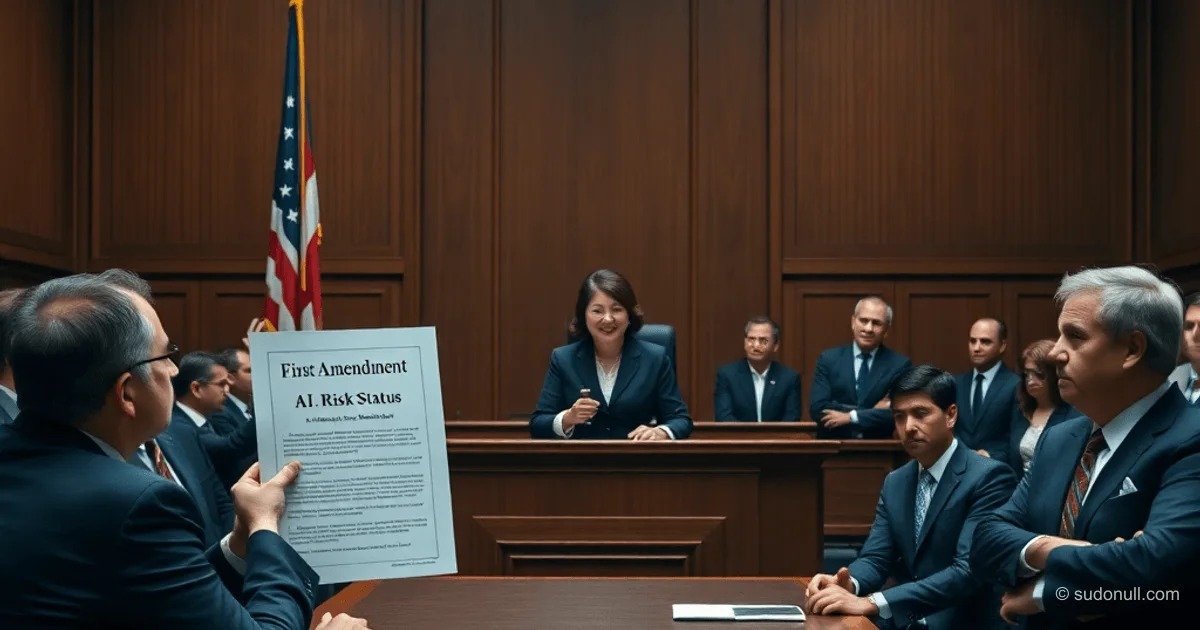
San Francisco Federal Court Overturns Pentagon's Ban on Anthropic's Claude
A federal court in San Francisco issued a preliminary ruling in favor of Anthropic, annulling the "supply chain risk" designation and the order prohibiting Claude's use in federal agencies. In her 43-page opinion, Judge Rita Lin cited violations of the First Amendment and due process requirements. The government has one week to appeal.
The dispute erupted after a $200 million contract was signed in July. Negotiations to integrate Claude onto the GenAI.mil platform stalled in September over disagreements: the Pentagon demanded unrestricted access to the models for any purpose, while Anthropic imposed limits on autonomous weapons and mass surveillance of US citizens.
'Risk' Designation and Judicial Criticism
In February, Defense Secretary Pete Hegseth labeled Anthropic a supply chain threat—a term previously reserved for companies with foreign ties. Judge Lin called this an "Orwellian narrative" that defies the law: no statute permits branding an American company an adversary simply for rejecting government demands.
Key court arguments:
- Violation of the First Amendment via "unlawful retaliation" for publicly disclosing the Pentagon's stance.
- Measures that fail to serve national security interests.
- Lack of legal basis for the restrictions.
The ruling does not require the Pentagon to use Anthropic's products and allows it to pivot to alternative AI providers.
Conflict Timeline
- July: $200 million contract signed.
- September: Deadlock in GenAI.mil integration talks.
- February: "Supply chain risk" designation.
- March 2026: Preliminary court ruling.
Anthropic expressed satisfaction and openness to further collaboration. A final decision is expected in months.
Key Points
- The court blocked the "risk" status, which infringed on constitutional rights.
- Anthropic defended its red lines against autonomous weapons and surveillance.
- The Pentagon can appeal within a week and select other AI vendors.
- The ruling underscores limits on government control over private AI models.
- The conflict highlights the balance between national security and corporate freedoms.
This case illustrates growing tensions in deploying AI within defense structures. AI developers face ethical dilemmas when working on government contracts, where model demands exceed standard terms of service.
— Editorial Team










No comments yet.