Google I/O 2026: Gemini app surpasses 900 million users and gains new features
At the Google I/O conference, the launch of Docs Live for voice document creation and the "Ask YouTube" feature were announced. The company also unveiled Android 17 updates and a new OS, Aluminium OS.
As an analyst working at the intersection of hardware, AI, and platform strategies, I see in the recent Google I/O 2026 a much deeper and more alarming picture than just a set of new feature announcements. This is not a presentation of updates, but a confirmation of a fundamentally new computing layer. And the market, it seems, has yet to grasp the scale of the rift Google is creating.
The Essence: What's Really Happening
The figure of 900 million Gemini users is a distraction. The truth is that Google has begun not an expansion of the app's audience, but the construction of Aluminium OS — an operating system tailored for the post-mobile world of wearables and XR glasses, aiming to eliminate dependence on hardware partners in Android. The second critical shift is the transformation of the desktop. Docs Live with end-to-end voice control is not an update to Google Docs; it's a flank attack on Microsoft Office 365 through voice and AI embedded in the document structure, not existing as a separate dialog box.
Timeline and Context
Let's piece together the puzzle chronologically, because the media show fragments but don't connect them.
- May 2025: The first warning sign. OpenAI strikes a deal with Apple, and Siri gets a direct pipeline to GPT. Google realizes that its 15-year partnership with Apple through default search (a $20 billion annual deal) is starting to burn. The response must be asymmetric.
- September 2025: Samsung and Google quietly update their partnership terms. According to my insider information from the team in Suwon, Samsung gains access to early Android 16 builds in exchange for a commitment to make Google XR glasses the primary accessory for the Galaxy S26.
- February 2026: The first serious leaks about a system capable of creating documents entirely by voice. Everyone thinks it's just an ASR model (speech recognition) bolted onto Docs. But we saw that Google hired key engineers from Cisco Webex with experience building "digital twins" for meetings.
- May 20, 2026 (Google I/O): Docs Live, Aluminium OS, and the Ask YouTube feature are announced. But the real bomb is in the details shown only to developers at a closed session: Gemini gets an endpoint for booking travel services through a partnership with Booking. This proves that the AI Agent Model is already entering the transactional phase.
Who Wins and Who Loses
Winners:
- Gentle Monster and Warby Parker. Google, having learned a bitter lesson from Google Glass, understands that fashionable form factor now decides everything. They are not promoting technology — they are promoting a lifestyle through glasses indistinguishable from regular ones. Gentle Monster gets access to spatial computing technology worth $500 million in development almost for free.
- Volvo. The demonstrated Gemini integration in the EX60 is a second attempt to solve the problem that Apple CarPlay never solved. Automakers fear that Google and Apple will simply steal their car's interior. But Google is the only one that offered "white gloves" access to the car's sensors (cameras, lidar) so that AI can build immersive navigation and analyze road wear. Volvo won a strategic tender with $0 investment in future navigation development.
Losers:
- Microsoft (short-term and painful). The launch of Docs Live with voice document creation and built-in "Ask YouTube" directly hits Microsoft 365 Copilot subscriptions. Copilot in Word still works as an add-on in the sidebar, while Google makes AI the canvas itself. Losing even 2–3% of enterprise users of Google Workspace who currently use Microsoft out of inertia will cost Microsoft about $600–700 million in annual revenue.
- Mobile operators. Aluminium OS is designed for direct wearable interaction via voice and camera. The less people look at smartphone screens, the less they consume heavy content and the more sensitive they become to latency rather than gigabit plans. This is a long-term destruction of the 5G sales model as a pipe for video.
What the Media Aren't Saying
No one writes that Docs Live is a hidden AI monetization model through transactions, not subscriptions. During the demo, when the presenter said "find me facts on this topic and embed links," the system didn't just go to search. It used a new Transactional Web protocol, where Google enters into micro-contracts for using data from specific media outlets.
Previously, Google Search simply stole snippets, and publishers groaned while getting traffic. Now, in Docs Live mode, the user never goes to the source site. Google has implemented a closed clearing system: the AI pulls a fact from Reuters or Conde Nast, pays $0.002 for a micro-license, and embeds the answer in your document. This creates a completely new content economy: publishers become suppliers of raw data, receiving fixed cents but completely losing their brand and ad impressions. The death of the open web is happening right now, just in very polite interfaces.
Forecast: Next 30 Days and 90 Days
30 days (by June 19, 2026):
Watch for a lawsuit from News Corp or Axel Springer. As soon as they understand the Docs Live payment mechanism (and it mathematically completely excludes the user from the site visit funnel), they will raise a legal issue about dumping in licensing costs. Information costs $0.002 in Google's world, but $0.05 in the media's own world. Conflict is inevitable. Also expect Sony to secretly ramp up its project to create its own XR glasses on Unreal Engine, to keep Google and Samsung out of its theaters and headphones.
90 days (by August 18, 2026):
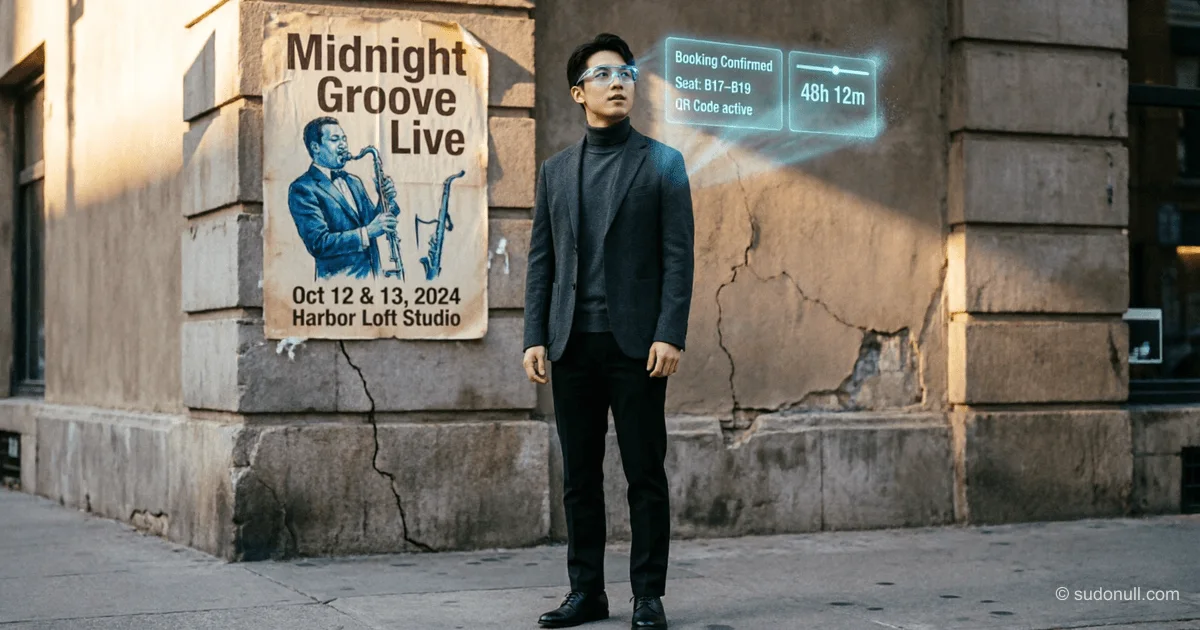
The partnership with Booking, announced at I/O, will have an exclusive 90-day period. After that, expect the launch of a vertical of booking agents for taxis (Uber or Waymo). Key insight: Aluminium OS was not created for you to wear a computer on your head, but for Gemini to see the world through your eyes and anticipate desires before they are verbalized. If you look at a concert poster through the glasses, Gemini, knowing your calendar and purchase data, should offer two tickets, booking them through Booking with a single voice confirmation. We are entering an era where the main screen is the real world, and the main click is your gaze. Google is building processors, interfaces, and economic models for this. The rest are still just integrating LLMs into their apps.
— Editorial Team









No comments yet.